Choosing the right steel protection system is one of the most consequential decisions in silo design. The choice between galvanized and coated steel directly impacts service life, maintenance costs, and commodity integrity over decades of operation. This Ventilation Fan Failure: Diagnosis and Repair Guide for G... breaks down the engineering realities behind each option so you can specify with confidence.
Galvanized vs Coated Steel: The Core Differences for Silo Construction
When evaluating galvanized vs coated steel which is right for your silo cost analysis, understanding the fundamental protection mechanisms is essential. These two systems defend steel substrates through entirely different Grain Bin Foundation Settlement: Prevention and Remediati... Bin Corrosion: Causes, Dust Explosion Prevention in Grain Storage Facilities: En... and Repair Strate... science principles.
How Galvanization Protects Steel
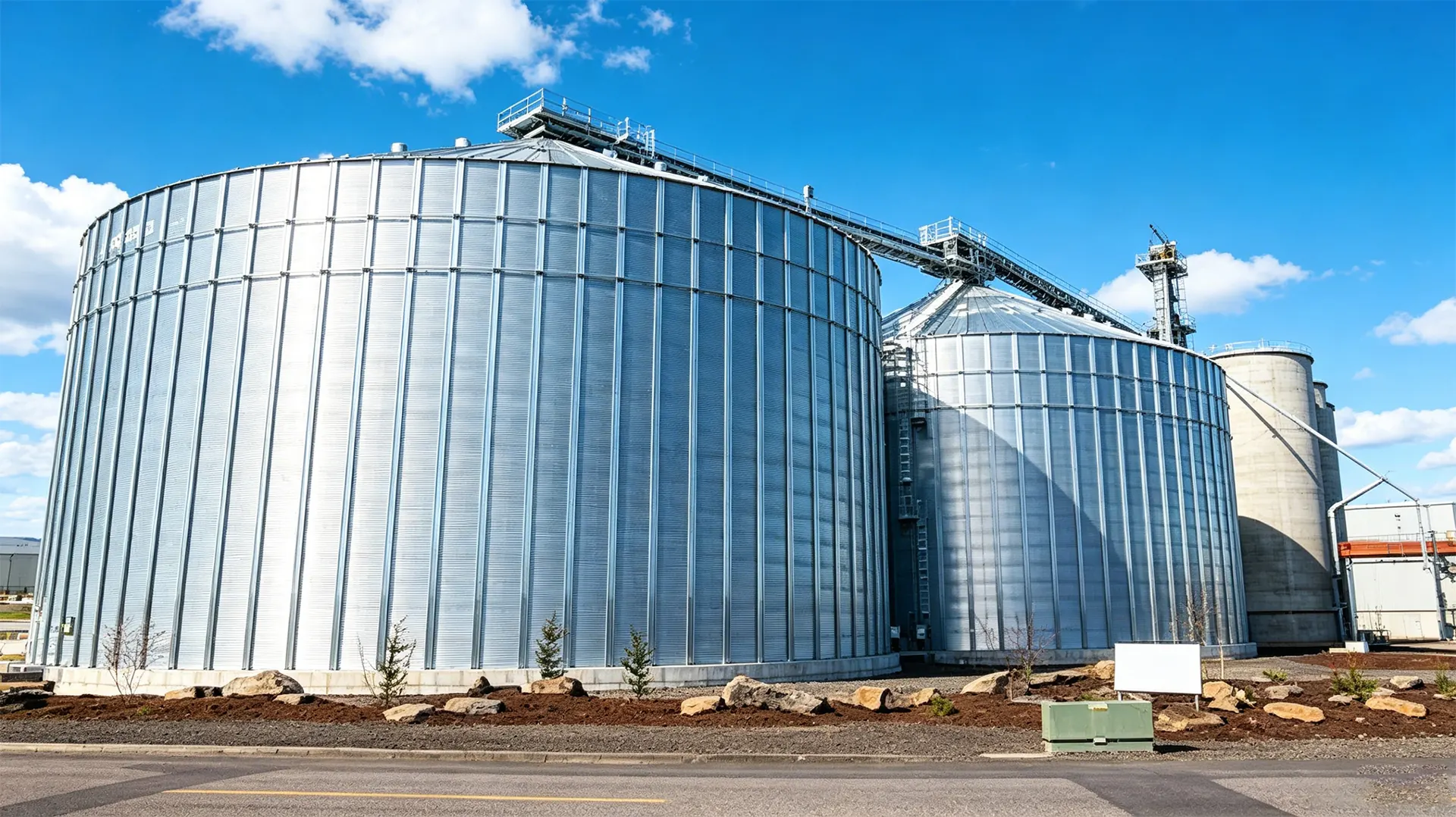
Hot-dip galvanizing immerses clean steel into molten zinc at approximately 450°C, creating a metallurgically bonded coating composed of multiple zinc-iron alloy layers. The resulting coating provides dual-mode protection: a physical barrier against moisture and oxygen, plus electrochemical sacrificial action. When the coating is scratched or cut, zinc corrodes preferentially to the underlying steel, protecting exposed areas through cathodic protection.
Standard galvanized coatings for silo applications typically range from Z275 (275 g/m² total zinc mass) to Z600 (600 g/m²), with heavier coatings specified for harsh environments. The coating thickness directly correlates with service life in a given atmosphere, following well-established corrosion rate models.
How Polymer and Composite Coatings Protect Steel
Coated steel systems apply organic or inorganic barrier layers over a prepared steel substrate. Common systems include polyester (PE), silicone-modified polyester (SMP), polyvinylidene fluoride (PVDF), and epoxy-based formulations. Unlike galvanizing, these coatings provide barrier-only protection: if the coating is breached, the underlying steel has no sacrificial mechanism and corrosion initiates immediately at the damage site.
However, modern multi-coat systems—typically a primer plus topcoat totaling 25–100 microns dry film thickness—can outperform galvanizing in specific chemical environments where zinc itself is vulnerable, such as high-pH or high-chloride conditions.
The Spiral Folding Advantage: How Forming Affects Coating Integrity
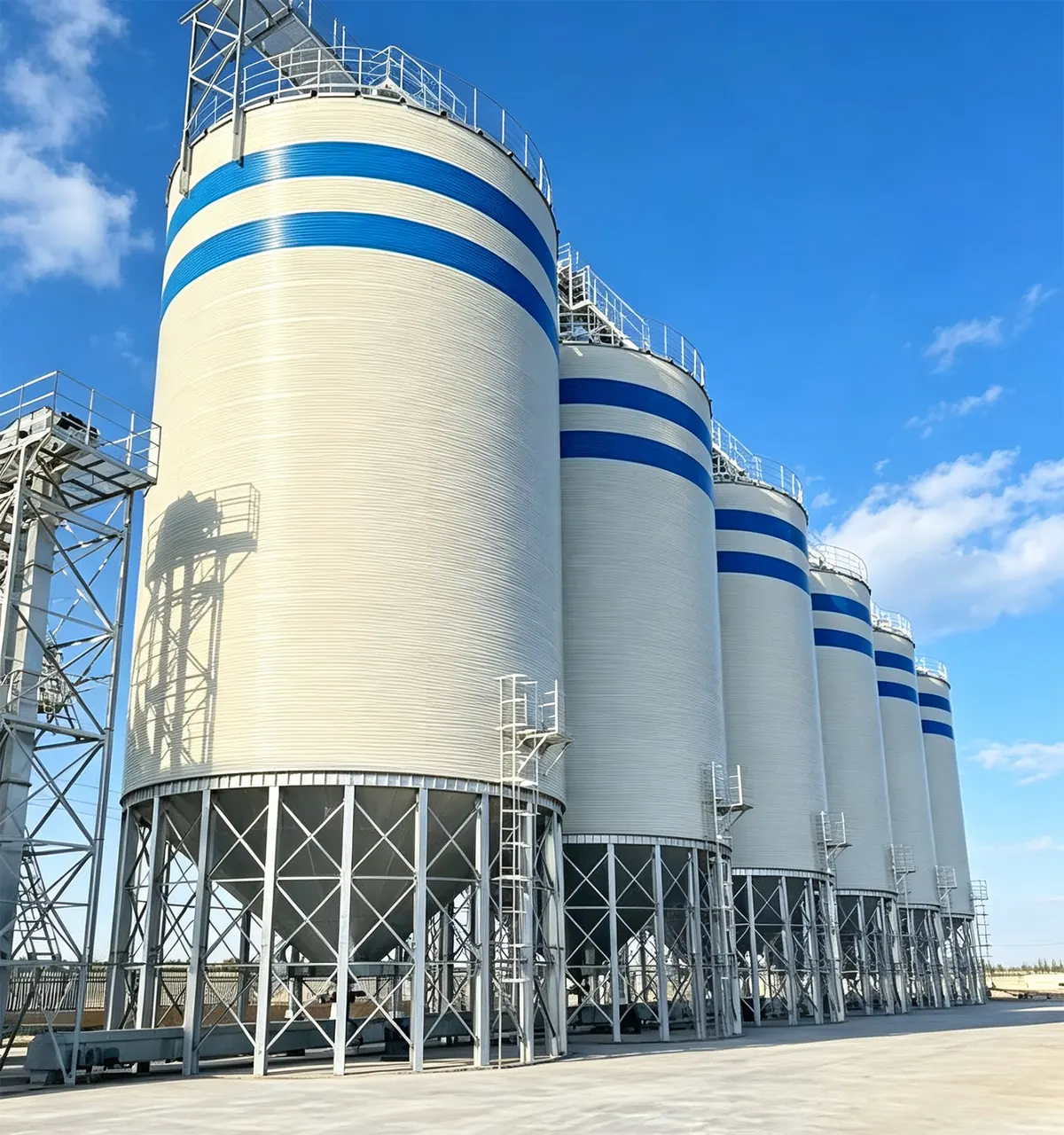
The spiral folded silo manufacturing process represents a critical differentiator when comparing galvanized vs coated steel which is right for your silo qui decision. In this process, a continuous strip of steel coil is fed through a spiral forming mill that corrugates and locks the edges into a tight helical seam, creating a monolithic cylindrical shell without field welding.

Coating Damage During Forming
When pre-coated steel undergoes spiral folding, the corrugation process subjects the coating to significant mechanical stress. Polymer coatings can micro-crack, delaminate at fold lines, or experience adhesion loss at the lock seam. These defects become initiation sites for corrosion that propagate beneath the coating over time.
Galvanized steel demonstrates superior formability because the zinc-iron alloy layers are metallurgically bonded and flexible enough to withstand corrugation without cracking. The sacrificial nature of zinc means that even minor coating damage during forming continues to protect the steel substrate. This is a decisive advantage in spiral folded silo construction, where every panel undergoes extensive cold working.
Seam Integrity Considerations
The lock seam in a spiral folded silo creates a double-thickness zone that experiences the highest forming stresses. With galvanized steel, the zinc coating flows with the metal during forming, maintaining protection continuity. With coated steel, seam areas often require post-forming touch-up or sealant application to restore barrier integrity—adding cost and introducing potential quality control variables.
Technical Specifications: Zinc Weight vs. Polymer Coating Thickness
Understanding the quantitative metrics behind each protection system enables meaningful comparison during silo specification.
| Parameter | Galvanized Steel (Z275–Z600) | Coated Steel (PE/SMP/PVDF) |
|---|---|---|
| Coating Thickness | 20–45 microns per side (Z275) | 20–35 microns dry film per coat |
| Protection Mechanism | Barrier + sacrificial (cathodic) | Barrier only |
| Self-Healing at Scratches | Yes, zinc corrodes preferentially | No, corrosion initiates at breach |
| Typical Service Life (rural) | 30–50+ years | 15–25 years |
| Formability (Spiral Folding) | Excellent, minimal damage | Good to moderate, risk of micro-cracking |
| Chemical Resistance (pH) | Degrades in pH <6 or >12 | Excellent in wide pH range (epoxy/PVDF) |
| Initial Material Cost | Moderate | Moderate to high (multi-coat systems) |
| Maintenance Recoat Cycle | Rarely needed | 10–15 years typical |
Selecting Zinc Coating Weights for Silo Applications
For standard grain storage in temperate climates, Z275 provides adequate protection with an expected coating life exceeding 30 years. Coastal installations, tropical high-humidity environments, and silos storing treated grains with elevated chloride content warrant Z350 or Z600 specifications. The incremental cost of heavier zinc coatings is typically 8–15% of base steel cost but can double the maintenance-free service life.
Commodity Corrosion: Matching Steel Protection to Grain and Biomass
The stored commodity is often the most overlooked variable in the galvanized vs coated steel which is right for your silo qui equation. Different materials create vastly different internal corrosion environments.
Grain and Seed Storage
Dry grain at recommended moisture levels (12–14% for cereals) creates a relatively benign internal environment. Aeration systems further reduce condensation risk. Under these conditions, galvanized steel performs exceptionally well, with decades of field-proven performance. The sacrificial zinc layer handles the occasional condensation event without degradation.
Biomass Pellets and Fertilizer Storage
Biomass pellets, wood chips, and certain fertilizers release organic acids, ammonia, or other compounds during storage that aggressively attack zinc. Ammonium-based fertilizers create an alkaline environment that dissolves zinc coatings rapidly. In these applications, coated steel systems—particularly epoxy or PVDF-based coatings—provide dramatically superior service life.

High-Moisture and Fermenting Materials
Silage, wet distillers grains, and other fermenting commodities produce organic acids (lactic, acetic, butyric) that lower internal pH to 3–5. At these pH levels, zinc corrodes rapidly. A multi-coat epoxy system rated for immersion service is the appropriate specification, with coating thickness of 200+ microns providing 15+ year service life in these aggressive conditions.
Design Considerations: Managing Condensation and Thermal Bridging
Regardless of coating system selection, proper silo design significantly influences corrosion performance. Condensation is the primary driver of internal corrosion in grain silos, and managing it requires attention to several engineering details.
Condensation Management Strategies
Daily and Complete Seasonal Maintenance Checklist for Grain Storage... temperature cycles cause moisture migration within stored grain. Warm air rising through the grain mass carries moisture into the headspace, where it condenses on cooler silo walls and roof surfaces. This condensation cycle creates wet-dry conditions that accelerate both galvanic and chemical corrosion.
Effective countermeasures include: mechanical aeration systems to equalize grain and ambient temperatures, properly sized headspace ventilation fans, insulated wall panels in extreme climate zones, and roof designs that direct condensation runoff away from wall junctions.
Thermal Bridging at Structural Connections
Bolts, stiffeners, and connection details create thermal bridges where condensation concentrates. In galvanized silos, the sacrificial coating provides localized protection at these points. In coated silos, thermal bridges represent vulnerability points where barrier coatings are most likely to fail. Specifying stainless steel fasteners or applying supplemental coating at all structural connections mitigates this risk.
Total Cost of Ownership: Beyond Initial Material Price
A rigorous galvanized vs coated steel which is right for your silo cost comparison must account for the full lifecycle. While coated steel may offer a lower initial material price point for standard polyester systems, the total cost equation shifts when maintenance, recoating, and downtime are included.
Galvanized spiral folded silos typically require no recoating for 30+ years in standard grain applications. Coated steel silos may require recoating at 10–15 year intervals, involving surface preparation, material costs, and operational downtime. Over a 40-year facility life, a galvanized silo often delivers 20–30% lower total cost of ownership despite a modest initial premium.
For aggressive commodity applications where galvanized coatings would fail prematurely, coated steel becomes the lower total-cost option by avoiding catastrophic early replacement. The key is matching the protection system to the actual service environment rather than defaulting to a single specification.
Installation and Quality Assurance Factors
Field assembly quality directly affects coating system performance. Spiral folded silos minimize field connections by forming the shell from continuous coil stock, reducing the number of potential coating damage sites. However, accessories—ladders, platforms, roof hatches, and discharge chutes—require careful coating specification and touch-up procedures.
Quality assurance for galvanized coatings involves zinc weight verification per ASTM A653 or equivalent standards, adhesion testing, and visual inspection for bare spots. Coated steel requires dry film thickness measurement, holiday detection for pinhole defects, and adhesion pull-off testing per ASTM D4541.
Frequently Asked Questions
Galvanized steel's primary limitation is its vulnerability to extreme pH environments. In highly acidic conditions (pH below 6) or highly alkaline conditions (pH above 12), zinc corrodes rapidly, compromising the protective layer. This makes standard galvanized coatings unsuitable for storing acidic commodities, certain fertilizers, or materials in coastal salt-spray environments without additional protective measures. Additionally, galvanized coatings can develop white rust (zinc oxide/hydroxide) during prolonged wet storage if ventilation is inadequate, though this surface oxidation does not typically compromise long-term protection.
Vinegar (acetic acid, pH approximately 2.4–3.4) actively dissolves zinc coatings through acid attack. Prolonged exposure to vinegar or acetic acid vapors will strip galvanized coatings from steel, removing both the barrier and sacrificial protection. This reaction demonstrates why galvanized steel is inappropriate for silos storing fermenting materials that produce organic acids, including silage, wet distillers grains, and certain biomass products. In these applications, acid-resistant polymer coatings such as epoxy or vinyl ester systems are required.
This question contains a misconception—galvanized steel is itself a metal product. The meaningful comparison is between galvanized steel and uncoated (bare) steel or painted steel. For outdoor structures including agricultural buildings, galvanized steel provides superior corrosion resistance compared to bare steel and generally outperforms painted steel over long time horizons because of its self-healing sacrificial protection at scratches and cut edges. For grain storage silos specifically, galvanized steel has been the industry standard for decades due to its proven longevity and minimal maintenance requirements.
Hot-dip galvanizing lasts significantly longer than zinc plating (electrogalvanizing) in outdoor and industrial environments. Hot-dip galvanized coatings are typically 45–85 microns thick, while zinc plating averages 5–25 microns. The thicker metallurgically bonded hot-dip coating provides proportionally longer protection—often 3–5 times the service life of zinc plating in identical environments. For silo construction, hot-dip galvanizing is the appropriate specification; zinc plating is insufficient for long-term structural protection and is not used in heavy-gauge silo applications.
Making Your Decision: A Practical Framework
Selecting between galvanized and coated steel for your silo requires evaluating four key factors: the stored commodity and its chemical characteristics, the local climate and atmospheric corrosion category, the expected service life and maintenance access, and the total cost of ownership over that lifespan.
For standard grain, seed, and dry commodity storage in moderate climates, galvanized steel—particularly in spiral folded construction—offers the best combination of longevity, formability, and cost efficiency. For aggressive chemical environments, high-moisture commodities, or applications requiring specific food-grade certifications, engineered coated steel systems provide targeted protection that galvanizing cannot match.
The most costly mistake in silo specification is applying a one-size-fits-all approach. Each storage application presents a unique corrosion profile that deserves individual engineering analysis.
Need Expert Guidance on Your Silo Steel Specification?
Our engineering team has designed galvanized and coated steel silo systems for grain, biomass, fertilizer, and industrial applications across six continents. Share your commodity specifications, climate data, and capacity requirements, and we will recommend the optimal steel protection system for your project.