
Dust Dust Explosion Prevention in Grain Storage Facilities: En... Prevention in Grain Storage Facilities: En... storage silos represent significant capital investments that must withstand decades of environmental exposure. Understanding wind and snow load design is not optional—it is the structural engineering foundation that determines whether a silo survives a 100-year storm or suffers catastrophic failure.
Why Wind & Snow Load Design is Critical for Grain Silo Structural Integrity
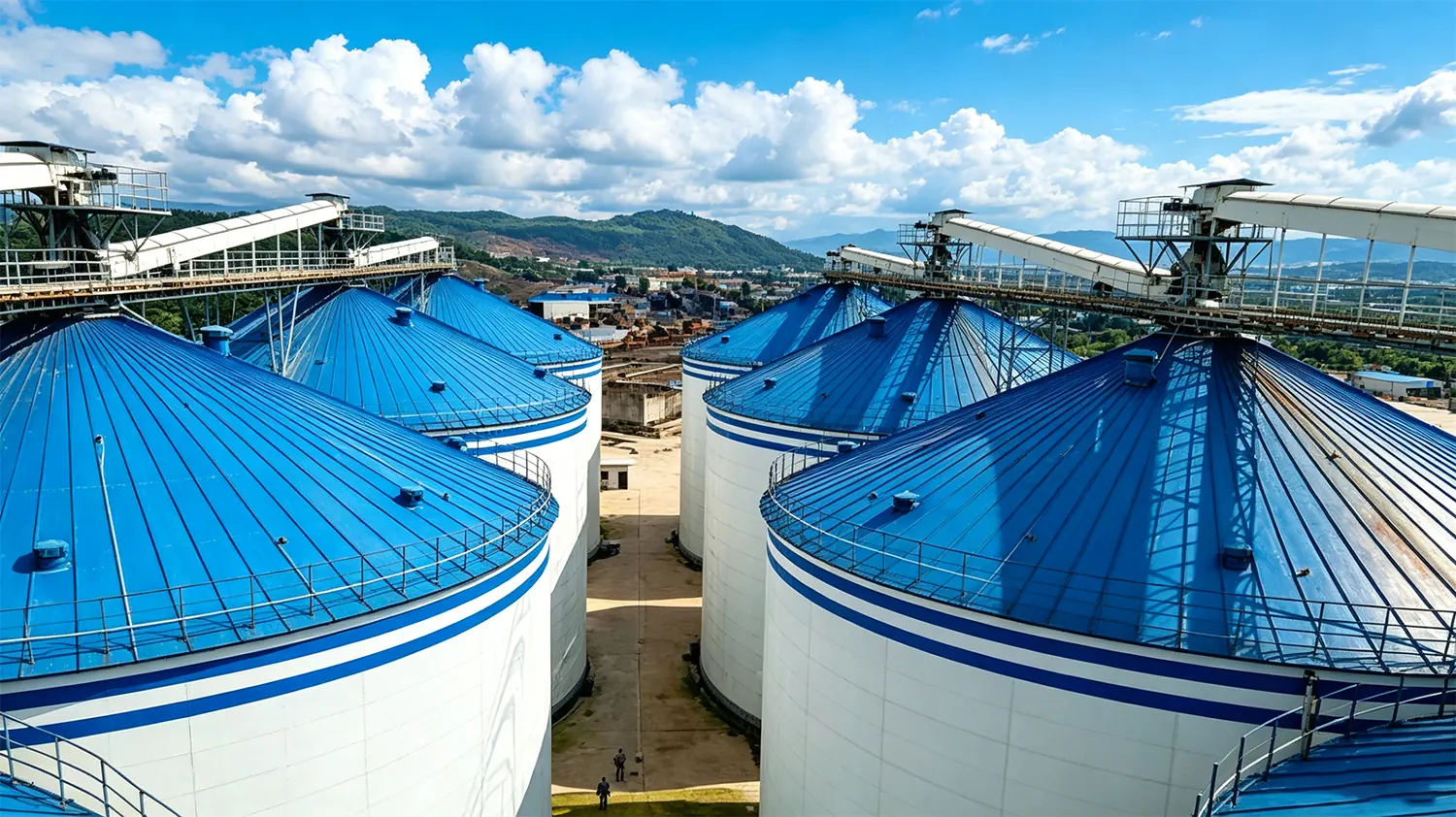
Dust Dust Explosion Prevention in Grain Storage Facilities: En... Prevention in Grain Storage Facilities: En... silos are uniquely vulnerable to environmental loading. Their tall, cylindrical profile creates significant wind exposure, while their large-diameter roofs present expansive surfaces for snow accumulation. Unlike conventional buildings, silos cannot be easily relocated or replaced once filled with thousands of tons of grain.
When a silo fails under wind or snow load, the consequences extend far beyond structural damage. A single collapse can result in total Dust Dust Explosion Prevention in Grain Storage Facilities: En... Prevention in Grain Storage Facilities: En... loss, environmental contamination from spilled grain, equipment destruction, and—most critically—worker fatalities. The economic impact of a silo failure routinely exceeds the original construction cost by factors of 10 to 50 when accounting for lost product, cleanup, regulatory penalties, and replacement construction.
Wind & snow load design is not a theoretical exercise. It is a life-safety engineering discipline that demands precise calculation, appropriate safety factors, and materials selected for specific environmental conditions. Every geographic region presents unique loading challenges that must be addressed during the design phase—not discovered during the first major storm event.
Decoding the Engineering: ASCE 7 and Eurocode Standards for Silo Design
ASCE 7: The American Standard for Minimum Design Loads
The American Society of Civil Engineers standard ASCE 7 (currently ASCE 7-22) provides the definitive framework for calculating wind and snow loads on structures in the United States. For grain silo design, ASCE 7 establishes the basic wind speed maps, exposure categories, and calculation procedures that engineers must follow.
The wind & snow load design formula under ASCE 7 follows the general approach of determining the design wind pressure using the equation: p = qzGCp - qi(GCpi), where qz is the velocity pressure, G is the gust-effect factor, and Cp is the external pressure coefficient. For silos, the cylindrical shape creates unique aerodynamic effects including vortex shedding and ovalling that flat-wall buildings do not experience.
ASCE 7 Chapter 29 addresses building structures, while Chapter 30 specifically covers open and partially enclosed buildings—categories that apply to many grain silo configurations. The standard requires engineers to consider main wind force resisting systems (MWFRS) and components and cladding (C&C) separately, as these elements experience different pressure distributions.
Eurocode 1: European Actions on Structures
For projects outside North America, Eurocode 1 (EN 1991-1-3 for snow loads and EN 1991-1-4 for wind actions) provides the governing design framework. Eurocode approaches wind loading through a reference velocity pressure qp(z) that depends on basic wind velocity, terrain roughness, and orography factors.
Engineers seeking a wind & snow load design pdf for reference will find that both ASCE 7 and Eurocode documentation is available through their respective standards organizations. These documents provide the complete calculation methodologies, including the snow load calculator procedures that translate ground snow loads into roof snow load distributions.
A wind & snow load design calculator based on these standards must account for drift accumulation, unbalanced snow loading, and rain-on-snow surcharge conditions that dramatically increase actual roof loads beyond simple ground snow load values.
Site-Specific Factors: Geography, Elevation, and Microclimates
Wind Speed Maps and Risk Categories
The roof snow load by zip code or postal code varies dramatically across regions. ASCE 7 provides wind speed maps based on 3-second gust speeds at 33 feet above ground for Exposure Category C. These maps are probability-based, with Risk Category II structures (standard agricultural buildings) designed for a mean recurrence interval of approximately 700 years in the most recent edition.
A snow load map from ASCE 7 or the equivalent national building code provides ground snow load values in pounds per square foot (psf). However, these values are only the starting point. The actual roof snow load must be calculated using the factor pf = 0.7CeCtIspg, where Ce is the exposure factor, Ct is the thermal factor, and Is is the importance factor.
Microclimate and Topographic Effects
Local topography significantly influences both wind and snow loads. Silos positioned on hilltops, ridges, or escarpments experience accelerated wind speeds that can exceed map values by 30-50%. The topographic factor Kzt in ASCE 7 accounts for these effects but requires detailed site survey data.
Snow drifting is equally sensitive to microclimate. A silo located in an open field will experience different snow accumulation patterns than one positioned near tree lines, buildings, or terrain features that alter wind flow. Drift loads on silo roofs can exceed balanced snow loads by 2-4 times, making drift calculation essential for structural adequacy.
Snow load calculation examples from engineering references demonstrate that a silo in Buffalo, NY (ground snow load 40 psf) with a large flat roof and adjacent lower structures can experience drift loads exceeding 80 psf on portions of the roof—double the balanced design load.
The Combined Load Effect: How Internal Grain Pressure Interacts with Wind and Snow
Grain silos experience a complex interaction of loads that most building structures never encounter. Internal grain pressure—both vertical and lateral—creates hoop tension in the silo wall that must be superimposed on wind-induced bending moments and snow-induced roof compression.
During emptying operations, grain exerts maximum lateral pressure on silo walls due to the funnel-flow or mass-flow discharge pattern. Simultaneously, wind loading creates overturning moments that increase wall tension on the windward side and compression on the leeward side. The critical design case often occurs when the silo is partially filled and experiencing maximum wind load—a combination that generates the highest localized wall stresses.
Roof structures must simultaneously support snow loads, wind uplift, and the weight of mechanical equipment (fans, conveyors, and access hatches). Wind uplift on silo roofs can exceed snow loads in many regions, requiring roof-to-wall connections designed for net uplift forces rather than gravity loading alone.
Modern engineering software platforms—including structural analysis tools similar to Snow Load Dlubal (RFEM) applications—allow engineers to model these combined load cases with three-dimensional finite element analysis, capturing stress concentrations that simplified hand calculations might miss.
Material Selection: High-Strength Steel and Advanced Galvanization for Extreme Weather
Steel Grade Selection for Load-Bearing Capacity
The choice of steel grade directly impacts a silo's ability to resist wind and snow loads. High-strength low-alloy (HSLA) steels such as ASTM A572 Grade 50 or equivalent European S355 grades provide approximately 20% higher yield strength than conventional carbon steels, allowing thinner wall sections without sacrificing structural capacity.
However, increased strength must be balanced against buckling resistance. Thin-walled cylindrical silos are susceptible to wind-induced buckling (elephant foot buckling) and snow-load-induced roof dimpling. The design must satisfy both strength and stability limit states, often requiring stiffener rings, increased wall thickness zones, or corrugated wall profiles.
Corrosion Protection for Longevity
Hot-dip galvanization per ASTM A123 provides the industry-standard corrosion protection for grain silo steel. The zinc coating thickness (typically G-235 or equivalent 2.0 oz/ft²) provides decades of protection in most agricultural environments. For coastal or high-humidity regions, additional paint or powder coating systems over galvanization extend service life further.
Corrosion allowance—additional steel thickness beyond structural requirements—is a critical but often overlooked design parameter. A 1/16-inch corrosion allowance on wall panels can mean the difference between a 40-year service life and premature structural degradation in aggressive environments.
Designing for the Future: Climate Change and Dynamic Weather Resilience
Historical weather data alone is no longer sufficient for grain silo design. Climate change is producing more frequent extreme weather events, including higher-intensity snowfall, stronger wind storms, and rapid freeze-thaw cycles that accelerate material fatigue.
Forward-thinking engineers are incorporating climate projection models into load calculations, applying amplification factors of 10-20% to historical wind and snow loads to account for projected increases in weather severity over a silo's 30-50 year design life. This approach, while not yet codified in most building standards, represents best practice for critical infrastructure.
Resilience engineering also considers the increasing frequency of compound events—simultaneous high winds and heavy snowfall, or rapid temperature swings that create ice damming on silo roofs. Designing for these compound scenarios requires load combinations beyond standard code minimums.
Installation Essentials: Anchoring Systems and Weather-Tight Sealing
Foundation and Anchor Bolt Design
Even the most precisely calculated wind and snow loads are meaningless if the silo cannot transfer those loads to the foundation. Anchor bolt design must resist the full overturning moment from wind loading plus any seismic considerations. For large-diameter silos, anchor bolt circles typically require 40-120 individual bolts, each pre-tensioned to specific values.
Foundation design must account for the combined effects of vertical load (grain weight plus silo self-weight), overturning moment, and base shear from wind. A properly designed reinforced concrete ring foundation or mat foundation distributes these loads to the soil without excessive settlement or rotation.
Weather-Tight Sealing and Penetration Details
Wind-driven rain and snow infiltration through roof penetrations, wall joints, and access doors is a leading cause of grain spoilage and structural deterioration. Every penetration—ventilation ducts, temperature cable entries, manways, and loading chutes—requires engineered sealing systems that maintain weather-tight integrity under design wind pressures.
Silicone sealants, EPDM gaskets, and compression seals rated for the specific movement and pressure conditions at each penetration point prevent moisture ingress that accelerates corrosion and degrades stored grain quality.
Post-Storm Inspections and Long-Term Maintenance Strategies
After any significant wind or snow event, grain silos require systematic inspection to identify damage that may compromise future structural performance. Key inspection points include anchor bolt nut tightness, wall panel deformation, roof-to-wall connection integrity, and any visible cracking in concrete foundations.
Long-term maintenance programs should include annual re-torquing of anchor bolts, periodic coating thickness measurement on galvanized surfaces, and documentation of any wall deformation or settlement. This data creates a structural health baseline that enables early detection of developing problems before they become safety hazards.
Cost vs. Risk: The ROI of Over-Engineering Grain Storage Silos
The incremental cost of designing for higher wind and snow loads—beyond minimum code requirements—typically adds only 5-15% to total silo construction cost. This investment purchases dramatically improved survival probability during extreme weather events.
Consider a 10,000-bushel grain bin storing corn at $5.00 per bushel: the stored grain value is $50,000. A silo designed to withstand 150 mph winds versus 120 mph winds might cost an additional $3,000-$5,000 in engineering and materials. If the higher design standard prevents even one failure event over the silo's lifetime, the return on investment is extraordinary.
Insurance underwriters increasingly recognize the value of enhanced structural design, offering premium reductions for silos engineered to exceed minimum code requirements. This creates a direct financial incentive for owners to invest in superior wind and snow load engineering.
Vetting Your Supplier: Engineering Certifications and Proven Track Records
Selecting a grain storage supplier with demonstrated engineering capability is as important as the design calculations themselves. Qualified suppliers should provide stamped structural calculations by licensed professional engineers, material certifications traceable to mill test reports, and documented quality control procedures for fabrication and galvanization.
Request project references from installations in regions with similar wind and snow loading conditions. A supplier with proven performance in Minnesota snow loads or Gulf Coast hurricane winds has demonstrated the engineering and manufacturing capability to deliver structurally sound silos.
Engineering certifications such as ISO 9001 for quality management, CE marking for European market compliance, and AISC certification for steel fabrication indicate a supplier's commitment to manufacturing standards that directly impact structural performance.
FAQs: Wind and Snow Load Design for Grain Storage
Written by: Manxing Engineering
Related Articles
Mastering Grain Bin Capacity Calculation: Precision Storage Formulas
Mastering Grain Bin Capacity Calculation: Precision Storage Formulas Mastering Grain Bin Capacity Calculation: Precision Storage Formulas Accurate grain bin...
Read →
Foundation Design for Grain Bins: A Complete Engineering Guide
Foundation Design for Grain Bins: A Complete Engineering Guide When evaluating grain storage bins for sale, the structural integrity of the foundation is the most critical factor in ensuring long-term...
Read →
Structural Design for Grain Bins: Engineering Principles for Safe, Efficient Storage
Structural Design for Grain Bins: Engineering Principles for Safe, Efficient Storage The structural integrity of grain bins directly impacts operational safety, grain quality preservation, and lo...
Read →
Selecting the Right Steel Grade for Grain Bin Construction
Selecting the Right Steel Grade for Grain Bin Construction Selecting the Right Steel Grade for Grain Bin Construction The steel grade you choose for grain bin construction direct...
Read →
Aeration Floor Design: Perforated Floors and Air Distribution
Aeration Floor Design: Perforated Floors and Air Distribution Effective grain preservation begins from the ground up. The aeration floor is the single most critical interface between stored grain and...
Read →Equipment Mentioned in This Guide
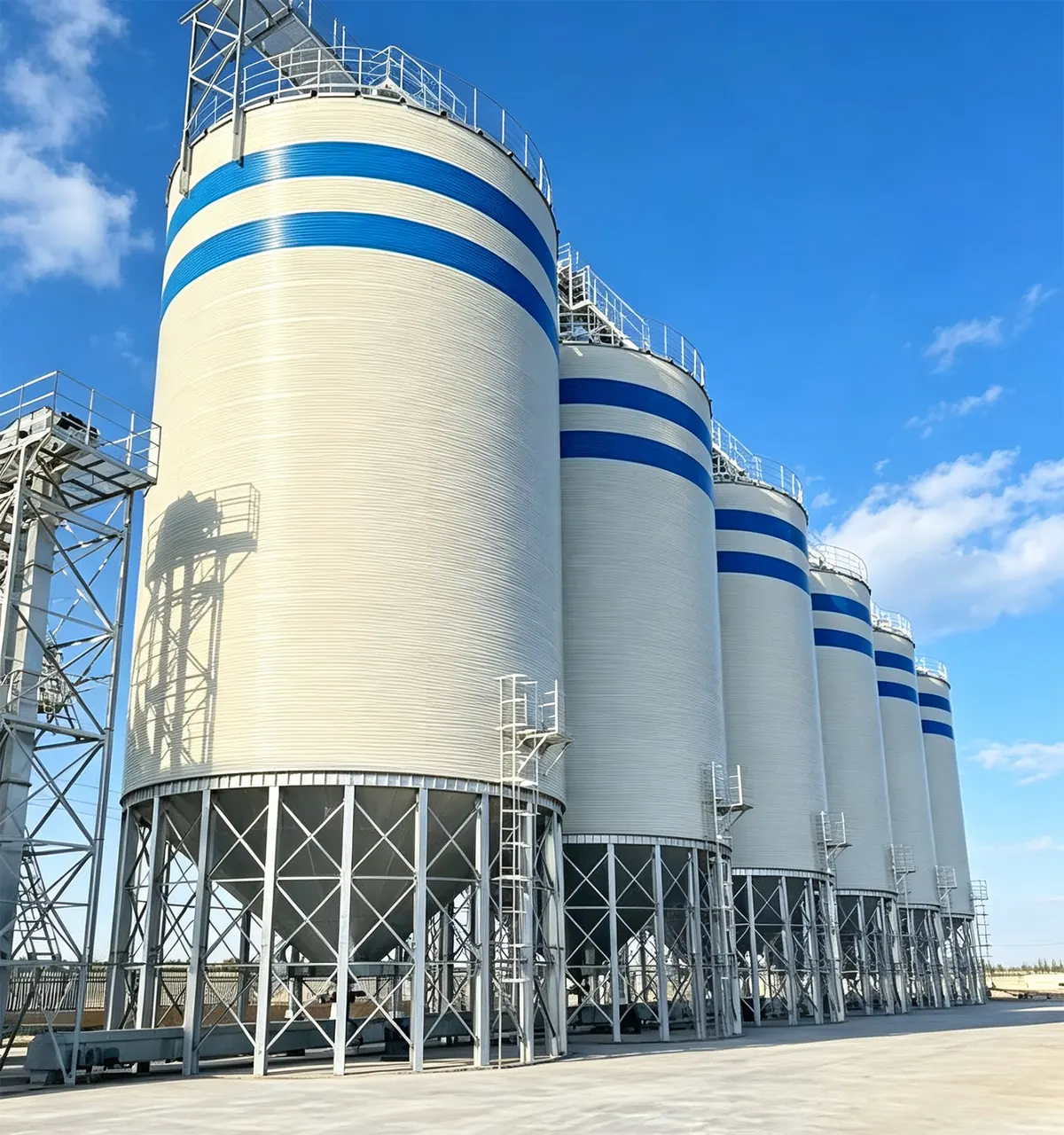
Wood Pellet Silo
Dust-controlled storage for biomass wood pellets
View Product →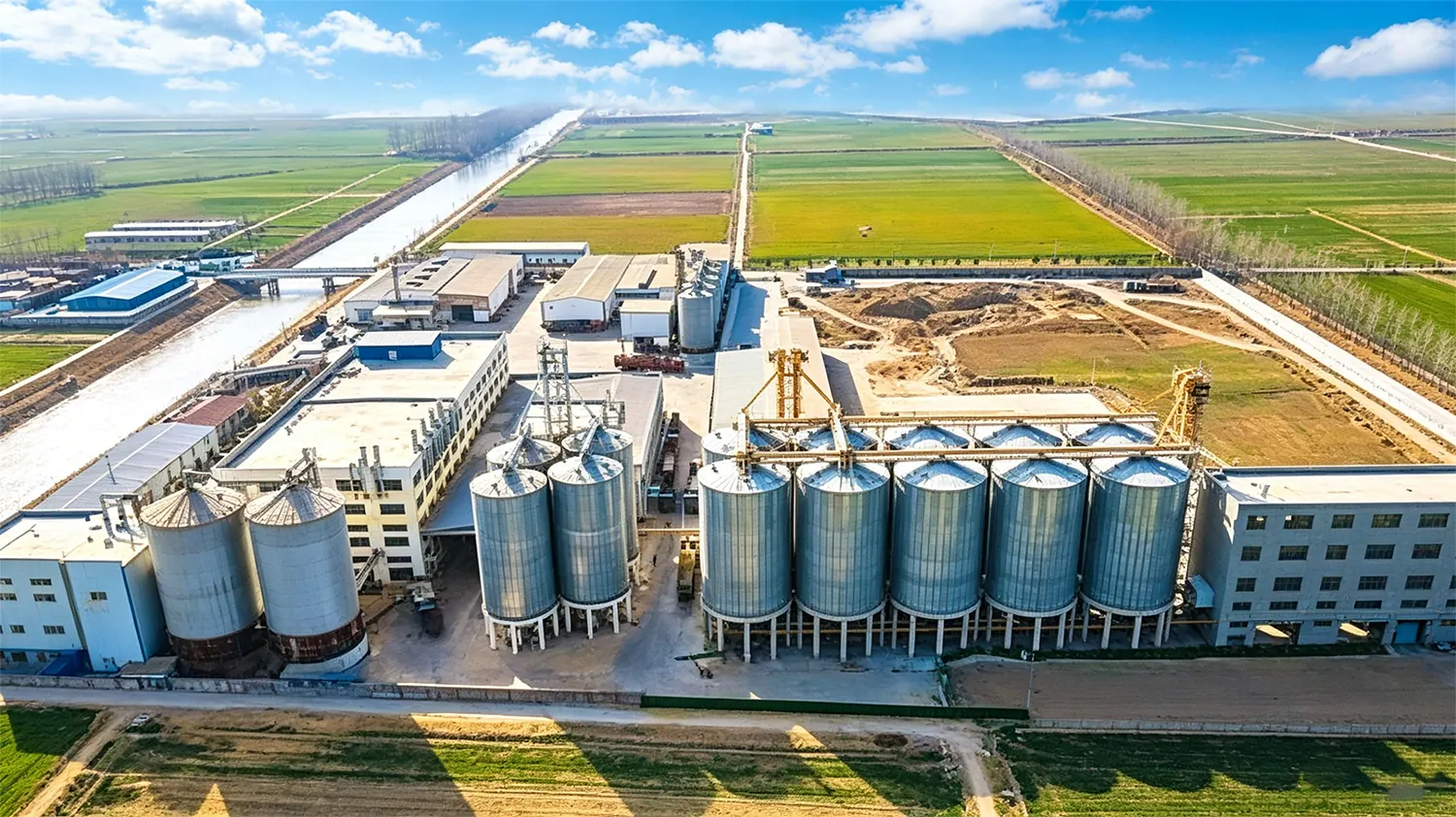
Commercial Silo
High-capacity storage for elevators, terminals and industrial users
View Product →
Feed Silo
Hygienic pellet & mash feed storage for feed mills and farms
View Product →Explore Storage Solutions
Corn Storage Solution
Complete storage systems for corn — from farm bins to export terminals
View Solution →
Wheat Storage Solution
Protect protein & milling quality with low-moisture storage
View Solution →Need help with wind & snow load design: engineering grain silos for extreme weather resilience?
Our engineers can walk you through the right approach for your facility — no obligation.
Talk to an Engineer Try the CalculatorOn This Page
- Why Wind & Snow Load Design is Critical for Grain Silo Structural Integrity
- Decoding the Engineering: ASCE 7 and Eurocode Standards for Silo Design
- Site-Specific Factors: Geography, Elevation, and Microclimates
- The Combined Load Effect: How Internal Grain Pressure Interacts with Wind and Snow
- Material Selection: High-Strength Steel and Advanced Galvanization for Extreme Weather
- Designing for the Future: Climate Change and Dynamic Weather Resilience
- Installation Essentials: Anchoring Systems and Weather-Tight Sealing
- Post-Storm Inspections and Long-Term Maintenance Strategies
- Cost vs. Risk: The ROI of Over-Engineering Grain Storage Silos
- Vetting Your Supplier: Engineering Certifications and Proven Track Records
- FAQs: Wind and Snow Load Design for Grain Storage