Gypsum looks like an easy material to store — it is cheap, inert-sounding, and arrives as a free-flowing grey powder or crushed rock. In practice, it is one of the most unforgiving bulk solids you will ever put in a silo. Moisture caking, cohesive arching, calcination drift, and acidic leachate have ended more gypsum Dust Explosion Prevention in Grain Storage Facilities: En... projects than any structural failure ever has.
Gypsum Storage Explained: Why This Seemingly Simple Bulk Material Punishes Poor Planning
Calcium sulfate dihydrate (CaSO₄·2H₂O) is chemically stable, non-combustible, and inexpensive. Those three facts tempt designers to treat gypsum Dust Explosion Prevention in Grain Storage Facilities: En... as a commodity problem: pour it in a bin, pull it out with a screw. The reality is that gypsum sits in an awkward middle ground between a free-flowing granular solid and a cohesive powder, and it shifts between those two behaviours depending on moisture, fines content, and consolidation time.
A gypsum pile that flows perfectly on Monday can bridge solid on Friday after a humid weekend. A silo that discharges cleanly at 8% moisture will rathole at 12%. A stockpile that was 98% dihydrate on delivery can be 15% hemihydrate after three weeks in a hot, sun-exposed pile. None of these failures show up in a structural calculation, and none of them are fixed by thicker Purchase High-Quality Steel Silo: An Engineer's Guide.
Good gypsum storage design starts with the material, not the vessel. You need a shear-test-derived flow function, a moisture specification you can actually enforce, and a discharge geometry sized for the worst-case condition rather than the average one. Everything else — silo type, aeration, reclaim equipment, pad drainage — follows from those three inputs.

Know Your Gypsum: Natural Rock, FGD Synthetic, Phosphogypsum, and Recycled Wallboard Compared
"Gypsum" describes at least four materially different feedstocks, and they behave nothing alike in storage. Specifying a single silo design for all of them is a guaranteed retrofit.
Natural Gypsum (Mined Rock)
Crushed to 0–25 mm or finer, natural gypsum is the most forgiving of the group. Particles are angular to sub-rounded, there is minimal fines generation, and free moisture is typically 1–5%. It classifies as a coarse, free-flowing to mildly cohesive solid. Storage is straightforward provided the hopper is steep enough and the outlet is generous.
FGD Gypsum (Flue Gas Desulfurization)
Synthetic gypsum from power plant scrubbers is fine — commonly 60–90% passing 75 µm — and arrives at 8–12% total moisture after vacuum belt dewatering. It is the single most troublesome grade to store. The fines are plate-like, the residual chloride and magnesium salts are hygroscopic, and the material consolidates into a plastic mass under its own head. FGD gypsum demands steep mass-flow hoppers, drained storage, and careful control of stockpile age.
Phosphogypsum
A byproduct of phosphoric acid production, phosphogypsum carries residual phosphoric acid, fluoride, and naturally occurring radionuclides. It is acidic (pH 2–5), often 15–25% moisture, and its leachate is aggressive to mild steel and to ordinary concrete. Storage must be lined, drained, and corrosion-protected, and handling is subject to site-specific radiological and environmental controls.
Recycled Wallboard Gypsum
Ground construction waste contains paper fibre, joint compound, and nails. Bulk density is low and variable, flowability is inconsistent, and the paper fraction introduces a combustible dust component that pure mineral gypsum does not have. Expect bridging and dust problems unless the paper is separated upstream.
| Gypsum Type | Typical Bulk Density | Typical Free Moisture | Angle of Repose | Storage Difficulty |
|---|---|---|---|---|
| Natural, crushed | 80–100 lb/ft³ (1.28–1.60 t/m³) | 1–5% | 30–35° | Low |
| FGD synthetic | 60–90 lb/ft³ (0.96–1.44 t/m³) | 8–12% | 35–45° | High |
| Phosphogypsum | 85–95 lb/ft³ (1.36–1.52 t/m³) | 15–25% | 35–40° | High (corrosive) |
| Recycled wallboard | 50–75 lb/ft³ (0.80–1.20 t/m³) | 2–8% | 35–45° | Medium–High |
Bulk Density, Angle of Repose, and Flowability: The Numbers Behind Every Gypsum Storage Decision
Three numbers drive the entire design. Get them wrong and no amount of clever detail work will save the project.
Bulk density sets vessel volume and structural loading, but it is not a single value. Loose-poured FGD gypsum may sit at 60 lb/ft³; after a month under 6 m of head it can consolidate to 85 lb/ft³ or more. Design for the consolidated figure and check the vessel's discharge and structural details against it.
Angle of repose is the slope a free-poured pile assumes — typically 30–35° for coarse natural gypsum and 35–45° for fine FGD material. It matters for stockpile footprint and for calculating live versus dead capacity in a silo, but it is a poor substitute for the angle of internal friction in hopper design.
Flowability is where gypsum storage is won or lost. Cohesion in gypsum comes from three sources: capillary bridges between particles at free moisture above roughly 2%, crystalline interlocking when dissolved sulfate recrystallizes during wet-dry cycling, and mechanical interlock in compacted fines. A proper Jenike shear test on a representative, moisture-conditioned sample gives you the flow function, the effective angle of internal friction, and the cohesive arching strength you need to size the outlet.
As a working rule for fine FGD gypsum, use mass-flow hoppers with walls at 60–70° from horizontal (steeper for the wettest grades), stainless or polymer-lined hopper surfaces, and an outlet at least three to four times the critical arching diameter derived from shear testing. Anything shallower should be expected to rathole.

Moisture, Humidity, and Free Water: The Three Fastest Ways to Ruin Stored Gypsum
Gypsum is not soluble in the way that fertilizer salts are, but it is slightly soluble — roughly 2 g/L at 20°C — and that is enough to cause serious trouble. Three mechanisms do the damage:
1. Free Surface Water
Rain ingress, washdown, and undrained stockpiles create free water that migrates downward and pools at the base of the pile. The base 300–500 mm becomes a compacted, recrystallized slab that will not discharge through any hopper. The fix is drainage and cover, not more vibration.
2. Humidity Cycling
Gypsum's critical relative humidity is high — near 98% — so pure gypsum tolerates ambient humidity well. But FGD and phosphogypsum carry chloride, magnesium, and sodium salts that deliquesce at 70–80% RH. In a humid climate, that means daily moisture absorption and re-drying cycles, each one welding particles together a little more firmly.
3. Condensation in Vessels
Warm, moist gypsum loaded into a cool steel silo condenses moisture on the inside wall. The result is wall build-up, a reduced live capacity, and a classic funnel-flow pattern. Insulating or ventilating the silo, or simply letting the material cool before transfer, prevents most of it.
Practical control targets: keep delivered FGD gypsum below 10% total moisture and allow 48–72 hours of drainage before reclaim; cover all long-term storage; and specify a moisture limit in your purchase contract, not just a chemistry specification.
Choosing Your Gypsum Storage System: Silos, Domes, Flat Storage Buildings, or Open Stockpiles
There is no universal best vessel. The right choice is driven by throughput, moisture, and how long the material will sit.
| Storage Type | Best For | Key Advantages | Watch-Outs |
|---|---|---|---|
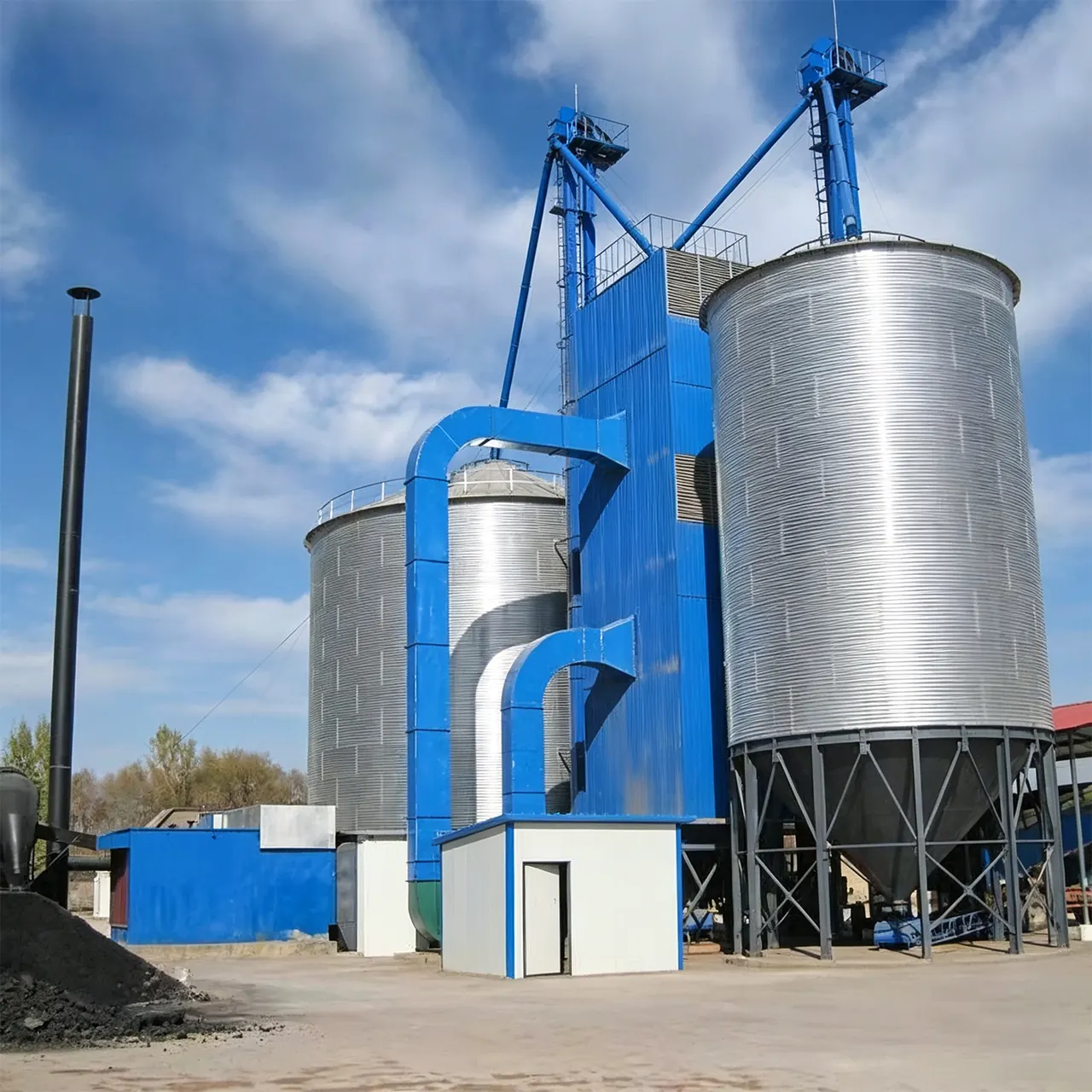
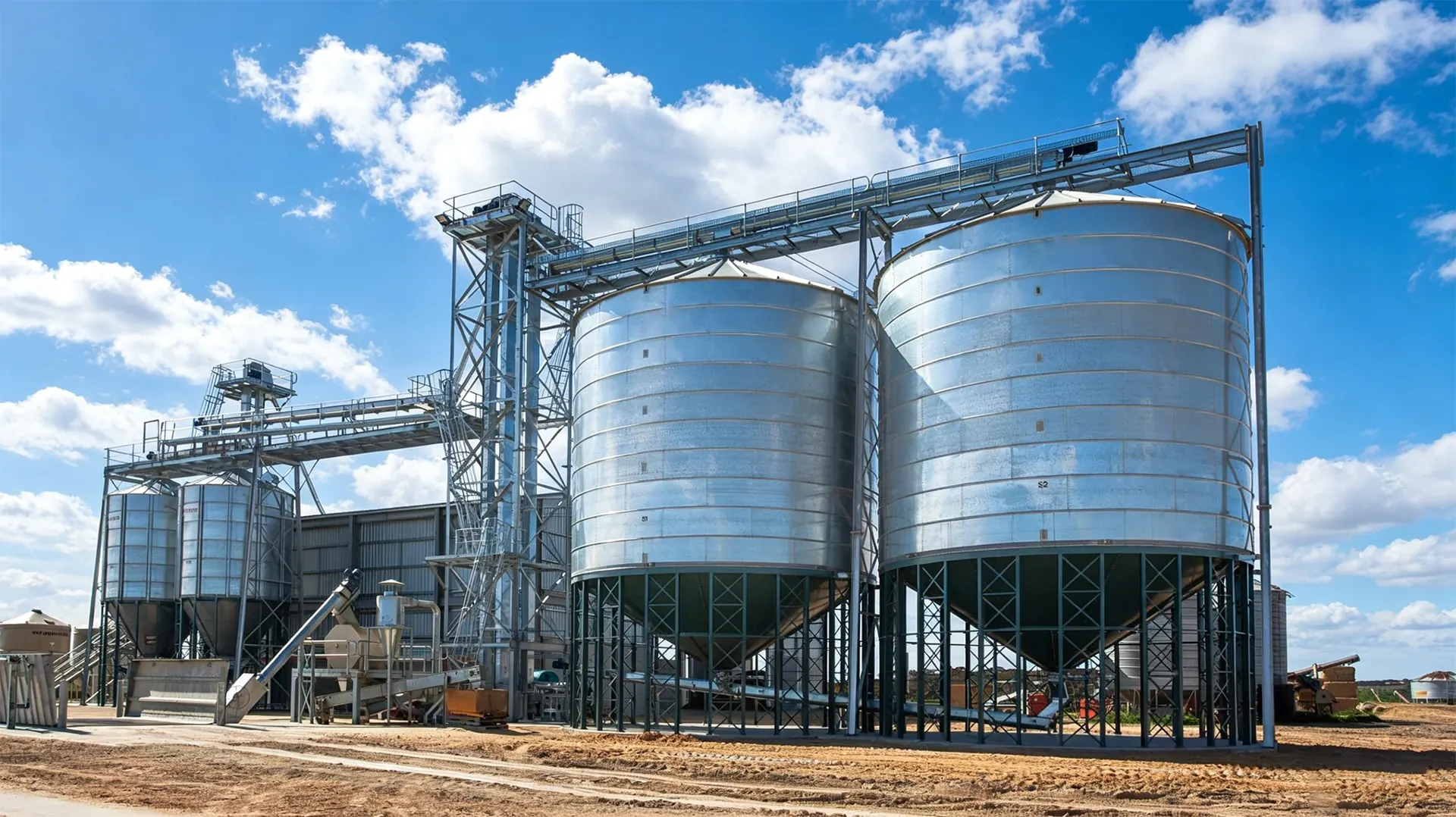
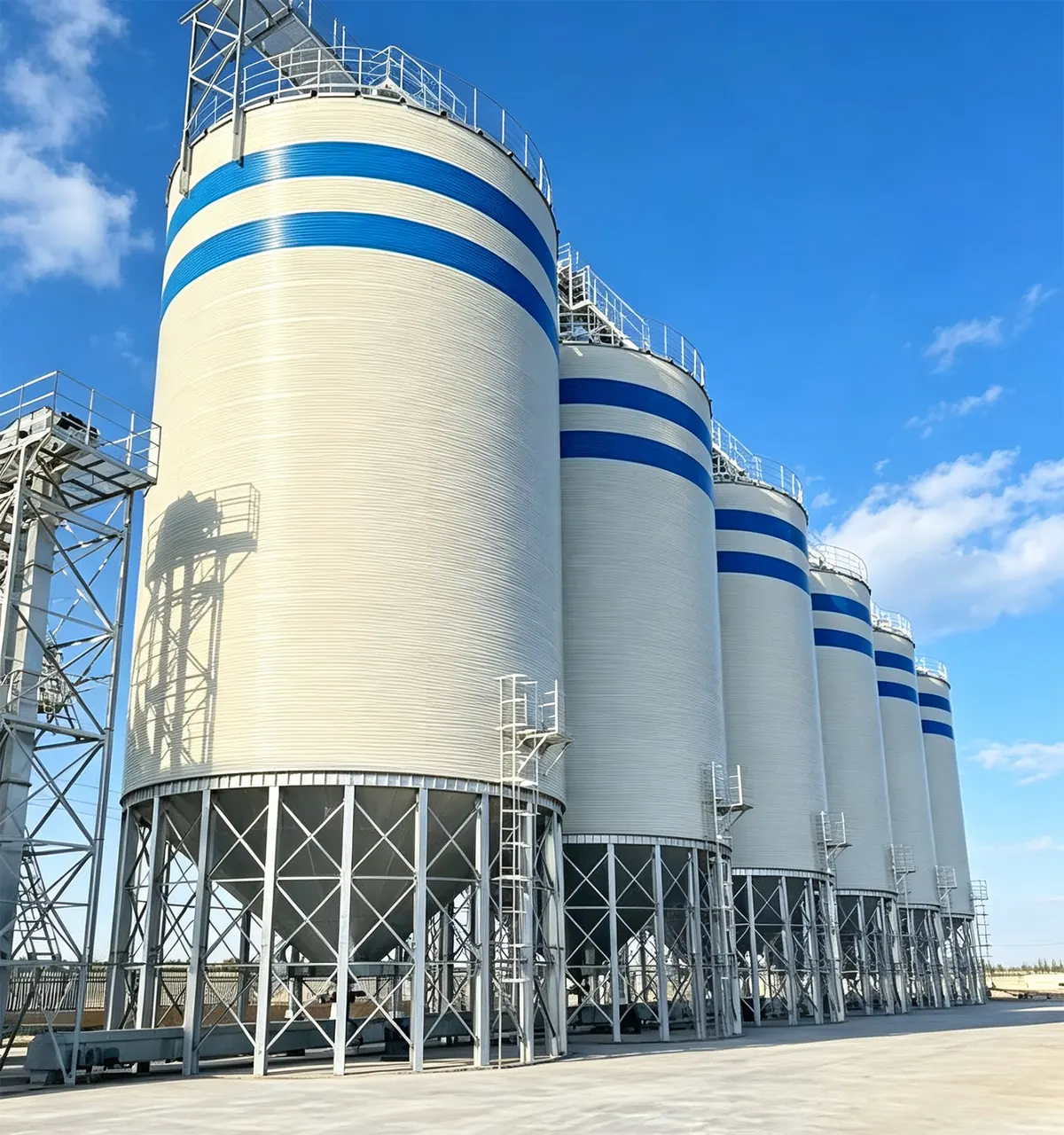
| Steel silo (mass flow cone) | Dry, consistent feed; process dosing | Reliable first-in-first-out, dust containment, small footprint | Needs shear-tested hopper design; condensation risk |
| Concrete silo / hopper | High capacity, heavy throughput | Durable, high thermal mass, low maintenance | Acidic grades require liners; slow to modify |
| Dome or covered bunker | Large volume, loader reclaim | Good weather protection at lower cost per tonne | Dead piles in corners; requires good drainage |
| Flat storage building | Flexible, mixed grades | Low capital, easy inspection, loader access | Poor FIFO; dust and spillage control needed |
| Open stockpile | Short-term, quarry-side | Lowest cost | Rain, wind loss, recrystallized base, no FIFO |
For FGD and phosphogypsum, covered storage is not optional — it is the difference between a working system and an annual cleanout. For dry, coarse natural gypsum destined for short-cycle use, an open stockpile with a properly drained pad can be entirely acceptable.
Ratholes, Bridging, and Dead Piles: Solving Gypsum Flow Problems in Silos and Hoppers
Gypsum fails in three recognisable patterns, and each has a specific remedy.
Ratholing
A stable vertical channel forms above the outlet while material around it stays static. It is the signature of funnel flow and cohesive strength. Remedies: convert to mass flow with a steeper, lower-friction hopper; reduce the stored head by lowering the fill line; and avoid long static periods with a full silo.
Arching and Bridging
A cohesive arch spans the outlet and stops discharge entirely. It is a direct consequence of an undersized outlet relative to the material's arching strength at the actual moisture content. The only engineering answer is a larger outlet — typically 3–4× the critical arching diameter — or a mechanical assist such as a bin activator or air cannon used as a supplement, never as the primary design.
Dead Piles
In flat storage and bunkers, material in corners and against walls never moves. It ages, calcines, and eventually contaminates fresh deliveries. Design the building with a discharge trench or a shaped, sloped floor so that at least 85% of the stored volume is reclaimable.
Also watch for wall friction. Fine gypsum consolidates hard against steel walls, and the resulting friction can carry a surprising share of the vertical load — something that must be accounted for in both structural and flow design.