
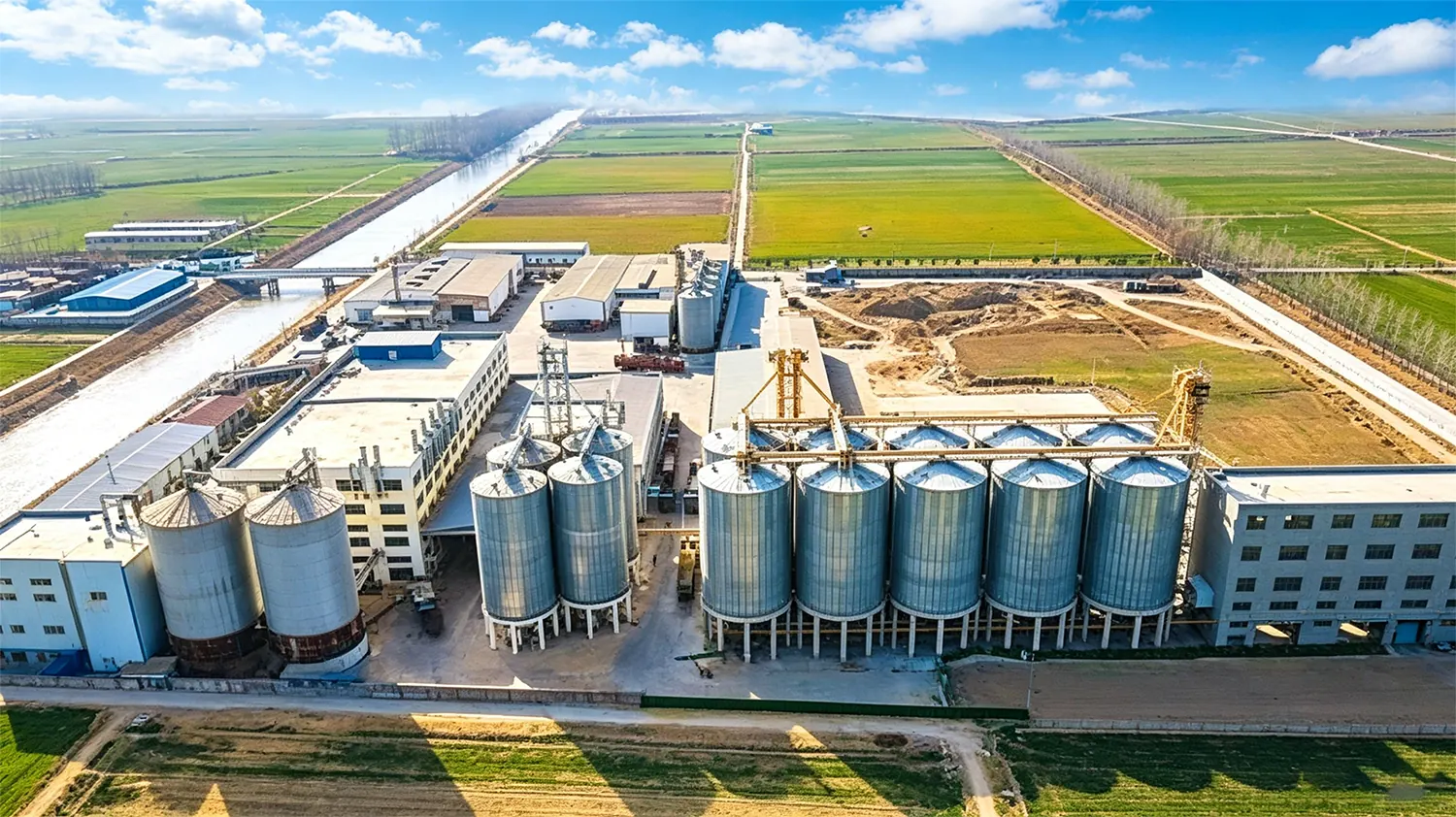
Industry Overview
Why Operators Choose ManXing
Engineered Throughput
Capacity matched to your daily intake and dispatch volume.
Grain Quality Protection
Aeration, monitoring and drying preserve moisture and grade.
Turnkey Delivery
Design, manufacture, ship, install and commission — one partner.
Global References
Proven across tropical, arid and cold-climate operations.
Detailed Application Notes
Food & Feed Processing: Engineered Storage for Ingredient Integrity
With over 20 years of experience serving the global food and feed processing industries, Manxing understands that ingredient storage is not a passive link in the production chain — it is an active quality-control system. Processors handling grains, oilseeds, pulses, and specialty ingredients face a unique set of demands: every ton that enters storage must exit with its nutritional profile, moisture content, and sanitary condition fully preserved. This article outlines the core challenges food and feed processors face and presents Manxing's engineered solutions designed to protect ingredient value from intake to discharge.
Industry Overview: Why Storage Performance Directly Impacts Processing Margins
The food and feed processing sector operates on tight margins where ingredient quality directly determines finished product quality. A single batch of spoiled or contaminated grain can halt production lines, trigger recalls, and damage brand reputation. According to industry studies, post-harvest losses in improperly managed storage facilities can reach 5–15% of total volume, representing millions of dollars in annual losses for mid-size processors.
Modern processors require storage systems that do more than hold material. They need bins and silos that facilitate first-in-first-out inventory rotation, maintain target moisture levels within ±0.5%, prevent cross-contamination between lots, and enable rapid, complete discharge without residual buildup. These requirements are non-negotiable in facilities producing human-grade food ingredients, pet food, aquafeed, and livestock feed where regulatory compliance and traceability are mandatory.
Specific Challenges in Food and Feed Ingredient Storage
1. Moisture Migration and Hot-Spot Formation
Grain and processed ingredients are hygroscopic — they continuously exchange moisture with surrounding air. In a sealed bin, temperature differentials between the grain mass and ambient air drive moisture migration, creating condensation zones where mold and mycotoxin development accelerate. For processors storing ingredients at 12–14% moisture content, even a 1% moisture increase can push material beyond safe storage thresholds, risking total loss of a 500-ton lot valued at $150,000 or more.
2. Residual Material and Cross-Contamination
Flat-bottom bins with inadequate discharge angles leave 3–8% of stored material behind after each emptying cycle. This residual grain becomes a breeding ground for insects, mold, and bacterial contamination. When a new lot is loaded, the contaminated residue compromises the entire batch. For processors managing allergen-sensitive ingredients or organic-certified products, even trace cross-contamination can result in rejected shipments and lost certifications.
3. Dust Control During Material Handling
Open conveyor systems generate significant dust during grain transfer operations. In food processing facilities, airborne grain dust poses explosion hazards, creates unsanitary conditions, and leads to product loss. Processors handling powdered ingredients, milled grains, or protein meals must maintain dust levels below 20 mg/m³ to comply with occupational safety standards and food safety regulations.
4. Traceability and Lot Segregation
Regulatory frameworks including FSMA, HACCP, and GFSI-benchmarked standards require processors to maintain complete lot traceability. This demands physical separation of different ingredient lots, harvest dates, and supplier sources. Without dedicated storage infrastructure, processors struggle to demonstrate chain-of-custody documentation during audits and recalls.
5. Cleaning and Sanitation Access
Food-grade storage equipment must support thorough cleaning protocols including dry cleaning, wet washing, and sanitization. Equipment with internal ledges, bolt-on attachments, or inaccessible corners traps material and moisture, undermining sanitation efforts. Processors operating under SQF or BRC standards require equipment that can be cleaned and inspected within defined maintenance windows without specialized tools.
Manxing Solutions: Engineered for Processing-Grade Performance
Manxing has developed a comprehensive product portfolio addressing each of these challenges through purpose-built engineering. Every solution is designed with food and feed processors' operational realities in mind — from 24/7 production schedules to stringent sanitation requirements.
Self-Cleaning Hopper-Bottom Bins
Manxing's hopper-bottom storage bins feature steep 55°–60° hopper angles engineered for complete, gravity-driven discharge. Unlike flat-bottom systems that leave material behind, these bins achieve 99.5% emptying efficiency, eliminating residual buildup that causes contamination. The smooth interior surfaces — available in galvanized steel, powder-coated finishes, and 304/316 stainless steel — prevent material adhesion and support rapid cleaning cycles.
Available in capacities ranging from 5 to 200 tons, these bins are ideal for processors requiring segregated lot storage. A typical mid-size feed mill operating 20–40 ingredient bins can maintain full traceability while minimizing the floor space required for storage infrastructure. Each bin is equipped with level sensors, temperature monitoring cables, and aeration ports to support active quality management.
Enclosed Conveying Systems for Dust-Free Transfer
Manxing's enclosed drag conveyors and chain conveyors provide dust-tight material transfer between intake, cleaning, storage, and processing stages. These systems feature sealed housings with gasketed access panels, reducing dust emissions by over 95% compared to open belt or auger systems. Capacities range from 10 to 300 tons per hour, covering everything from specialty ingredient dosing to high-volume grain transfer.
The enclosed design also protects material from external contamination during transfer — critical for processors handling food-grade ingredients in facilities where multiple products share common conveying routes. Manxing engineers each conveyor route with minimal transfer points, reducing material degradation and dust generation at each transition.
Cleaning and Grading Equipment
Incoming ingredients rarely arrive at processing specifications. Manxing offers integrated cleaning and grading systems that remove impurities, foreign material, and damaged kernels before storage. Vibratory screens, destoners, and gravity separators process material at rates of 5–50 tons per hour, ensuring that only clean, uniform product enters storage bins.
This pre-storage processing step is essential for maintaining ingredient quality throughout the storage period. By removing fines, broken kernels, and foreign matter — which are primary sites for mold growth and insect infestation — processors can extend safe storage duration by 30–50% and reduce the frequency of bin cleaning and fumigation.
Food-Grade Material Options
Manxing offers storage and handling equipment in multiple material configurations to meet food-grade requirements. Galvanized steel bins with food-safe interior coatings provide cost-effective storage for bulk grains and feed ingredients. For processors handling acid-sensitive ingredients, high-moisture materials, or products requiring frequent washdown, Manxing's stainless steel bins and conveyors deliver superior corrosion resistance and sanitation performance.
All food-grade configurations feature smooth weld finishes, radiused corners, and CIP-compatible designs where applicable. Manxing's engineering team works with processors to select the optimal material specification based on ingredient characteristics, cleaning protocols, and regulatory requirements.
Aeration and Temperature Management Systems
Proper aeration is the most cost-effective method for maintaining grain quality during storage. Manxing's aeration systems deliver controlled airflow through the grain mass — typically 0.1–0.2 CFM/bushel for natural aeration and 0.5–1.0 CFM/bushel for drying applications. By maintaining grain temperatures below 15°C (59°F) and moisture levels within target ranges, processors can store ingredients for 6–12 months without quality degradation.
Manxing integrates temperature monitoring cables with real-time data logging, enabling processors to detect hot spots before they develop into quality failures.
Recommended Storage Solutions
Corn Storage Solution
Complete storage systems for corn — from farm bins to export terminals
View Solution →Wheat Storage Solution
Protect protein & milling quality with low-moisture storage
View Solution →Equipment Used in Food & Feed Processing
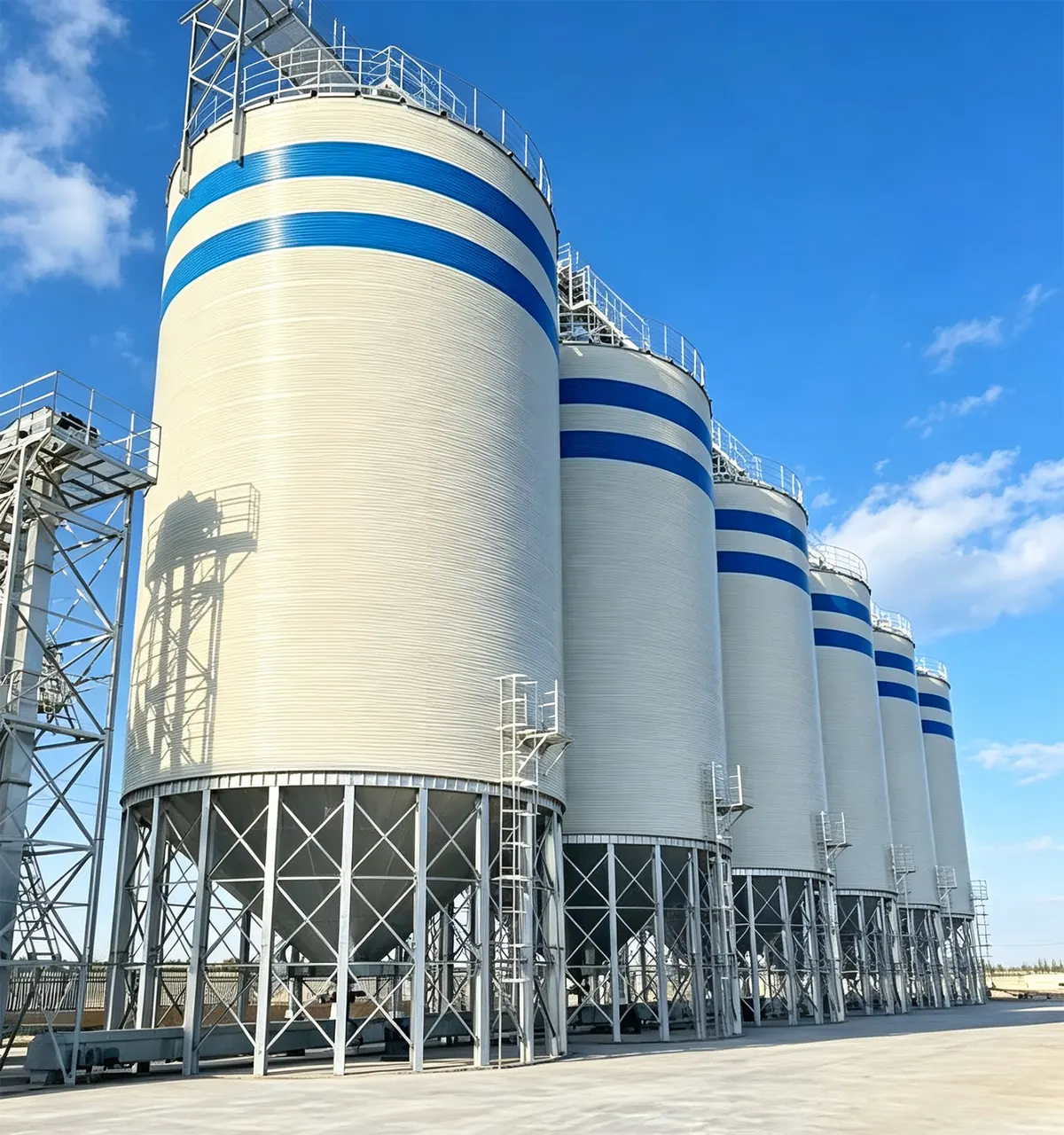
Wood Pellet Silo
Dust-controlled storage for biomass wood pellets
View Product →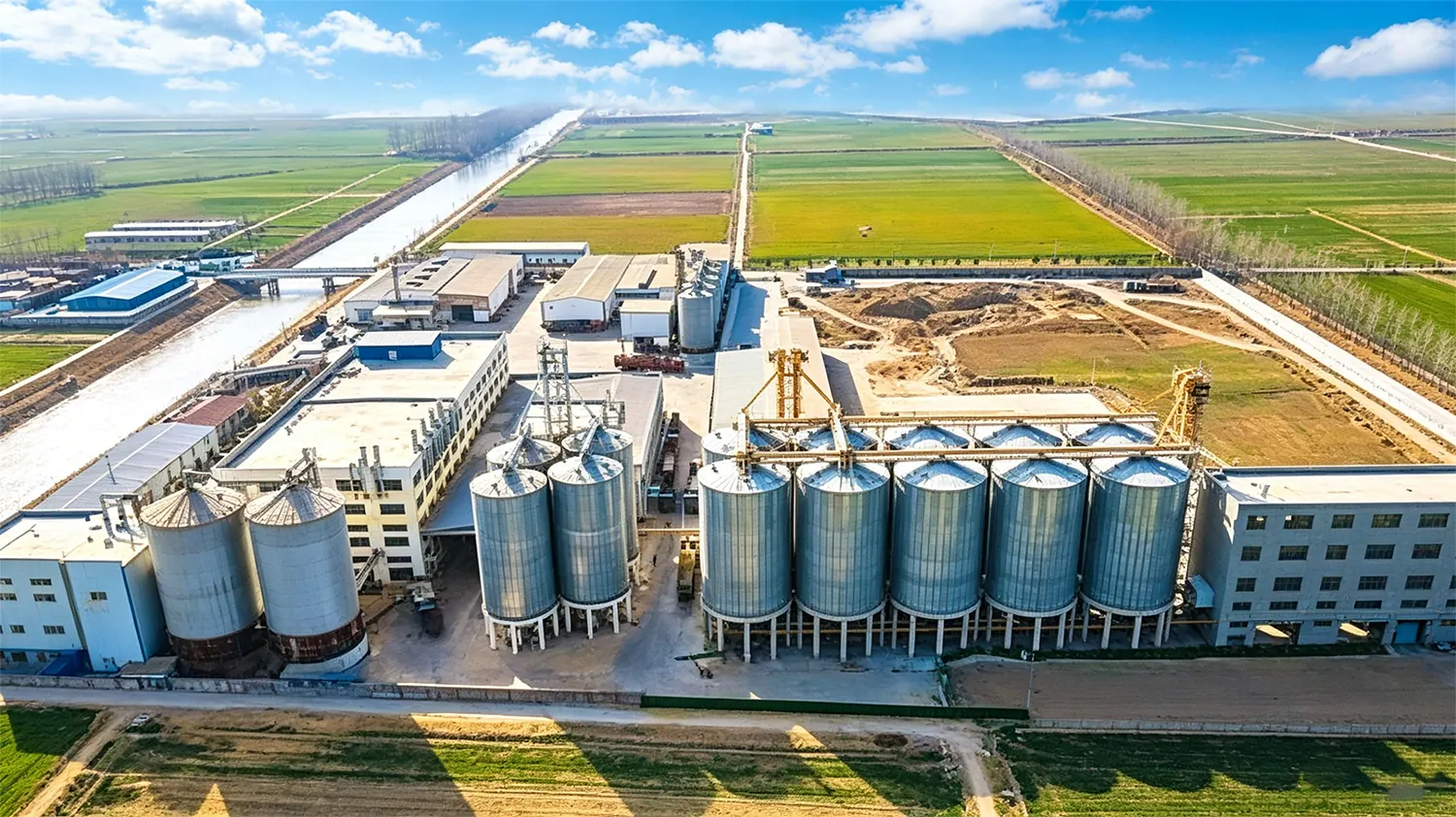
Commercial Silo
High-capacity storage for elevators, terminals and industrial users
View Product →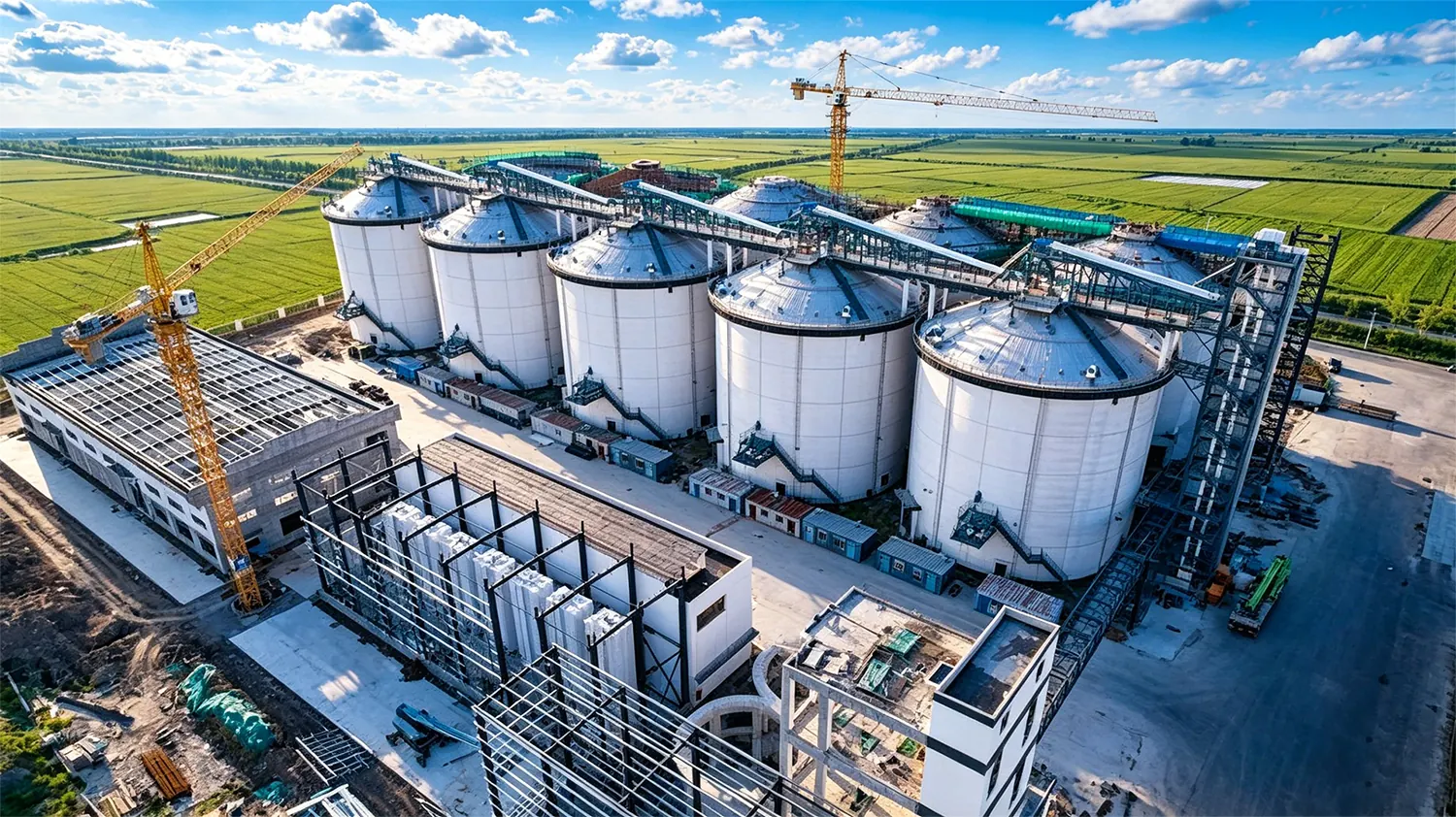
Feed Silo
Hygienic pellet & mash feed storage for feed mills and farms
View Product →Related Case Studies
6×5000Ton Grain Storage for Grain Traders — Nigeria
Nigeria · Commercial Grain Depot
Read Case Study →
5×2000T Grain Silos Project — Philippines
Philippines · Agricultural Processing & Feed Production
Read Case Study →
4×2500T High-Capacity Maize Grain Handling & Storage Facility — Rwanda
Eastern Province, Rwanda · Commercial Grain Elevator & Feed Mill
Read Case Study →Related Knowledge Articles
Mastering Grain Bin Capacity Calculation: Precision Storage Formulas
Mastering Grain Bin Capacity Calculation: Precision Storage Formulas Mastering Grain Bin Capacity Calculation: Precision Storage Formulas Accurate grain bin...
Read Article →Foundation Design for Grain Bins: A Complete Engineering Guide
Foundation Design for Grain Bins: A Complete Engineering Guide When evaluating grain storage bins for sale, the structural integrity of the foundation is the most critical factor in ensuring long-term...
Read Article →Solutions for Food & Feed Processing
Let us help you design the right storage system for your operation.
Get a Quote Try the CalculatorOther Industries
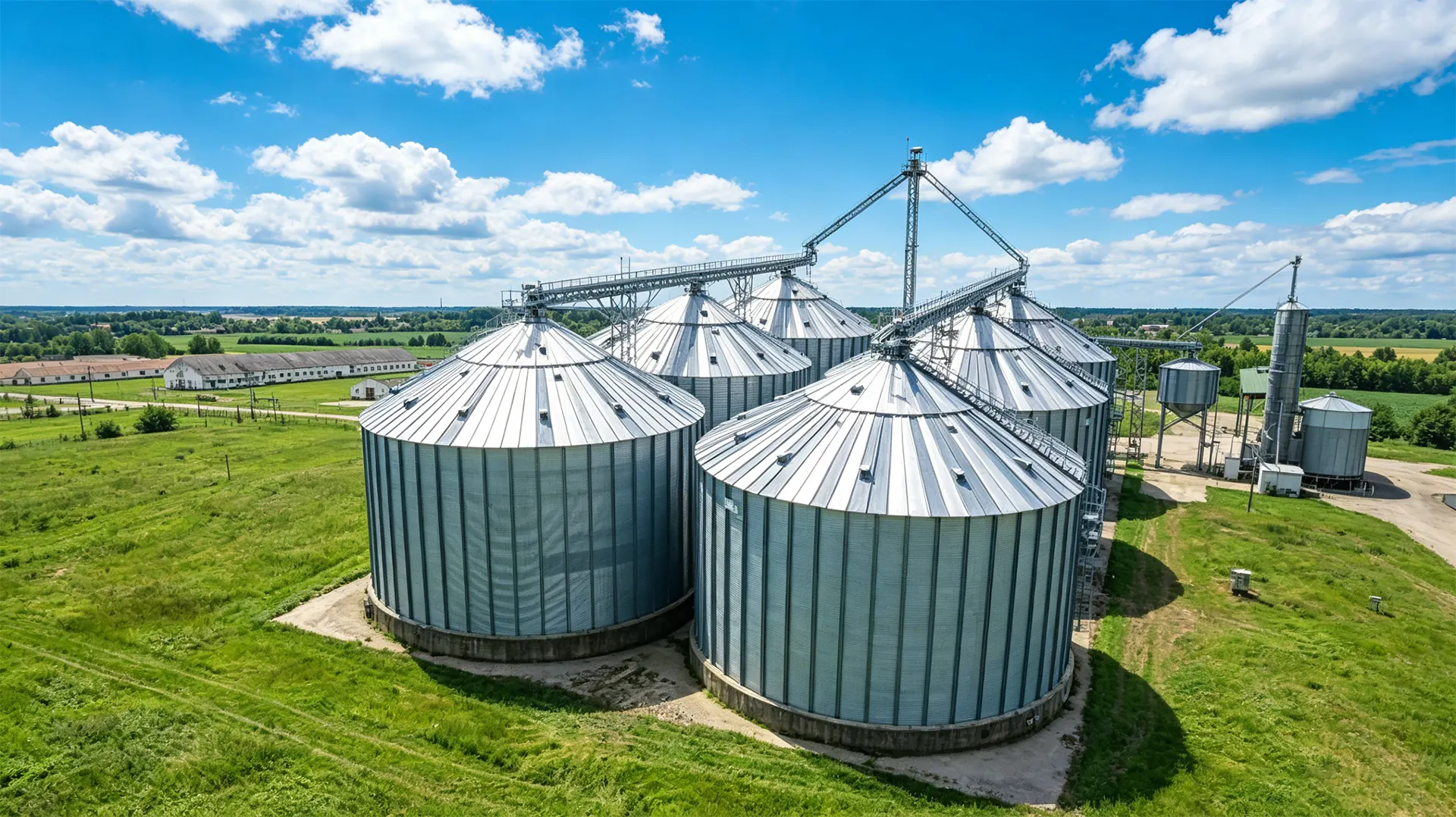
On-Farm Storage
Practical, cost-effective storage for growers
View Industry →
Commercial Grain Elevator
High-throughput storage for elevators and marketers
View Industry →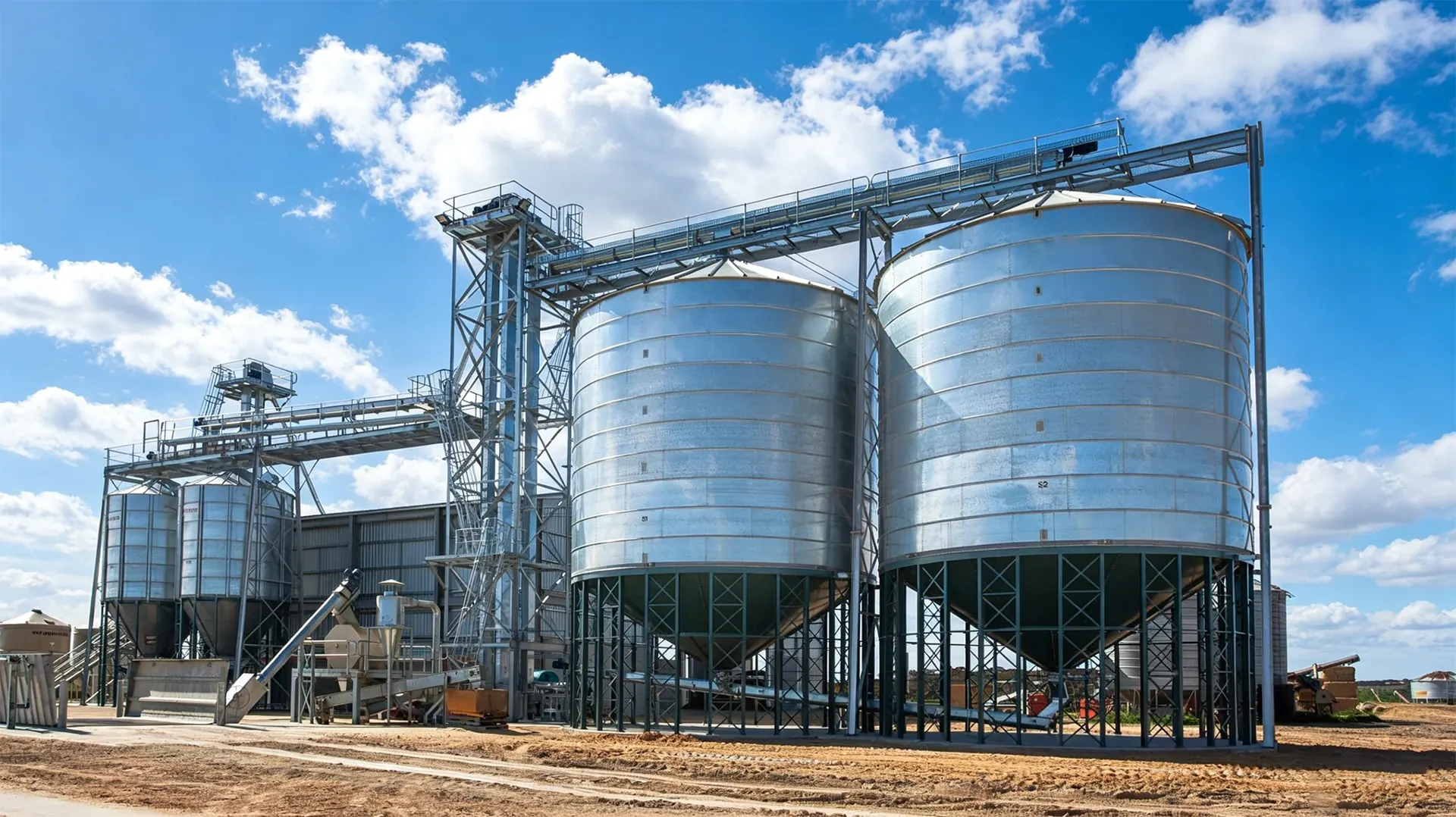
Agricultural Cooperative
Shared storage that serves many members
View Industry →
Export Terminal
Large-scale storage for bulk export markets
View Industry →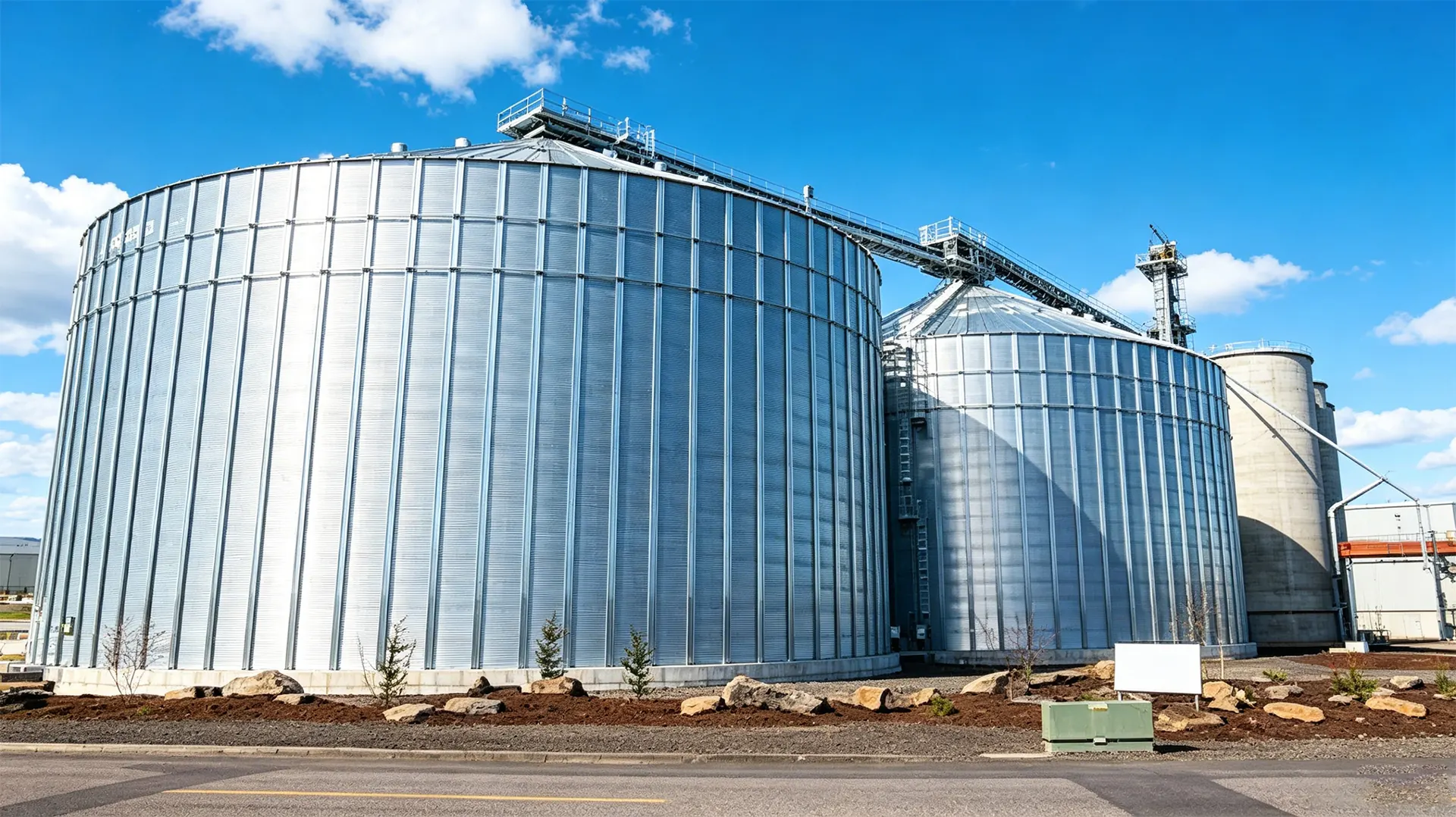
Seed Storage
Precision storage that protects seed viability
View Industry →