Ensuring the long-term viability of harvested corn requires a precise intersection of agricultural timing, structural engineering, and environmental control. This comprehensive guide explores the critical methodologies for preserving corn quality from the moment of harvest through extended Dust Dust Explosion Prevention in Grain Storage Facilities: En... Prevention in Grain Storage Facilities: En... periods, providing a vital resource for operators and engineers alike. With global corn production exceeding 1.2 billion metric tons annually, even a 1% reduction in post-harvest losses represents billions of dollars in preserved value — making proper storage engineering not merely an operational concern, but a critical economic imperative.
Introduction: Why Proper Corn Storage Matters for Long-Term Grain Quality and Profitability
Corn is a hygroscopic organic material, meaning it naturally exchanges moisture with the surrounding air. Without engineered Dust Dust Explosion Prevention in Grain Storage Facilities: En... Prevention in Grain Storage Facilities: En... environments, corn is highly susceptible to mold, insect infestation, and mycotoxin development. For agricultural businesses, post-harvest losses can erode profit margins significantly — studies indicate that improperly stored corn can lose 2-5% of its total mass within the first year, with quality discounts at delivery points further compounding financial losses. Mycotoxin contamination, particularly aflatoxin and fumonisin, can render entire lots unsaleable for food or feed use, triggering costly regulatory interventions and liability exposure.
Implementing a scientifically sound storage strategy protects the commodity, allows farmers to capitalize on market price fluctuations, and ensures food safety compliance. This guide serves as a foundational resource, much like a complete corn storage guide from harvest to long term storage pdf, offering actionable engineering insights for operators at every scale. The principles outlined here apply equally to on-farm storage facilities handling a few thousand bushels and to commercial Dust Dust Explosion Prevention in Grain Storage Facilities: En... Prevention in Grain Storage Facilities: En... terminals managing millions of bushels across interconnected silo complexes.
Modern corn storage engineering integrates structural design, airflow dynamics, moisture science, and automated monitoring into a unified system. Understanding each component — and how they interact — is essential for designing storage infrastructure that preserves grain quality, minimizes energy consumption, and maximizes return on investment over a facility's 30- to 50-year operational lifespan.
Harvest Timing and Moisture Management: Setting the Stage for Safe Corn Storage
The foundation of successful corn storage begins in the field. Harvesting corn at the optimal moisture content is critical; however, field drying is highly dependent on regional climate conditions. While corn can be harvested at higher moisture levels to reduce field losses and mechanical damage, it must be mechanically dried before it enters long-term storage. The relationship between harvest moisture, drying costs, and storage safety forms a complex optimization problem that operators must solve each season based on local weather patterns, energy prices, and market timing.

Optimal Moisture Levels for Harvest
For mechanical drying systems, corn is typically harvested between 20% and 25% moisture. Harvesting above 25% increases the risk of mechanical damage to the kernels, which accelerates spoilage and creates fine material that obstructs airflow through the grain mass. Once harvested, the corn must be dried rapidly to prevent microbial growth. Utilizing a corn storage moisture chart is essential for determining the exact safe moisture content relative to the intended storage duration and ambient temperature.
Operators should invest in calibrated moisture measurement equipment — either near-infrared (NIR) analyzers for laboratory-grade accuracy or capacitive moisture meters for rapid field testing. Taking multiple samples from each load during harvest provides a statistical basis for blending strategies and drying program selection. The test weight of the corn, measured in pounds per bushel, also serves as a key quality indicator; corn testing below 54 lbs/bu may suffer discounts at delivery and often correlates with higher breakage susceptibility during handling.
| Storage Duration | Maximum Safe Moisture Content | Target Grain Temperature |
|---|---|---|
| Less than 6 months | 15% | 60°F (15°C) |
| 6 to 12 months | 14% | 50°F (10°C) |
| More than 12 months | 13% | 40°F (4°C) |
Understanding Corn Storage Systems: Silo Types, Capacities, and Structural Design
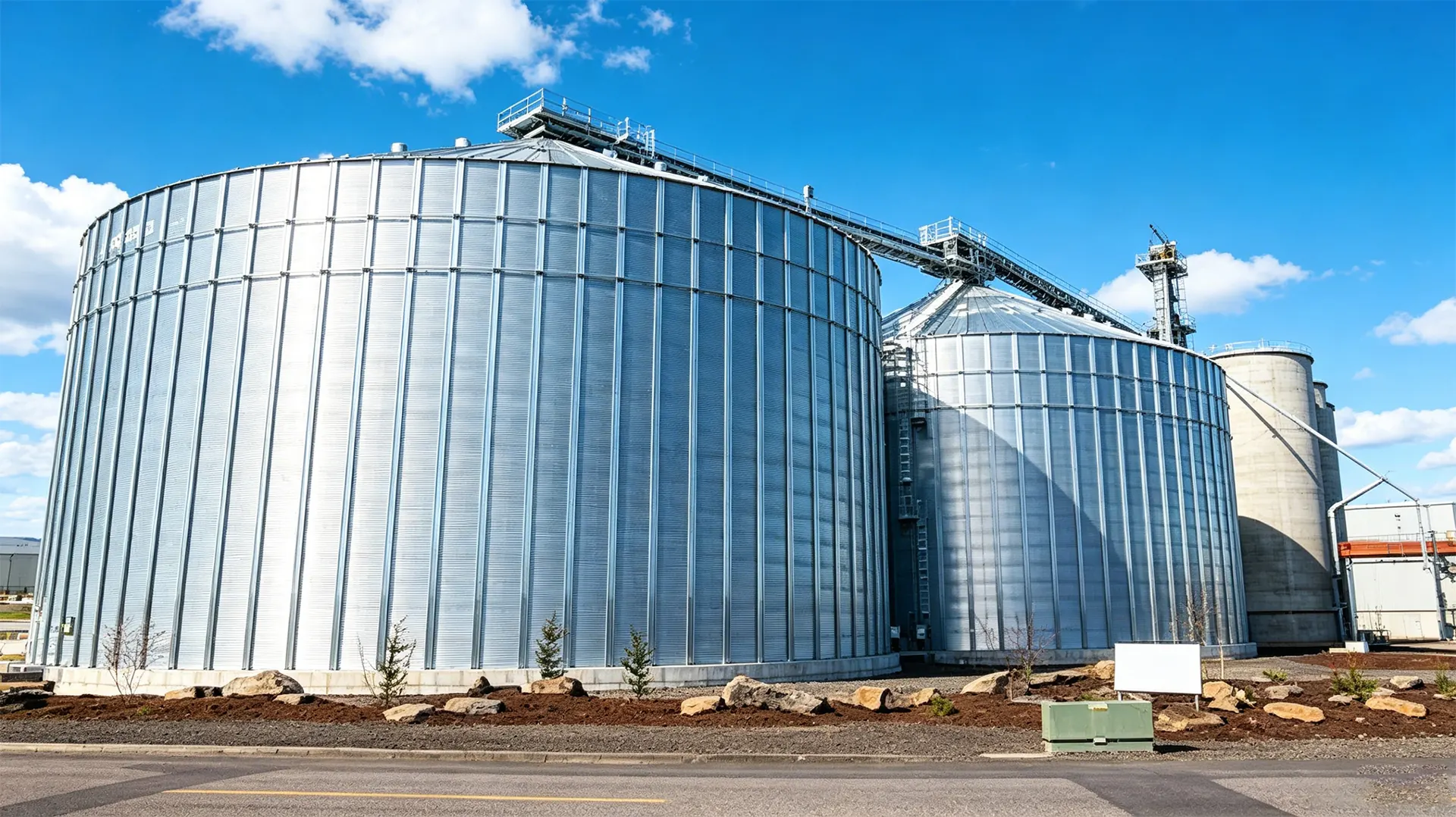
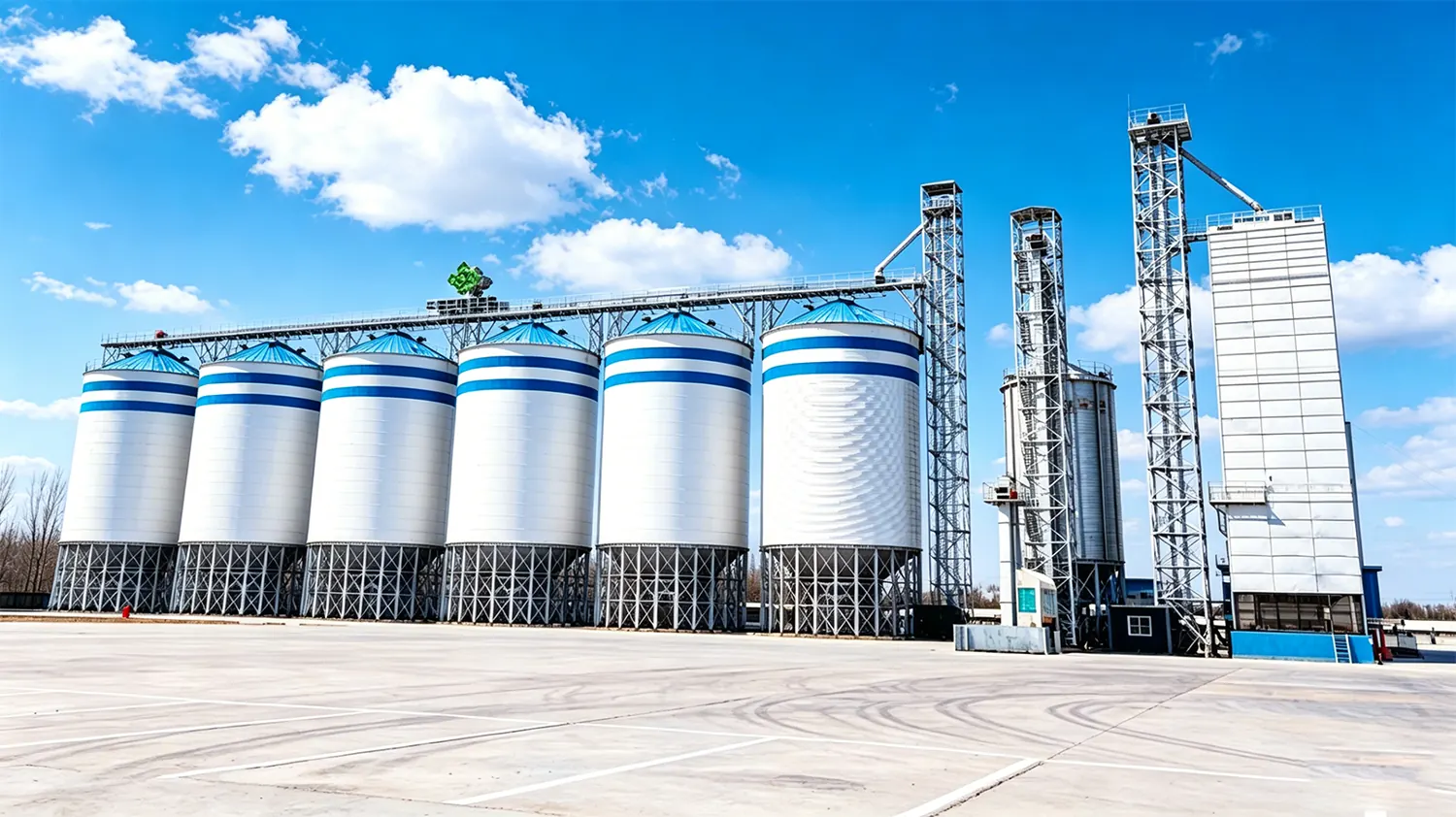
Selecting the appropriate corn storage building is a major capital investment that dictates operational efficiency for decades. The primary structural options for bulk corn storage include flat-bottom silos, hopper-bottom silos, and large-span flat warehouses. The choice depends on capacity requirements, throughput needs, and site constraints. Each configuration presents distinct advantages in terms of capital cost per bushel stored, operational flexibility, and maintenance requirements.
Flat-Bottom vs. Hopper-Bottom Silos
Flat-bottom silos are ideal for large-scale, long-term storage capacities exceeding 5,000 metric tons. They feature a completely flat concrete foundation and rely on automated sweep augers for final clean-out. These structures typically range from 15 to 45 meters in diameter and can store up to 20,000 metric tons in a single unit. The flat foundation simplifies construction and reduces per-bushel capital costs, but requires mechanical sweep augers to recover the final 15-20% of stored grain after gravity flow ceases.
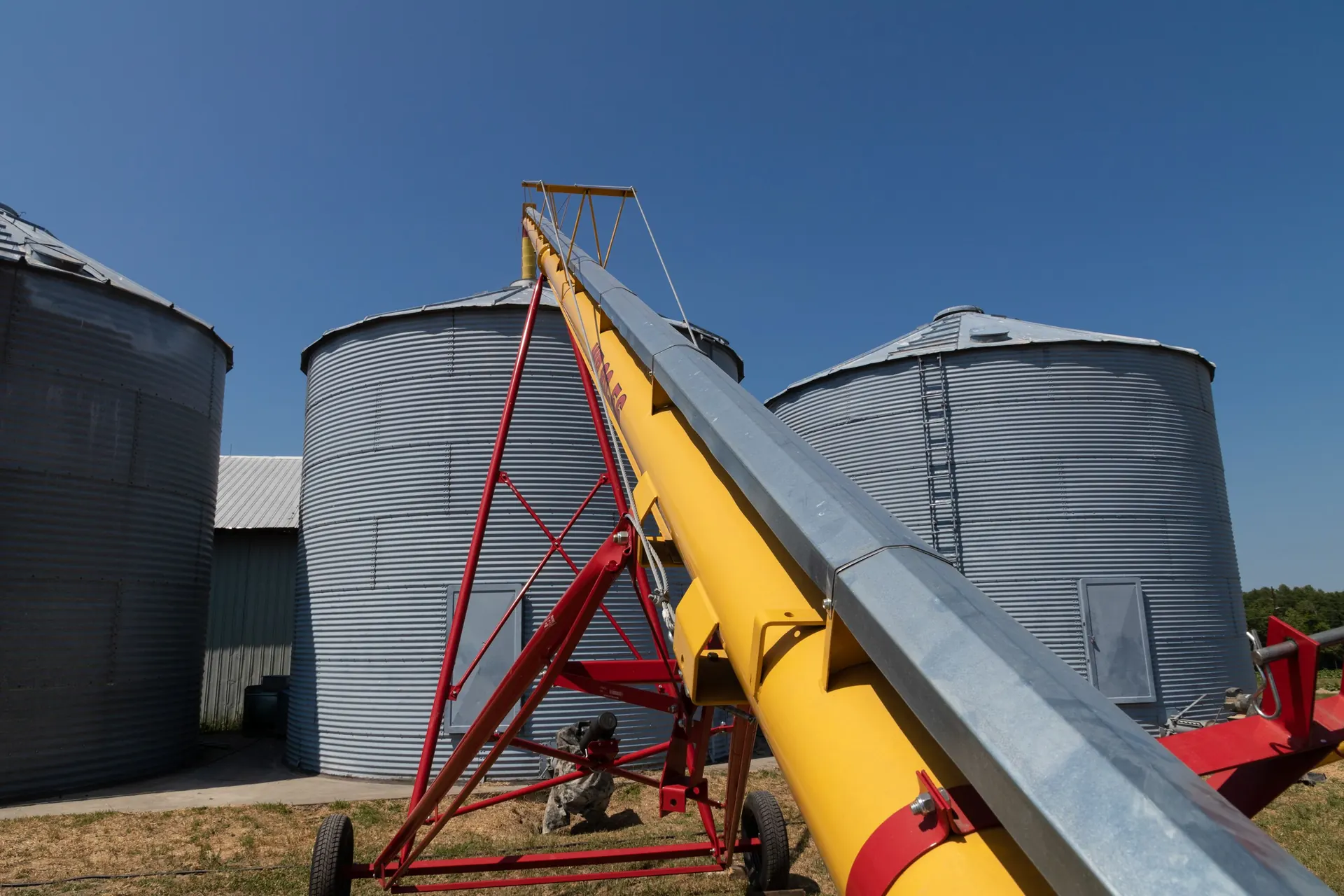
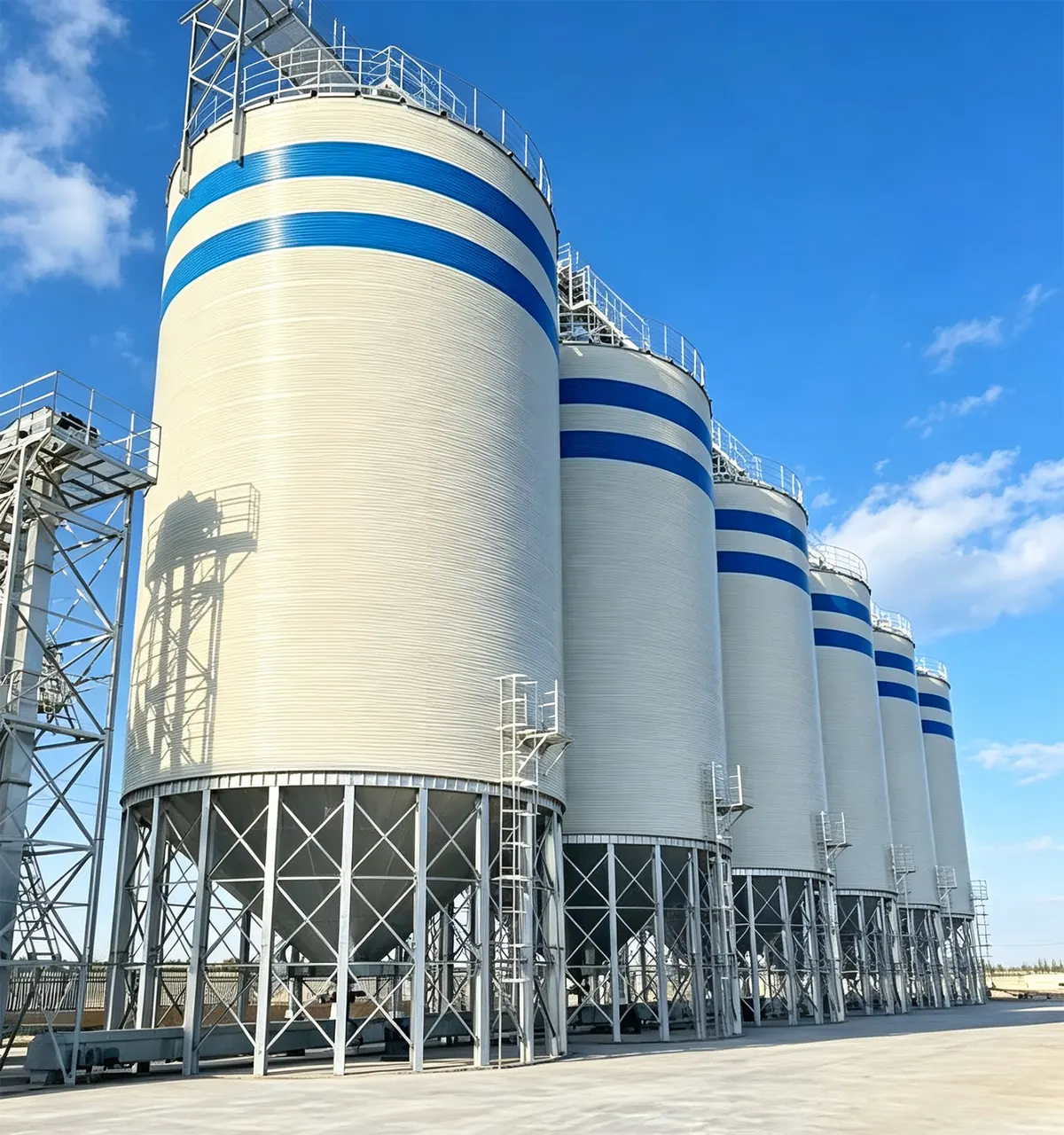
Hopper-bottom silos, featuring a conical or pyramidal base, are better suited for smaller capacities and applications requiring 100% gravity discharge, such as seed corn processing or continuous feed operations. The hopper slope angle must exceed the angle of repose of corn (approximately 20-22 degrees from horizontal) to ensure reliable mass flow discharge. While hopper-bottom designs eliminate the need for sweep augers and reduce residual grain handling, their structural Galvanized vs Coated Steel: Which Is Right for Your Silo-vs-coated-steel-silo-selection-guide">Galvanized vs Coated Steel: Which Is Right for Your Silo requirements and elevated foundation costs result in higher per-bushel capital investment compared to flat-bottom alternatives.
Large-span flat warehouses offer maximum flexibility for operations that handle multiple grain types or require frequent product segregation. These structures use bulkheads and grain walls to create temporary storage partitions, and rely on front-end loaders or automated reclaim systems for material recovery. While flat warehouses offer the lowest initial cost per bushel of capacity, their labor-intensive loading and unloading processes make them less suitable for high-throughput operations.
The Science of Aeration: Temperature and Humidity Control for Preventing Corn Spoilage
Aeration is the process of forcing ambient air through the grain mass to equalize temperature and moisture. Without aeration, the center of a silo can become a hot, humid microclimate due to the natural respiration of the grain and seasonal ambient temperature fluctuations. This thermal gradient drives moisture migration — a phenomenon where warm air rising through the grain mass carries moisture that condenses in cooler upper layers, creating localized zones of elevated moisture that rapidly develop into spoilage hotspots.
Aeration System Design and Airflow Rates
For corn storage, aeration systems must provide a minimum airflow rate of 1/10 to 1/5 cubic foot per minute per bushel (CFM/bu). High-volume, low-pressure centrifugal fans are typically used for this application. The corn drying temperature chart dictates the maximum temperature of the air introduced during mechanical drying; exceeding 180°F (82°C) for batch dryers or 210°F (99°C) for continuous flow dryers can cause stress cracking and kernel damage that compromises both storage stability and downstream processing quality.
The ductwork distribution system represents a critical design element that directly impacts aeration uniformity. Perforated ducts, full-floor plenums, and semi-circular duct configurations each offer different trade-offs in terms of airflow uniformity, structural loading, and maintenance accessibility. Computational fluid dynamics (CFD) modeling is increasingly used during the design phase to optimize duct spacing, perforation patterns, and fan selection — ensuring that no region of the grain mass receives insufficient airflow that could create a spoilage risk.
Modern aeration systems incorporate automated controllers that monitor ambient temperature and relative humidity, activating fans only when conditions favor drying or cooling of the grain mass. This intelligent control strategy can reduce energy consumption by 40-60% compared to continuous fan operation, while maintaining grain temperature within the safe storage window. Temperature cables suspended within the grain mass provide real-time monitoring at multiple depths, alerting operators to developing hotspots before visible spoilage occurs.
Grain Handling and Material Flow: Engineering for Quality Preservation
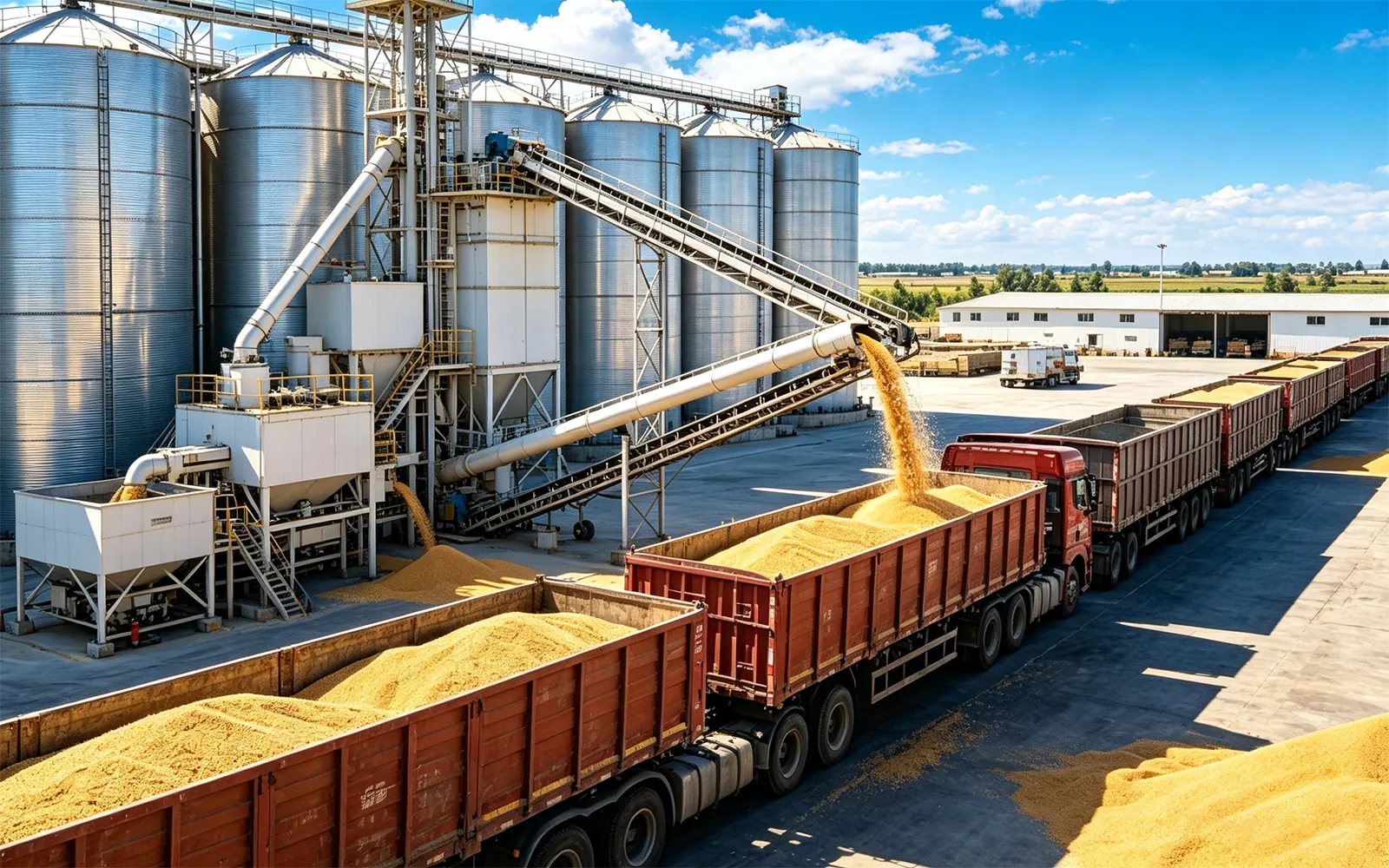
The mechanical handling of corn between harvest, drying, and storage introduces significant risk of physical damage. Each transfer point — from the combine to the truck, from the truck to the receiving pit, from the leg to the silo distributor — subjects kernels to impact forces that can cause cracks, breaks, and fines generation. Minimizing free-fall distances, using grain cushions and flow retarders, and selecting appropriate belt speeds for conveyor systems all contribute to preserving kernel integrity throughout the handling chain.
Bucket elevators remain the vertical conveyance standard for grain handling, with capacities ranging from 50 to over 50,000 bushels per hour depending on bucket size, belt speed, and boot design. The intake boot must be properly sized and configured to ensure efficient grain loading without excessive rollback, while the discharge point should incorporate a splash guard to direct grain flow smoothly into the receiving chute. Drag conveyors and belt conveyors handle horizontal transfers, with belt conveyors generally producing less mechanical damage at equivalent throughput rates.
Dust management represents both a safety and quality concern during grain handling. Corn dust is combustible, and the concentration of airborne particles in handling facilities must remain below the minimum explosive concentration (MEC) of approximately 50 g/m³. Dust collection systems at transfer points, proper grounding and bonding of all equipment, and regular housekeeping protocols form the foundation of a comprehensive dust control program that protects both personnel and the stored commodity.
Real-World Application Examples: Corn Storage in Practice
Example 1: Large-Scale Commercial Terminal Operation
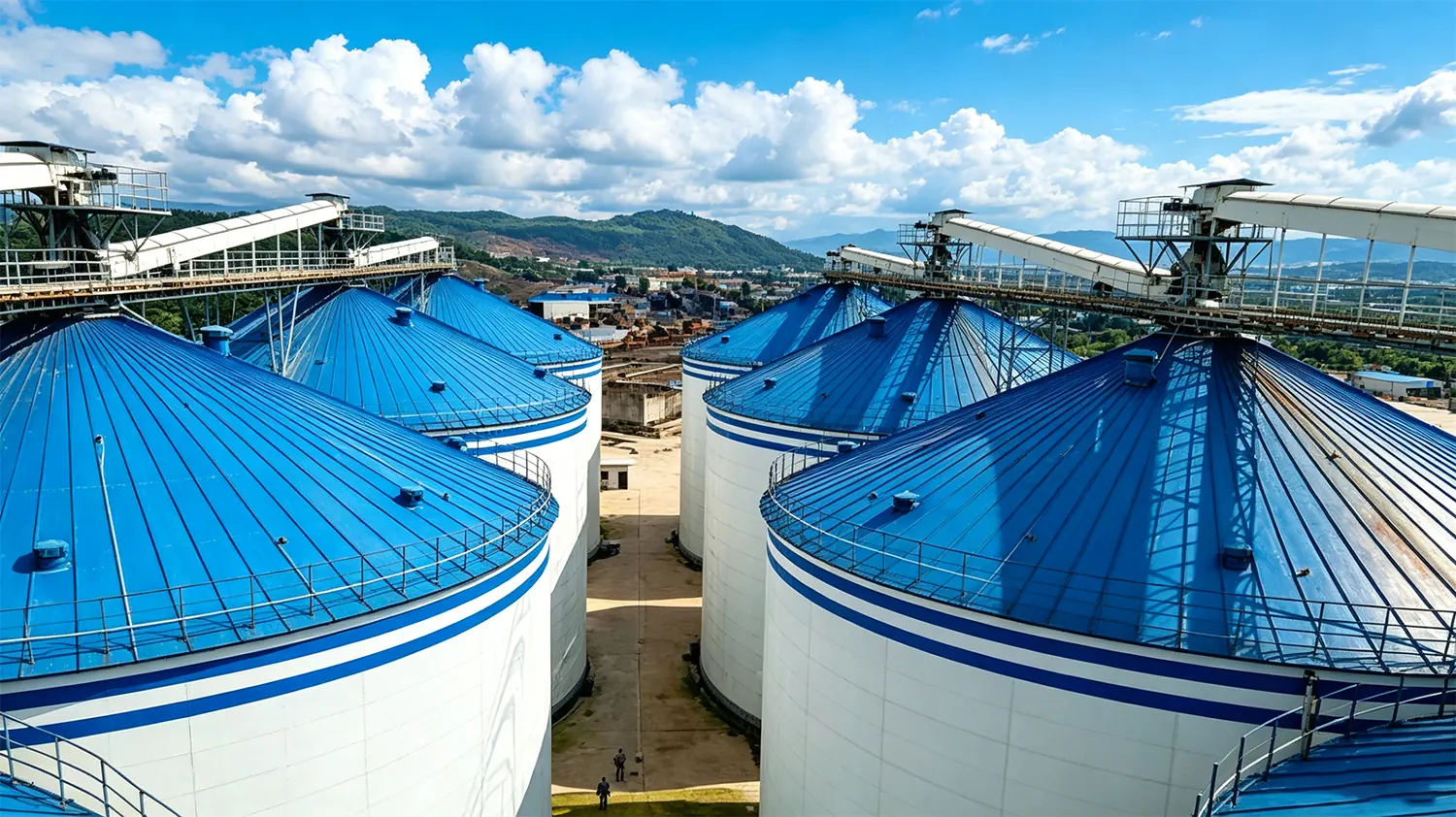
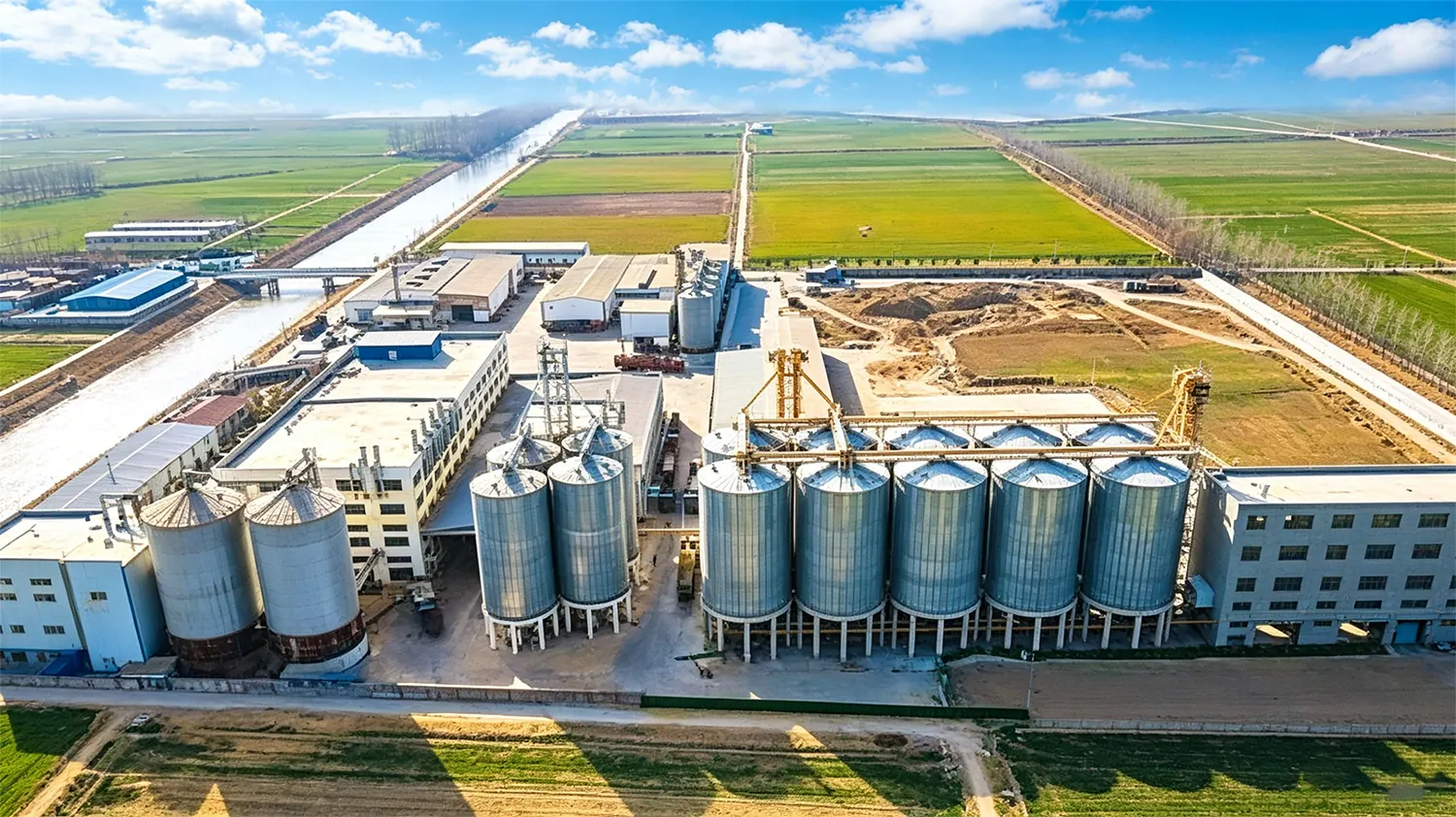
A commercial grain terminal in the U.S. Midwest operates a complex of twelve flat-bottom concrete silos, each 35 meters in diameter and 30 meters tall, with a combined storage capacity of 250,000 metric tons. The facility receives corn from hundreds of farm deliveries daily during harvest season, with trucks unloaded through two receiving pits capable of handling 1,500 metric tons per hour. After receipt, corn is cleaned to remove