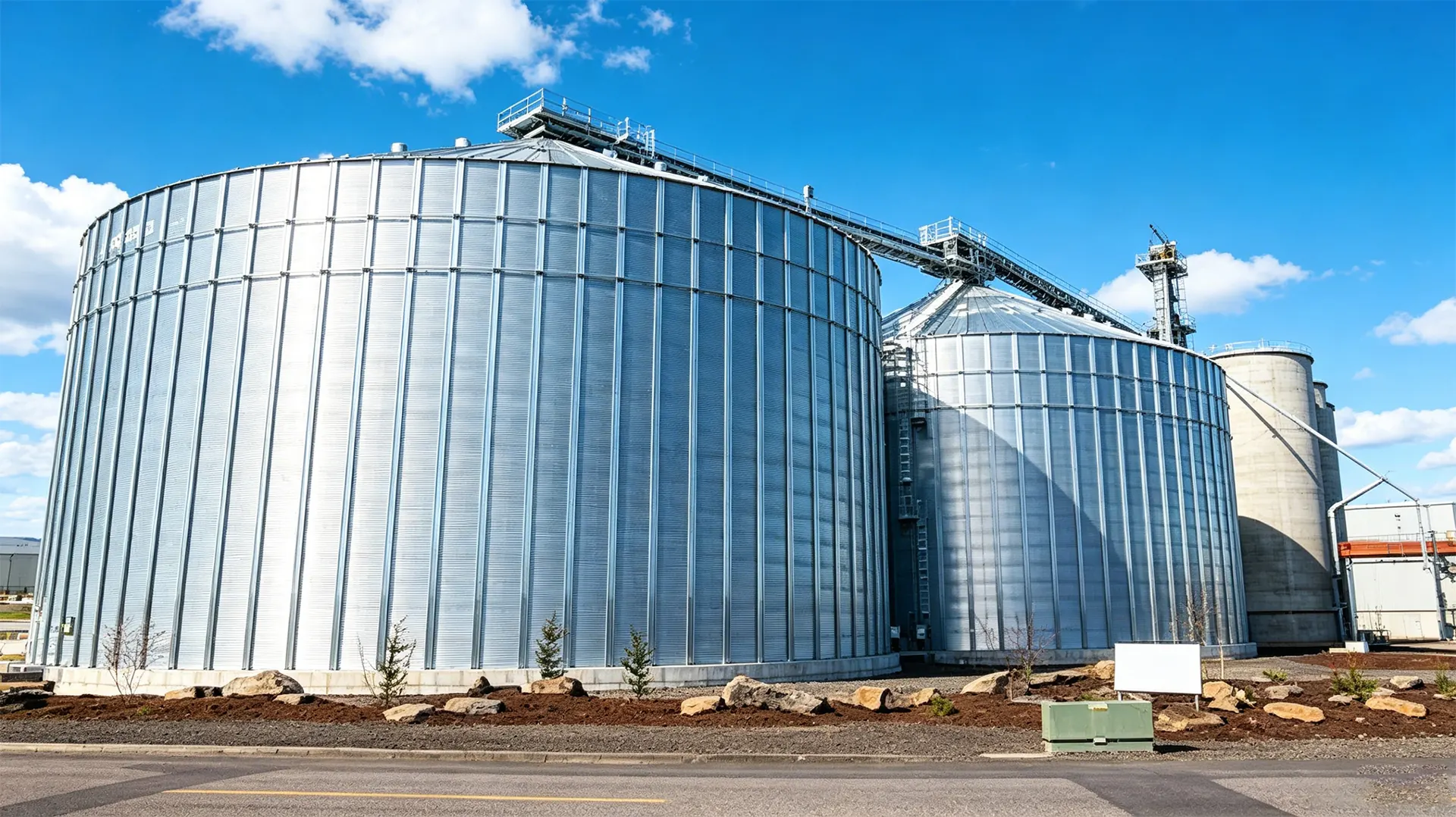
Plastic resin pellets travel thousands of miles and pass through multiple handling steps before they ever reach a molding machine — and every one of those steps is an opportunity to lose moisture control, generate fines, or introduce contamination. This guide covers the engineering decisions that determine whether your resin arrives at the feed throat at specification or becomes a rejected lot.

Why Plastic Resin Pellet Storage Failures Cost More Than You Think: Moisture, Fines, and Contamination
Storage is usually treated as a passive holding stage — a tank that simply keeps material out of the rain. In practice, the storage system is an active process vessel. Air moves through it, pellets rub against each other and against steel, temperature gradients form, and fines migrate. Each of those mechanisms degrades material in ways that only become visible downstream.
The three dominant failure modes are interdependent:
Moisture regain
Hygroscopic resins absorb atmospheric moisture at a rate governed by exposure time, ambient relative humidity, and temperature. A PET resin dried to 40 ppm can climb back above 100 ppm within hours in a humid, poorly sealed storage path. The consequences show up as hydrolysis-driven molecular weight reduction, splay, silver streaking, and reduced impact strength. Drying is not a one-time event — it is a condition that must be maintained continuously, right through the storage and handling chain.
Fines generation
Fines are fragments below roughly 1 mm generated by attrition. They are a triple liability: they change bulk flow behavior, they are the primary fuel in a combustible dust event, and they can cause feed-throat starvation, screw recovery variation, and cosmetic defects. Fines do not disappear on their own — they accumulate in dead zones and in the bottom of every hopper in the line.
Contamination
A single cross-contamination event between a natural resin and a colored masterbatch lot can scrap an entire production run. Traceability failures compound the problem: without lot segregation, the affected material cannot be isolated, so the entire silo contents become suspect.
The economic framing matters. A rejected lot is not just the cost of the resin — it is the resin, the drying energy already invested, the machine time lost, the scrapped parts, and the labor to clean the system. Measured that way, storage engineering is one of the highest-return investments in a polymer plant.
Hygroscopic vs. Non-Hygroscopic Resins: Matching Storage Strategy to PET, Nylon, PC, and Polyolefins
The single most important classification for storage design is whether the resin absorbs moisture into its molecular structure. Hygroscopic resins must be dried and then kept dry. Non-hygroscopic resins only carry surface moisture, which is far easier to manage.