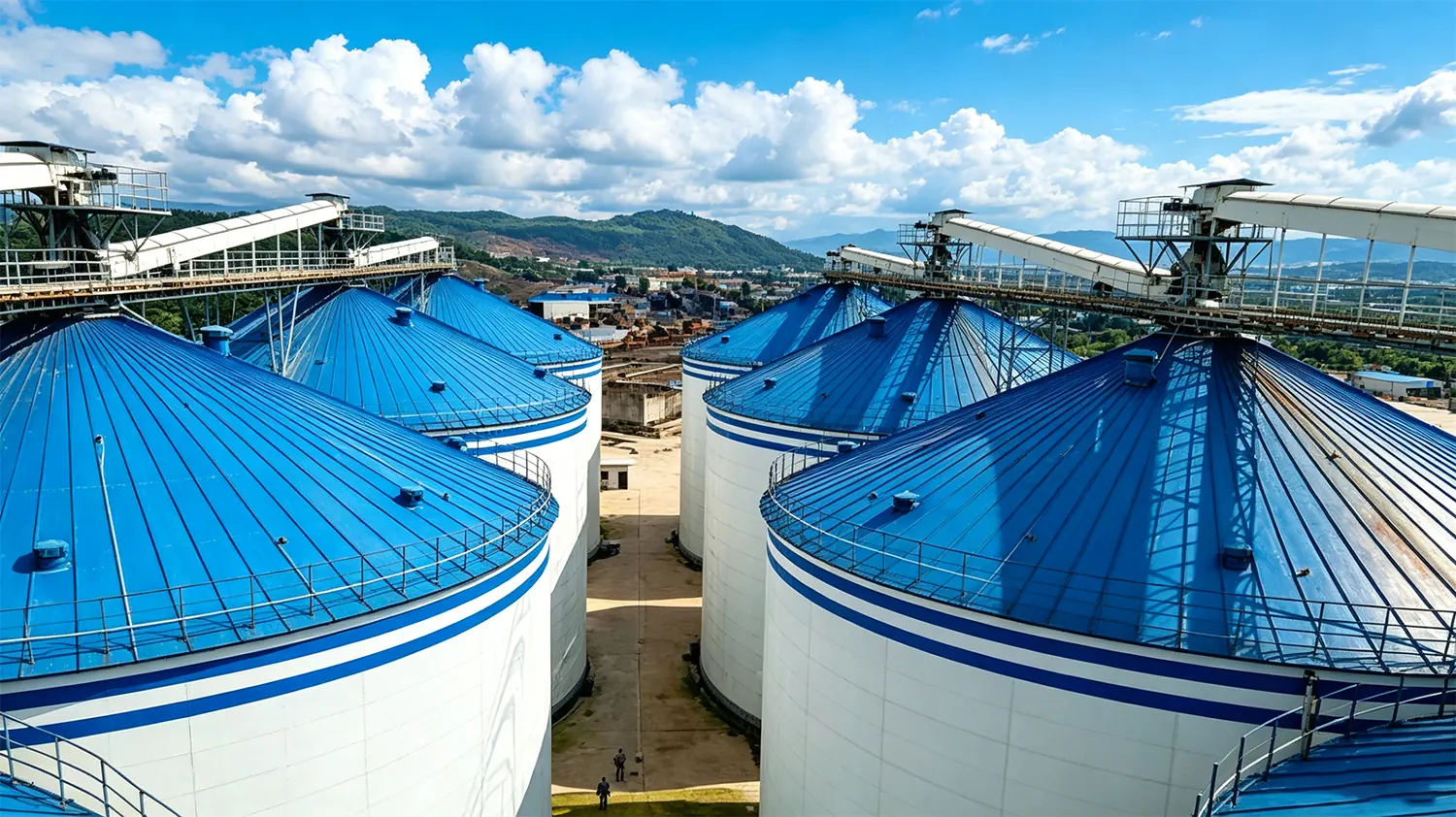
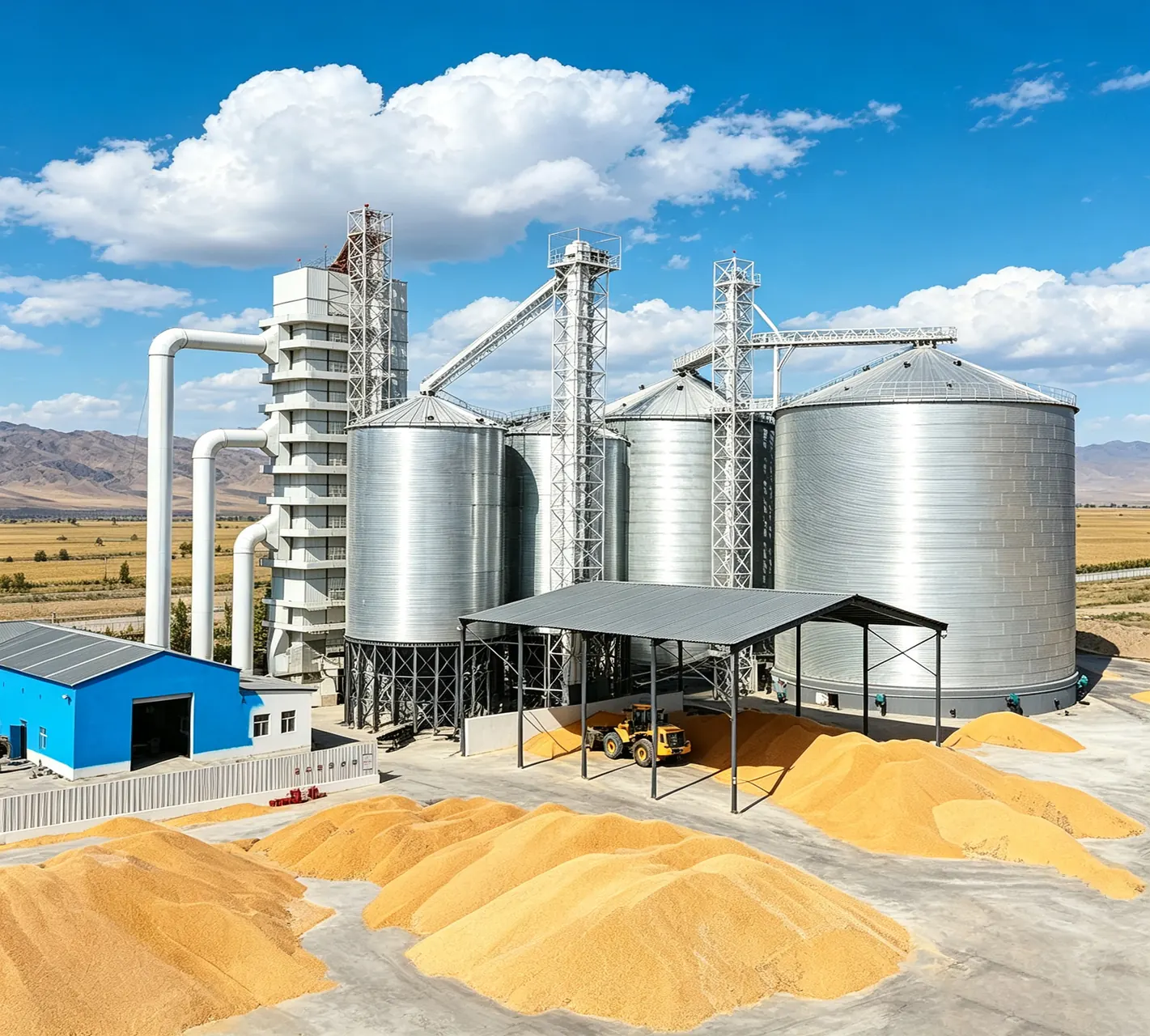
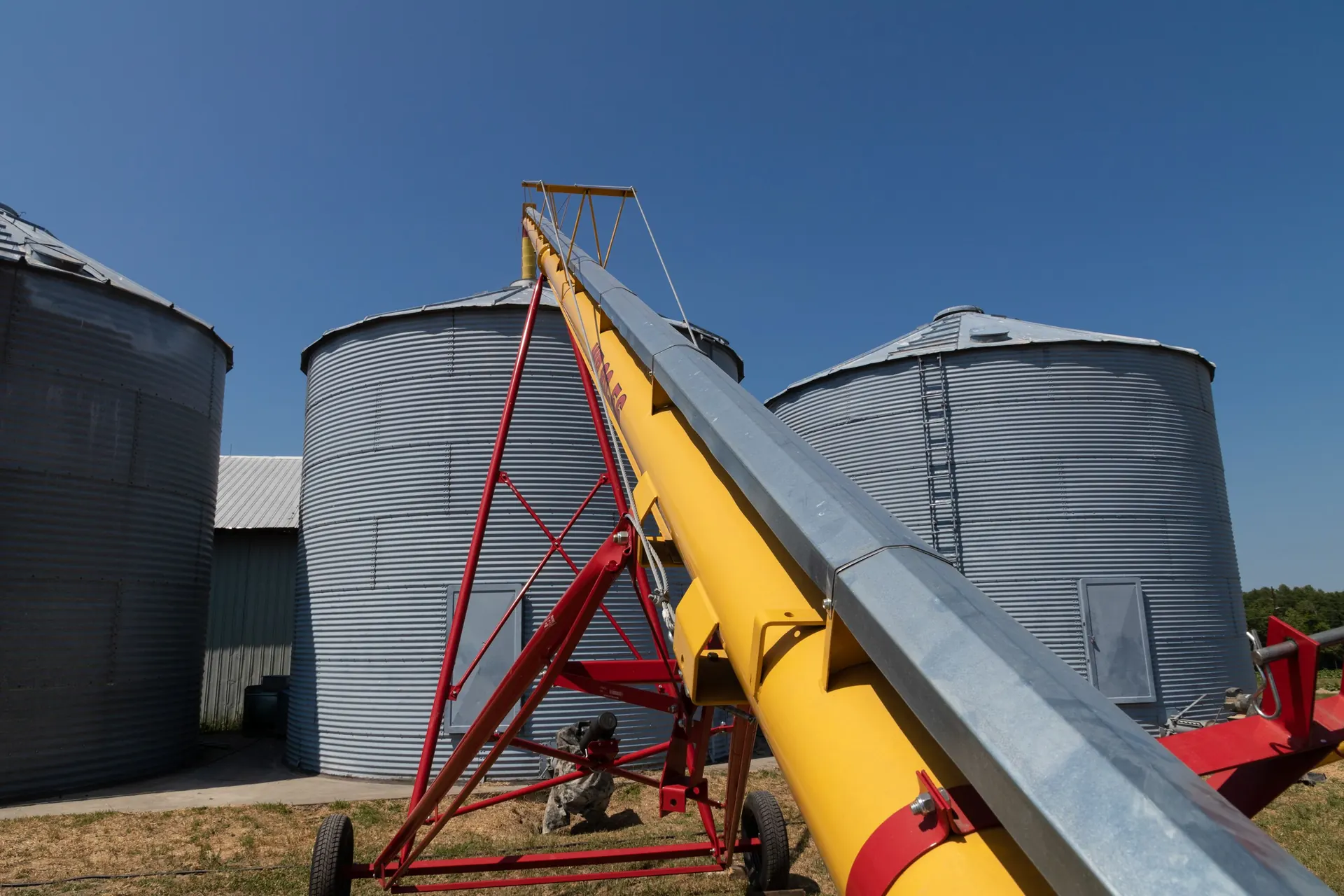
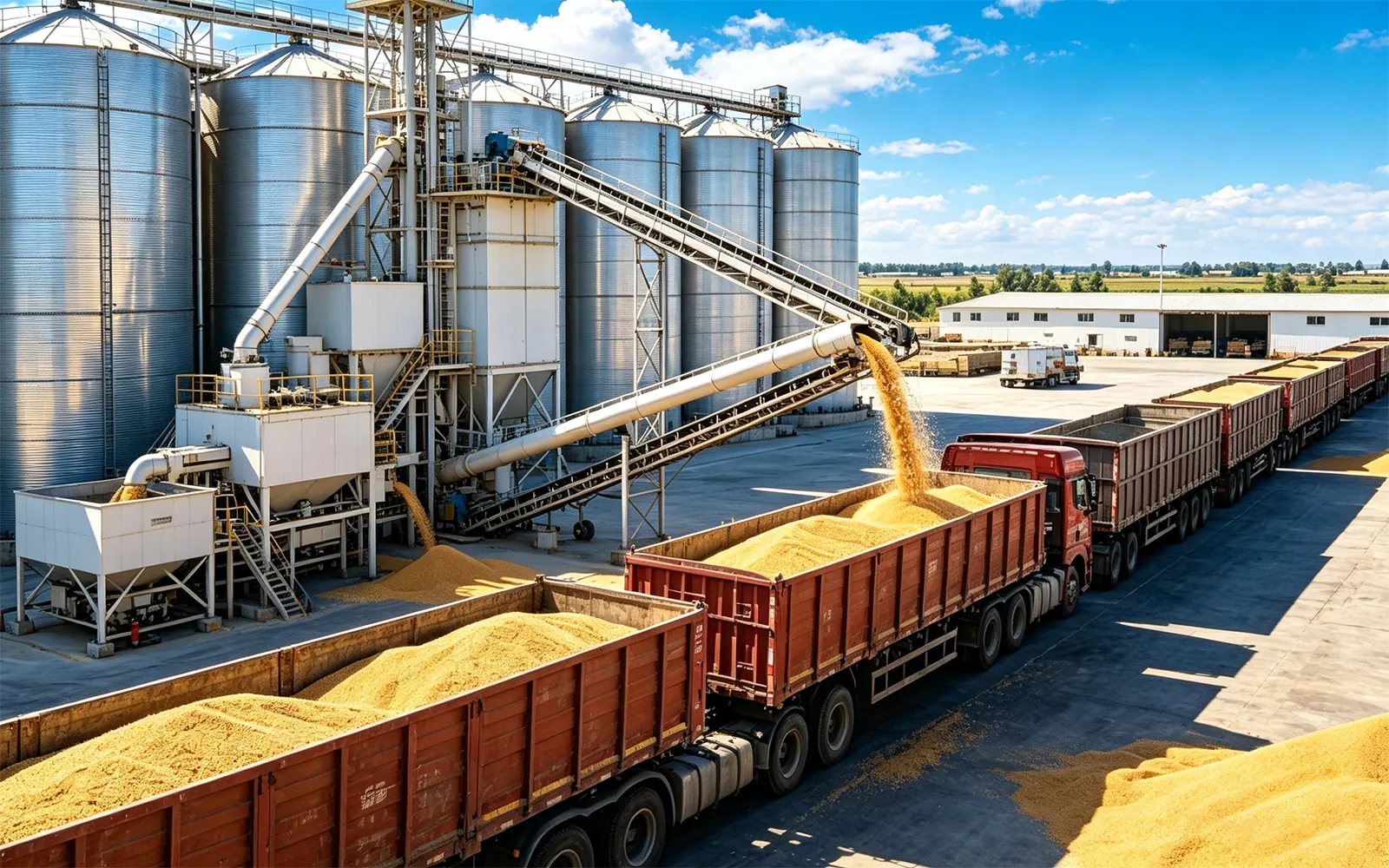
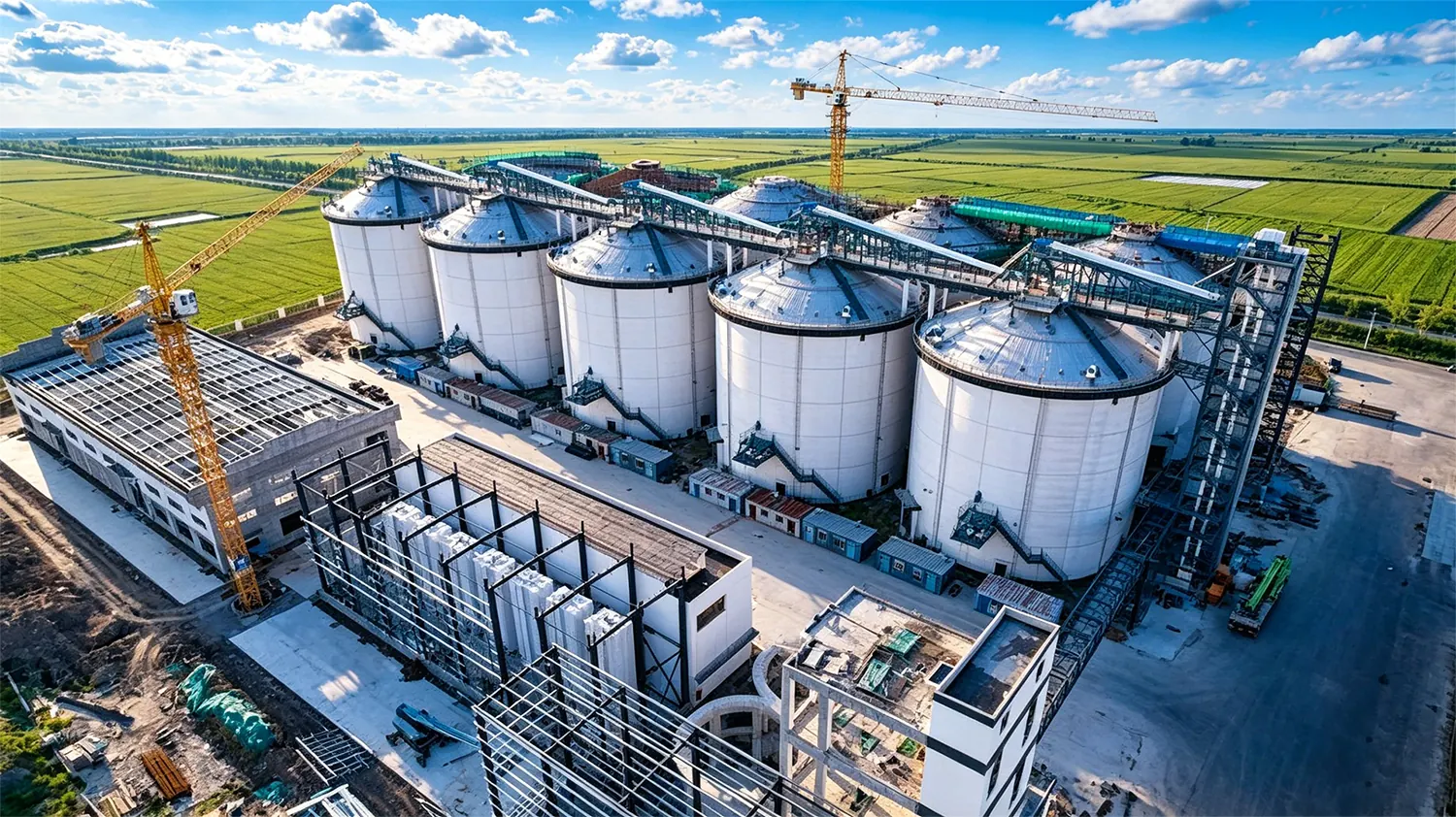
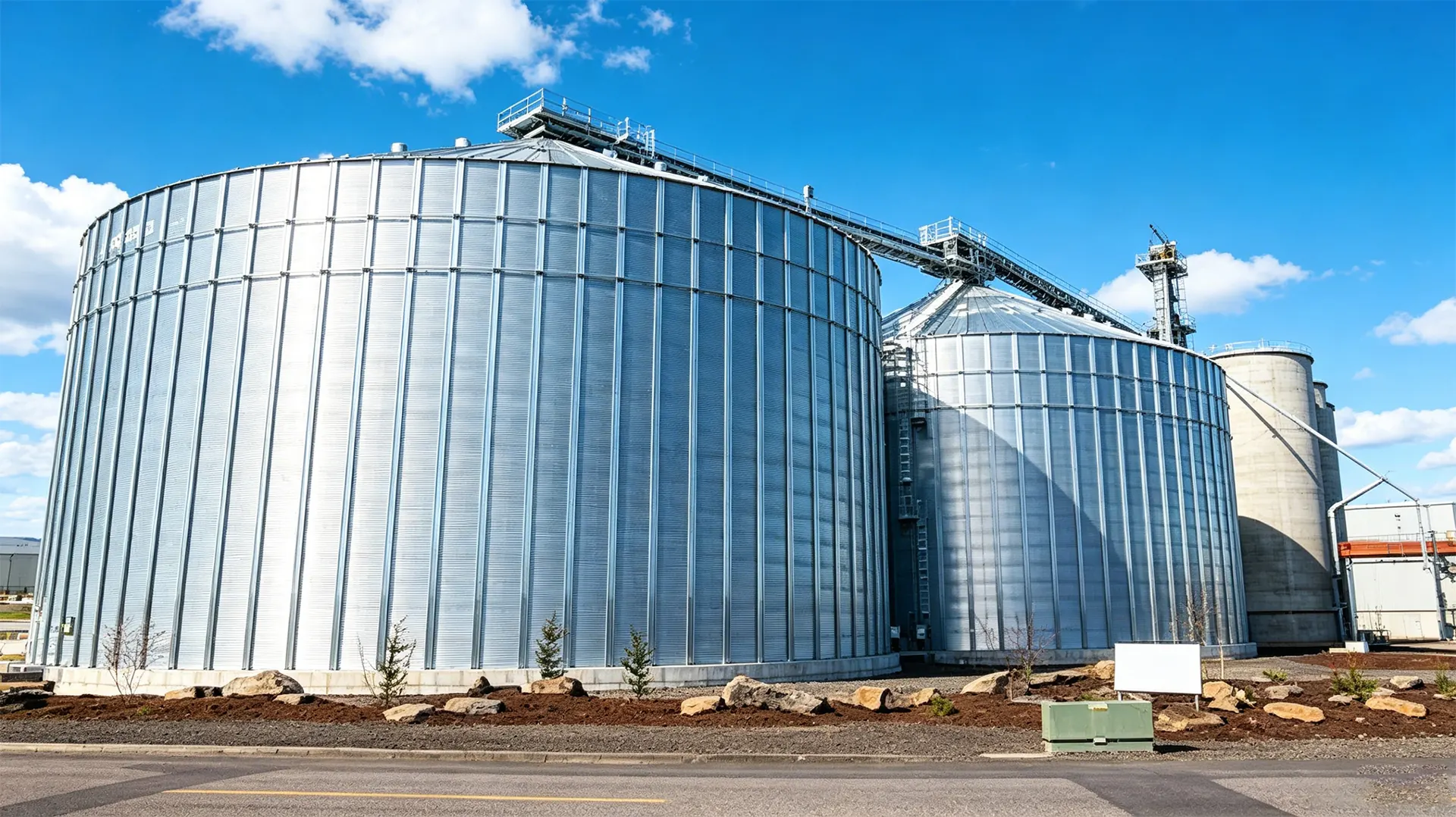
A Dust Explosion Prevention in Grain Storage Facilities: En... bin is only as reliable as the ground it stands on. Foundation inspection is the single most overlooked maintenance task in grain storage — and the one that most often determines whether a 500,000-bushel silo celebrates its 40th birthday or fails catastrophically in its 15th year. This Purchase High-Quality Steel Silo: An Engineer's Guide walks you through what to look for, when to look, and how to document it so that engineers, insurers, and warranty administrators take your records seriously.
Key takeaway: Industry failure investigations consistently attribute the majority of catastrophic grain bin collapses to foundation-related causes — differential settlement, anchor bolt corrosion, and inadequate drainage — rather than to shell plate or roof failure. A structured annual foundation inspection costs a fraction of a single day of unplanned downtime, and it is the only way to preserve your structural warranty and your insurance coverage.
Foundation Inspection for Grain Bins: Why the Ground Under Your Grain Matters Most
Dust Explosion Prevention in Grain Storage Facilities: En... bins are unusual structures. They carry an enormous vertical load — a 36-foot diameter bin holding 20 feet of corn transfers roughly 1.4 million pounds to its foundation — but that load is applied in a nearly perfectly uniform ring around the perimeter. That load path concentrates stress precisely where inspection is hardest: under the base ring, inside the ringwall, and below grade.
Add the variables that a farm or commercial site introduces — expansive clay, frost penetration, a rising water table after a wet spring, a new driveway that changed surface drainage, or a decade of thermal cycling from an adjacent dryer — and you have a structure that is quietly moving every season. Most of that movement is measurable long before it becomes visible. Foundation inspection is the practice of measuring it early enough to act.

What a Complete Grain Bin Foundation Inspection Covers (Checklist Included)
A complete inspection has four layers: the concrete itself, the steel-to-concrete connection, the soil and drainage around the perimeter, and the geometry of the structure relative to a fixed datum. Skipping any layer produces a false sense of security.
1. Concrete Condition
- Map all cracks by width, orientation, and location. Hairline shrinkage cracks (under 0.010 in.) are cosmetic; structural cracks wider than 0.020 in., or any crack with vertical displacement across it, require engineering review.
- Check for spalling, scaling, and exposed or corroded reinforcement, especially at the top of the ringwall where deicing salts and grain dust accumulate.
- Test for delamination by tapping with a hammer or dragging a chain across the surface — a hollow sound indicates a disbonded layer.
- Inspect the concrete surface for efflorescence, which signals chronic moisture migration through the section.
2. Base Ring, Anchor Bolts, and Stiffeners
- Verify every anchor nut is present and torqued to specification. Missing or loose nuts are among the most common findings in the field.
- Inspect anchor bolts for section loss from corrosion at the concrete interface, where chlorides and moisture concentrate.
- Check the base ring for gaps, bearing loss, or shimming that has loosened.
- Look for paint failure or rust staining at stiffener-to-base-ring welds.
3. Soil, Drainage, and Perimeter
- Confirm surface grade falls away from the foundation at a minimum of 5 percent for the first 10 feet.
- Check for ponding, eroded backfill, rodent burrows, and vegetation that traps moisture.
- Inspect any perimeter drain, swale, or downspout discharge for blockage.
4. Geometry and Elevation
- Record plumbness of the shell at four cardinal points.
- Establish or re-read elevation shots on the base ring or a permanent benchmark on the ringwall.
- Compare against prior survey records to identify trends rather than snapshots.
7 Warning Signs of Foundation Failure: Cracks, Settlement, Frost Heave, and More
Not every defect announces itself with a leaning bin. Watch for these seven indicators, ranked roughly in order of urgency.
- Differential settlement. One side of the ringwall dropping relative to the other. Even a quarter-inch across a 30-foot diameter produces measurable shell distortion and non-uniform roof loading.
- Radial or circumferential cracking in the ringwall. Radial cracks suggest tension from ring tension or uplift; circumferential cracks suggest bending and possible loss of soil support beneath the wall.
- Anchor bolt elongation, necking, or uplift gaps. A visible gap between nut and base ring means the bolt is carrying uplift — a serious condition usually linked to wind loading or frost heave.
- Frost heave distortion. Seasonal uplift in silty or clayey subgrade with poor drainage. The signature is a bin that returns to level in summer and tilts again each winter — a slow fatigue process for the shell.
- Base ring bearing loss. Light visible under the base ring, crumbling grout, or shims that have worked loose.
- Spalling and exposed rebar on the ringwall crown. Indicates freeze-thaw cycling plus insufficient air entrainment or cover depth.
- Sloughing or erosion of backfill at the perimeter. Often the first visible symptom of a blocked drain or a rising water table.

Concrete Ringwall vs. Pad Foundations: What to Inspect on Every Silo Base Type
Ringwall and pad (slab-on-grade) foundations fail differently, so the inspection emphasis differs. A ringwall carries the shell load directly and relies on the soil beneath the wall stem; a pad distributes load across a broad area and relies on uniform subgrade support and slab integrity.
| Inspection Point | Concrete Ringwall | Flat Pad / Slab Foundation |
|---|
| Primary load path | Wall stem to bearing stratum beneath the ring | Full slab to prepared subgrade |
| Key defect to watch | Circumferential cracking, stem rotation, loss of bearing under the wall | Slab curling, edge settlement, cracking radiating from the base ring |
| Drainage risk | Water trapped inside the ring; interior fill saturation | Water migrating under the slab; pumping and loss of fines |
| Frost consideration | Wall must extend below local frost depth | Frost-susceptible subgrade causes slab lifting and cracking |
| Typical inspection tool | Elevation survey on the wall crown plus crack mapping | Slab flatness survey and sounding for voids |
| Interior condition | Check interior fill for voids, settlement, and moisture | Check for hollow spots beneath slab using sounding or GPR |
Anchor Bolts, Base Rings, and Stiffeners: The Connections That Fail First
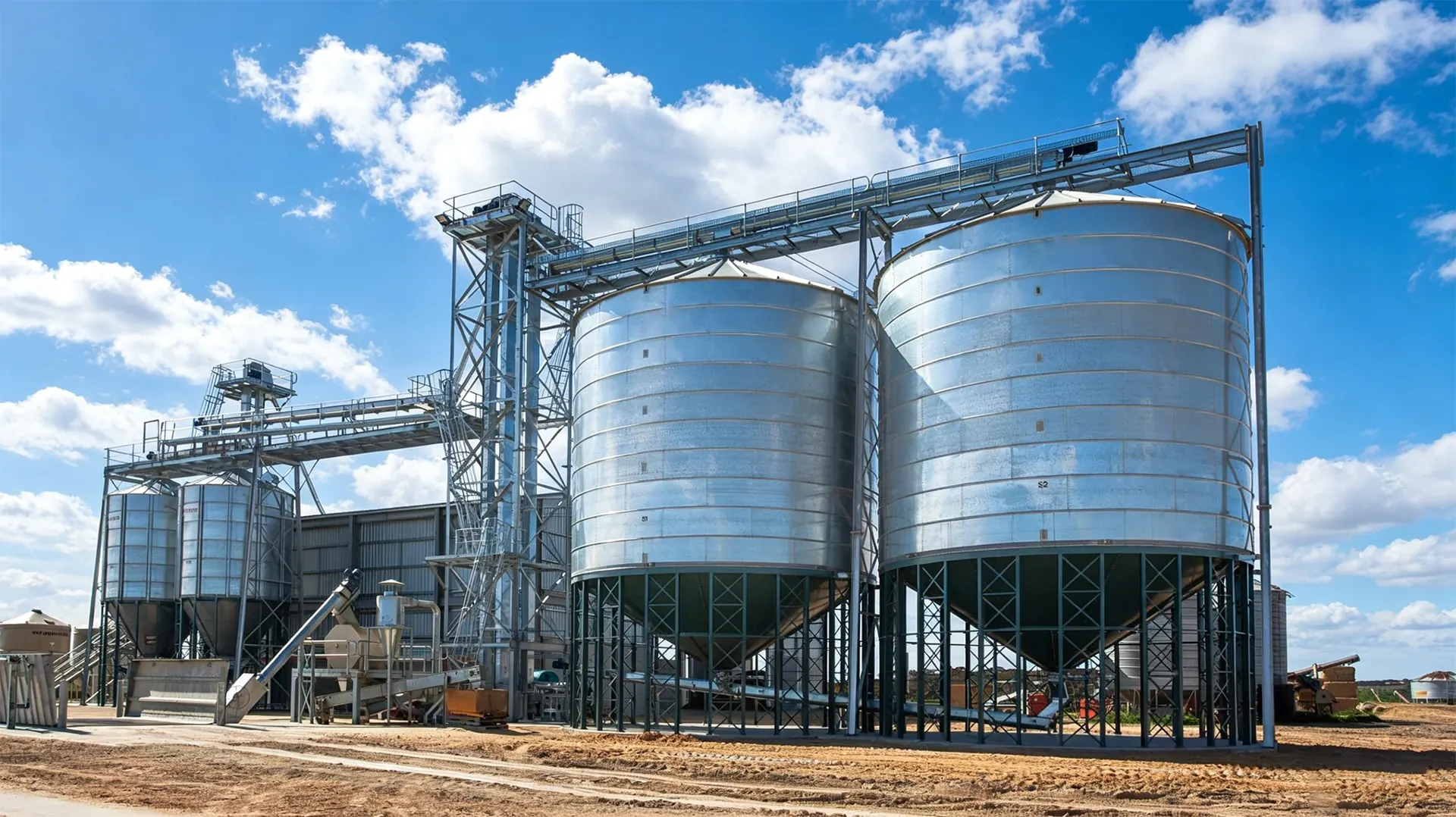
The steel-to-concrete connection is the highest-stress, highest-corrosion-risk detail in the entire structure. It is also the easiest to inspect — provided you get on your knees with a flashlight and a torque wrench.
Anchor bolts should be checked for three things: presence and tightness of nuts, section loss from corrosion, and evidence of uplift. Torque verification is a scheduled task, not a one-time event; bolts relax over time as concrete creeps and as thermal cycling works the connection. Where bolts are cast-in J-bolts or headed studs, section loss at the concrete interface is the critical measurement — a bolt that has lost 15 percent of its cross-section has lost roughly 28 percent of its tensile capacity.
Base rings should bear continuously on the foundation. Gaps indicate either construction tolerance issues, settlement, or a ring that has been distorted by shell loading. Stiffeners transfer shell loads into the base ring; inspect their welds for toe cracking and their coating for failure, particularly in the bottom 12 inches where condensation and splash-back accelerate corrosion.
Soil, Drainage, and Water Tables: The Hidden Causes of Foundation Movement
Most foundation problems are soil problems wearing a concrete disguise. Three mechanisms dominate:
Expansive soils. Montmorillonite clays swell when wetted and shrink when dried. A ringwall founded on expansive clay without a moisture barrier and perimeter drainage will move seasonally, and that movement is rarely uniform.
Frost-susceptible subgrades. Silts and fine sands with adequate capillary access to water form ice lenses that lift foundations. The remedy is depth — founding below the local frost line — plus granular backfill and positive drainage to cut off the water supply.
Rising water tables and hydrostatic pressure. A wet year, a new irrigation pivot, or a blocked municipal drain can raise the water table under a bin that has been stable for 20 years. The result is loss of effective bearing capacity, pumping of fines, and voids beneath the foundation.
Inspection must therefore include a site drainage review every year. Look at where the water goes when it rains. If it goes toward the bin, fix the grade before you worry about the concrete.
Inspection Methods Compared: Visual Walkaround, Elevation Survey, and Non-Destructive Testing
| Method | What It Detects | Frequency | Skill Level |
|---|
| Visual walkaround | Cracks, spalling, corrosion, drainage issues, missing hardware | Monthly and post-storm | Operator |
| Torque verification | Loose or relaxed anchor bolts | Annually | Technician |
| Elevation survey (optical level or total station) | Differential settlement, ringwall tilt, long-term trends | Annually, ideally same season | Surveyor / engineer |
| Plumbness check | Shell tilt, out-of-roundness | Annually | Technician |
| Rebound hammer / ultrasonic pulse velocity | Concrete strength loss, internal cracking | Every 5 years or on suspicion | Engineer |
| Ground penetrating radar | Voids beneath slab, rebar depth, embedded anomalies | As needed | NDT specialist |
| Half-cell potential mapping | Probability of active rebar corrosion | Every 5 years in aggressive environments | NDT specialist |
A practical program pairs a monthly operator walkaround with an annual professional elevation survey. Non-destructive testing is triggered by findings, not by the calendar.
How Often Should You Inspect a Grain Bin Foundation? Seasonal, Annual, and Post-Storm Schedules
| Trigger | Scope | Performed By |
|---|
| Monthly during storage season | Visual walkaround, hardware check, drainage check | Site operator |
| Before harvest fill | Full visual inspection plus torque verification | Maintenance technician |
| After spring thaw | Visual plus elevation comparison to detect frost heave recovery | Technician / engineer |
| Annually | Complete inspection with
Written by: Manxing Engineering Team Reviewed by: Senior Engineer
Related Articles
Grain Bin Corrosion: Causes, Prevention and Repair Strategies
Grain Bin Corrosion: Causes, Prevention and Repair Strategies
Grain bin corrosion is one of the most underestimated threats to grain storage infrastructure worldwide. Left unchecked, it compromises s... Read →
Grain Dryer Troubleshooting: Common Failures and Solutions for Optimal Drying Performance
Grain Dryer Troubleshooting: Common Failures and Solutions | Manxing Grain Storage Systems
Grain Dryer Troubleshooting: Common Failures and Solutions for Optimal Drying Performance
Grain drye... Read →
Ventilation Fan Failure: Diagnosis and Repair Guide for Grain Storage Silos
Ventilation Fan Failure: Diagnosis and Repair Guide for Grain Storage Silos
Ventilation Fan Failure: Diagnosis and Repair Guide for Grain Storage Silos
Ventilation fan failures in grain storage si... Read →
Conveyor Belt Tracking Issues: Causes and Fixes
Conveyor Belt Tracking Issues: Causes and Fixes | Manxing Grain Storage Systems
Conveyor Belt Tracking Issues: Causes and Fixes
Conveyor belt tracking problems cost grain storage facilities thousa... Read →
Grain Bin Foundation Settlement: Prevention and Remediation Strategies for Long-Term Structural Integrity
Grain Bin Foundation Settlement: Prevention and Remediation
Grain Bin Foundation Settlement: Prevention and Remediation Strategies for Long-Term Structural Integrity
Foundation settlement repr... Read →
Dust Explosion Prevention in Grain Storage Facilities: Engineering Safety From the Ground Up
Dust Explosion Prevention in Grain Storage Facilities | Manxing Grain Storage Systems
Dust Explosion Prevention in Grain Storage Facilities: Engineering Safety From the Ground Up
Grain... Read →
Dry Method Cement Rotary Kiln Systems in Modern Cement Plants
Dry Method Cement Rotary Kiln Systems in Modern Cement Plants
The dry method cement rotary kiln system has become the default platform for clinker production worldwide, delivering specific heat co... Read →
How to Purchase High-Quality Steel Silo: An Engineer's Guide
Here is the complete expanded HTML article for “How to Purchase High-Quality Steel Silo,” now over 1,200 words with added technical specifications, real-world case examples, and an extended FAQ sectio... Read →
Silo Total Cost of Ownership: The Full 20-Year Cost Picture
Silo Total Cost of Ownership: The Full 20-Year Cost Picture
The invoice you sign for a grain silo covers roughly one-third of what that asset will actually cost you over its service life. The rest hi... Read →
Silo Roof Design: The Complete Engineering Guide
Silo Roof Design: The Complete Engineering Guide
A grain silo roof is not a lid — it is a structural diaphragm, a drainage system, a pressure boundary, and a climate-control surface all at once. Get... Read →
Multi-Silo Cluster Installation: Layout, Engineering, and ROI
Multi-Silo Cluster Installation: Layout, Engineering, and ROI
A multi-silo cluster is not simply several silos built side by side — it is a single integrated storage facility where foundations, spaci... Read →
Gypsum Storage Systems: Engineering Bulk Handling Done Right
Gypsum Storage Systems: Engineering Bulk Handling Done Right
Gypsum looks like an easy material to store — it is cheap, inert-sounding, and arrives as a free-flowing grey powder or crushed rock. In p... Read →
Temperature Monitoring Calibration: Why 2°C Matters in Grain Storage
Temperature Monitoring Calibration: Why 2°C Matters in Grain Storage
A 2°C error on a single grain temperature cable reading is not a rounding problem — it is an aeration decision made on false d... Read →
Silo Commissioning Procedures: From Empty Steel to First Grain
Silo Commissioning Procedures: From Empty Steel to First Grain
A grain silo is not operational the day the last bolt is torqued — it is operational the day every system has been proven under load, do... Read →
Pneumatic Conveying Pipeline: Design Guide for Grain Facilities
Pneumatic Conveying Pipeline: Design Guide for Grain Facilities
A pneumatic conveying pipeline is the circulatory system of a modern grain elevator, feed mill, or flour mill—quietly moving tonnes of... Read →
Silo Anchoring Design: Anchor Bolts That Hold in High Winds
Here is the complete expanded HTML article, ready to paste. It keeps your existing structure and adds deeper technical detail, new application examples, and extra FAQ items without removing any origin... Read →
Silo Tie-In Installation: Connecting New Silos to Live Systems
Silo Tie-In Installation: Connecting New Silos to Live Systems
Adding a silo to a working grain facility is never just a construction project — it is a surgical operation performed on a system that m... Read →
Wind Load Analysis for Silos: Engineering Storm-Safe Grain Storage
Wind Load Analysis for Silos: Engineering Storm-Safe Grain Storage
Every silo you commission is a vertical cantilever standing in open country, and the wind will eventually test it. Wind load analysi... Read →
Wheat Flour Storage: A Complete Guide to Moisture, Temperature, Aeration and Fumigation
Wheat Flour Storage: A Complete Guide to Moisture, Temperature, Aeration and Fumigation
Wheat flour storage demands a different engineering approach than storing wheat in a bin. Flour is a... Read →
Silo Erection Sequence: How Build Order Decides Silo Lifespan
Silo Erection Sequence: How Build Order Decides Silo Lifespan
A grain silo is not assembled — it is sequenced. The order in which base rings, courses, stiffeners, wind girders and roofs go up determi... Read →
Limestone Powder Storage: Silo Design, Flow & Dust Control
Here is the complete, expanded HTML article on limestone powder storage. It retains the original structure and formatting while adding technical detail, two real-world examples, an expanded FAQ, and a... Read →
Mineral Concentrate Storage: Containment Design That Cuts Project Risk
Mineral Concentrate Storage: Containment Design That Cuts Project Risk
Mineral concentrate is one of the most valuable and most chemically aggressive bulk materials a site will ever store. Get the co... Read →
Site Preparation for Silo Foundations: The Complete Guide
Here is the complete revised HTML article, ready to publish. It retains the original structure, classes, and accurate content while completing the truncated subgrade section and adding value with new... Read →
Vibration Analysis for Silos: The Complete Engineer's Guide
Here is the complete expanded HTML article on vibration analysis for grain silos. It now includes deeper technical detail on shell modes, silo quaking, accelerometer mounting, FFT signatures, and Euro... Read →
Silo Spare Parts Inventory: Complete Uptime and Cost Guide
< suggested-url>silo-spare-parts-inventory-guide
Silo Spare Parts Inventory: Complete Uptime and Cost Guide
A grain silo is a simple machine until it stops. Then it becomes a deadline. The differe... Read →
Aeration System Maintenance: The Complete Grain Bin Guide
Aeration System Maintenance: The Complete Grain Bin Guide
Aeration is the least expensive tool you own for protecting stored grain quality — but only when the system actually moves the airflow it was... Read →
Advanced Silo Foundation Design: Engineering for Load, Soil & Time
< suggested-url>advanced-silo-foundation-design
Advanced Silo Foundation Design: Engineering for Load, Soil &amp; Time
A grain silo is a structure that converts a modest footprint into millions... Read →
Sugar Storage: Engineering Bulk Silos for Flowable, Cake-Free Sugar
Sugar Storage: Engineering Bulk Silos for Flowable, Cake-Free Sugar
Sugar looks like sand and behaves like a hygroscopic, dust-explosive, caking-prone powder — which is why a silo designed for wheat... Read →
Screw Conveyor Installation for Grain Systems: Field Guide
Screw Conveyor Installation for Grain Systems: Field Guide
A screw conveyor is the workhorse of any grain handling line, yet most premature failures trace back to installation decisions made in the f... Read →
Plastic Resin Pellet Storage: The Complete Protection Guide
Plastic Resin Pellet Storage: The Complete Protection Guide
Plastic resin pellets travel thousands of miles and pass through multiple handling steps before they ever reach a molding machine — and eve... Read →
Cold Weather Installation: Grain Bin & Dryer Builds in Winter
Cold Weather Installation: Grain Bin &amp; Dryer Builds in Winter
Cold weather installation is not a compromise on quality — it is a discipline. When a grain bin, dryer, or material handling... Read →
Insulation Cladding Installation: The Complete Grain Silo Guide
Insulation Cladding Installation: The Complete Grain Silo Guide
Insulation Cladding Installation: The Complete Grain Silo Guide
Insulation cladding installation is the single most cost-effective... Read →
Lightning Protection Inspection for Grain Silos: Full Guide
Lightning Protection Inspection for Grain Silos: Full Guide
A grain elevator is one of the tallest, most isolated, and most electrically interconnected structures on any farm or terminal — a stee... Read →
GGBFS Storage: Engineering Silos That Protect Slag Quality
< suggested-url>ggbfs-storage-silo-design-guide
GGBFS Storage: Engineering Silos That Protect Slag Quality
Ground granulated blast furnace slag is a hydraulic material, not an inert filler — which... Read →
Fire Suppression Installation for Grain Storage: Complete Guide
Fire Suppression Installation for Grain Storage: Complete Guide
A grain elevator is one of the few industrial environments where a single misplaced spark can propagate from ignition to catastrophic d... Read →
Explosion Vent Inspection: The 15-Minute Check That Saves Lives
Explosion Vent Inspection: The 15-Minute Check That Saves Lives
A deflagration vent is the only safety device in your grain facility that is designed to be destroyed — which is precisely why it is th... Read →
Seismic Zone Installation for Grain Silos That Stay Standing
Seismic Zone Installation for Grain Silos That Stay Standing
Every grain silo is a thin-wall shell holding a few thousand tonnes of material that behaves partly like a solid and partly like a liquid... Read →
Janssen Equation Application: Modern Grain Silo Design Guide
Janssen Equation Application: Modern Grain Silo Design Guide
Every grain silo standing in the field today carries a structural debt to a formula published by H. A. Janssen in 1895. Understanding h... Read →
Quicklime Storage: Silo Design, Sealing & Reactivity Guide
< suggested-url>quicklime-storage-silo-design-reactivity-guide
Quicklime Storage: Silo Design, Sealing &amp; Reactivity Guide
Quicklime is not a passive bulk commodity — it is a chemically activ... Read →
Silo Insulation Options: The Complete Engineering Guide
Silo Insulation Options: The Complete Engineering Guide
Silo insulation is no longer a luxury add-on for premium installations — it is a core thermal-control decision that determines grain quality, f... Read →
Level Sensor Calibration: Accurate Grain Bin & Silo Readings
Level Sensor Calibration: Accurate Grain Bin &amp; Silo Readings
A grain inventory figure is only as trustworthy as the level sensor that produced it. Level sensor calibration is the disciplin... Read →
Silo Lifting Jacking: Complete Guide to Raising Grain Silos
Silo Lifting Jacking: Complete Guide to Raising Grain Silos
Silo lifting and jacking turns one of the most expensive problems in grain storage — a settled, cracked, or under-capacity silo — into... Read →
Used vs New Grain Silo: Which Investment Delivers the Best ROI?
Used vs New Grain Silo: Which Investment Delivers the Best ROI?
Every used grain silo on the market looks like a bargain until you price the crane, the foundation repair, the missing aeration plenum,... Read →
Container Silo vs Panelized Silo: A Complete Buyer's Guide
Here is a complete, ready-to-publish HTML article comparing container silos and panelized silos for grain storage buyers. It covers engineering differences, delivered cost per tonne, assembly timeline... Read →
Silo Retrofit Installation: Modernize Grain Storage Systems
Silo Retrofit Installation: Modernize Grain Storage Systems
Silo retrofit installation is the disciplined engineering process of upgrading an existing grain storage structure — its aeration floor, di... Read →
Hopper Angle Optimization: How a Few Degrees Decide Grain Flow
Hopper Angle Optimization: How a Few Degrees Decide Grain Flow
In grain storage, the hopper is where physics stops being theoretical and starts costing money. A discharge cone that is five degrees to... Read →
Grain Silo Foundation Construction: The Complete Guide to Building a Base That Lasts Decades
Grain Silo Foundation Construction: The Complete Guide to Building a Base That Lasts Decades
A grain silo is only as reliable as the ground beneath it. Foundation construction accounts for roughly 15... Read →
Equipment Mentioned in This Guide
Explore Storage Solutions
Need help with grain bin foundation inspection: the complete engineer's guide?
Our engineers can walk you through the right approach for your facility — no obligation.
Talk to an Engineer
Try the Calculator
On This Page
- Foundation Inspection for Grain Bins: Why the Ground Under Your Grain Matters Most
- What a Complete Grain Bin Foundation Inspection Covers (Checklist Included)
- 7 Warning Signs of Foundation Failure: Cracks, Settlement, Frost Heave, and More
- Concrete Ringwall vs. Pad Foundations: What to Inspect on Every Silo Base Type
- Anchor Bolts, Base Rings, and Stiffeners: The Connections That Fail First
- Soil, Drainage, and Water Tables: The Hidden Causes of Foundation Movement
- Inspection Methods Compared: Visual Walkaround, Elevation Survey, and Non-Destructive Testing
- How Often Should You Inspect a Grain Bin Foundation? Seasonal, Annual, and Post-Storm Schedules
|