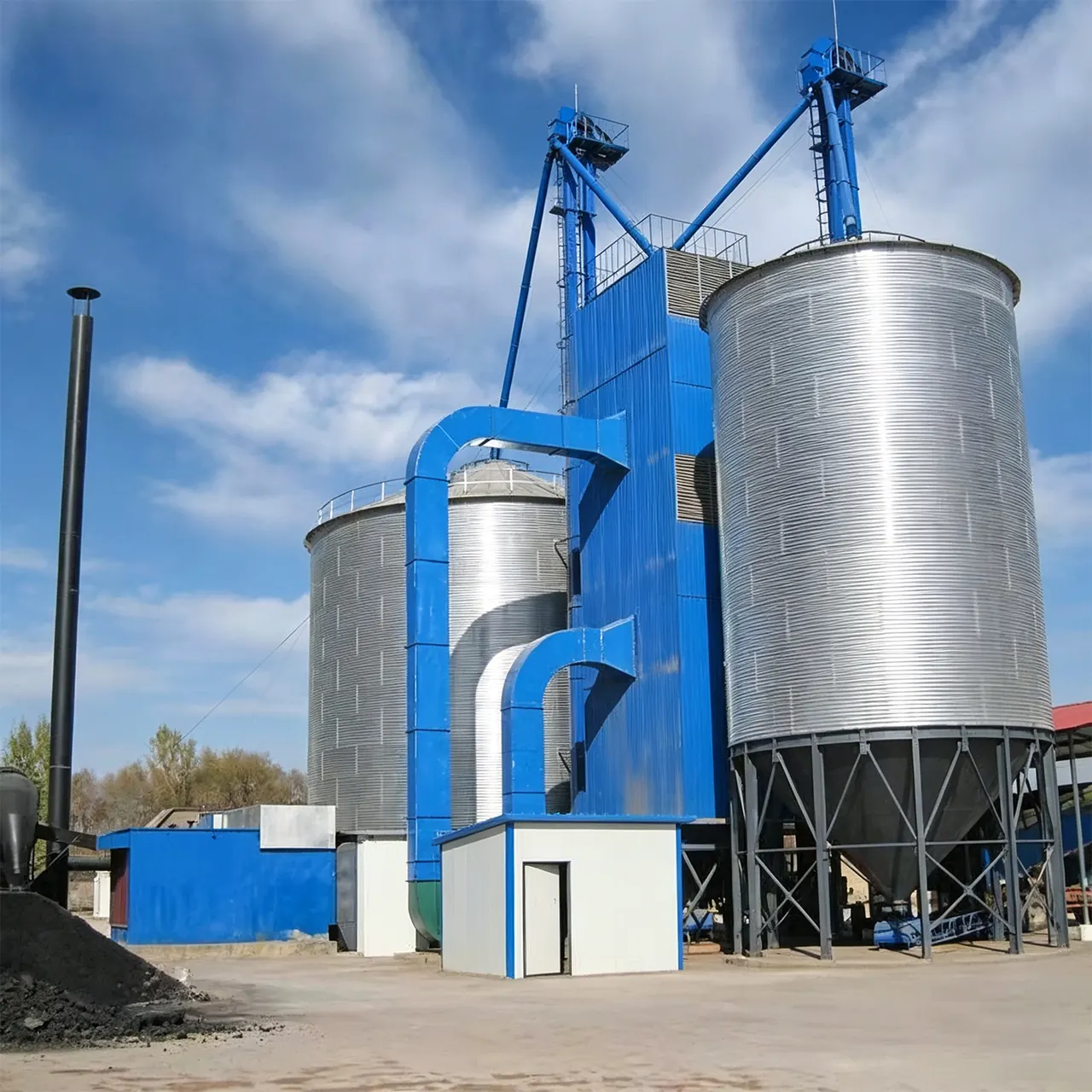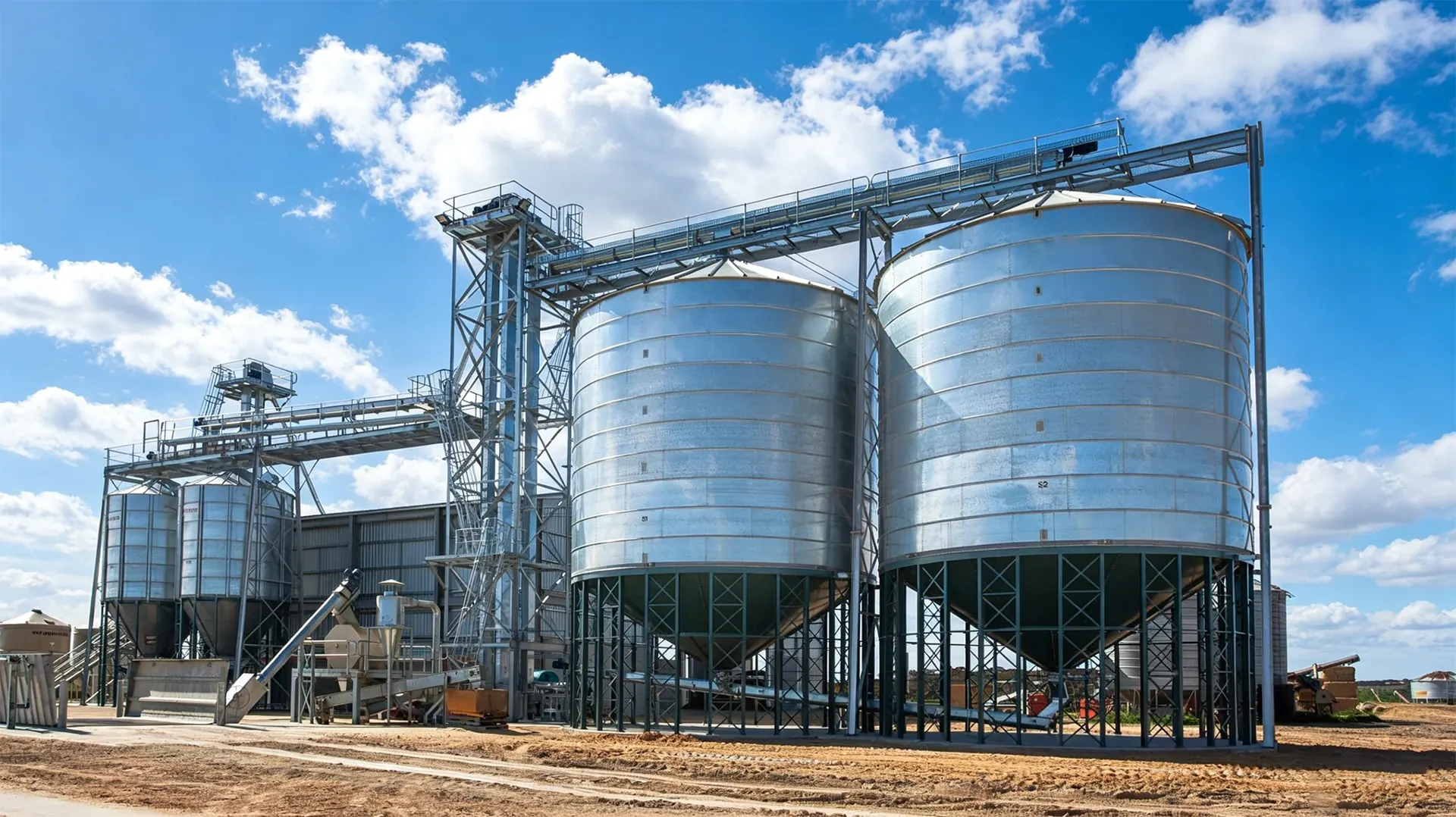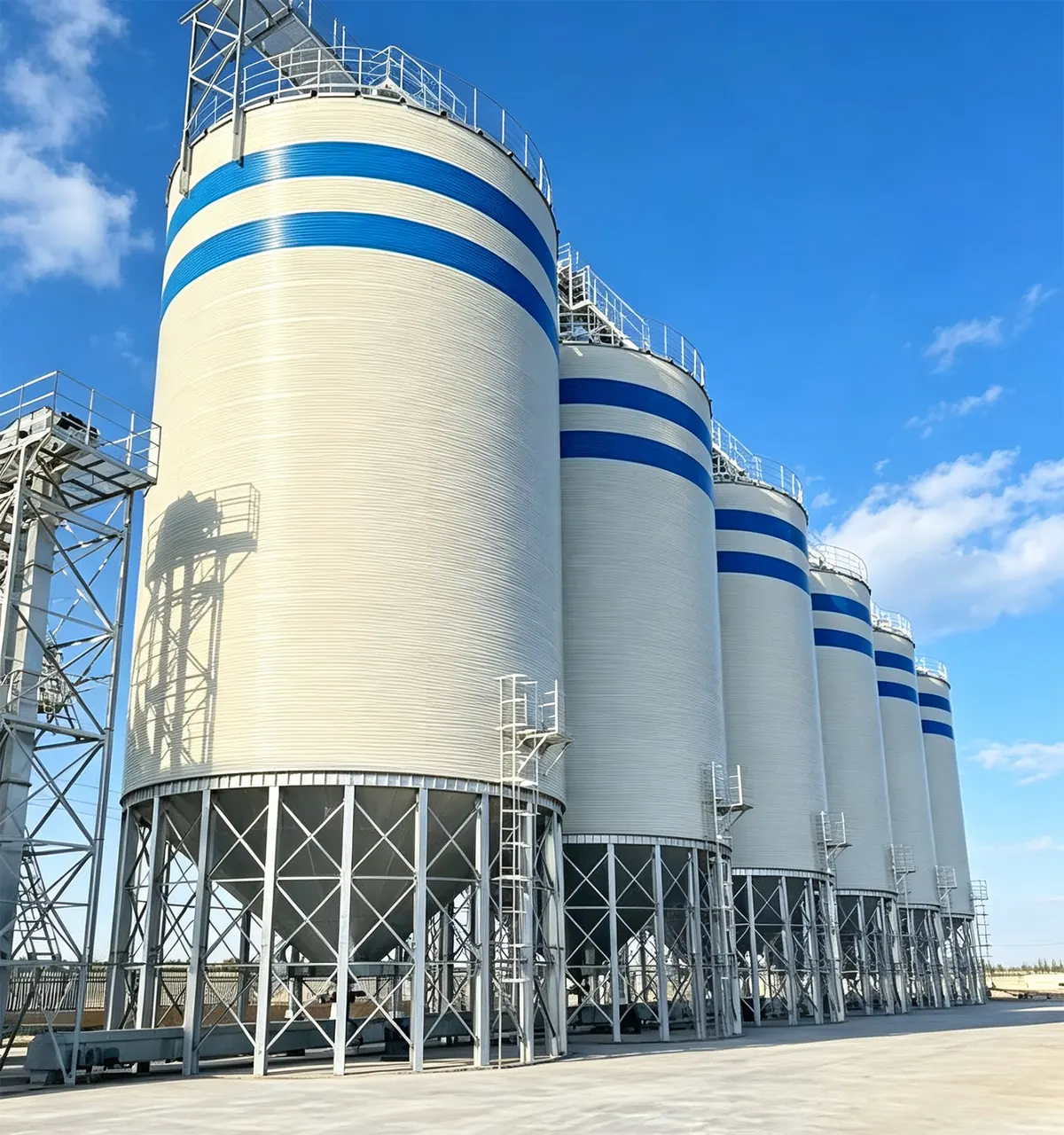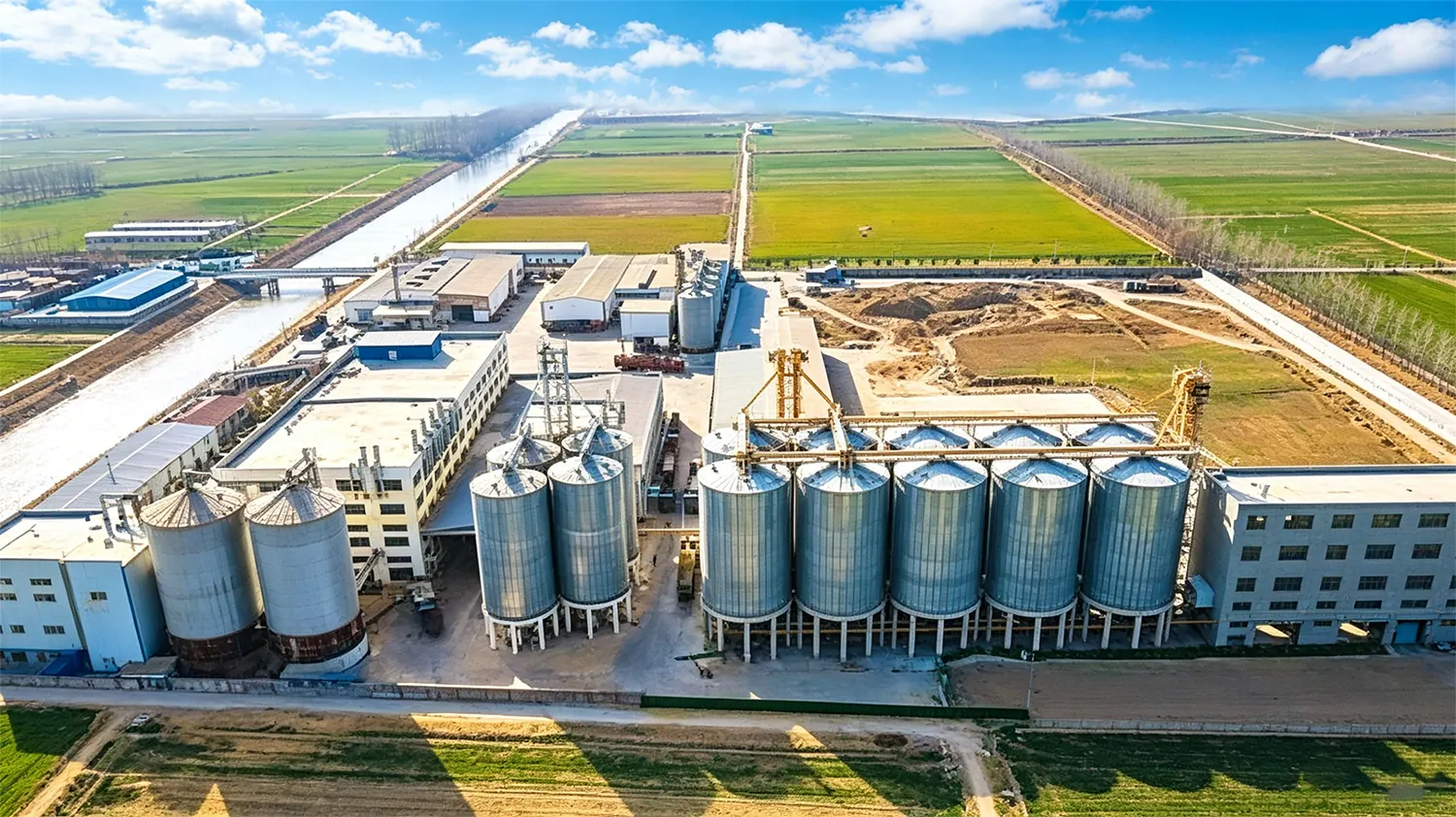
A grain elevator is one of the few industrial environments where a single misplaced spark can propagate from ignition to catastrophic deflagration in under 200 milliseconds. Fire suppression installation in these facilities is not a code checkbox — it is a sequence of engineering decisions that begins with dust hazard analysis and ends with a harvest-aligned inspection schedule.
Why Grain Dust Explosions and Deep-Seated Grain Fires Require Custom Suppression Design
Engineers new to agricultural facilities often assume that a standard NFPA 13 wet-pipe sprinkler layout will satisfy a grain terminal. It will not. Two distinct hazards coexist inside the same structure, and they behave in fundamentally Different Types of Silos Used in Cement, Mining & Agr... ways.
The first is the dust deflagration hazard. Grain dust is generated continuously by conveying, elevating, and drying. It accumulates on ledges, inside elevator legs, above bin roofs, and on structural Purchase High-Quality Steel Silo: An Engineer's Guide. The primary explosion is usually small — a bearing failure, a friction spark from a choked leg, or a hot surface inside a dryer burner. That primary event dislodges settled dust, and the resulting secondary explosion is the one that levels headhouses. Suppression and explosion-prevention Dry Method Cement Rotary Kiln Systems in Modern Cement Pl... must therefore target ignition sources before the primary event occurs, because once a secondary deflagration is airborne, suppression alone is rarely sufficient.
The second is the deep-seated smoldering fire. Grain stored above roughly 16% moisture, or grain with uneven moisture distribution, supports biological self-heating. Heat migrates toward cooler zones through convection currents driven by temperature gradients. A smoldering pocket can travel several meters through a 30,000-tonne mass over weeks, insulated by grain's naturally low thermal conductivity. Water applied to the surface of a bin does nothing to extinguish it. Effective control requires either inert gas injection into a sealed headspace or direct injection into the grain mass through specially designed lances.

NFPA and OSHA Standards That Govern Fire Suppression Installation in Grain Facilities
Compliance in this sector is layered. No single document covers a grain terminal, and designers who rely on only one standard routinely fail acceptance testing.
| Standard | Scope Relevant to Grain Facilities |
|---|---|
| NFPA 61 | Primary standard for agricultural and food processing facilities handling combustible dust; prescribes construction, ventilation, housekeeping, and pneumatic conveying requirements |
| NFPA 652 | Fundamentals of combustible dust safety; mandates the Dust Hazard Analysis (DHA) that drives suppression scope |
| NFPA 654 | General requirements for dust deflagration prevention, including layer depth criteria and ignition control |
| NFPA 68 / NFPA 69 | Explosion venting and explosion prevention through inerting, oxidant concentration reduction, and isolation |
| NFPA 13 / 15 / 750 | Sprinkler, water spray, and water mist system design criteria respectively |
| NFPA 72 | Detection and alarm system installation and verification |
| NFPA 25 | Inspection, testing, and maintenance of water-based systems |
| 29 CFR 1910.272 | OSHA Grain Handling Facilities standard — housekeeping, hot work permitting, bin entry permits, emergency action plans, employee training |
OSHA 1910.272 does not specify a suppression agent, but it does establish the administrative framework that any installation must respect: hot work permits, bin entry procedures, and a documented emergency action plan. Inspectors reviewing a fire suppression installation frequently ask for these documents before they ask about pipe sizing, because an undocumented system is an unverifiable system.
The Pre-Installation Hazard Audit: Dust Hazard Analysis and Fire Risk Mapping
Every credible installation begins with a Dust Hazard Analysis conducted under NFPA 652. The DHA is not a walkthrough — it is a structured, equipment-by-equipment evaluation of dust explosibility, ignition sensitivity, operating conditions, and consequence severity.
Required DHA Inputs
- Laboratory dust explosibility data: Kst, Pmax, MEC, minimum ignition energy (MIE), minimum ignition temperature of the dust cloud and of the layer (MITcloud, MITlayer), and limiting oxygen concentration (LOC)
- Equipment inventory with materials of construction, bearing types, and drive configurations
- Process flow diagrams showing where dust is generated, entrained, and deposited
- Historical incident data including near-misses, hot bearing alarms, and previous smoldering events
- Structural and ventilation drawings showing confinement volume for each hazard zone
The output is a fire risk map: a facility drawing that assigns each zone a hazard classification, a credible ignition scenario, a consequence estimate, and a required control layer. That map is the scope-of-work document the suppression contractor prices against. Skipping it is the single most common cause of under-specified systems that pass commissioning but fail the first real event.
Selecting Suppression Agents: Water Mist, Dry Chemical, Foam, and Inert Gas Compared
Agent selection follows the hazard, not the budget. In practice, most grain facilities end up with a hybrid system because the hazard profile changes from zone to zone.
| Agent | Best-Fit Application | Key Limitations |
|---|---|---|
| High-pressure water mist | Headhouses, elevator legs, dryer enclosures, occupied spaces | Higher capital cost; requires clean water and careful nozzle placement |
| Dry chemical (potassium bicarbonate) | Localized protection of burners, electrical panels, conveyor drives | Cleanup burden; limited cooling; no deep-seated penetration |
| Foam | Bulk oil and fuel storage, loading areas | Not suitable for Class C electrical hazards; fluorine-free formulations require re-approval |
| Inert gas (CO₂, nitrogen) | Sealed bins with smoldering grain; enclosed conveyor galleries | Life-safety risk in occupied spaces; requires pressure-tested sealing |
Water mist deserves particular attention. A well-designed high-pressure system operating at 70–100 bar produces droplets in the 50–200 micron range, dramatically increasing surface area and enabling oxygen displacement through steam generation. Total water demand can be as little as 10–15% of a comparable deluge system, which matters enormously in remote facilities where water supply is limited and runoff containment is expensive.
For deep-seated grain fires, carbon dioxide remains the workhorse. Effective concentrations run 34% by volume for surface Class B fires and upward of 50% for deep-seated smoldering. This demands a bin that can hold 5–10 psi of internal pressure — meaning the sealing work, not the gas supply, is usually the critical path item.

Zone-by-Zone Fire Suppression Installation: Bins, Elevator Legs, Headhouses, Dryers, and Conveyors
Storage Bins and Silos
Bin protection is primarily about detection and inerting rather than suppression. Temperature cables suspended on a grid pattern detect the thermal signature of a developing hotspot, while CO monitoring in the headspace catches smoldering combustion at concentrations as low as 10–50 ppm — long before visible smoke appears. Inert gas injection points should be located in the headspace with a distribution manifold that prevents channeling through the grain mass. Bins retrofitted for inerting require pressure-vacuum relief valves sized to the injection rate, and all bin penetrations must be sealed and pressure-tested before the first gas discharge.
Elevator Legs
The elevator leg is the highest-risk component in the facility. Belt misalignment, choked boot sections, and tramp metal all produce frictional heating that can ignite dust within seconds. Installation typically combines spark detection at the leg discharge with a high-speed abort gate, plus water mist nozzles at the boot and at intermediate bearing locations. The abort gate must divert material to a safe location and actuate in under 300 milliseconds to be effective.
Headhouses
Headhouses are confined, multi-level, and heavily populated with rotating equipment. Water mist coverage on all levels, thermal detection, and interlocked shutdown of conveying equipment form the baseline. Where headhouses are enclosed with limited egress, NFPA 69 inerting may be considered, but the life-safety implications of reduced oxygen in an occupied space must be evaluated first.
Grain Dryers
Dryers combine the highest temperatures in the facility with the highest dust concentrations. Gas-fired burners require burner-management interlocks, flame supervision, and high-temperature limits that shut off fuel within seconds. Suppression should protect the burner chamber, the plenum, and the discharge transition. Ductwork carrying dust-laden air must be bonded and grounded continuously, with resistance to ground verified at every flange.
Conveyors and Transfer Points
Belt conveyors accumulate dust on idlers, in skirtboards, and beneath the belt return. Bearing temperature sensors on head and tail pulleys, combined with spark detection at transfer chutes and water mist at drive stations, address the majority of credible ignition scenarios.
Retrofitting Fire Suppression Into Legacy Grain Bins and Elevators Without Halting Harvest
Retrofit work in an operating grain terminal is a scheduling problem as much as an engineering one. The practical approach is to segment the facility into isolation packages that can be worked during short windows between truck receipts.
- Pre-fabricate everything possible. Pipe spools, nozzle assemblies, and manifold sections should arrive cut, threaded, and pressure-tested. Field work becomes assembly rather than fabrication.
- Work bin-by-bin. A single empty bin can be isolated, sealed, and instrumented in two to four days without affecting adjacent storage.
- Sequence around the harvest calendar. In most geographies there is a four-to-eight week window between the end of spring movement and the start of harvest. That is the only period when headhouse shutdowns are economically tolerable.
- Document existing conditions first. Legacy bins often lack adequate structural capacity for new piping loads, and older headhouses may have unlabeled electrical circuits that complicate interlock wiring.
Detection and Activation: Spark Detection, Thermal Imaging, and CO Monitoring for Early Warning
Suppression without detection is a fire extinguisher with no one holding it. Grain facilities benefit from layered detection because no single technology covers every scenario.
Spark Detection and Extinguishing
Optical spark detectors mounted in pneumatic and mechanical conveying ducts identify infrared and ultraviolet radiation from passing embers. Response time from detection to water injection is typically under 100 milliseconds. These systems are most valuable upstream of dust collectors and bins, where a single ember can become a deflagration.
Thermal Imaging and Temperature Cables
Fixed thermal cameras monitoring bin walls, drive stations, and dryer shells detect anomalous surface temperatures before combustion. Inside bins, digital temperature cables on a 5–10 meter grid provide the earliest possible indication of self-heating.
CO and VOC Monitoring
Carbon monoxide is the most reliable early indicator of smoldering grain. Headspace CO monitors with alarm thresholds at 50 ppm and shutdown interlocks at 100 ppm give operators time to begin aeration or inerting before the situation escalates. Some facilities add volatile organic compound sensors for additional sensitivity.
Installation Sequencing, Contractor Coordination, and Hot Work Safety During Retrofits
Welding and cutting in a dust-laden environment is a leading cause of catastrophic loss. NFPA 51B and OSHA 1910.272 require a formal hot work permit program, and it must be enforced without exception.
Before any torch is lit: the work area must be cleared of combustible dust within a 35-foot radius, all conveying equipment in the zone must be locked out, dust accumulation on adjacent surfaces must be removed, a fire watch must be posted for the duration plus 60 minutes after completion, and a calibrated gas monitor must confirm the absence of combustible gas. In high-hazard zones, consider replacing welded connections with grooved or flanged mechanical joints wherever the design pressure permits — this eliminates most hot work entirely.

Written by: Manxing Engineering Team
Reviewed by: Senior Engineer