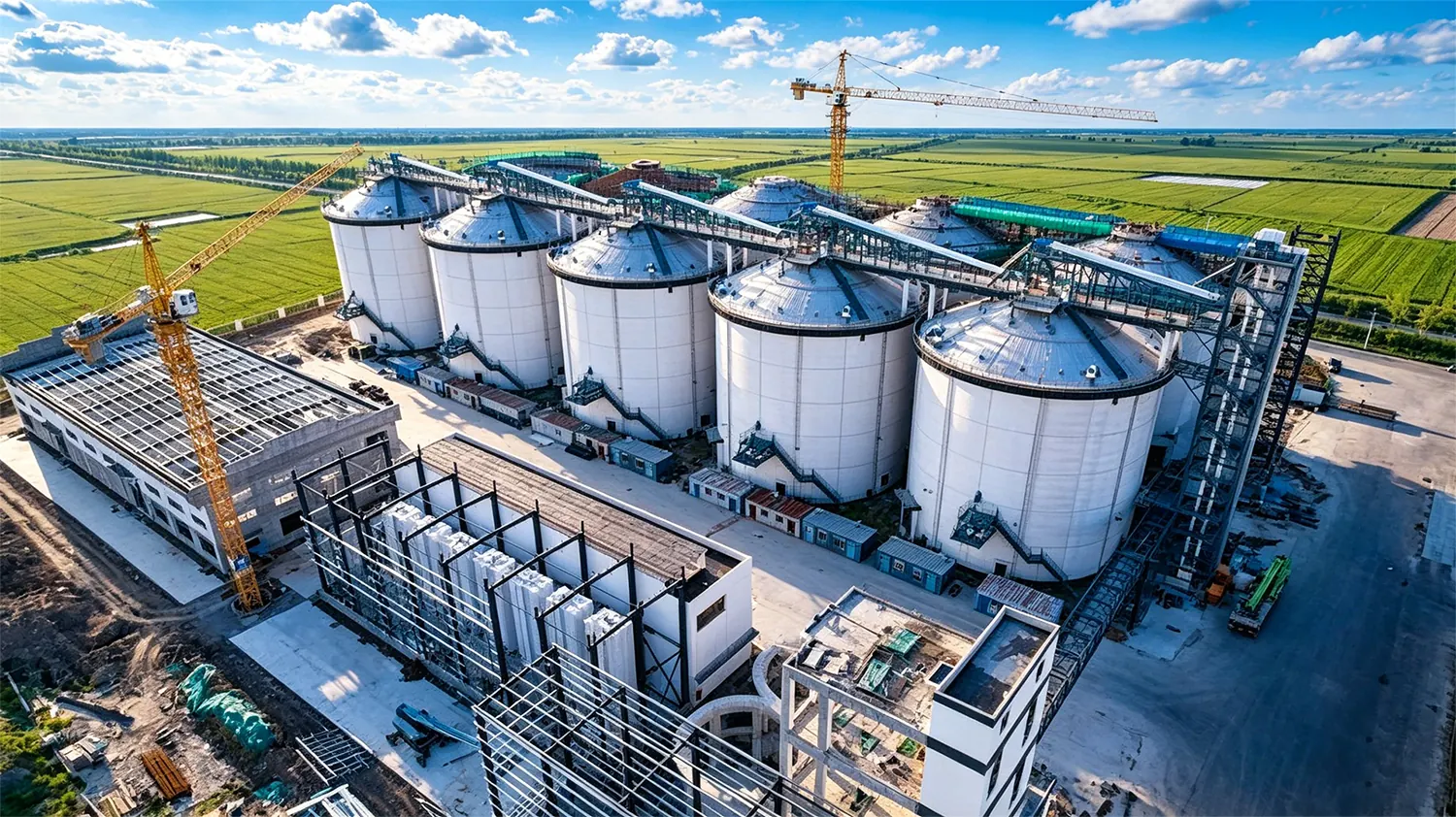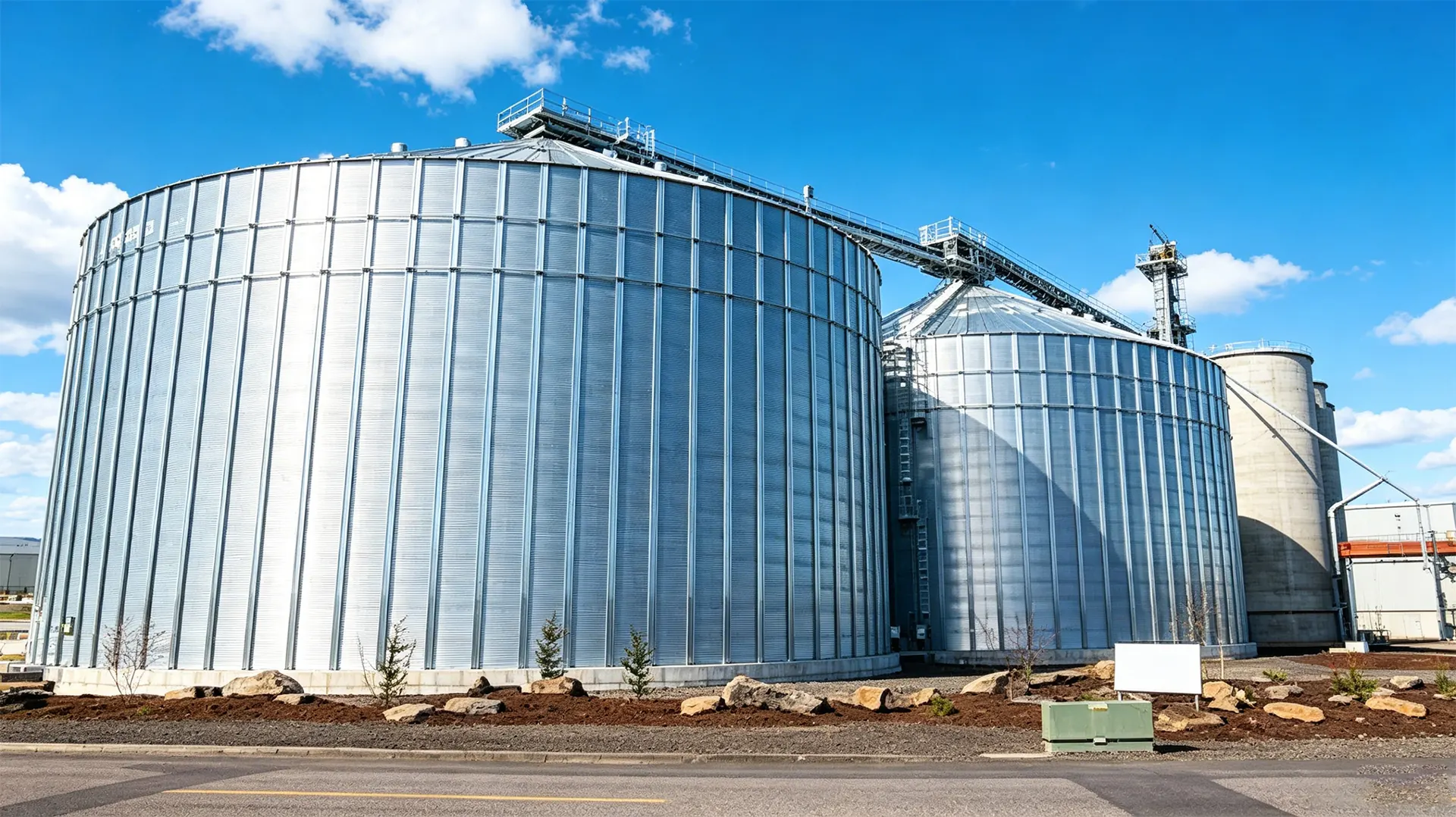
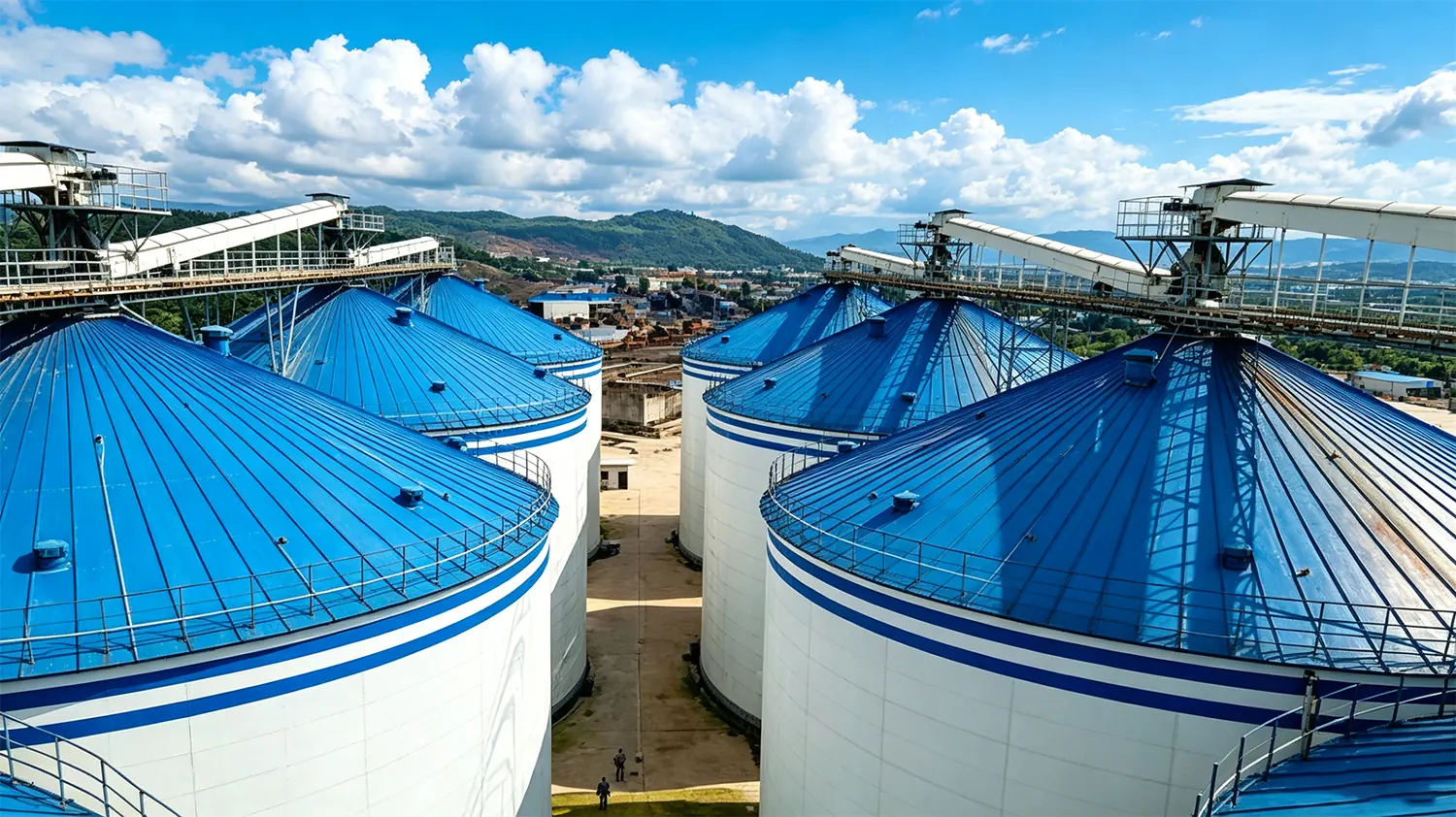
A silo is never just a steel cylinder — it is a pressure vessel, a flow channel, and a structural system all at once. Choose the wrong type, and you inherit bridging, ratholing, wall fatigue, and decades of avoidable maintenance. This Ventilation Fan Failure: Diagnosis and Repair Guide for G... breaks down the different types of silos used across cement, mining, and agriculture, and explains exactly how material behaviour should drive your specification.

Why Choosing the Right Silo Type Makes or Breaks Cement, Mining, and Agriculture Operations
A cement plant handling 200 tonnes per hour of clinker cannot tolerate a silo that discharges in fits and starts. A copper concentrator feeding a mill at a fixed rate cannot accept segregation that quietly changes the feed grade. A Dust Explosion Prevention in Grain Storage Facilities: En... elevator holding 30,000 tonnes of wheat cannot afford a moisture migration problem that turns the core of the bin into a mouldy plug. In each case, the silo is the process bottleneck, and its design is dictated by the material it holds.
Bulk solids behave nothing like liquids. Their discharge is governed by internal friction, wall friction, cohesion, particle size distribution, moisture content, and time at rest under consolidation pressure. A silo designed for free-flowing dry sand will fail within weeks on damp filter cake. A hopper sized for wheat will choke on cement powder. Getting the type right — bolted versus welded, flat-bottom versus hopper-bottom, mass flow versus funnel flow — is the single most consequential decision in a bulk Dust Explosion Prevention in Grain Storage Facilities: En... project.

Silo Anatomy 101: Shell, Hopper, Discharge, Aeration, and Venting Systems Explained
Before comparing silo types, it helps to name the parts. Every industrial silo is an assembly of five functional systems, and each one has its own failure modes.
Shell and Structural
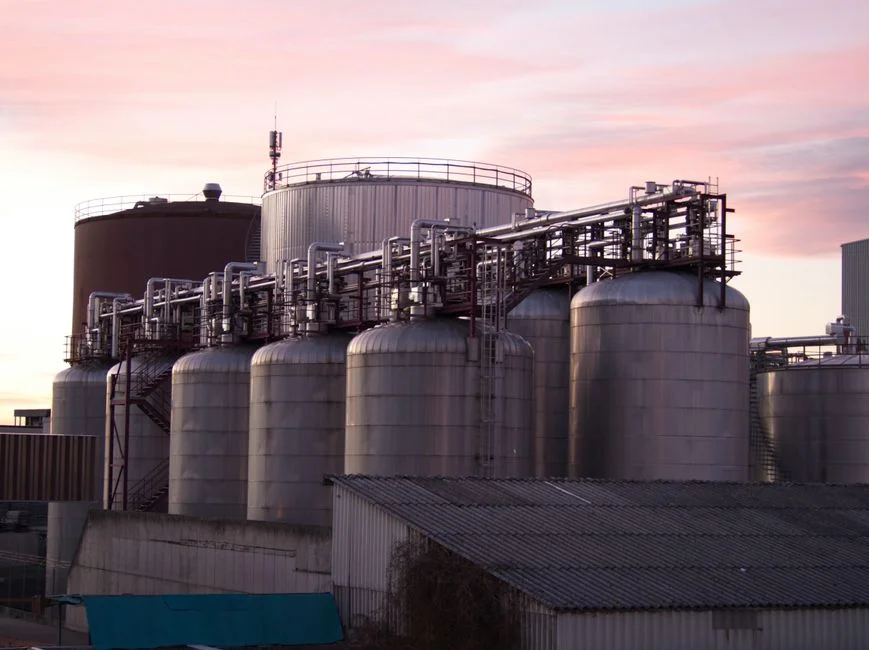
The shell carries the vertical and hoop stresses generated by the stored material, plus wind, seismic, snow, and thermal loads. Steel shells range from 2.0 mm corrugated galvanised sheet in agricultural grain bins to 25 mm+ plate in heavy mining duty. Concrete shells rely on hoop reinforcement and post-tensioning. Wall thickness is not simply a function of capacity — eccentric discharge can triple local pressures on one side of a shell, and codes such as EN 1991-4, ACI 313, and AS 3774 exist precisely to capture that asymmetry.
Hopper and Transition
The hopper is where flow is won or lost. Its wall angle, outlet size, and surface finish determine whether the material moves in mass flow (everything moves, first-in-first-out) or funnel flow (a central channel drains while material clings to the walls). Mass flow demands steeper, smoother, often lined hoppers; funnel flow is cheaper but carries dead-zone and segregation risk.
Discharge Systems
Discharge hardware includes screw conveyors, air slides, vibrating bin dischargers, rotary valves, chain reclaimers, sweep augers, and belt or drag feeders. The correct choice depends on abrasiveness, particle size, and whether the process requires volumetric or gravimetric control.
Aeration and Venting
Aeration serves two masters: keeping grain cool and dry in agriculture, and fluidising fine powders such as cement and fly ash to restore flow. Venting is non-negotiable — pressure and vacuum relief valves, bin vent filters, and explosion vent panels sized to NFPA 68 or EN 14491 protect the shell from pneumatic filling pressure and from dust deflagration.
Cement Storage Silos: Bolted, Welded, and Concrete Silos for Clinker, Fly Ash, and Cement Powder
Cement industry storage covers a wide spectrum of materials: hot clinker, gypsum, limestone, slag, fly ash, and finished cement. Bulk densities run from roughly 0.9 t/m³ for dry fly ash to 1.8 t/m³ for compacted cement, and clinker is aggressively abrasive at temperatures that can exceed 100 °C at the point of discharge.
Bolted steel silos in the 50–1,000 tonne range dominate distribution terminals and batching plants. They ship in panels, erect quickly, and are easily relocated. Welded smooth-wall silos are preferred where hygiene, low wall friction, or mass flow behaviour matters — cement and fly ash both benefit from a low-friction, seamless interior with no bolt heads to trap material.
Slip-form concrete silos take over at the high end: 5,000 to 30,000 tonnes, often in clinker or blended cement service. Concrete offers thermal mass, excellent abrasion resistance, and low maintenance, but it cannot be relocated and requires a long construction window.
Flow Considerations for Cementitious Materials
Finished cement is fine, cohesive, and prone to flushing and caking when aerated excessively. Practical designs use 60–65° conical hoppers, fluidising pads or air cannons, and controlled aeration pressure. Fly ash is highly fluidisable and will behave like a liquid if over-aerated, so aeration must be zoned and sequenced. Clinker, by contrast, needs abrasion-resistant liners, generous outlet dimensions, and often a heavy-duty apron or pan feeder rather than a screw.

Mining Storage Silos: Heavy-Duty Designs for Ore, Concentrate, Coal, and Tailings
Mining silos live in the harshest environment of the three industries. Copper and zinc concentrates typically run 2.0–2.5 t/m³ with 8–10% moisture, and they are both abrasive and cohesive. Coal adds an explosion risk. Iron ore and crushed rock bring large lump sizes and impact loading. Tailings and filter cake can be thixotropic, gaining strength the longer they sit.
Heavy-duty mining silos usually feature thick plate shells, internal wear liners in the hopper and around the outlet, and mass flow geometry wherever the process demands consistent feed. Common liner materials include quenched-and-tempered abrasion plate, ceramic tiles, and ultra-high-molecular-weight polyethylene for cohesive, sticky materials. Wedge-shaped (transition) hoppers are frequently chosen over conical ones because they achieve mass flow at shallower wall angles and require less headroom.
Coal silos add a second design layer: dust explosivity. Kst values for coal dust commonly fall between 100 and 200 bar·m, so silos require explosion venting, inerting or monitoring where appropriate, bonded and grounded construction, and careful control of ignition sources.