Dust Dust Explosion Prevention in Grain Storage Facilities: En... Prevention in Grain Storage Facilities: En... bridging and crusting represent two of the most persistent and dangerous challenges in bulk material storage. While a silo may appear fully loaded from the outside, internal flow obstructions can render discharge systems completely inoperative, leading to costly downtime and severe safety hazards. As a veteran engineer with over two decades of experience designing grain storage systems, I have witnessed firsthand how these phenomena can cripple operations if not properly addressed during the design phase. This comprehensive guide explores the mechanics of grain bridging and crusting, and outlines the engineering strategies required to eliminate them.
1. The Hidden Dangers of Grain Bridging and Crusting in Silos
When Dust Dust Explosion Prevention in Grain Storage Facilities: En... Prevention in Grain Storage Facilities: En... flows through a silo, it is subject to complex physical forces that can halt movement entirely. Grain bridging occurs when a stable arch forms above the discharge outlet, supporting the weight of the material above it. Crusting, on the other hand, refers to the hardening of grain layers, typically near the silo wall or at the surface, creating a rigid structure that prevents flow. The hidden danger lies in the deceptive nature of these blockages. Operators may believe a silo is emptying normally, only to discover that a void has formed beneath a bridged mass. If the bridge collapses unexpectedly, it can destroy downstream equipment or cause catastrophic silo failure. Furthermore, crusting restricts airflow in aeration systems, leading to localized hot spots, moisture accumulation, and ultimately, grain spoilage.
2. The Physics of Flow: Why Grain Bridging and Crusting Occur
To engineer a solution, one must first understand the problem. The formation of a Dust Dust Explosion Prevention in Grain Storage Facilities: En... Prevention in Grain Storage Facilities: En... bridge is a battle between gravitational forces and the cohesive strength of the bulk material. When grain is loaded into a silo, it compacts under its own weight. Fine particles, moisture, and interlocking husks create cohesive strength. If the compressive forces exerted by the material exceed the gravitational pull on the arch, the grain locks into a stable bridge. Crusting is primarily driven by moisture migration. As ambient temperatures fluctuate, warm grain cools near the silo wall, causing moisture to migrate inward. This cycle of wetting and drying creates a hardened crust that adheres to the wall and bridges across the silo interior.

Funnel Flow vs. Mass Flow Dynamics
In a funnel flow silo, material at the center moves first, while stagnant zones remain along the walls. These stagnant zones are the primary breeding grounds for crusting and bridging, as the grain sits stationary for extended periods, absorbing moisture and compacting. Conversely, a mass flow silo ensures that all material is in motion during discharge. By eliminating stagnant zones, mass flow design prevents the conditions necessary for crusting and bridging to develop.
3. Engineering Flow: Silo Design Strategies to Prevent Bridging
Preventing grain bridging begins at the drafting table. The geometry of the silo hopper is the most critical factor in ensuring reliable discharge. A properly designed hopper must have a steep enough wall angle and a sufficiently large outlet diameter to overcome the material's cohesive strength. For most grains, such as wheat, corn, and soybeans, a hopper slope of 60 to 70 degrees from horizontal is typically required to achieve mass flow. Furthermore, the transition from the vertical cylinder to the hopper must be smooth and seamless. Any ledges, bolt heads, or weld seams protruding into the material path will catch grain and initiate a bridge.
Optimizing Wall Friction Coefficients
Wall friction dictates how easily grain slides down the silo interior. High wall friction promotes funnel flow and bridging. To mitigate this, engineers specify specialized wall coatings and highly polished stainless steel or galvanized steel liners for the hopper sections. These materials reduce the coefficient of friction, allowing the grain to slide uniformly toward the outlet, thereby preventing the formation of stable arches.
4. Moisture Migration and Crusting: The Critical Role of Aeration
Crusting is overwhelmingly a moisture management issue. Without proper aeration, the temperature differential between the outside air and the stored grain drives moisture migration. During autumn, the silo walls cool down, and the air adjacent to the walls warms up, creating a convection current that carries moisture into the grain mass. This results in severe crusting near the walls and surface. An intelligently designed aeration system combats this by maintaining a uniform temperature throughout the grain mass. By pushing small amounts of ambient air through the silo floor, the thermal front is equalized, halting the moisture migration cycle before crusting can occur.

5. Material Handling Solutions: Flow Aids and Activators for Bridging
Even with optimal silo design, certain hygroscopic or high-moisture materials may still require mechanical assistance to prevent bridging. Flow aids and activators are engineered to transmit energy directly to the grain mass, breaking stable arches and disrupting crusts. However, not all flow aids are created equal. Improperly applied vibration can actually compact the grain further, making the bridge more stable. The key is to apply high-amplitude, low-frequency energy at precise locations.
Pneumatic Vibrators and Air Cannons
Pneumatic vibrators attached to the exterior of the silo hopper create high-frequency oscillations that fluidize the grain, reducing inter-particle friction. For severe bridging, air cannons (also known as bin blasters) are highly effective. These devices release a sudden, high-volume burst of compressed air that shatters the bridge without causing compaction. The strategic placement of these devices is critical; they must be positioned at the exact location where the bridge typically forms, which is usually just above the discharge outlet.
6. Grain Silos vs. Grain Bins: Impact on Material Flow and Crusting
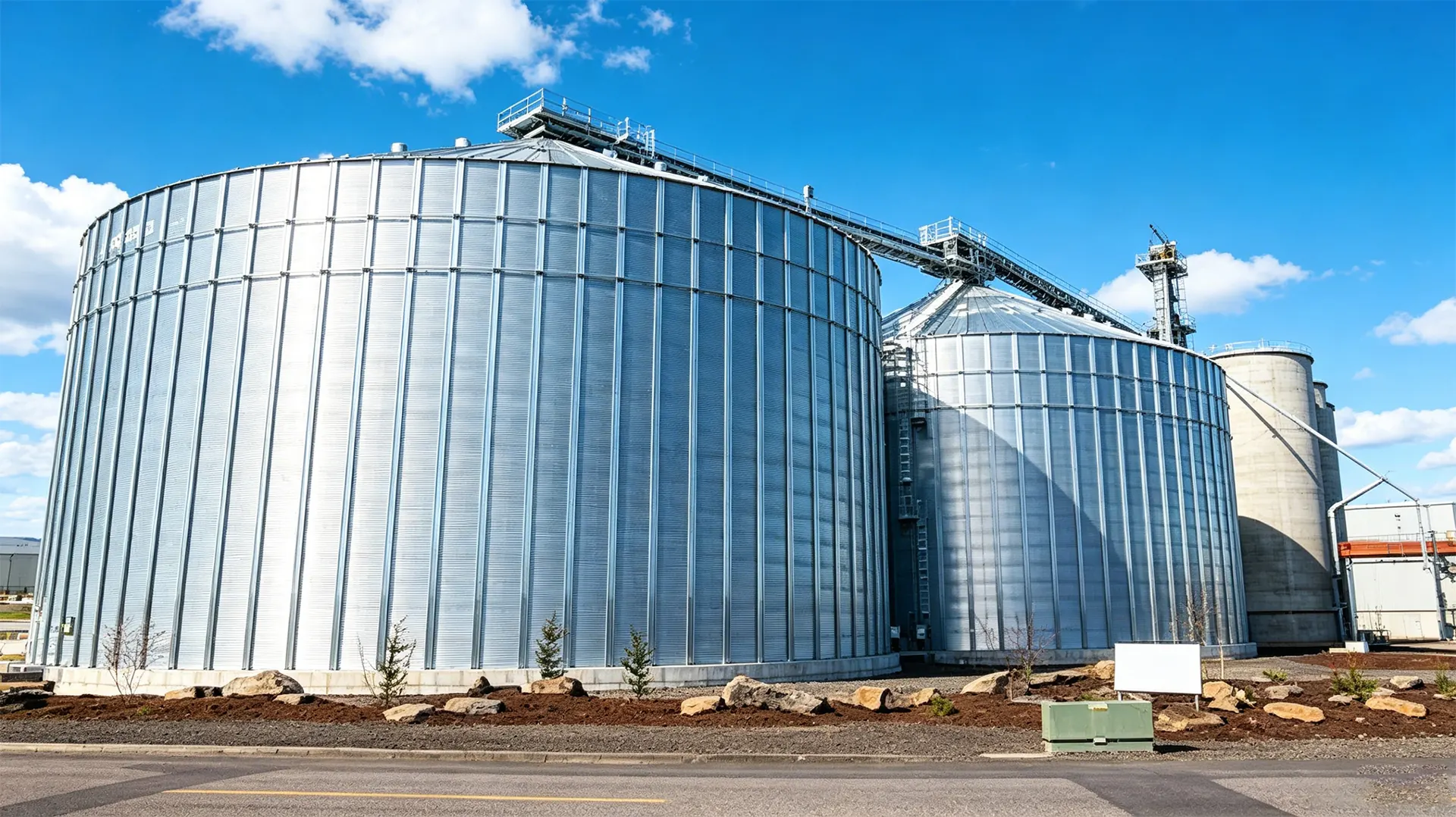
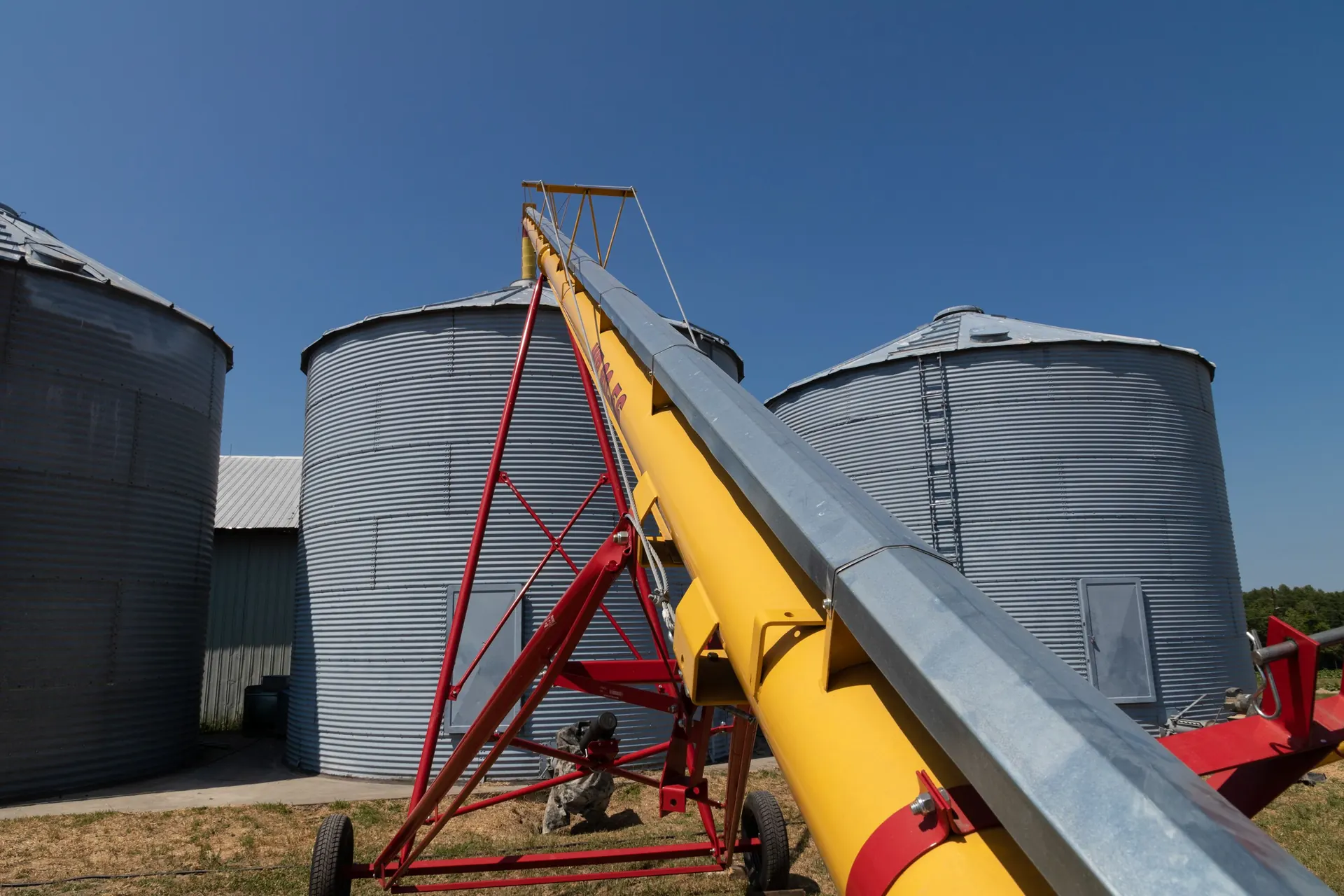
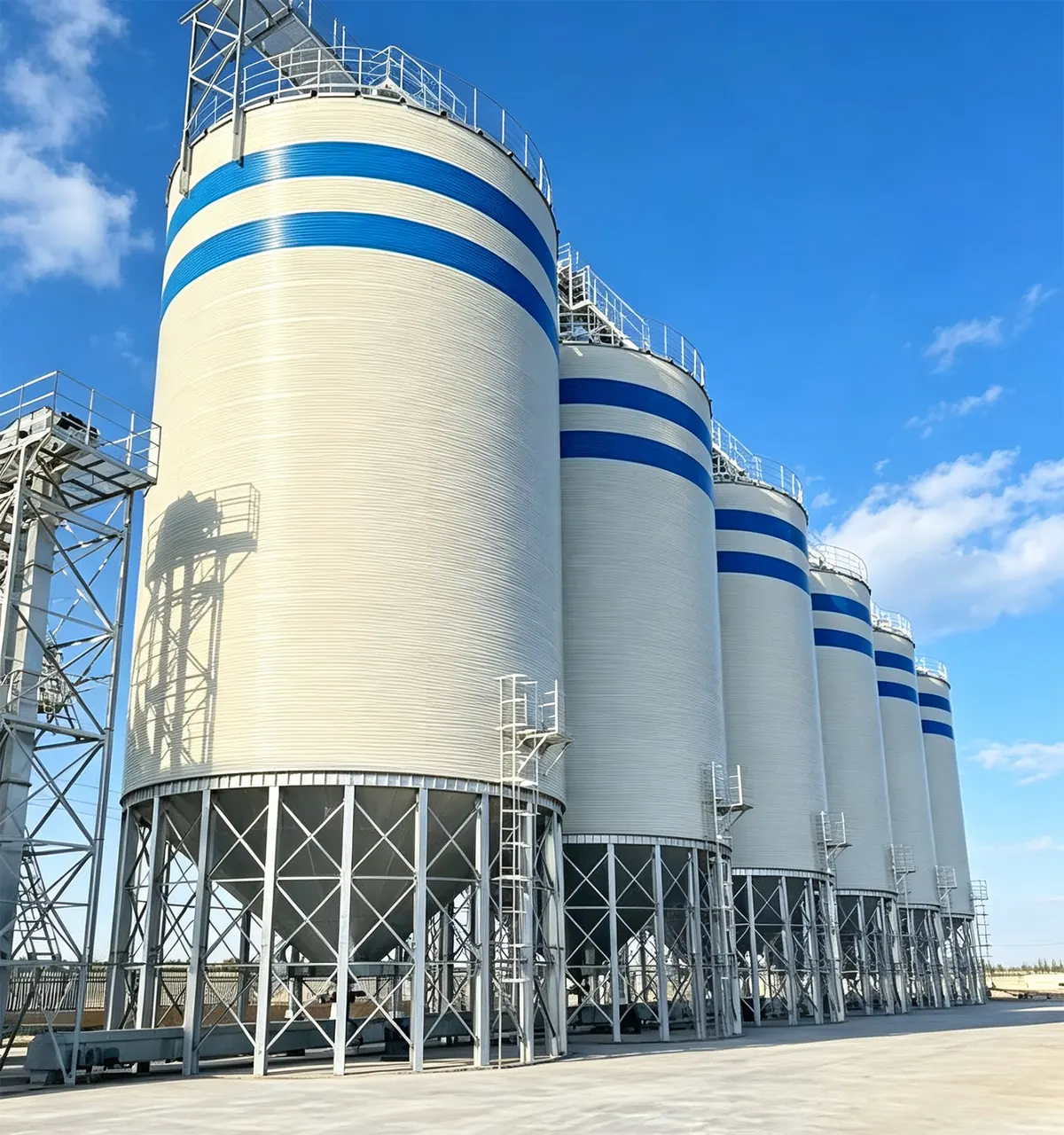
Understanding the distinction between grain silos and grain bins is essential when evaluating flow dynamics and crusting risks. While both serve the same fundamental purpose, their structural differences dictate how material behaves during storage and discharge. Grain bins are generally shorter, wider structures used for on-farm storage and frequent turnover. Grain silos are taller, engineered structures typically utilized for long-term storage at commercial facilities. The height-to-diameter ratio directly impacts the compressive pressure at the bottom. Taller silos exert significantly higher pressure on the grain at the outlet, which can increase the risk of compaction and bridging if the hopper design is inadequate. Furthermore, the larger volume of grain in a commercial silo means that moisture migration has a more pronounced effect over time, making integrated aeration and crusting prevention systems absolutely mandatory.
| Feature | Grain Silos | Grain Bins |
|---|---|---|
| Typical Height | Taller (High height-to-diameter ratio) | Shorter (Low height-to-diameter ratio) |
| Primary Use | Commercial, long-term storage | On-farm, short-term turnover |
| Flow Challenge | High compaction pressure, severe moisture migration | Moderate compaction, bridging near outlet |
| Aeration Requirement | Mandatory, high-capacity systems | Recommended, basic systems |
| Construction | Welded or bolted steel, spiral lock-seam | Corrugated bolted steel |
7. Safety First: The Critical Risks of Clearing Grain Bridges
The most immediate danger of grain bridging is the human risk involved in clearing the blockage. When an operator enters a silo to dislodge a bridge, they are working directly beneath a highly unstable mass of grain. If the bridge collapses, the worker can be engulfed in seconds. Grain entrapment is fatal; the pressure of the grain makes it impossible to breathe. Strict safety protocols must be followed. Under no circumstances should an operator enter a silo with a bridged condition. Instead, external flow aids, air cannons, and roof-mounted knock-out panels must be utilized. If entry is absolutely necessary, it must be done with a full-body harness, safety line, and an external observer, following confined space entry procedures.
8. Calculating the Cost: How Bridging and Crusting Affect Storage ROI
The financial impact of grain bridging and crusting extends far beyond the immediate cost of lost production. When a silo fails to discharge, downstream processing