
Soybean Storage Solution
Manage the high oil content that makes soybeans heat-sensitive
Understanding Soybean Storage Challenges
Soybeans present unique storage challenges that demand specialized engineering solutions. With an oil content ranging from 18% to 20%, soybeans are inherently more heat-sensitive and prone to quality deterioration than cereal grains. The high lipid concentration accelerates oxidative rancidity when exposed to elevated temperatures, and the porous seed structure readily absorbs moisture from the surrounding atmosphere. Without precise environmental control, stored soybeans can develop elevated free fatty acid levels, reduced protein solubility, and compromised germination rates within just weeks of harvest.
At Manxing, we engineer storage solutions specifically calibrated for these biological realities. Our soybean storage systems maintain grain temperatures below 15°C (59°F) during long-term holding periods, keeping the commodity well within the safe zone for lipid preservation. Our designs account for soybean's lower bulk density—typically 680 to 720 kg/m³ compared to 720 to 770 kg/m³ for corn—and the corresponding impact on lateral wall pressures, aeration airflow rates, and discharge dynamics.
What the Manxing Soybean Storage Solution Includes
Our soybean storage solution is a fully integrated system engineered to protect oil quality, protein integrity, and market value from the moment of intake through final dispatch. The core components include:
- High-capacity corrugated steel silos with diameters ranging from 4.5 meters to 36 meters and individual capacities from 50 to 15,000 metric tons. Wall gauges are calculated specifically for soybean lateral loads, accounting for the material's lower angle of repose and higher wall friction coefficients compared to wheat or maize.
- Temperature monitoring cables with sensor spacing every 1.2 to 1.5 meters vertically, providing real-time grain temperature data with an accuracy of ±0.5°C. These systems detect incipient heating within hours, well before visible quality loss occurs.
- High-efficiency aeration systems delivering airflow rates of 0.05 to 0.15 m³/min per metric ton of soybeans. This range is critical: too little airflow fails to remove field heat and respiration moisture; too much airflow drives excessive drying that can case-harden the seed coat and create moisture migration pathways.
- Automated moisture management with intake pre-cleaners that remove fines and foreign material. Soybeans stored above 13.0% moisture are at immediate risk of mold growth and heating; our systems maintain grain moisture between 11.0% and 12.5% for safe long-term storage of up to 18 months.
- Insulated roof and wall panels with minimum R-values of 3.5 m²·K/W, minimizing solar heat gain that can create temperature differentials within the grain mass and drive destructive moisture migration cycles.
Why Soybeans Demand a Dedicated Storage Approach
Soybeans behave fundamentally differently from starchy grains in storage. The oil-rich endosperm has a lower thermal conductivity—approximately 0.16 W/m·K compared to 0.18 W/m·K for corn—meaning heat generated by respiration or microbial activity dissipates more slowly. This thermal property makes soybeans more susceptible to localized hot spots that can escalate rapidly if undetected.
Furthermore, soybeans have a higher equilibrium relative humidity at a given moisture content. At 12.0% moisture and 25°C, soybeans maintain an equilibrium relative humidity of approximately 65%, which is near the threshold for Aspergillus glaucus growth. This narrow safety margin demands tighter environmental control than most other stored commodities require.
Our engineering team designs every soybean storage facility with these parameters as foundational inputs. Fan sizing, duct spacing, sensor placement, and silo geometry are all optimized for the specific thermal and hygroscopic properties of soybeans—not adapted from corn or wheat storage templates.
Who This Solution Serves
The Manxing soybean storage solution is purpose-built for:
- Commercial grain elevators handling 10,000 to 200,000 metric tons of soybeans annually, requiring rapid intake throughput of 200 to 1,200 metric tons per hour and the ability to segregate by oil content, protein level, or GMO status.
- Crushing and oil extraction plants that need buffer storage of 15 to 60 days of raw material supply. Consistent grain temperature and moisture are essential for maintaining press efficiency and oil yield, and our systems deliver grain at the target 10.0% to 11.0% moisture required for optimal mechanical extraction.
- Seed companies storing certified soybean seed where germination rates must remain above 85% for up to 10 months. Our low-temperature storage protocols, combined with humidity-controlled aeration, preserve seed viability far beyond what conventional flat storage or non-aerated bins can achieve.
- Export terminals managing vessel loading cycles of 25,000 to 60,000 metric tons. Our high-capacity silo configurations with automated reclaim systems ensure continuous, uniform discharge at rates matching ship loader capacities without grain damage or temperature spikes.
- Large-scale farming operations with on-farm storage of 2,000 to 15,000 metric tons, enabling strategic marketing by holding soybeans through seasonal price lows without quality degradation.
Why Manxing Is the Right Partner
Manxing brings over two decades of specialized grain storage engineering to every soybean project. Our approach is distinguished by several factors:
- Biological engineering expertise. Our design team includes grain storage biologists who model respiration rates, mold growth curves, and oil oxidation kinetics specific to soybean varieties from North America, South America, and Black Sea origins. This biological foundation informs every mechanical and structural decision.
- Proven performance in tropical and subtropical climates. Soybean storage in high-humidity environments—common in Brazil's Cerrado, Southeast Asia, and the U.S. Gulf Coast—demands aggressive condensation control. Our silo designs incorporate roof venting systems sized for soybean-specific vapor pressure differentials and wall insulation packages validated in environments with ambient temperatures exceeding 40°C and relative humidity above 85%.
- Integrated temperature and aeration control. Our MX-GrainManager automation platform continuously monitors grain temperature at multiple depths and automatically activates aeration fans when conditions warrant. For soybeans, the system is programmed with tighter temperature thresholds—typically initiating cooling at 12°C rather than the 18°C threshold used for corn—reflecting the commodity's lower safe storage temperature.
- Structural integrity for long-term static loads. Soybeans stored for 12 to 18 months impose sustained lateral pressures that can challenge silo wall integrity. Manxing silos are engineered with hoop tension calculations that account for soybean-specific fill and discharge load patterns, including eccentric flow stresses that develop during reclaim from large-diameter bins.
- Global project execution capability. From initial site assessment through commissioning, our project teams have delivered soybean storage facilities across 30 countries. We manage the full scope: foundation design, steel fabrication, mechanical installation, electrical integration, and operator training.
Technical Specifications at a Glance
Our standard soybean storage silo configurations include the following parameters:
- Capacities: 50 to 15,000 metric tons per silo
- Diameters: 4.5 m to 36.0 m
- Eave heights: 6.0 m to 42.0 m
- Design grain temperature range: -10°C to +45°C ambient
- Target stored grain temperature: 5°C to 15°C
-
Key Features
Safe moisture threshold
≤13.0%
Test weight
75 kg/hL (60 lb/bu)
Angle of repose
24°
Recommended storage temp
10-15°C
Max safe storage
210 days @ 15°C
Recommended Equipment
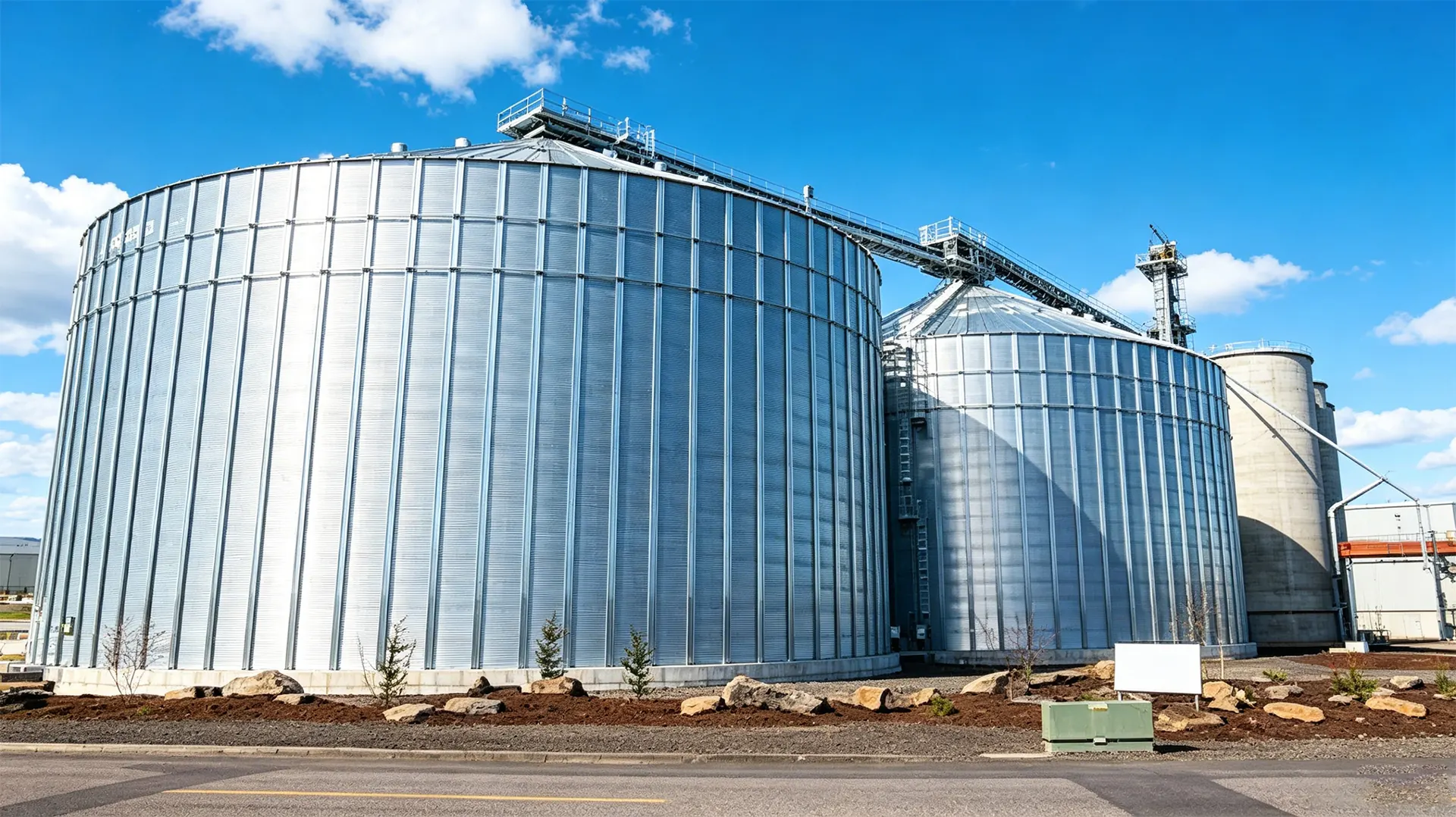
Typical system flow diagram — Soybean Storage Solution
System Configurations
Use the Selection Tool to find your fit →
Industries Using This Solution
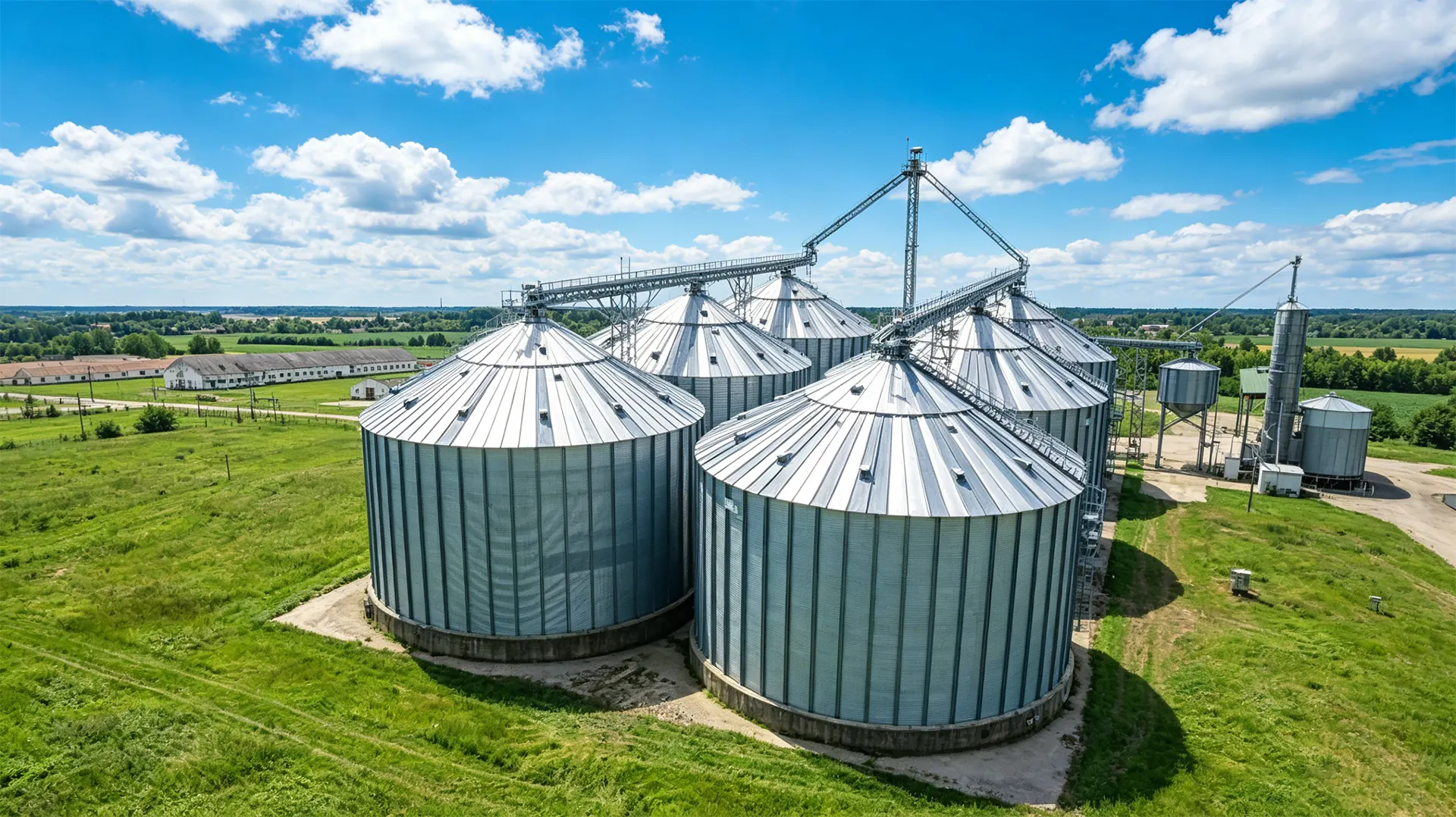
On-Farm Storage
Practical, cost-effective storage for growers
View Industry →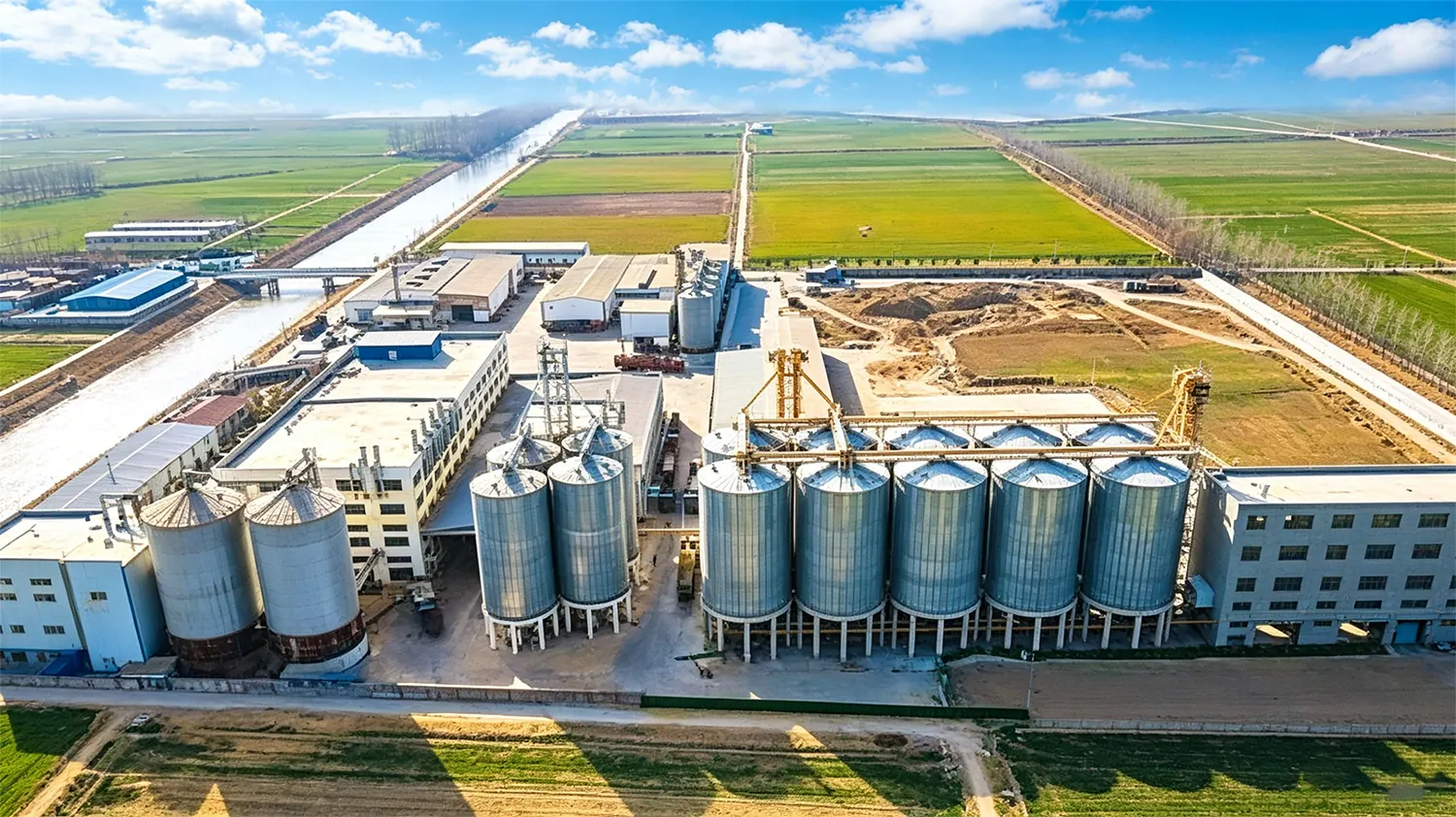
Commercial Grain Elevator
High-throughput storage for elevators and marketers
View Industry →Related Guides
Mastering Grain Bin Capacity Calculation: Precision Storage Formulas
Mastering Grain Bin Capacity Calculation: Precision Storage Formulas Mastering Grain Bin Capacity Calculation: Precision Storage Formulas Accurate grain bin...
Read Guide →
Foundation Design for Grain Bins: A Complete Engineering Guide
Foundation Design for Grain Bins: A Complete Engineering Guide When evaluating grain storage bins for sale, the structural integrity of the foundation is the most critical factor in ensuring long-term...
Read Guide →Soybean Projects
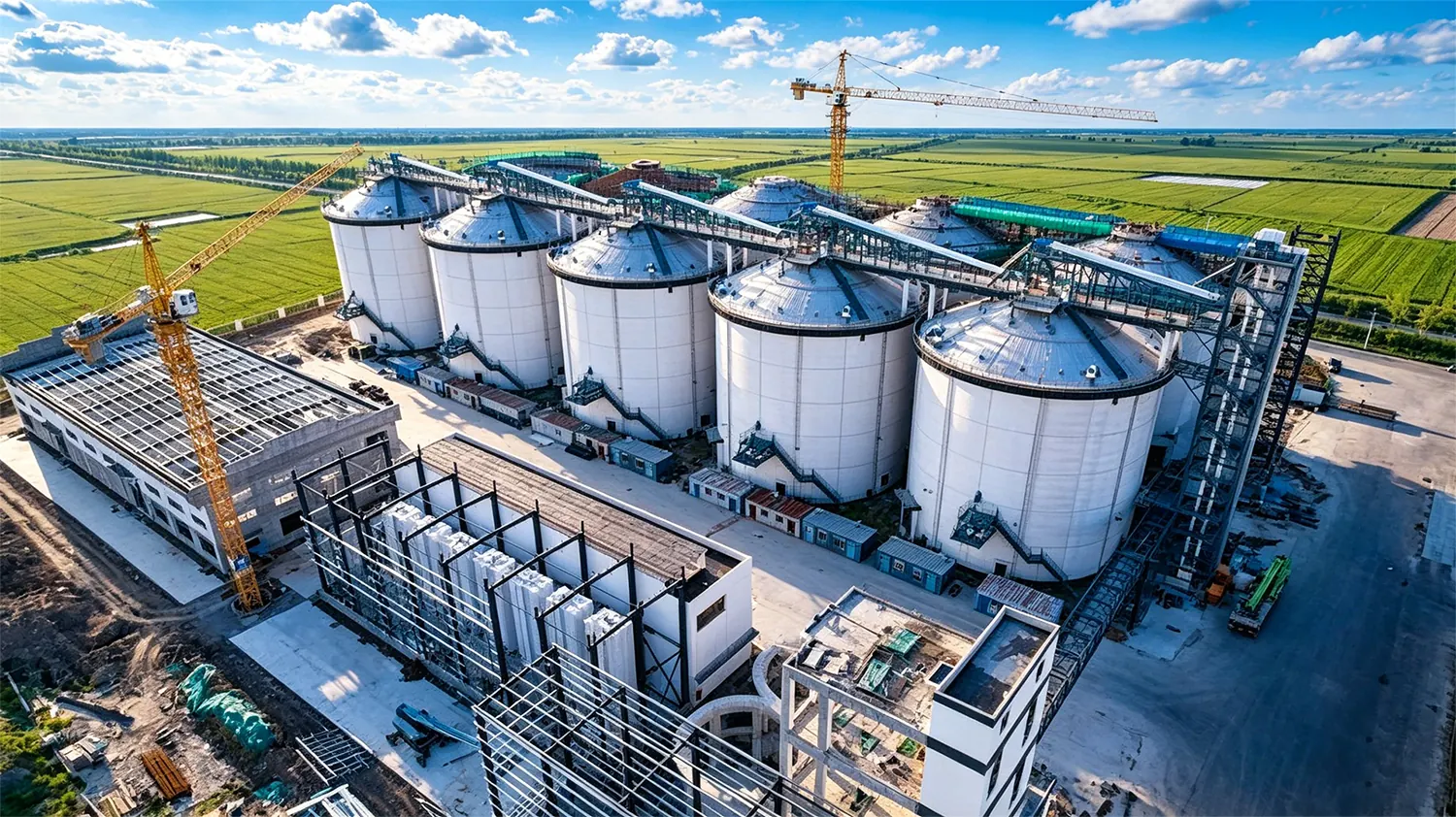
6×5000Ton Grain Storage for Grain Traders — Nigeria
Nigeria · Commercial Grain Depot
Read Case Study →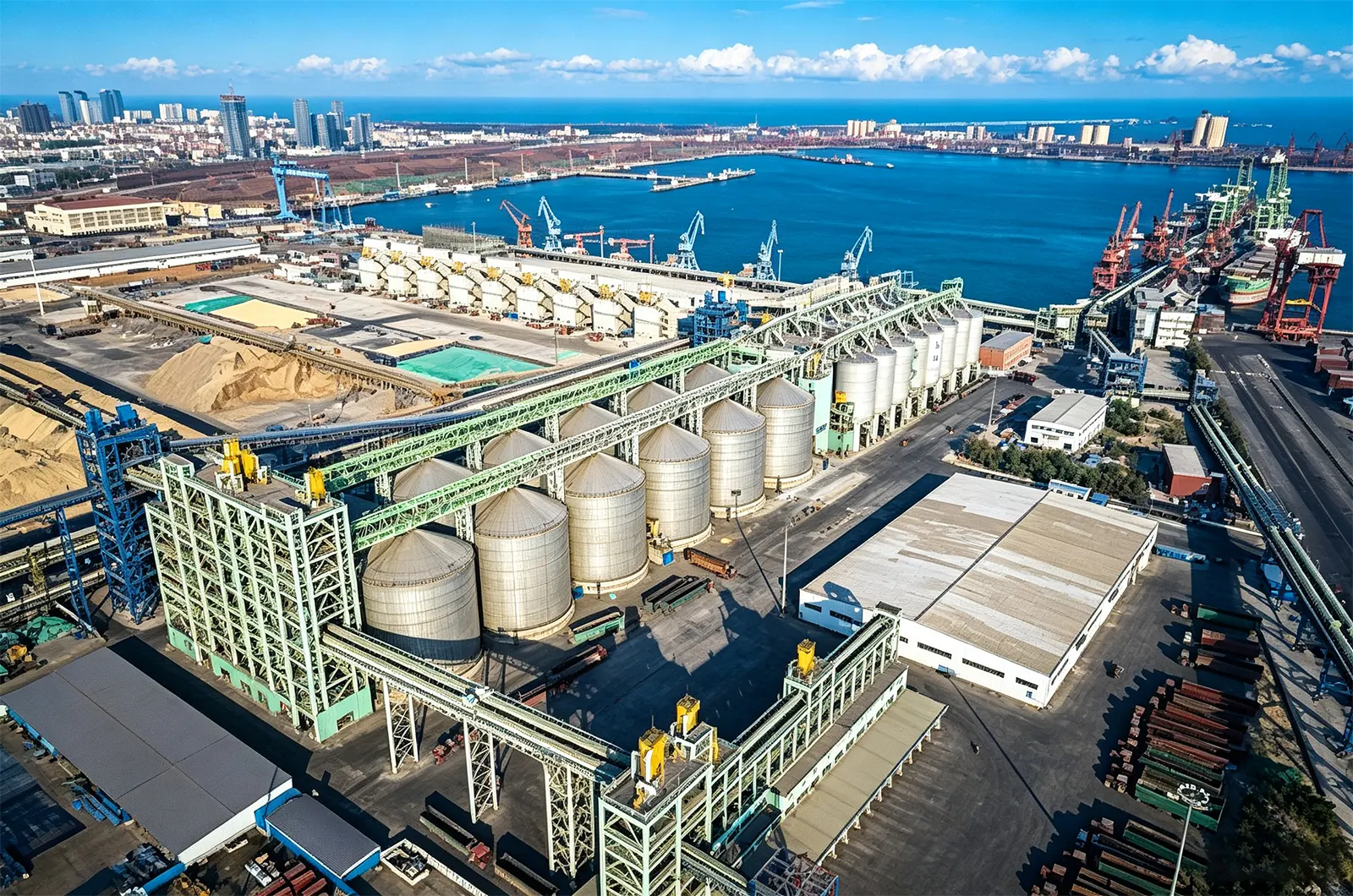
5×2000T Grain Silos Project — Philippines
Philippines · Agricultural Processing & Feed Production
Read Case Study →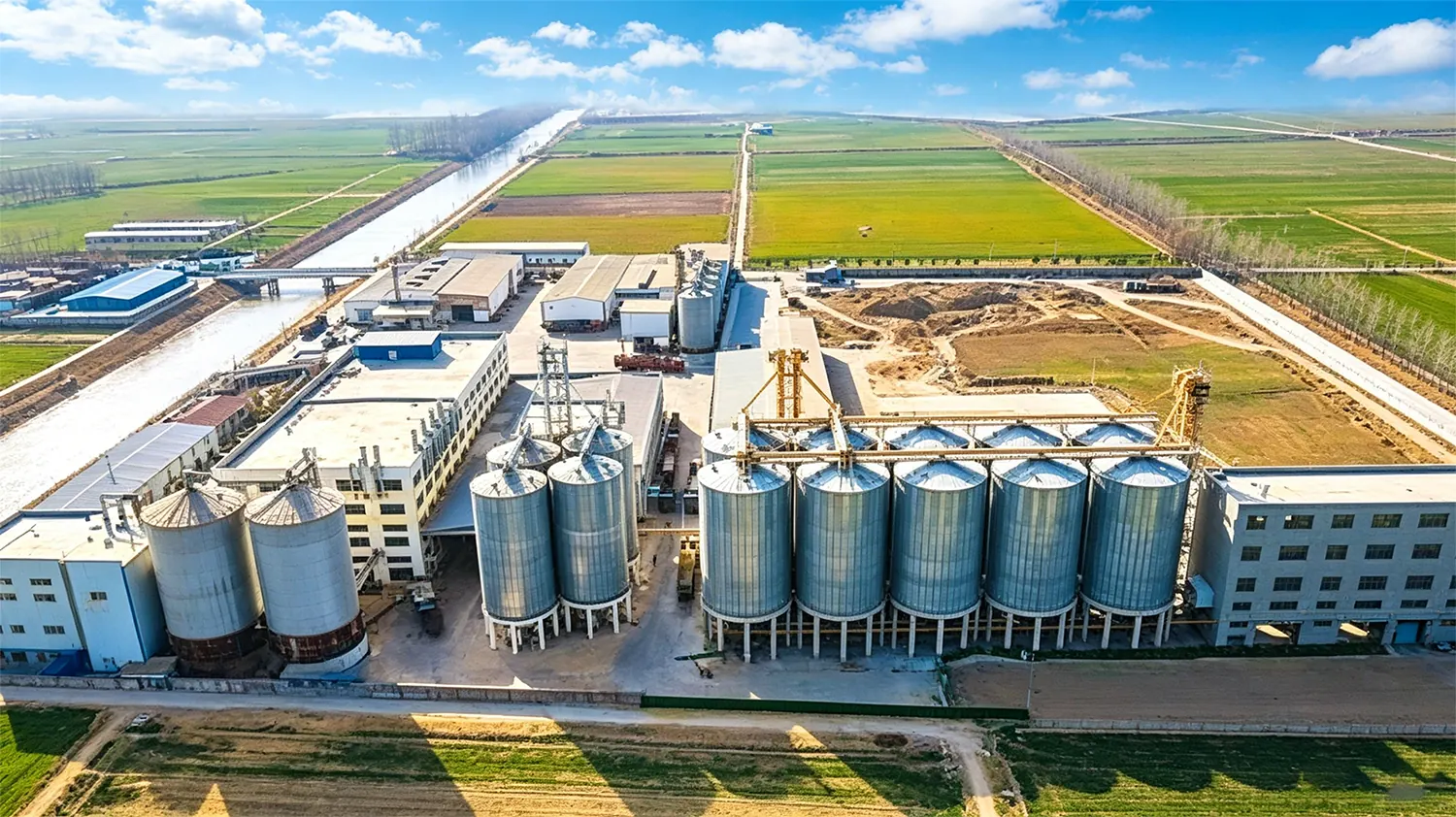
4×2500T High-Capacity Maize Grain Handling & Storage Facility — Rwanda
Eastern Province, Rwanda · Commercial Grain Elevator & Feed Mill
Read Case Study →Frequently Asked Questions
What is the recommended moisture content for safe long-term storage of Soybean?
For storage exceeding 6 months, Soybean should be dried to 13.5–14.5% moisture content (wet basis) and maintained below 15 °C grain temperature. At 15.5% moisture, safe storage duration drops to roughly 3 months even with continuous aeration. Manxing drying systems achieve output moisture within ±0.5% of the target setpoint, and our aeration systems keep grain temperature uniform to prevent moisture migration.How do I determine the correct aeration airflow rate?
Manxing recommends a minimum airflow rate of 15 m³/h per tonne for preservation aeration and 20–25 m³/h per tonne for cooling aeration after drying. For example, a 5,000 t bin requires 75,000–125,000 m³/h total airflow, typically supplied by 4–6 axial fans of 7.5–15 kW. Our engineering team performs full aeration design (duct sizing, floor perforation area, fan selection) based on your climate data and storage capacity.What is the typical installation timeline for a Manxing system?
A 5,000 t farm installation is usually completed in 6–8 weeks from foundation pouring to mechanical completion. A 30,000 t commercial elevator requires 16–20 weeks including civil works, mechanical installation, electrical commissioning, and dryer integration. Export terminals of 150,000+ tonnes typically require 9–12 months for full turnkey delivery. Manxing bolted-panel construction eliminates on-site welding and dramatically accelerates assembly.Can Manxing bins withstand extreme weather and seismic events?
Yes. All Manxing bins are designed to EN 1991-4 (Eurocode 1 Part 4) for silos, with wind loads up to 150 km/h (3-second gust) and snow loads up to 1.5 kN/m². In hurricane-prone regions we add M24 chemical anchor bolts at 1.5 m spacing plus extra stiffener rings. Seismic design to EN 1998 (or equivalent local codes) is available for zones up to Richter 8.How does Manxing prevent spoilage and mycotoxin development?
Mycotoxin-producing fungi need moisture above 14.5% and temperatures above 20 °C to grow. Manxing addresses all three risk factors: (1) drying systems reduce moisture within 24 hours of harvest; (2) aeration holds grain below 15 °C with automatic fan activation; (3) temperature monitoring with 12+ cables per 1,000 t detects hot spots before visible spoilage. Our bins feature full-seal EPDM gaskets that prevent moisture ingress.What maintenance does a Manxing system require?
Routine maintenance includes: annual inspection of galvanized coating and touch-up of any mechanical damage; quarterly lubrication of elevator bearings and conveyor sprockets; monthly calibration of temperature monitoring; pre-harvest fan belt and motor checks; bi-annual cleaning of dust filters. Manxing provides a comprehensive maintenance manual with every project and offers annual service contracts performed by trained field engineers. With proper care, our systems deliver 30+ years of reliable service.Can Manxing integrate with my existing grain handling equipment?
Absolutely. Manxing routinely interfaces our bins, conveyors, and automation with existing third-party equipment. We provide mechanical interface drawings, electrical I/O lists, and communication protocol specs (Modbus TCP/IP, PROFINET, EtherNet/IP). Our SCADA platform supports OPC UA for ERP integration. During the design phase we conduct a thorough site survey to document existing equipment dimensions, capacities, and control interfaces.Related Solutions
Corn Storage Solution
Complete storage systems for corn — from farm bins to export terminals
View →
Wheat Storage Solution
Protect protein & milling quality with low-moisture storage
View →
Rice Storage Solution
Hulled vs. paddy storage, moisture control & milling integration
View →
Farm-Scale Storage Solution
Budget-friendly bins, dryers & handling for the farm
View →
Commercial Elevator Solution
High-throughput bins, tower dryers & automated handling
View →
Export Terminal Solution
Very high throughput, multi-commodity handling & ship loading
View →
Seed Storage Solution
Protect germination with precise temperature & humidity control
View →Reviewed & Verified InformationData sources & engineering referencesLet's design your soybean storage system
Get a tailored quote or talk to our engineering team.
Get Quote Talk to an Engineer