
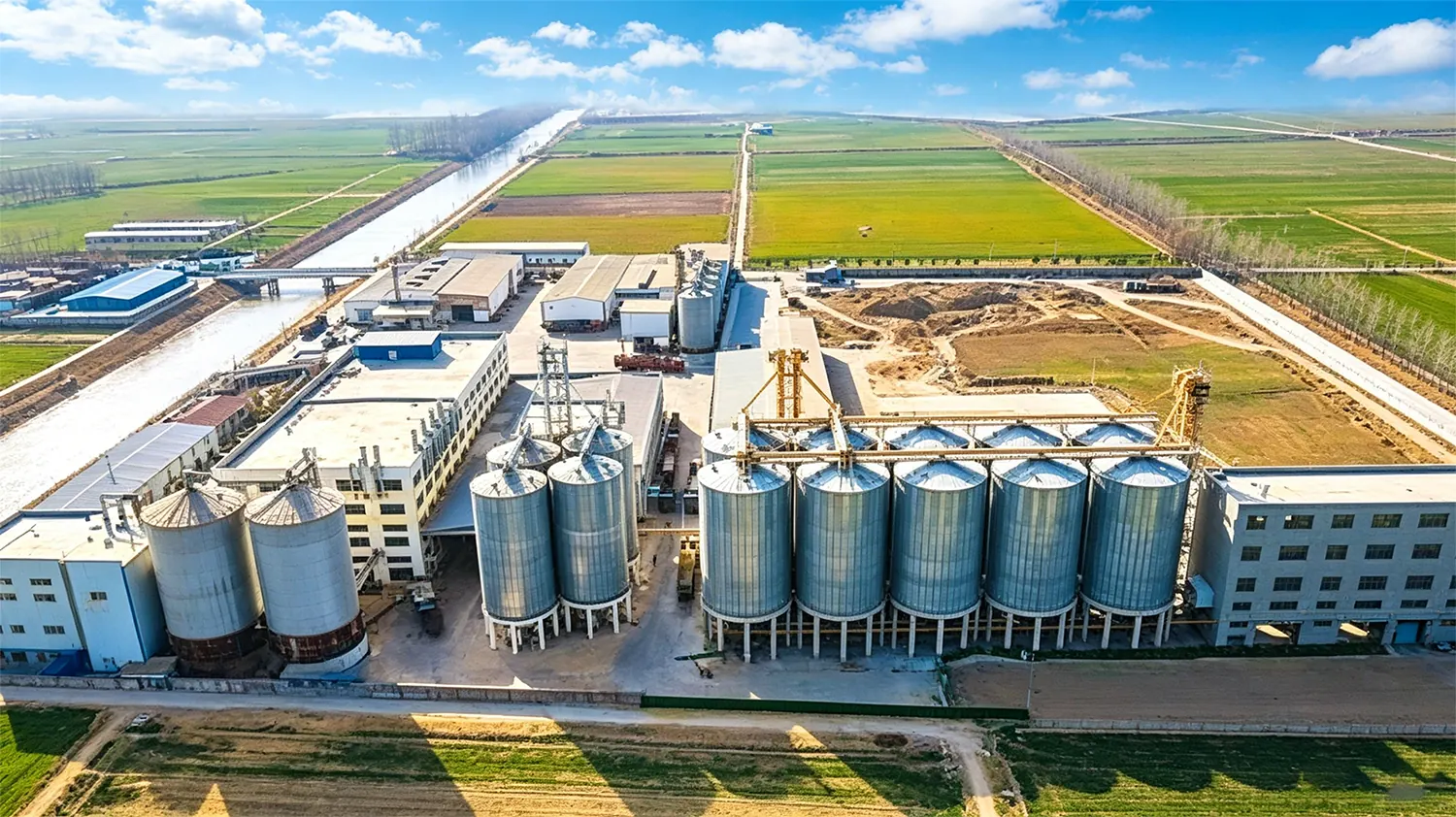
Industry Overview
Why Operators Choose ManXing
Engineered Throughput
Capacity matched to your daily intake and dispatch volume.
Grain Quality Protection
Aeration, monitoring and drying preserve moisture and grade.
Turnkey Delivery
Design, manufacture, ship, install and commission — one partner.
Global References
Proven across tropical, arid and cold-climate operations.
Detailed Application Notes
Seed Storage: Engineering Solutions for Maximum Viability Preservation
Seed storage represents the most technically demanding application in the entire grain storage industry. Unlike commercial grain, where the primary objective is weight preservation and market quality maintenance, seed storage has a fundamentally different goal: preserving the living embryo's ability to germinate and produce a healthy plant. A single percentage point of viability loss can translate into thousands of dollars in replanting costs, missed planting windows, and compromised crop establishment. At Manxing, we have spent over two decades engineering storage systems specifically designed to meet the uncompromising requirements of seed operations — from small certified seed producers to large-scale foundation seed programs.
The Biological Reality of Seed Storage
Seed is a living organism. Even in a dormant state, it respires, consuming oxygen and releasing carbon dioxide, heat, and moisture. The rate of respiration — and therefore the rate of viability loss — is directly governed by two variables: seed moisture content and storage temperature. This relationship is not linear; it is exponential. A seed stored at 14% moisture and 25°C may lose significant viability within 3 to 6 months. That same seed stored at 10% moisture and 10°C can maintain germination rates above 90% for 3 to 5 years or more.
This biological reality means that every decision in a seed storage facility — from bin geometry to aeration airflow rates to handling equipment selection — must be evaluated through its impact on moisture and temperature control. There is no margin for approximation.
Industry Overview: The Seed Storage Market
The global seed industry exceeds $60 billion annually and continues to grow as hybrid varieties, genetically improved cultivars, and certified seed programs expand across every major crop. Seed companies, cooperatives, and government agricultural programs require storage infrastructure that can handle multiple varieties, maintain strict lot integrity, and deliver documented germination performance at the point of sale.
Seed storage facilities differ from commercial grain elevators in several critical ways. First, the number of distinct lots is far greater — a single facility may manage 50 to 200 or more individual seed lots simultaneously. Second, the value per ton is significantly higher, often 3 to 10 times the value of commercial grain. Third, the consequences of cross-contamination or mechanical damage are severe, potentially destroying an entire season's breeding work or certified seed production. Fourth, regulatory and certification requirements demand full traceability, documented storage conditions, and periodic germination testing.
Specific Challenges in Seed Storage
Moisture Management
Safe seed moisture levels vary by crop species, but the general rule is that seed must be dried to levels significantly lower than commercial grain. Oilseed crops such as sunflower and canola require storage moisture below 8%. Cereal grains including wheat, barley, and rice typically require 10% to 12% moisture for safe long-term storage. Maize seed is particularly sensitive and should be stored at 11% to 12% maximum. Legume seeds such as soybean and alfalfa require moisture levels at or below 12%.
The challenge is not only achieving these moisture levels but maintaining them consistently throughout the entire storage period. Moisture migration — driven by temperature gradients within the bin — can create localized zones of elevated moisture even when the average moisture content appears acceptable. A temperature differential of just 5°C between the warm core and cool bin walls can cause moisture to migrate and accumulate in the grain mass, creating conditions for mold growth and accelerated viability loss.
Temperature Control
Seed storage temperature targets are more stringent than commercial grain storage. The ideal range for most seed species is 5°C to 15°C. At temperatures above 20°C, respiration rates increase dramatically, and insect activity becomes a serious threat. At temperatures below 0°C, some tropical and subtropical seed species may suffer cold damage, though most temperate crop seeds can tolerate near-freezing conditions without harm.
Maintaining uniform temperature throughout the grain mass requires adequate aeration capacity. For seed storage, Manxing recommends minimum aeration rates of 0.1 to 0.2 cubic feet per minute per bushel (CFM/bu), with many operations benefiting from rates up to 0.3 CFM/bu for sensitive high-value seed. The aeration system must be capable of pulling ambient air through the grain mass consistently, responding to seasonal temperature changes and daily thermal cycles.
Mechanical Damage
Seed is fragile. Impact damage from free-fall drops, excessive conveyor speeds, and poorly designed transfer points can crack seed coats, fracture embryos, and create invisible internal damage that reduces germination without visible external signs. Research consistently shows that a single 15-meter free-fall drop onto a hard surface can reduce germination in maize seed by 5% to 10%. Repeated handling compounds this damage exponentially.
For certified seed operations, mechanical damage is not merely a quality issue — it is a regulatory concern. Germination test results must meet minimum standards, and mechanical damage is one of the primary causes of test failure. Every handling point in the facility must be engineered to minimize impact velocity and control seed flow.
Lot Integrity and Traceability
Seed operations must maintain absolute separation between varieties, lots, and certification classes. Cross-contamination of even a small percentage of foreign seed can result in the rejection of an entire lot by certification authorities. Storage systems must provide complete discharge capability — no residual grain left in bins that could contaminate the next lot — and handling systems must be designed for easy, thorough cleaning between lots.
Manxing Seed Storage Solutions
With over 20 years of experience designing and manufacturing grain storage systems, Manxing has developed a comprehensive suite of solutions specifically engineered for the seed industry. Every component is designed with the understanding that seed is not just a commodity — it is a living product whose value depends entirely on biological performance.
Hopper-Bottom Bins with Steep, Complete Discharge
Manxing's hopper-bottom seed storage bins are engineered with steep cone angles of 60 degrees or greater, ensuring complete, self-cleaning discharge without residual grain. This is critical for seed operations where lot integrity is paramount. Flat-bottom bins, while suitable for commercial grain, leave significant residual material after unloading — material that can harbor moisture, insects, and contaminants that compromise the next seed lot.
Our hopper-bottom bins are available in capacities ranging from 5 to 500 metric tons, with custom configurations available for larger installations. All bins are manufactured from high-quality galvanized steel with a minimum zinc coating of 275 g/m², providing decades of corrosion-resistant service. The hopper design incorporates smooth internal surfaces with no ledges, bolts, or protrusions where seed can accumulate.
For operations requiring flat-bottom storage of larger volumes, Manxing offers sweep auger systems specifically designed for seed applications. These sweep augers feature low-speed operation, soft-start drives, and gentle engagement mechanisms that minimize seed damage during the final cleanout phase.
Precise Aeration and Temperature Monitoring
Manxing's seed storage aeration systems are designed to deliver uniform airflow throughout the grain mass, eliminating hot spots and preventing moisture migration. Our standard aeration configurations include full perforated floors for smaller bins and duct-type aeration systems for larger installations. All systems are engineered with airflow rates specifically calculated for seed storage requirements — typically 0.1 to 0.3 CFM/bu depending on bin size, grain depth, and seed type.
Temperature monitoring is the foundation of effective seed storage management. Manxing provides digital temperature monitoring systems with sensors spaced at 1.5 to 2.0 meter intervals throughout the grain mass. These systems provide continuous, real-time temperature data accessible via on-site displays and remote monitoring platforms. Automated alerts notify operators when temperatures deviate from acceptable ranges, enabling rapid response before viability is compromised.
Our aeration control systems can be configured for fully automated operation, activating fans based on ambient temperature and humidity conditions, grain temperature readings, and programmed storage strategies. This automation ensures that aeration is applied at the optimal times — typically during cool, dry nighttime hours — maximizing cooling efficiency while minimizing moisture addition.
Gentle Handling Equipment
Manxing's seed handling systems are engineered from the ground up to minimize mechanical damage. Our bucket elevators feature low-speed operation with specially designed buckets that control the discharge trajectory, reducing free-fall impact. Belt speeds are optimized to 1.0 to 1.5 meters per second for seed applications, compared to 2.0 to 3.0 meters per second for commercial grain handling.
Our conveyor systems include low-profile belt conveyors, gentle roller conveyors, and air-supported conveyor systems that transport seed on a cushion of air, virtually eliminating friction and impact damage. Transfer points are engineered with controlled-flow spouts, impact cradles, and velocity-matching designs that maintain seed speed consistency and
Recommended Storage Solutions
Corn Storage Solution
Complete storage systems for corn — from farm bins to export terminals
View Solution →Wheat Storage Solution
Protect protein & milling quality with low-moisture storage
View Solution →Equipment Used in Seed Storage
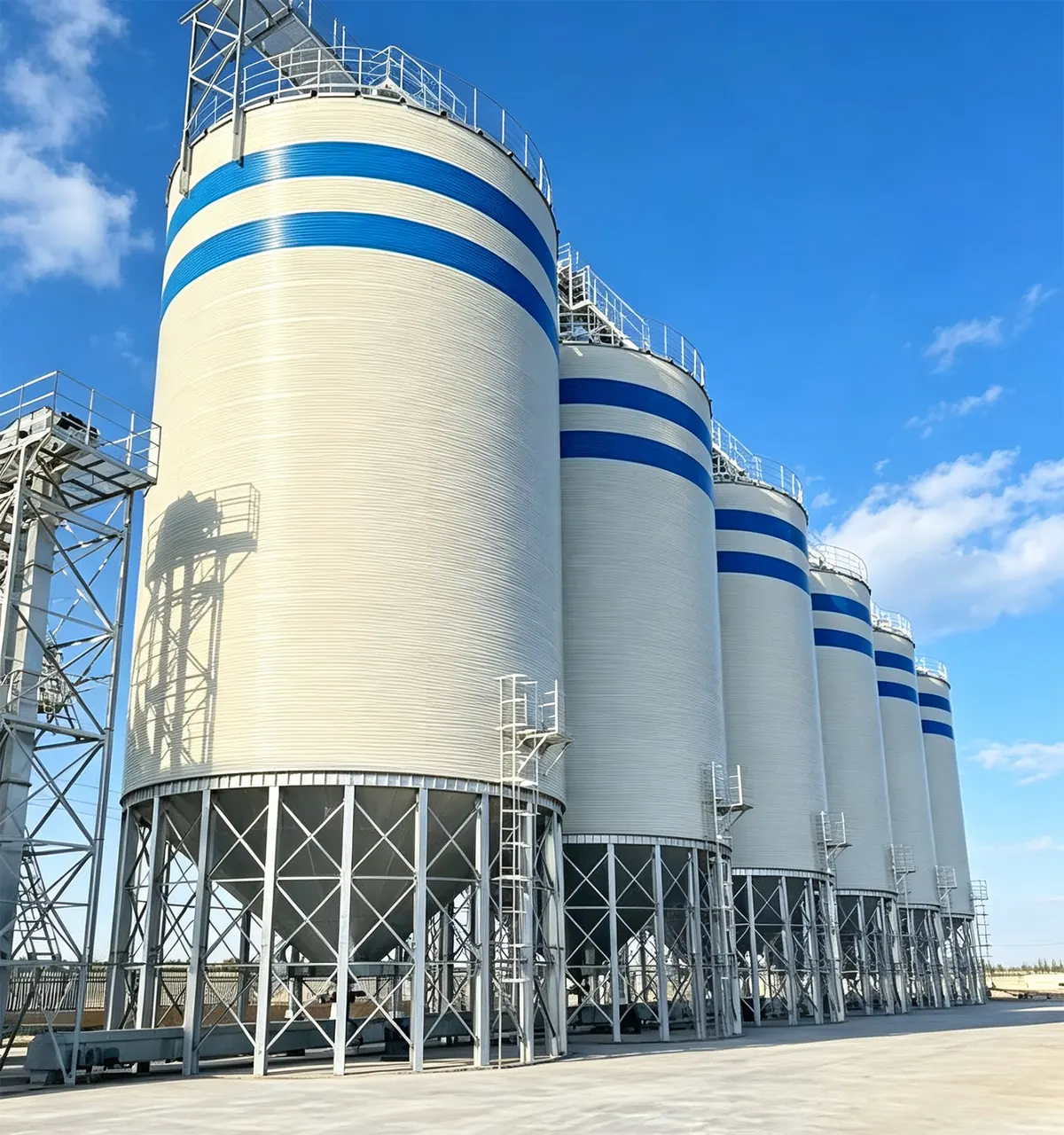
Wood Pellet Silo
Dust-controlled storage for biomass wood pellets
View Product →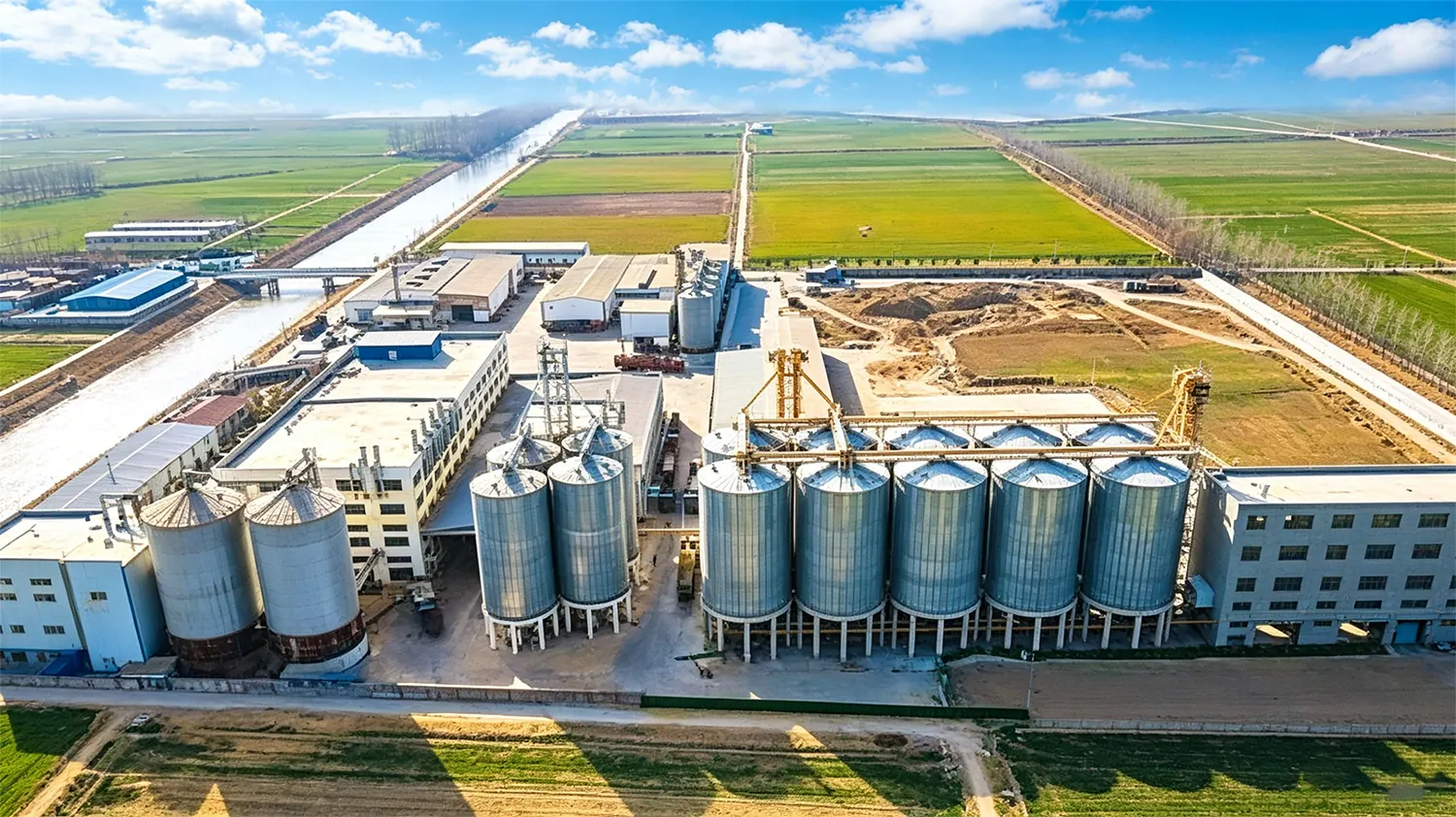
Commercial Silo
High-capacity storage for elevators, terminals and industrial users
View Product →
Feed Silo
Hygienic pellet & mash feed storage for feed mills and farms
View Product →Related Case Studies
6×5000Ton Grain Storage for Grain Traders — Nigeria
Nigeria · Commercial Grain Depot
Read Case Study →
5×2000T Grain Silos Project — Philippines
Philippines · Agricultural Processing & Feed Production
Read Case Study →
4×2500T High-Capacity Maize Grain Handling & Storage Facility — Rwanda
Eastern Province, Rwanda · Commercial Grain Elevator & Feed Mill
Read Case Study →Related Knowledge Articles
Mastering Grain Bin Capacity Calculation: Precision Storage Formulas
Mastering Grain Bin Capacity Calculation: Precision Storage Formulas Mastering Grain Bin Capacity Calculation: Precision Storage Formulas Accurate grain bin...
Read Article →Foundation Design for Grain Bins: A Complete Engineering Guide
Foundation Design for Grain Bins: A Complete Engineering Guide When evaluating grain storage bins for sale, the structural integrity of the foundation is the most critical factor in ensuring long-term...
Read Article →Solutions for Seed Storage
Let us help you design the right storage system for your operation.
Get a Quote Try the CalculatorOther Industries
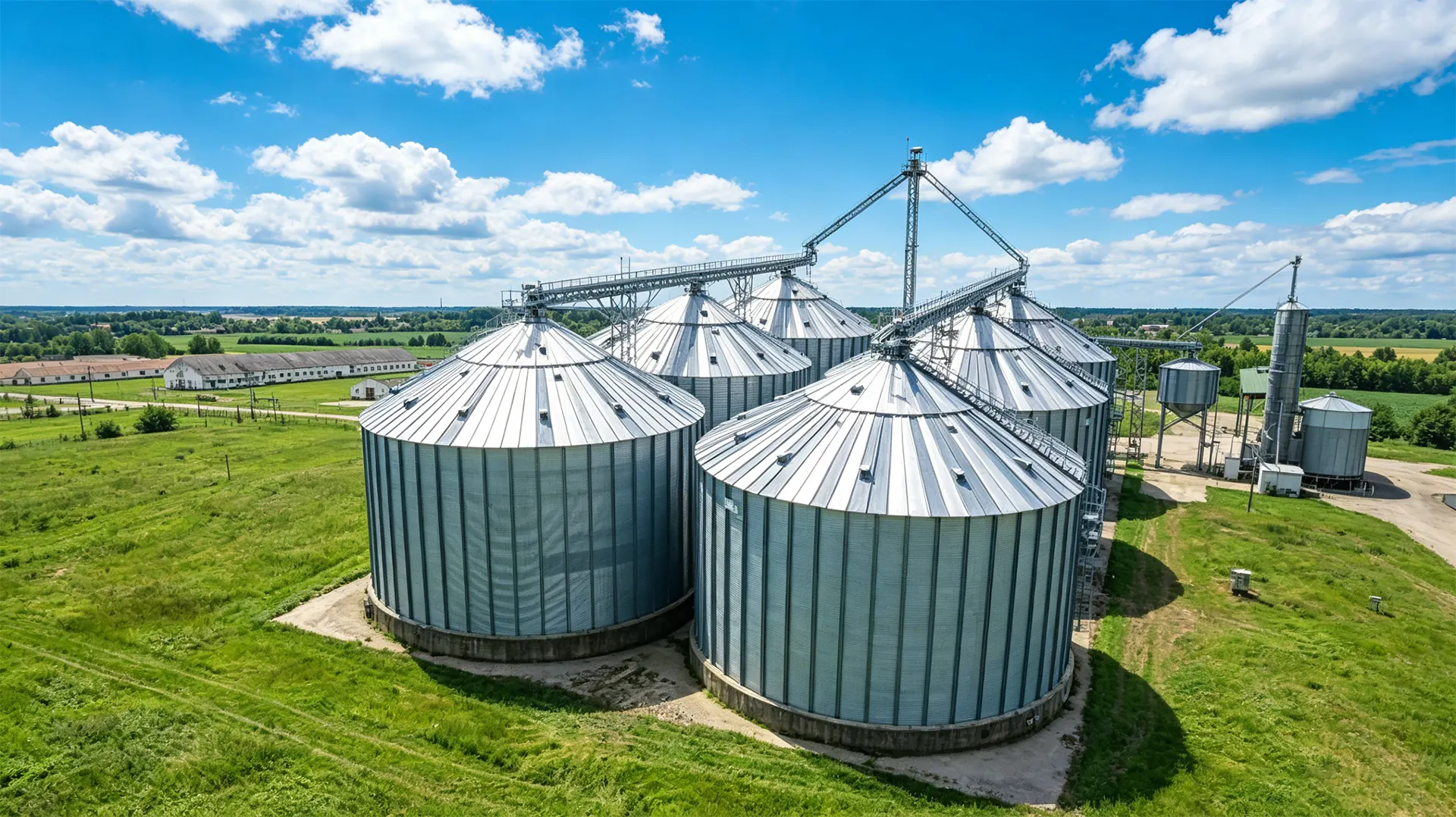
On-Farm Storage
Practical, cost-effective storage for growers
View Industry →
Commercial Grain Elevator
High-throughput storage for elevators and marketers
View Industry →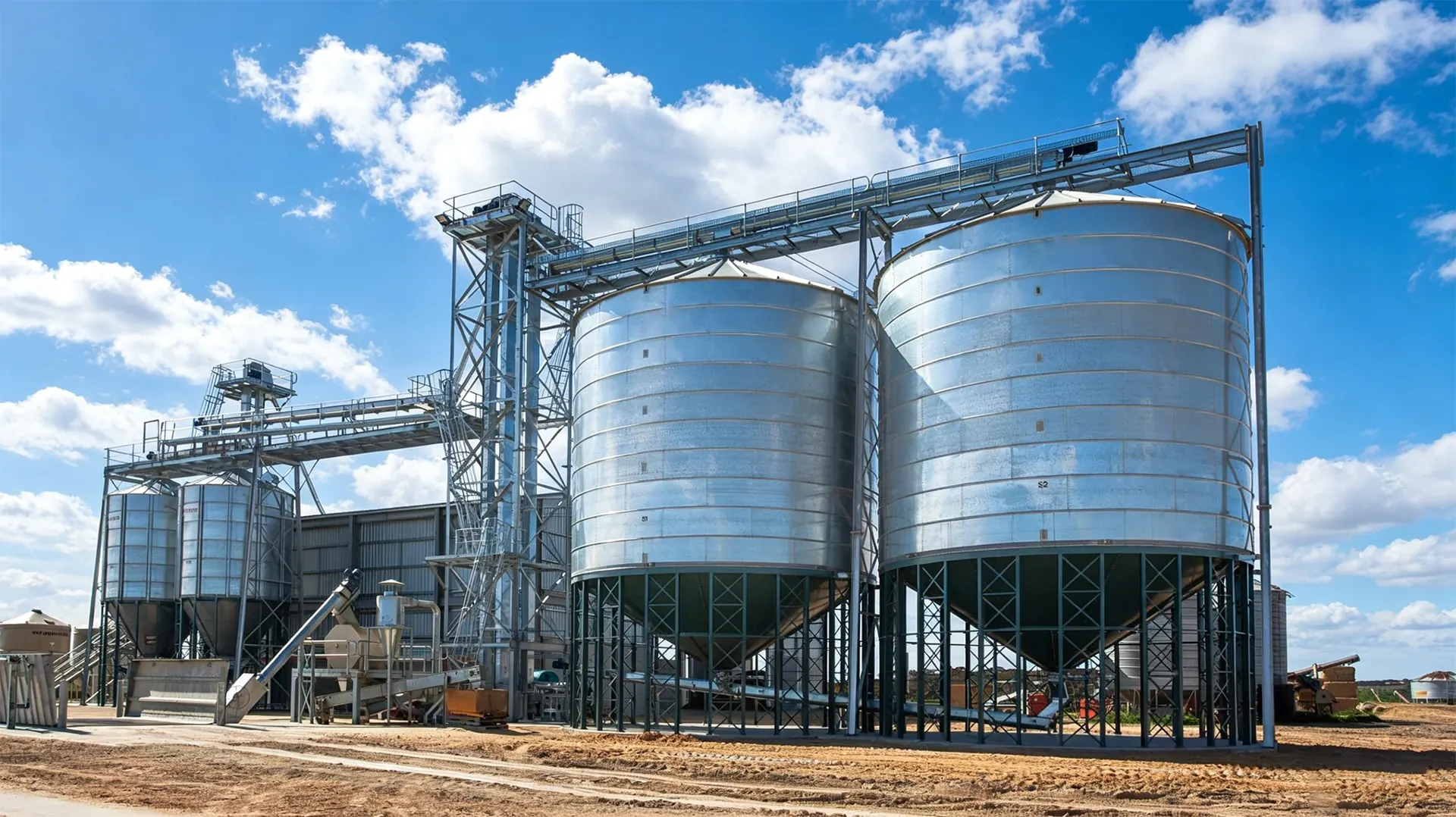
Agricultural Cooperative
Shared storage that serves many members
View Industry →
Export Terminal
Large-scale storage for bulk export markets
View Industry →
Food & Feed Processing
Clean, controlled storage for processors
View Industry →