
Export Terminal Solution
Very high throughput, multi-commodity handling & ship loading
Export Terminal Solution — Engineered for Scale, Precision, and Multi-Commodity Performance
Manxing Export Terminal Solutions are purpose-built for the world's most demanding grain export operations, where throughput reliability, commodity integrity, and ship loading efficiency are non-negotiable. Designed to handle throughput capacities ranging from 2,000 to over 15,000 metric tons per hour, these integrated systems address the full operational chain — from rail and truck receiving through cleaning, drying, storage, blending, and ultimately ship loading. Every component is engineered to perform continuously in harsh port environments, ensuring that vessels are loaded on schedule, grain quality is preserved, and operational costs remain tightly controlled.
What the Solution Comprises
A Manxing Export Terminal Solution is a fully integrated, modular system that can be configured to match site-specific throughput, commodity mix, and logistical requirements. The core subsystems include:
- Receiving Systems: Truck dump pits and railcar unloading systems rated for 200 to 1,200 metric tons per hour, with heavy-duty hoppers, vibrating feeders, and dust suppression enclosures designed for 24/7 operation.
- Cleaning and Pre-Processing: High-capacity rotary and vibratory grain cleaners removing foreign material, broken kernels, and impurities to achieve export-grade cleanliness standards of 98.5% or higher purity.
- Drying Systems: Mixed-flow and continuous-column grain dryers capable of reducing moisture content from initial levels as high as 25% down to safe storage and export thresholds of 12.5% to 14.0%, depending on commodity. Dryer thermal capacities range from 5 to 60 million kcal/hour, with burner systems tuned for natural gas, diesel, or dual-fuel operation.
- Storage Infrastructure: Flat-bottom and hopper-bottom steel silos with individual cell capacities from 2,000 to 30,000 metric tons. Galvanized corrugated wall panels with 0.7 mm to 1.5 mm zinc coating ensure decades of corrosion resistance in coastal environments. Aeration systems maintain grain temperatures between 10°C and 15°C to prevent insect proliferation and moisture migration.
- Blending and Proportioning: Precision blending systems using loss-in-weight feeders and inline grain analyzers to achieve target protein, moisture, and test-weight specifications for specific buyer contracts, with blending accuracy within ±0.3% of target composition.
- Ship Loading: Telescopic ship loaders with boom lengths extending from 18 to 32 meters, capable of loading Panamax and Capesize vessels at rates from 1,500 to 5,000 metric tons per hour. Loading chutes incorporate dust-tight seals, trimmer deflectors, and anti-segregation spreaders to ensure even cargo distribution and minimal dust emissions.
- Process Automation: Centralized SCADA and PLC-based control systems providing real-time monitoring of every conveyor, elevator, valve, and sensor across the terminal. Automated routing, inventory tracking, and quality logging ensure full traceability from receiving to vessel loading.
Who This Solution Serves
Manxing Export Terminal Solutions are designed for a broad range of stakeholders in the global grain supply chain:
- Commercial Grain Exporters: Companies operating at major port terminals who require dependable, high-throughput systems to fulfill international sales contracts with tight loading windows and strict quality specifications.
- Multi-Commodity Handlers: Terminals that process wheat, corn, soybeans, barley, sorghum, rice, and oilseeds through shared infrastructure. Manxing systems incorporate commodity-specific flow path designs, abrasion-resistant liners, and adjustable speed drives to accommodate the varying bulk densities (ranging from 600 kg/m³ for canola to 800 kg/m³ for wheat) and flow characteristics of each grain type.
- Government Strategic Reserve Operators: National agencies managing large-scale grain reserves that require long-term hermetic or controlled-atmosphere storage with temperature monitoring accuracy of ±0.5°C and moisture management systems that maintain grain at 12.0% to 13.5% equilibrium moisture content.
- Port Authorities and Logistics Hubs: Entities developing greenfield or brownfield port facilities where throughput scalability, minimal environmental footprint, and regulatory compliance are critical success factors.
Why Manxing Is the Right Partner
Selecting a technology partner for an export terminal is a decision that impacts operational performance for 25 years or more. Manxing brings a combination of engineering depth, manufacturing precision, and lifecycle support that sets our solutions apart:
- Proven Throughput Engineering: Manxing conveyor and elevator systems are designed using discrete element modeling (DEM) and computational fluid dynamics (CFD) to eliminate bottlenecks, minimize grain damage (keeping mechanical damage to below 1.5% of throughput), and optimize energy consumption to as low as 0.8 kWh per metric ton handled.
- Corrosion and Weather Resilience: All structural steel components undergo hot-dip galvanization with minimum zinc coating weights of 600 g/m² for standard environments and up to 1,000 g/m² for high-salinity coastal installations. Bolted connections use Grade 8.8 or higher hardware with zinc-flake coating systems rated for 1,000+ hours salt spray resistance.
- Temperature and Moisture Mastery: Manxing aeration and drying systems are calibrated to maintain grain at optimal storage conditions across ambient temperature extremes from -30°C to +50°C. Temperature cable sensors spaced at 3.5-meter intervals in silo floors provide continuous thermal mapping, triggering automated aeration fan activation when grain temperatures exceed setpoints by more than 3°C.
- Multi-Commodity Flexibility: Manxing's modular valve routing and reversible conveyor designs allow a single terminal to switch between commodities in under 4 hours, with flush sequences that reduce cross-contamination to less than 0.1% by weight — critical for maintaining organic and non-GMO certification integrity.
- Global Project Execution: From feasibility studies and 3D plant modeling through civil works supervision, mechanical erection, electrical commissioning, and operator training, Manxing delivers turnkey solutions on schedule. Our project management framework includes milestone-based quality hold points, third-party inspection protocols, and performance guarantee testing at 110% of nameplate capacity before handover.
- Lifecycle Support: Every Manxing terminal is backed by a comprehensive after-sales program including remote diagnostics, annual structural inspections, spare parts warehousing at regional hubs, and on-site technical assistance contracts that guarantee 48-hour response times for critical components.
Performance Specifications at a Glance
Manxing Export Terminal Solutions are engineered to meet the following baseline performance parameters, with customization available for project-specific requirements:
- Throughput capacity: 2,000 to 15,000 metric tons per hour (receiving through loading)
- Storage capacity per silo cell: 2,000 to 30,000 metric tons
- Grain drying capacity: 10 to 25 percentage points moisture reduction per pass
- Target storage moisture: 12.0% to 14.0% (commodity dependent)
- Target storage temperature: 10°C to 15°C (long-term), maximum 20°C (short-term)
- Ship loading rate: 1,500 to 5,000 metric tons per hour
- Mechanical grain damage: less than 1.5% of total throughput
- Dust emission at transfer points: less than 20 mg/m³ (with enclosed dust collection)
- Structural design life: minimum 25 years with standard maintenance
- Galvanization warranty: 20 years against red rust perforation
Built for the Demands of Global Trade
The global grain trade moves over 500 million metric tons across oceans annually, and the terminals that handle this flow cannot afford downtime, quality degradation, or loading delays. Manxing Export Terminal Solutions are engineered from the
Key Features
High Throughput
Dust Suppression
Automated Loading
Quality Monitoring
Corrosion Resistance
Recommended Equipment
Manxing Bucket Elevator
Manxing Grain Cleaner
Manxing Shiploader
Manxing Rail Unloader
Manxing Dust Collector
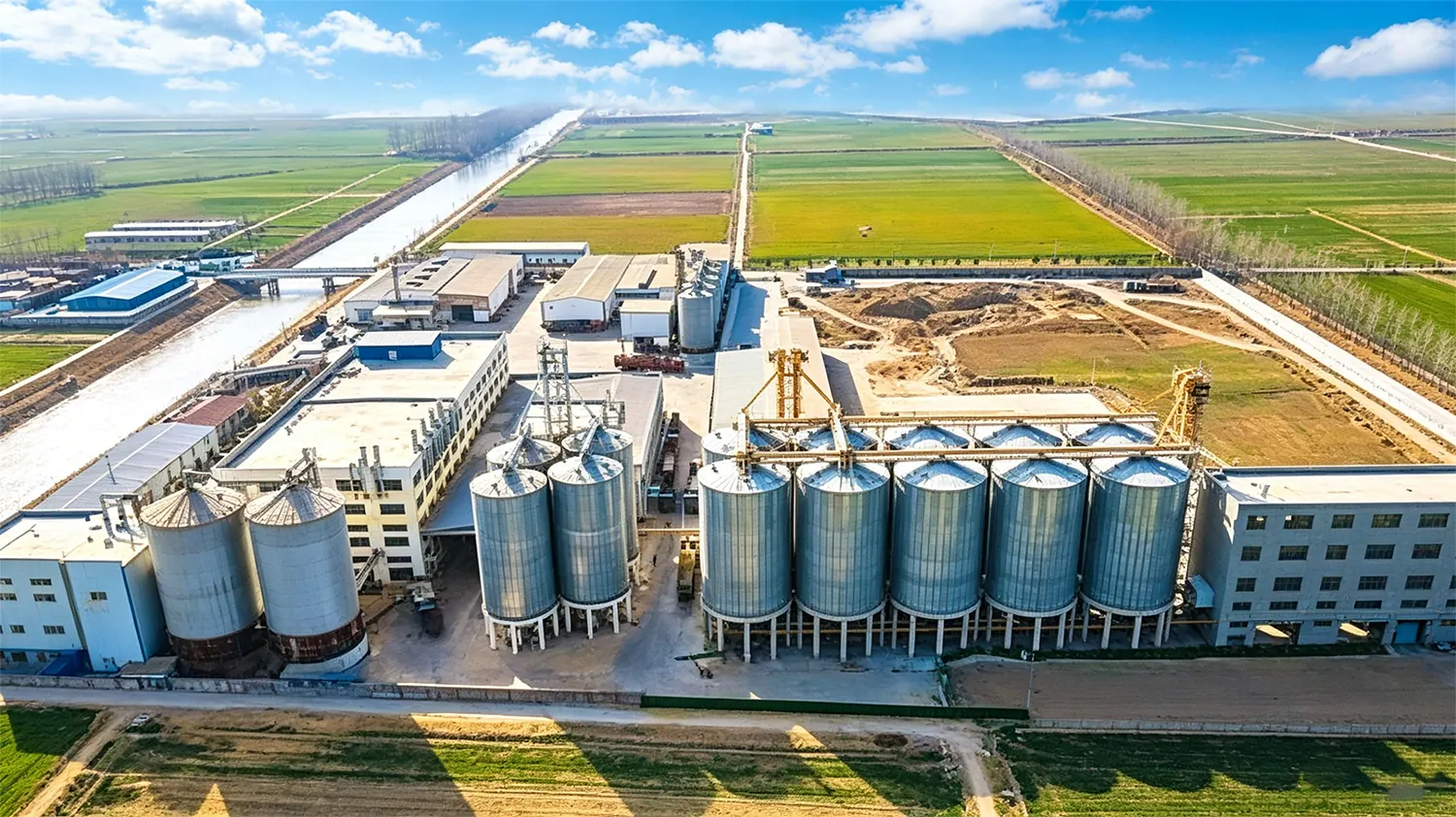
Typical system flow diagram — Export Terminal Solution
System Configurations
High-Speed Receiving
Flat Bottom Storage
Continuous Shiploader
High-Capacity Drying
Use the Selection Tool to find your fit →
Industries Using This Solution
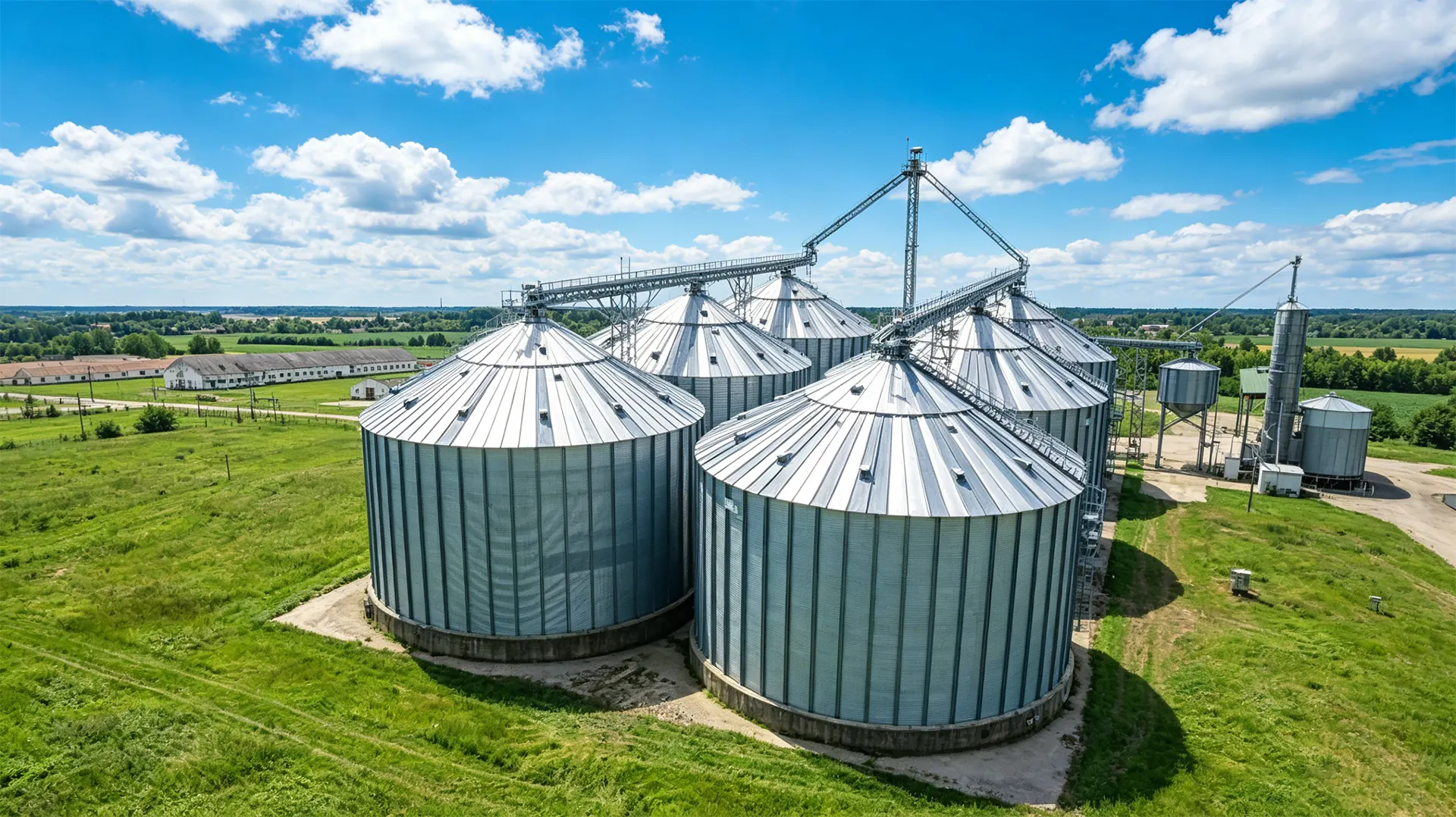
On-Farm Storage
Practical, cost-effective storage for growers
View Industry →
Commercial Grain Elevator
High-throughput storage for elevators and marketers
View Industry →Related Guides
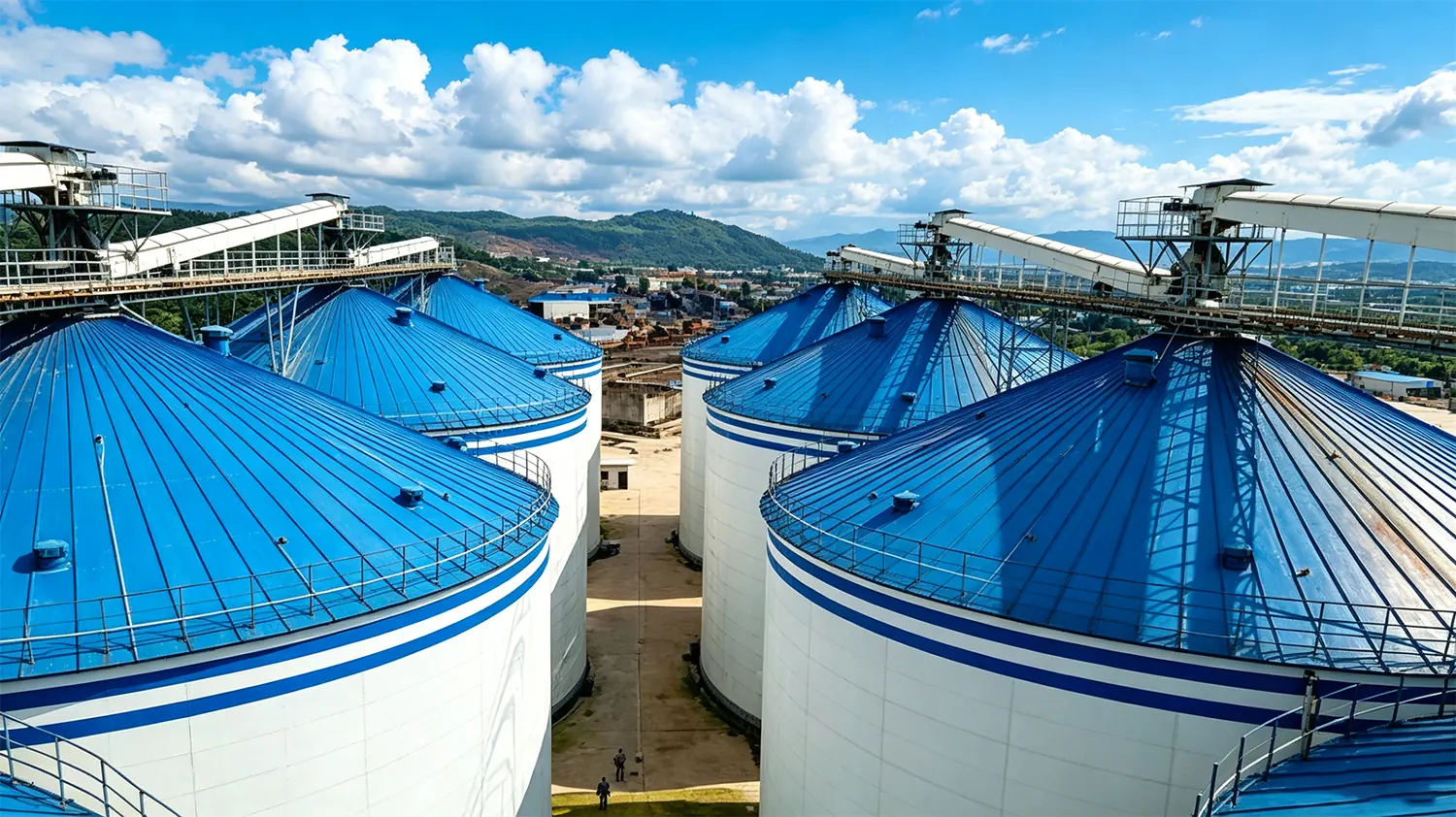
Mastering Grain Bin Capacity Calculation: Precision Storage Formulas
Mastering Grain Bin Capacity Calculation: Precision Storage Formulas Mastering Grain Bin Capacity Calculation: Precision Storage Formulas Accurate grain bin...
Read Guide →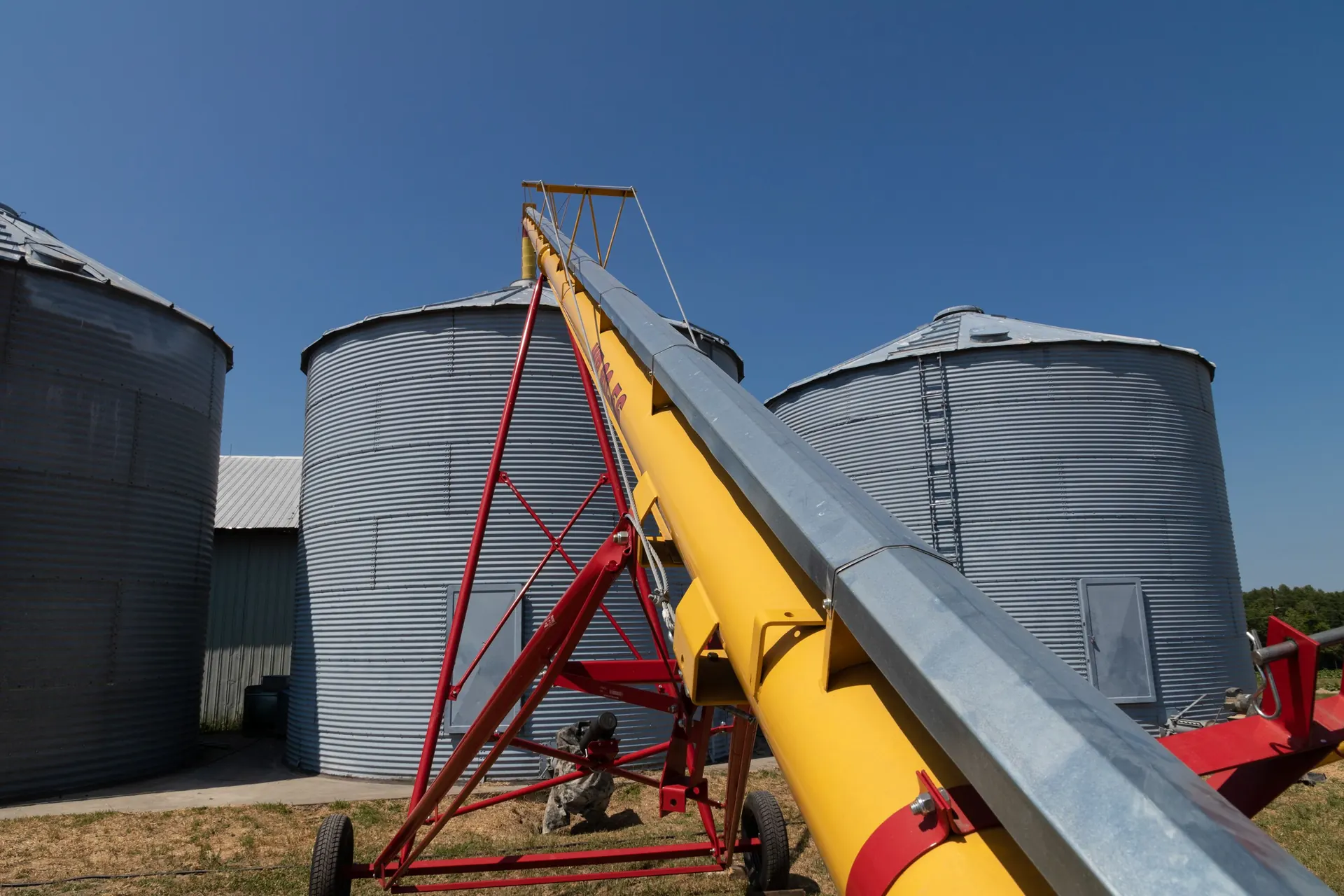
Foundation Design for Grain Bins: A Complete Engineering Guide
Foundation Design for Grain Bins: A Complete Engineering Guide When evaluating grain storage bins for sale, the structural integrity of the foundation is the most critical factor in ensuring long-term...
Read Guide →Export Terminal Projects
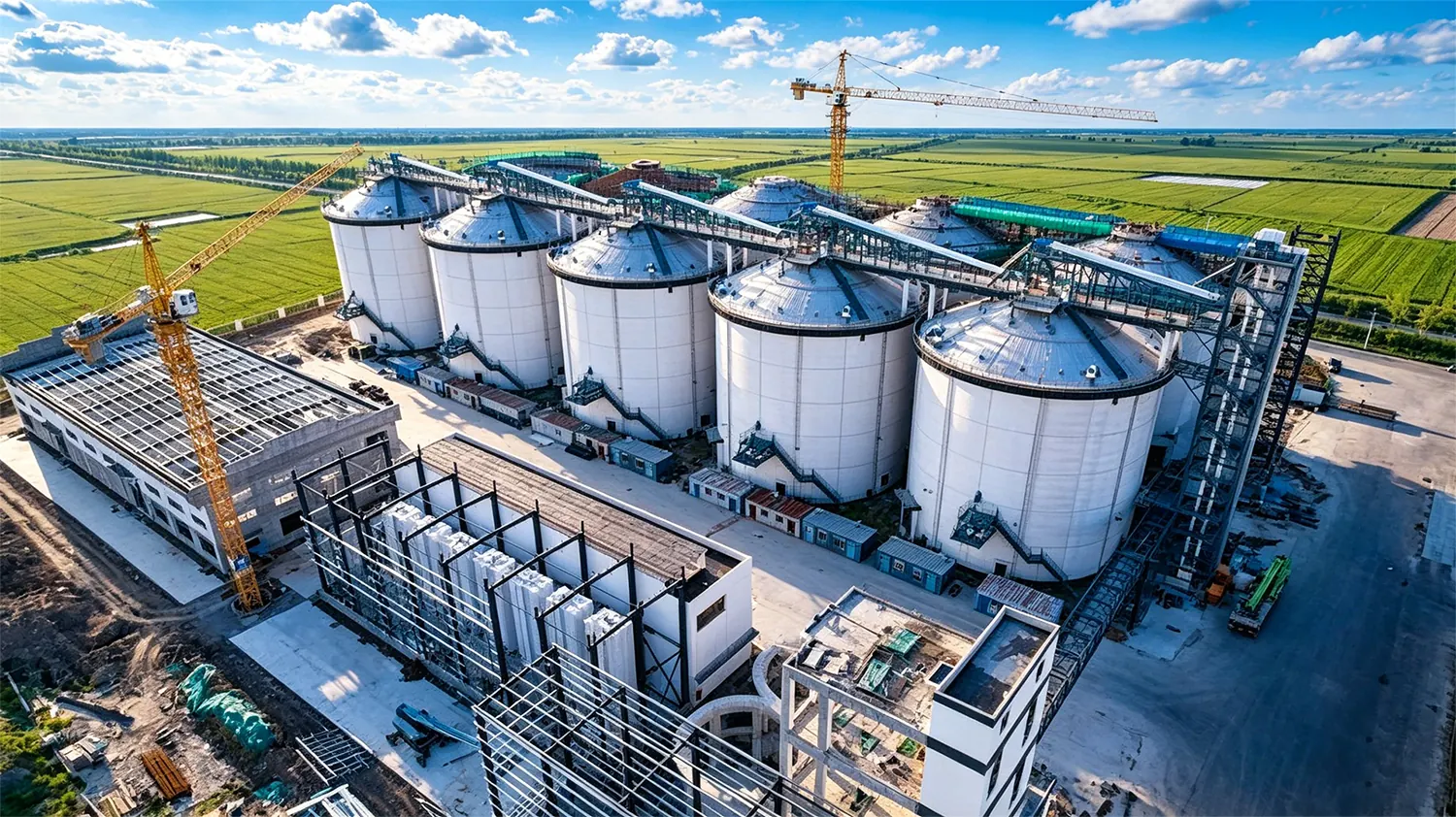
6×5000Ton Grain Storage for Grain Traders — Nigeria
Nigeria · Commercial Grain Depot
Read Case Study →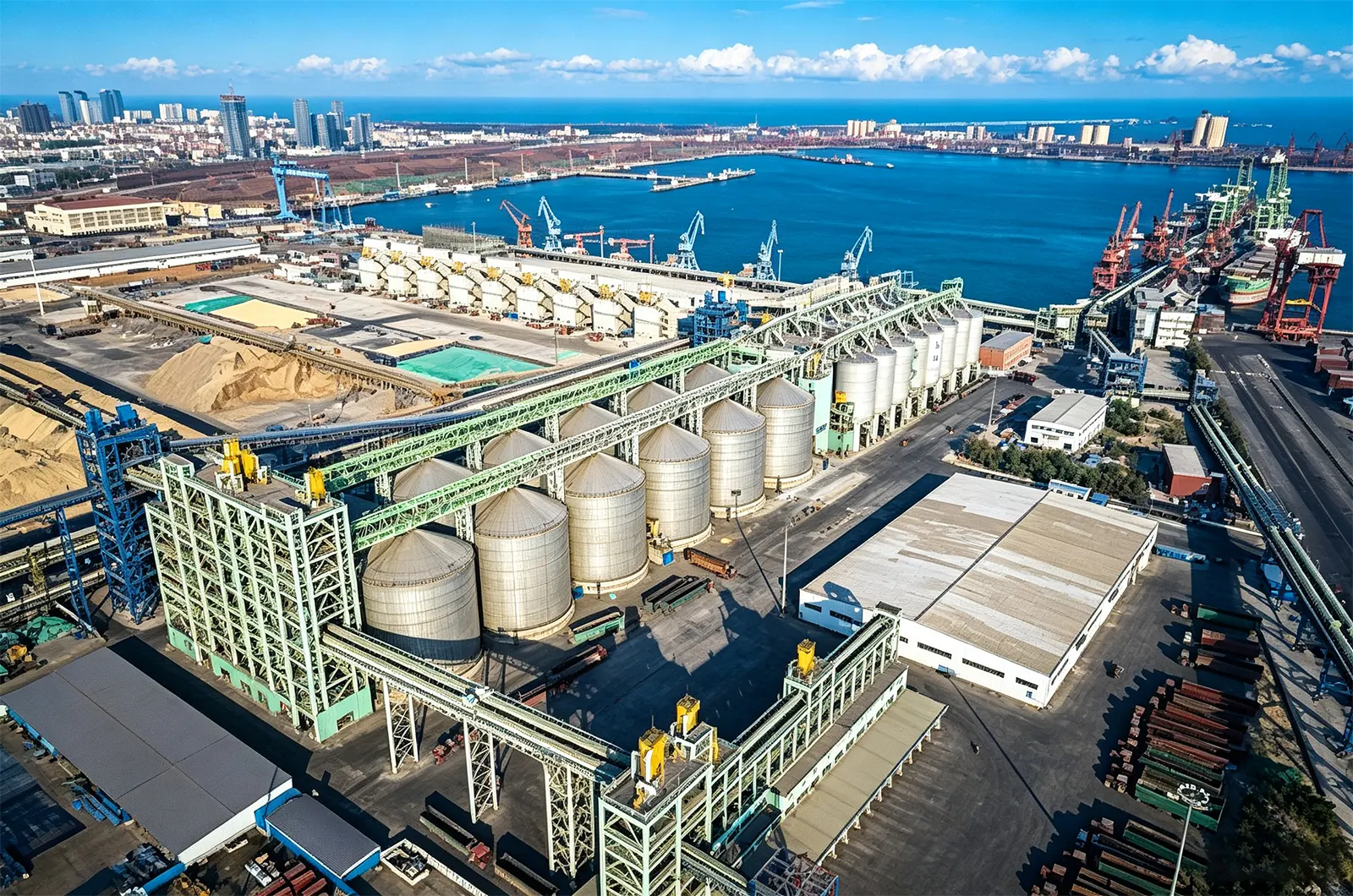
5×2000T Grain Silos Project — Philippines
Philippines · Agricultural Processing & Feed Production
Read Case Study →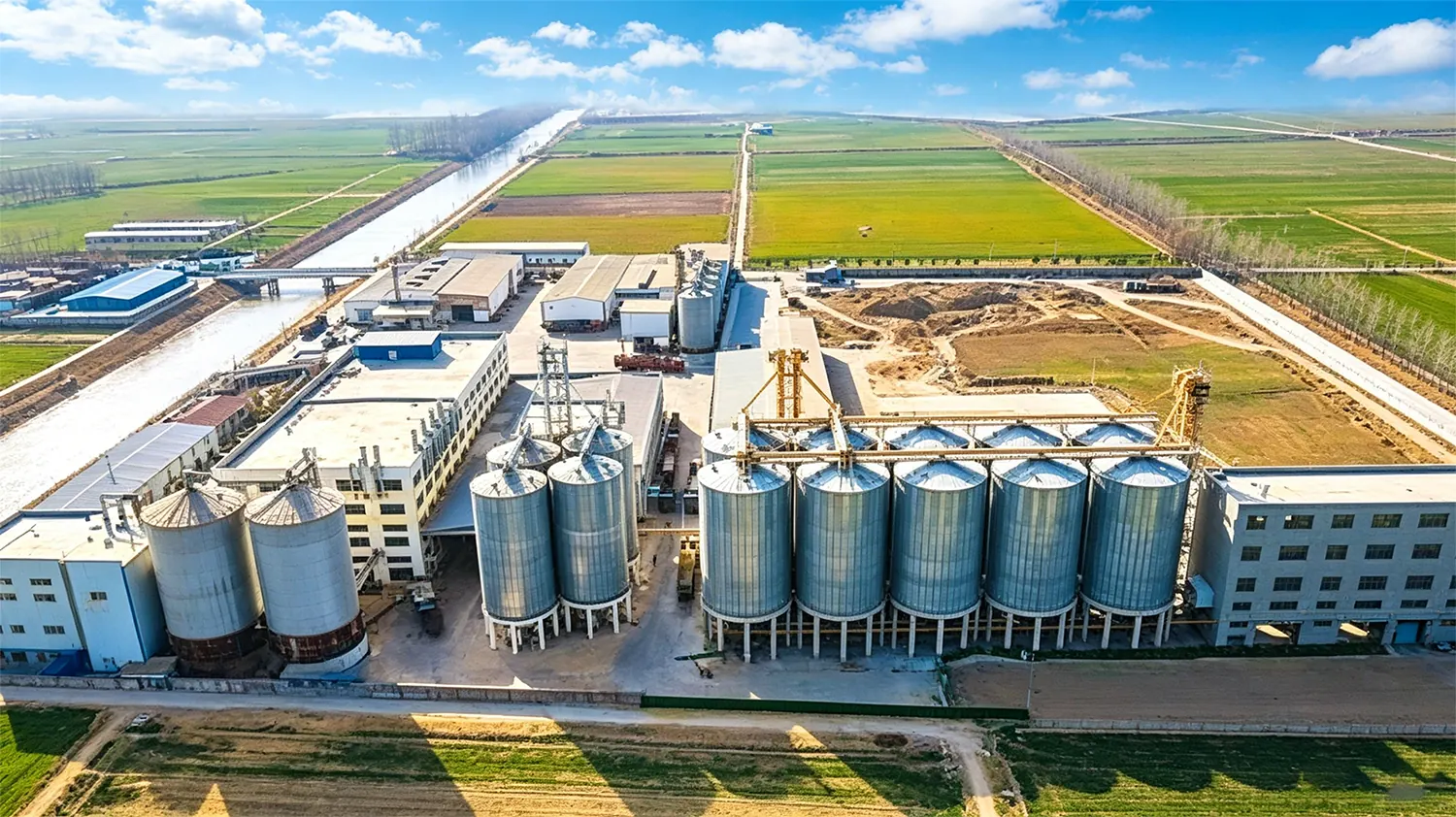
4×2500T High-Capacity Maize Grain Handling & Storage Facility — Rwanda
Eastern Province, Rwanda · Commercial Grain Elevator & Feed Mill
Read Case Study →Frequently Asked Questions
What is the recommended moisture content for safe long-term storage of Export Terminal?
How do I determine the correct aeration airflow rate?
What is the typical installation timeline for a Manxing system?
Can Manxing bins withstand extreme weather and seismic events?
How does Manxing prevent spoilage and mycotoxin development?
What maintenance does a Manxing system require?
Can Manxing integrate with my existing grain handling equipment?
Related Solutions
Corn Storage Solution
Complete storage systems for corn — from farm bins to export terminals
View →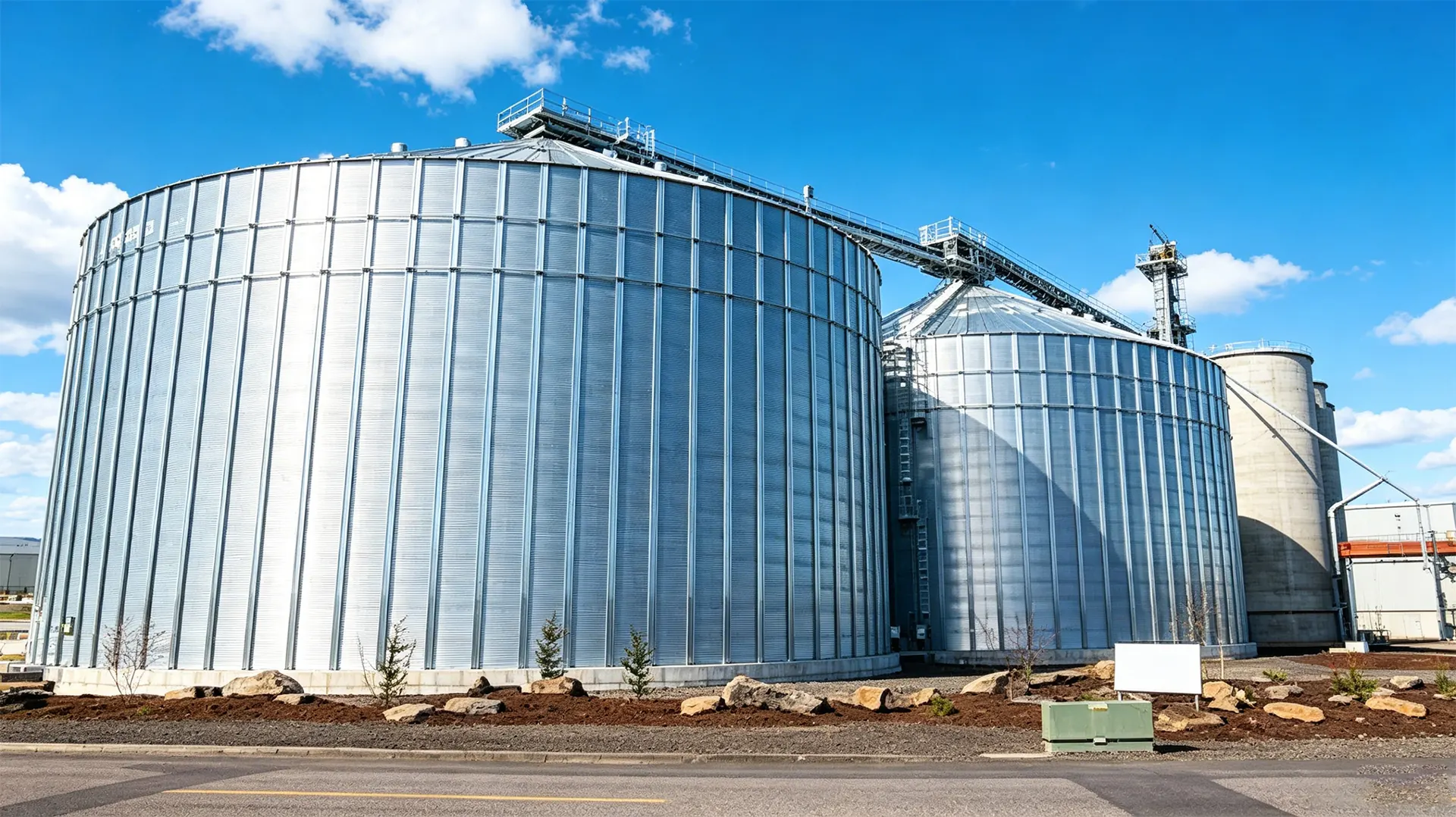
Wheat Storage Solution
Protect protein & milling quality with low-moisture storage
View →
Soybean Storage Solution
Manage the high oil content that makes soybeans heat-sensitive
View →
Rice Storage Solution
Hulled vs. paddy storage, moisture control & milling integration
View →
Farm-Scale Storage Solution
Budget-friendly bins, dryers & handling for the farm
View →
Commercial Elevator Solution
High-throughput bins, tower dryers & automated handling
View →
Seed Storage Solution
Protect germination with precise temperature & humidity control
View →Let's design your export terminal storage system
Get a tailored quote or talk to our engineering team.
Get Quote Talk to an Engineer