
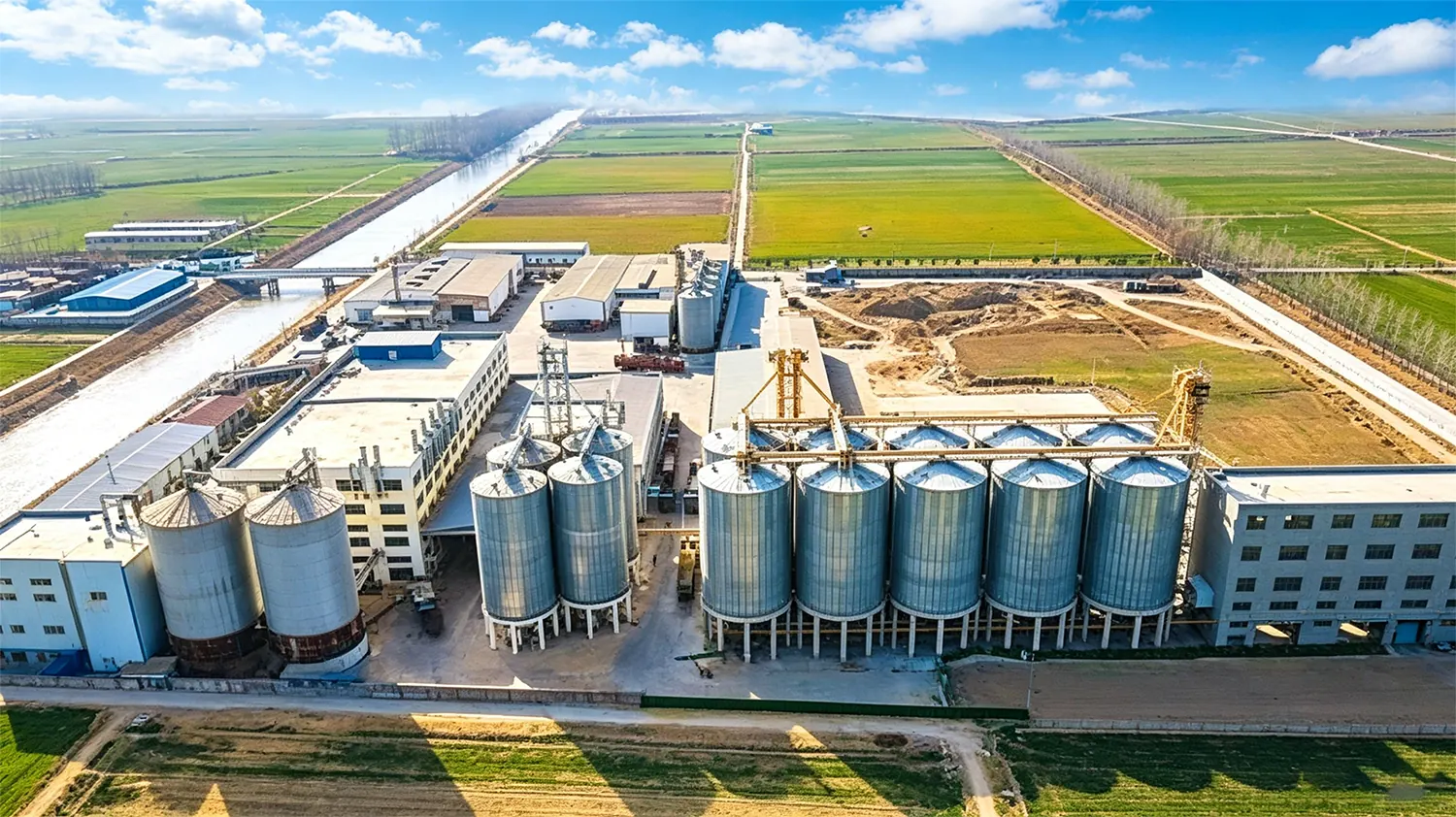
Industry Overview
Why Operators Choose ManXing
Engineered Throughput
Capacity matched to your daily intake and dispatch volume.
Grain Quality Protection
Aeration, monitoring and drying preserve moisture and grade.
Turnkey Delivery
Design, manufacture, ship, install and commission — one partner.
Global References
Proven across tropical, arid and cold-climate operations.
Detailed Application Notes
On-Farm Storage: The Foundation of Grain Marketing Independence
For over two decades, Manxing has worked alongside grain producers across diverse agricultural regions, helping them take control of their harvest from the moment grain leaves the combine. On-farm storage is no longer a luxury reserved for large-scale operations — it has become a strategic necessity for any grower who wants to maximise profitability, reduce post-harvest losses, and maintain grain quality from field to final delivery.
The global grain market rewards timing. Producers who can hold grain and sell when prices peak — rather than being forced to accept harvest-time lows — consistently outperform those who rely solely on commercial elevators. On-farm storage gives you that timing advantage. It also eliminates the costly, time-consuming truck queues that characterise peak harvest periods at local receiving points. When you store on your own property, you decide when to move grain, how much to move, and where to deliver it.
Why On-Farm Storage Matters More Than Ever
Grain markets are increasingly volatile. Weather events, geopolitical disruptions, and shifting trade policies can swing basis levels by 30 to 80 cents per bushel within a single marketing year. Producers without on-farm storage are forced to sell at harvest, when prices are typically at their lowest due to oversupply at local elevators. Those with storage capacity can hold grain through the seasonal price recovery that historically occurs between January and June.
Beyond price, on-farm storage offers three critical operational benefits:
- Price control — hold grain and sell when the market offers the best return, not when the elevator demands delivery.
- Reduced hauling — store at harvest on your own property, then move grain only when you have confirmed a sale or when freight rates are favourable.
- Grain freshness — dry and store at your own pace, maintaining quality rather than rushing grain through commercial systems that may not handle it gently.
The Real Challenges of On-Farm Storage
While the benefits are clear, on-farm storage is not simply a matter of buying a bin and filling it. Grain is a living biological product that respires, generates heat, and is susceptible to insect infestation, mould growth, and moisture migration. Managing stored grain properly requires understanding the science behind safe storage and investing in the right equipment to maintain conditions.
Moisture Management
Grain harvested above safe storage moisture is at immediate risk. For wheat, barley, and oats, the maximum safe long-term storage moisture is 12.5%. For canola, the threshold drops to 8%. Corn and soybeans can typically be stored safely at 13% to 14% if kept cool, but at temperatures above 20°C, even these moisture levels become risky. When grain arrives at the bin at 16% or 18% — common during wet harvest conditions — it must be dried quickly or aerated immediately to prevent spoilage.
Manxing engineers have seen first-hand what happens when grain is stored too wet without adequate aeration. Hot spots develop within 24 to 48 hours. Mould begins to grow. Within a week, entire sections of a bin can be compromised, turning a profitable crop into a discounted or rejected load. The cost of a single spoilage event can exceed the investment in proper drying and aeration equipment.
Temperature Control
Even dry grain is not safe if it sits at elevated temperatures. The rule of thumb that guides Manxing's aeration design is straightforward: grain temperature should be reduced to within 10°C of the ambient average temperature as soon as possible after storage. In most temperate growing regions, this means bringing grain down to 10°C to 15°C for winter storage and maintaining it below 20°C through summer.
Without aeration, solar radiation on the bin roof can create a temperature differential of 15°C to 20°C between the grain near the roof and the grain at the bottom. This temperature gradient drives moisture migration, causing condensation at the bottom of the bin and creating ideal conditions for mould and spoilage. Aeration systems from Manxing are designed to eliminate these gradients by pushing or pulling ambient air through the grain mass at controlled rates.
Insect and Pest Pressure
Insect infestations in stored grain are a persistent threat. The lesser grain borer, rusty grain beetle, and sawtoothed grain beetle can all reproduce rapidly in grain held above 12°C with moisture above 13%. Once established, fumigation is the only effective treatment — and fumigation is expensive, logistically complex, and increasingly restricted by regulatory frameworks in many jurisdictions.
Prevention is far more cost-effective than cure. Manxing's sealed bin designs, combined with temperature monitoring and aeration, create an environment where insect reproduction is suppressed. Keeping grain below 15°C effectively halts the life cycle of most common stored-product insects.
Harvest Logistics
Harvest windows are narrow. A 2,000-hectare wheat crop yielding 4 tonnes per hectare produces 8,000 tonnes of grain in a period of 10 to 14 days. If your storage system cannot receive grain at the rate the combine produces it, you face a choice: slow down harvest (risking weather damage to standing crops) or truck grain to the commercial elevator (incurring haulage costs and accepting harvest-time basis levels).
Manxing designs on-farm systems with receiving capacities that match or exceed typical combine output. A single combine harvesting wheat at 40 to 60 tonnes per hour requires a receiving system capable of handling that volume continuously. Our bucket elevator and conveyor configurations are specified to move grain from truck to bin at rates of 50 to 150 tonnes per hour, ensuring that harvest never waits on storage.
Manxing Solutions for On-Farm Storage
With over 20 years of manufacturing experience, Manxing has developed a comprehensive range of on-farm storage equipment designed to address every stage of the post-harvest chain: receiving, drying, storing, aerating, and monitoring.
Flat-Bottom and Hopper-Bottom Storage Bins
Manxing offers flat-bottom and hopper-bottom bins ranging from 40 to 1,200 tonnes. Each bin is engineered for the specific demands of on-farm use — ease of assembly, structural integrity under full load, weather sealing, and compatibility with aeration and monitoring systems.
- Flat-bottom bins — ideal for long-term storage of 500 to 1,200 tonnes. Full floor aeration ensures uniform airflow through the entire grain mass. Centre sweep augers allow efficient unloading with minimal residual grain left in the bin.
- Hopper-bottom bins — suited for smaller operations and situations where gravity unloading is preferred. Available in 40 to 200 tonne capacities, these bins are particularly popular for seed storage and for producers who need to load trucks quickly without running a sweep auger.
All Manxing bins are constructed from high-strength corrugated galvanised steel with a zinc coating of 275 g/m² (G90 equivalent), providing corrosion resistance for 25 to 30 years under normal field conditions. Bolted construction allows for straightforward on-site assembly, and every bin is supplied with appropriate anchoring systems for the local soil and wind conditions.
Portable Batch Dryers
When harvest moisture exceeds safe storage levels, drying is essential. Manxing's portable batch dryers are designed for on-farm use — compact enough to move between sites, yet capable of handling the volumes required during peak harvest.
Our batch dryers operate on a simple, reliable principle: a measured volume of wet grain is loaded into the drying chamber, heated air is passed through the grain batch for a controlled period, and the dried grain is then cooled and transferred to storage. Key specifications
Recommended Storage Solutions
Corn Storage Solution
Complete storage systems for corn — from farm bins to export terminals
View Solution →Wheat Storage Solution
Protect protein & milling quality with low-moisture storage
View Solution →Equipment Used in On-Farm Storage

Wood Pellet Silo
Dust-controlled storage for biomass wood pellets
View Product →
Commercial Silo
High-capacity storage for elevators, terminals and industrial users
View Product →
Feed Silo
Hygienic pellet & mash feed storage for feed mills and farms
View Product →Related Case Studies
6×5000Ton Grain Storage for Grain Traders — Nigeria
Nigeria · Commercial Grain Depot
Read Case Study →
5×2000T Grain Silos Project — Philippines
Philippines · Agricultural Processing & Feed Production
Read Case Study →
4×2500T High-Capacity Maize Grain Handling & Storage Facility — Rwanda
Eastern Province, Rwanda · Commercial Grain Elevator & Feed Mill
Read Case Study →Related Knowledge Articles
Mastering Grain Bin Capacity Calculation: Precision Storage Formulas
Mastering Grain Bin Capacity Calculation: Precision Storage Formulas Mastering Grain Bin Capacity Calculation: Precision Storage Formulas Accurate grain bin...
Read Article →Foundation Design for Grain Bins: A Complete Engineering Guide
Foundation Design for Grain Bins: A Complete Engineering Guide When evaluating grain storage bins for sale, the structural integrity of the foundation is the most critical factor in ensuring long-term...
Read Article →Solutions for On-Farm Storage
Let us help you design the right storage system for your operation.
Get a Quote Try the CalculatorOther Industries
Commercial Grain Elevator
High-throughput storage for elevators and marketers
View Industry →
Agricultural Cooperative
Shared storage that serves many members
View Industry →
Export Terminal
Large-scale storage for bulk export markets
View Industry →
Food & Feed Processing
Clean, controlled storage for processors
View Industry →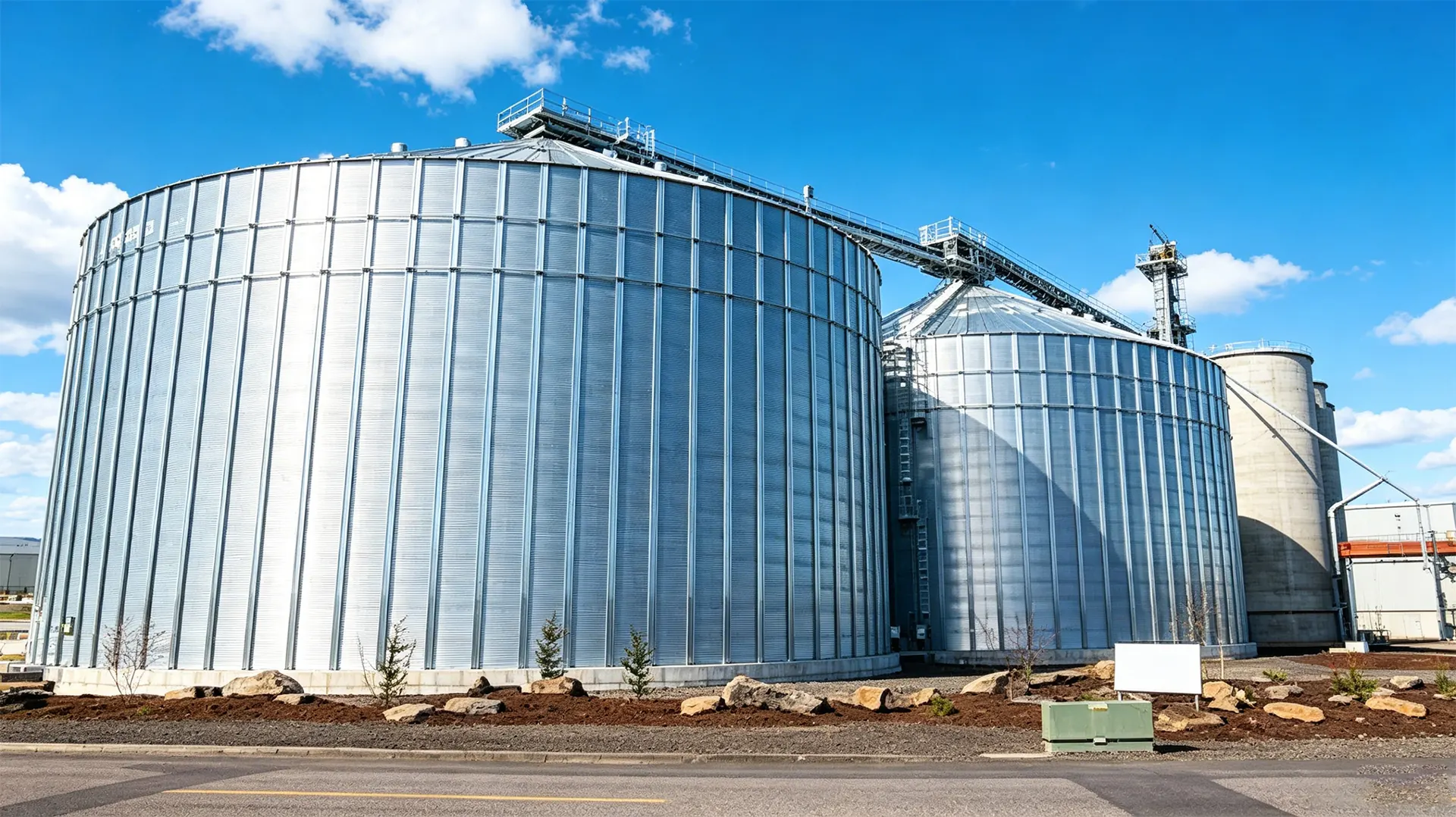
Seed Storage
Precision storage that protects seed viability
View Industry →