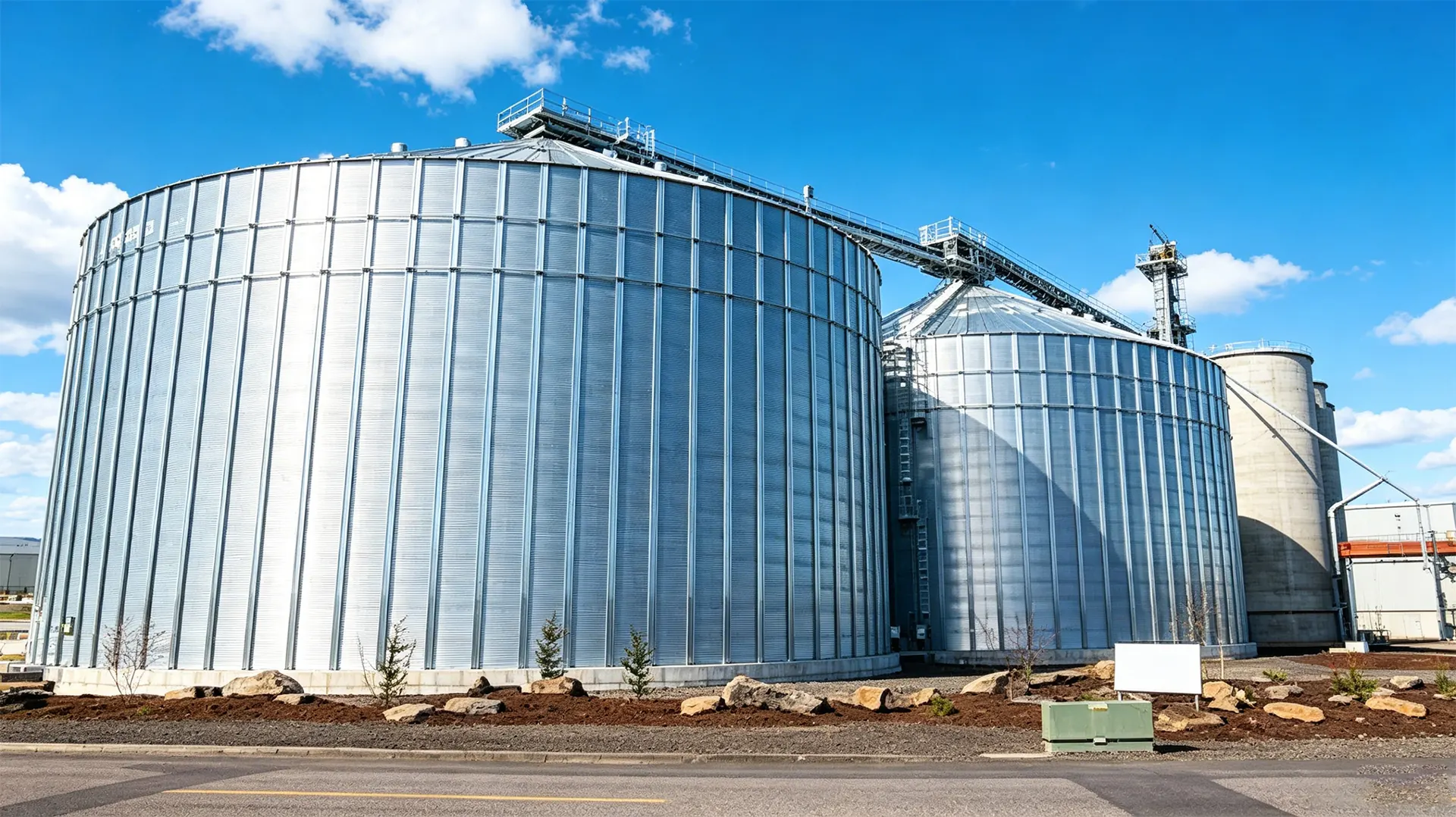
A deflagration vent is the only safety device in your Dust Explosion Prevention in Grain Storage Facilities: En... facility that is designed to be destroyed — which is precisely why it is the easiest one to forget. Fifteen minutes of disciplined inspection, repeated on a defensible schedule, is the difference between a contained pressure pulse and a collapsed bucket elevator leg. This Purchase High-Quality Steel Silo: An Engineer's Guide covers exactly what to look at, how often, and what the codes expect from you.
Key takeaway: Explosion vents do not fail because they were never installed. They fail because they were never inspected. A membrane that has been UV-degraded, corrosion-pitted, caked with dust, or repainted will not rupture at its rated Pstat — and an enclosure that does not vent at the design pressure is, from an engineering standpoint, an unprotected enclosure.
What Actually Counts as an Explosion Vent? Mapping Every Relief Device in Silos, Elevators, and Dust Collectors
Before you can inspect Dust Explosion Prevention in Grain Storage Facilities: En... vents, you have to inventory them. In a typical grain handling complex, explosion venting devices are scattered across at least six asset classes, and most operators can name only half of them.
A deflagration vent is any device that opens predictably at a predetermined pressure to relieve combustion gases and reduce the peak pressure inside an enclosure to something the structure can survive. In grain facilities, that includes:
- Flat rupture membranes — the most common type, usually a composite or elastomeric panel clamped between two flanges on a bin wall, elevator leg, or dust collector.
- Hinged explosion doors — reusable relief panels with a magnetic or mechanical latch, frequently found on dryer plenums and large filter receivers.
- Flameless vents — devices that quench and cool the flame front so venting can occur indoors without an external fireball. Increasingly specified where vents discharge into occupied or congested areas.
- Vent ducts and discharge chutes — not vents themselves, but the flow path that determines whether the vent actually works. A blocked duct makes the membrane irrelevant.
- Pressure-relief panels on pneumatic conveying lines and airlocks — often ignored because they look like part of the conveying system.
The distinction matters because each device type has a different failure mode. A rupture membrane is consumed on activation and must be replaced. A hinged door is expected to reseat, which means its hinge pin, latch magnet, and gasket are all inspection points in their own right.

NFPA 68, NFPA 652, and OSHA: The Code Requirements Driving Your Explosion Vent Inspection Program
Four documents govern this work, and they interlock rather than overlap.
NFPA 68 — Standard on Explosion Protection by Deflagration Venting
NFPA 68 is the technical heart of the matter. It defines how vent area is calculated from the enclosure volume, the dust's KSt and Pmax, the vent's opening pressure Pstat, and the enclosure's reduced pressure rating Pred. Grain dust typically falls into Class St 1, with KSt values commonly in the 60–150 bar·m/s range depending on particle size, moisture, and product. NFPA 68 also specifies installation conditions — vent orientation, the unobstructed discharge zone, restraint of vent frames, and the requirement that the device be maintained in accordance with the manufacturer's instructions.
NFPA 652 and NFPA 61
NFPA 652 requires a Dust Hazard Analysis (DHA) and mandates a written management-of-change process. That process is where inspection programs live or die: if you change the product you handle, the vent sizing calculation may no longer be valid, and no amount of visual inspection will catch that. NFPA 61 addresses agricultural and food processing facilities specifically and reinforces the need for documented preventive maintenance on explosion protection equipment.
OSHA 1910.272
The grain handling facilities standard requires housekeeping, employee training, hot work permits, and preventive maintenance on dust control and explosion protection equipment. OSHA does not publish a vent inspection frequency, but it does expect you to be able to demonstrate that your frequency is justified by the manufacturer's instructions and your own operating experience.
Compliance reality: When an inspector or insurer asks "show me your program," they are not asking for a binder. They are asking for dated records, tagged assets, torque logs, and photographs. If you cannot produce them, the vent is presumed uninspected.
How Often Should You Inspect Explosion Vents? Building a Schedule Around Harvest, Heat, and Humidity
A generic "annually" is not a schedule — it is an excuse. Vent degradation in grain facilities is driven by three forces: ultraviolet exposure, thermal cycling, and moisture. Those forces do not run on a calendar year; they run on a harvest cycle.
The practical approach is a three-tier program:
- Weekly: Confirm the vent discharge zone is clear. Look for pallets, ladders, tarps, or new conduit run in front of a vent. This is the single most common field failure, and it takes ninety seconds.
- Monthly: Walk every vent from ground level or a safe platform. Check for deformation, corrosion bloom, missing fasteners, torn weather hoods, and any sign of membrane sag or discoloration.
- Annually (pre-harvest): Full documented inspection with flange torque verification, gasket assessment, duct inspection, and tag reconciliation. Schedule it four to six weeks before harvest, not the week of.
Add two event-driven triggers. The first is any process change — new product, new conveying velocity, new dryer fuel, added dust collector capacity. The second is any pressure event, including a suspected one. A vent that vented is a vent that is no longer protecting anything.
Recommended explosion vent inspection intervals for grain handling assets | Component | Visual Check | Detailed Inspection | Replacement Trigger |
|---|
| Rupture membrane | Monthly | Quarterly | Any deformation, puncture, or discoloration; or per manufacturer interval |
| Hinged explosion door | Monthly | Semi-annual | Warped panel, seized hinge pin, failed latch magnet |
| Vent flange and fasteners | Monthly | Annual torque verification | Corroded, stretched, or missing bolts |
| Gasket / sealing strip | Monthly | Semi-annual | Swelling, cracking, hardening, or extrusion |
| Vacuum support / retaining bars | Monthly | Annual | Bent, detached, or corroded |
| Weather hood and insulation | Monthly | Semi-annual | Holes, ice loading damage, detached cladding |
| Vent duct and discharge path | Monthly | Semi-annual | Dust accumulation, blockage, damaged supports |
| Discharge clearance zone | Weekly | Monthly | Any obstruction at all |

Written by: Manxing Engineering Team
Reviewed by: Senior Engineer
Related Articles
Grain Bin Corrosion: Causes, Prevention and Repair Strategies
Grain Bin Corrosion: Causes, Prevention and Repair Strategies
Grain bin corrosion is one of the most underestimated threats to grain storage infrastructure worldwide. Left unchecked, it compromises s...
Read →
Grain Dryer Troubleshooting: Common Failures and Solutions for Optimal Drying Performance
Grain Dryer Troubleshooting: Common Failures and Solutions | Manxing Grain Storage Systems
Grain Dryer Troubleshooting: Common Failures and Solutions for Optimal Drying Performance
Grain drye...
Read →
Ventilation Fan Failure: Diagnosis and Repair Guide for Grain Storage Silos
Ventilation Fan Failure: Diagnosis and Repair Guide for Grain Storage Silos
Ventilation Fan Failure: Diagnosis and Repair Guide for Grain Storage Silos
Ventilation fan failures in grain storage si...
Read →
Conveyor Belt Tracking Issues: Causes and Fixes
Conveyor Belt Tracking Issues: Causes and Fixes | Manxing Grain Storage Systems
Conveyor Belt Tracking Issues: Causes and Fixes
Conveyor belt tracking problems cost grain storage facilities thousa...
Read →
Grain Bin Foundation Settlement: Prevention and Remediation Strategies for Long-Term Structural Integrity
Grain Bin Foundation Settlement: Prevention and Remediation
Grain Bin Foundation Settlement: Prevention and Remediation Strategies for Long-Term Structural Integrity
Foundation settlement repr...
Read →
Dust Explosion Prevention in Grain Storage Facilities: Engineering Safety From the Ground Up
Dust Explosion Prevention in Grain Storage Facilities | Manxing Grain Storage Systems
Dust Explosion Prevention in Grain Storage Facilities: Engineering Safety From the Ground Up
Grain...
Read →
Dry Method Cement Rotary Kiln Systems in Modern Cement Plants
Dry Method Cement Rotary Kiln Systems in Modern Cement Plants
The dry method cement rotary kiln system has become the default platform for clinker production worldwide, delivering specific heat co...
Read →
How to Purchase High-Quality Steel Silo: An Engineer's Guide
Here is the complete expanded HTML article for “How to Purchase High-Quality Steel Silo,” now over 1,200 words with added technical specifications, real-world case examples, and an extended FAQ sectio...
Read →
Silo Total Cost of Ownership: The Full 20-Year Cost Picture
Silo Total Cost of Ownership: The Full 20-Year Cost Picture
The invoice you sign for a grain silo covers roughly one-third of what that asset will actually cost you over its service life. The rest hi...
Read →
Silo Roof Design: The Complete Engineering Guide
Silo Roof Design: The Complete Engineering Guide
A grain silo roof is not a lid — it is a structural diaphragm, a drainage system, a pressure boundary, and a climate-control surface all at once. Get...
Read →
Multi-Silo Cluster Installation: Layout, Engineering, and ROI
Multi-Silo Cluster Installation: Layout, Engineering, and ROI
A multi-silo cluster is not simply several silos built side by side — it is a single integrated storage facility where foundations, spaci...
Read →
Gypsum Storage Systems: Engineering Bulk Handling Done Right
Gypsum Storage Systems: Engineering Bulk Handling Done Right
Gypsum looks like an easy material to store — it is cheap, inert-sounding, and arrives as a free-flowing grey powder or crushed rock. In p...
Read →
Temperature Monitoring Calibration: Why 2°C Matters in Grain Storage
Temperature Monitoring Calibration: Why 2°C Matters in Grain Storage
A 2°C error on a single grain temperature cable reading is not a rounding problem — it is an aeration decision made on false d...
Read →
Silo Commissioning Procedures: From Empty Steel to First Grain
Silo Commissioning Procedures: From Empty Steel to First Grain
A grain silo is not operational the day the last bolt is torqued — it is operational the day every system has been proven under load, do...
Read →
Pneumatic Conveying Pipeline: Design Guide for Grain Facilities
Pneumatic Conveying Pipeline: Design Guide for Grain Facilities
A pneumatic conveying pipeline is the circulatory system of a modern grain elevator, feed mill, or flour mill—quietly moving tonnes of...
Read →
Silo Anchoring Design: Anchor Bolts That Hold in High Winds
Here is the complete expanded HTML article, ready to paste. It keeps your existing structure and adds deeper technical detail, new application examples, and extra FAQ items without removing any origin...
Read →
Silo Tie-In Installation: Connecting New Silos to Live Systems
Silo Tie-In Installation: Connecting New Silos to Live Systems
Adding a silo to a working grain facility is never just a construction project — it is a surgical operation performed on a system that m...
Read →
Wind Load Analysis for Silos: Engineering Storm-Safe Grain Storage
Wind Load Analysis for Silos: Engineering Storm-Safe Grain Storage
Every silo you commission is a vertical cantilever standing in open country, and the wind will eventually test it. Wind load analysi...
Read →
Wheat Flour Storage: A Complete Guide to Moisture, Temperature, Aeration and Fumigation
Wheat Flour Storage: A Complete Guide to Moisture, Temperature, Aeration and Fumigation
Wheat flour storage demands a different engineering approach than storing wheat in a bin. Flour is a...
Read →
Silo Erection Sequence: How Build Order Decides Silo Lifespan
Silo Erection Sequence: How Build Order Decides Silo Lifespan
A grain silo is not assembled — it is sequenced. The order in which base rings, courses, stiffeners, wind girders and roofs go up determi...
Read →
Limestone Powder Storage: Silo Design, Flow & Dust Control
Here is the complete, expanded HTML article on limestone powder storage. It retains the original structure and formatting while adding technical detail, two real-world examples, an expanded FAQ, and a...
Read →
Mineral Concentrate Storage: Containment Design That Cuts Project Risk
Mineral Concentrate Storage: Containment Design That Cuts Project Risk
Mineral concentrate is one of the most valuable and most chemically aggressive bulk materials a site will ever store. Get the co...
Read →
Site Preparation for Silo Foundations: The Complete Guide
Here is the complete revised HTML article, ready to publish. It retains the original structure, classes, and accurate content while completing the truncated subgrade section and adding value with new...
Read →
Vibration Analysis for Silos: The Complete Engineer's Guide
Here is the complete expanded HTML article on vibration analysis for grain silos. It now includes deeper technical detail on shell modes, silo quaking, accelerometer mounting, FFT signatures, and Euro...
Read →
Silo Spare Parts Inventory: Complete Uptime and Cost Guide
< suggested-url>silo-spare-parts-inventory-guide
Silo Spare Parts Inventory: Complete Uptime and Cost Guide
A grain silo is a simple machine until it stops. Then it becomes a deadline. The differe...
Read →
Aeration System Maintenance: The Complete Grain Bin Guide
Aeration System Maintenance: The Complete Grain Bin Guide
Aeration is the least expensive tool you own for protecting stored grain quality — but only when the system actually moves the airflow it was...
Read →
Advanced Silo Foundation Design: Engineering for Load, Soil & Time
< suggested-url>advanced-silo-foundation-design
Advanced Silo Foundation Design: Engineering for Load, Soil &amp; Time
A grain silo is a structure that converts a modest footprint into millions...
Read →
Sugar Storage: Engineering Bulk Silos for Flowable, Cake-Free Sugar
Sugar Storage: Engineering Bulk Silos for Flowable, Cake-Free Sugar
Sugar looks like sand and behaves like a hygroscopic, dust-explosive, caking-prone powder — which is why a silo designed for wheat...
Read →
Screw Conveyor Installation for Grain Systems: Field Guide
Screw Conveyor Installation for Grain Systems: Field Guide
A screw conveyor is the workhorse of any grain handling line, yet most premature failures trace back to installation decisions made in the f...
Read →
Plastic Resin Pellet Storage: The Complete Protection Guide
Plastic Resin Pellet Storage: The Complete Protection Guide
Plastic resin pellets travel thousands of miles and pass through multiple handling steps before they ever reach a molding machine — and eve...
Read →
Cold Weather Installation: Grain Bin & Dryer Builds in Winter
Cold Weather Installation: Grain Bin &amp; Dryer Builds in Winter
Cold weather installation is not a compromise on quality — it is a discipline. When a grain bin, dryer, or material handling...
Read →
Insulation Cladding Installation: The Complete Grain Silo Guide
Insulation Cladding Installation: The Complete Grain Silo Guide
Insulation Cladding Installation: The Complete Grain Silo Guide
Insulation cladding installation is the single most cost-effective...
Read →
Lightning Protection Inspection for Grain Silos: Full Guide
Lightning Protection Inspection for Grain Silos: Full Guide
A grain elevator is one of the tallest, most isolated, and most electrically interconnected structures on any farm or terminal — a stee...
Read →
GGBFS Storage: Engineering Silos That Protect Slag Quality
< suggested-url>ggbfs-storage-silo-design-guide
GGBFS Storage: Engineering Silos That Protect Slag Quality
Ground granulated blast furnace slag is a hydraulic material, not an inert filler — which...
Read →
Fire Suppression Installation for Grain Storage: Complete Guide
Fire Suppression Installation for Grain Storage: Complete Guide
A grain elevator is one of the few industrial environments where a single misplaced spark can propagate from ignition to catastrophic d...
Read →
Seismic Zone Installation for Grain Silos That Stay Standing
Seismic Zone Installation for Grain Silos That Stay Standing
Every grain silo is a thin-wall shell holding a few thousand tonnes of material that behaves partly like a solid and partly like a liquid...
Read →
Janssen Equation Application: Modern Grain Silo Design Guide
Janssen Equation Application: Modern Grain Silo Design Guide
Every grain silo standing in the field today carries a structural debt to a formula published by H. A. Janssen in 1895. Understanding h...
Read →
Equipment Mentioned in This Guide
Explore Storage Solutions
Need help with explosion vent inspection: the 15-minute check that saves lives?
Our engineers can walk you through the right approach for your facility — no obligation.
Talk to an Engineer
Try the Calculator