
Accurate Dust Dust Explosion Prevention in Grain Storage Facilities: En... Prevention in Grain Storage Facilities: En... bin capacity calculation is the cornerstone of efficient agricultural storage, directly impacting inventory management, structural safety, and return on investment. Understanding the precise volume and weight metrics ensures operators maximize storage potential while mitigating risks associated with overfilling and environmental factors.

Understanding Bin Capacity Calculation: Why Precision Matters in Grain Storage
In modern Dust Dust Explosion Prevention in Grain Storage Facilities: En... Prevention in Grain Storage Facilities: En... storage engineering, underestimating or overestimating capacity can lead to catastrophic financial and structural consequences. Precise grain bin capacity calculation forms the foundation of facility planning, influencing everything from the initial capital expenditure to daily operational logistics. When operators miscalculate volume, they risk overfilling, which can exert unprecedented lateral and vertical pressure on the silo walls, potentially leading to structural failure. Conversely, underutilizing a bin's capacity results in inefficient use of footprint and capital. By applying rigorous engineering formulas, operators can accurately forecast storage needs, optimize aeration system layouts, and ensure that the structural load remains within safe design parameters. Precision in these calculations is not merely an academic exercise; it is a fundamental safety and economic imperative.
The Core Formulas: How to Calculate Grain Bin Capacity Accurately
To determine the total storage potential of a silo, engineers rely on specific geometric formulas tailored to the bin's shape. The most common structure is the cylindrical flat-bottom or hopper-bottom silo. For cylindrical bins, the Dust Dust Explosion Prevention in Grain Storage Facilities: En... Prevention in Grain Storage Facilities: En... bin capacity calculation formula relies on the volume of a cylinder: V = π × r² × h, where V is the volume, r is the radius, and h is the height of the grain column. Once the cubic footage is determined, it must be converted into bushels or metric tons based on the commodity's test weight. For instance, one bushel of shelled corn occupies roughly 1.244 cubic feet. Therefore, dividing the total cubic footage by 1.244 yields the bushel capacity for corn. For operators managing rectangular structures, a Rectangular Bin volume calculator is indispensable. The formula for rectangular bins is straightforward: V = Length × Width × Height. However, calculating the heaped capacity requires factoring in the angle of repose and the geometry of the peak, which adds complexity to the rectangular bin volume calculator process.
The Hidden Loss: How Condensation and Moistine Migration Affect Effective Bin Capacity
Grain bins can "sweat," a phenomenon that significantly impacts effective storage capacity and grain quality. Sweating refers to moisture condensation on the inner walls of a grain bin, which occurs when there is a steep temperature difference between the grain mass inside and the ambient air outside. As warm, moist air migrates through the grain pile, it hits the cooler steel walls, condenses, and creates localized pockets of high moisture. This moisture migration can lead to mold growth, crusting, and spoilage along the bin perimeter. When grain spoils, it effectively reduces the usable capacity of the bin, as contaminated product must be removed or remediated. Furthermore, spoiled grain can bridge and hang up, disrupting gravity flow and complicating discharge. Managing this hidden loss requires integrating aeration systems that equalize temperatures and selecting silos with superior thermal insulation properties.
Structural Limits of Spiral Silos: Calculating Capacity Within the 10,000-Ton Threshold
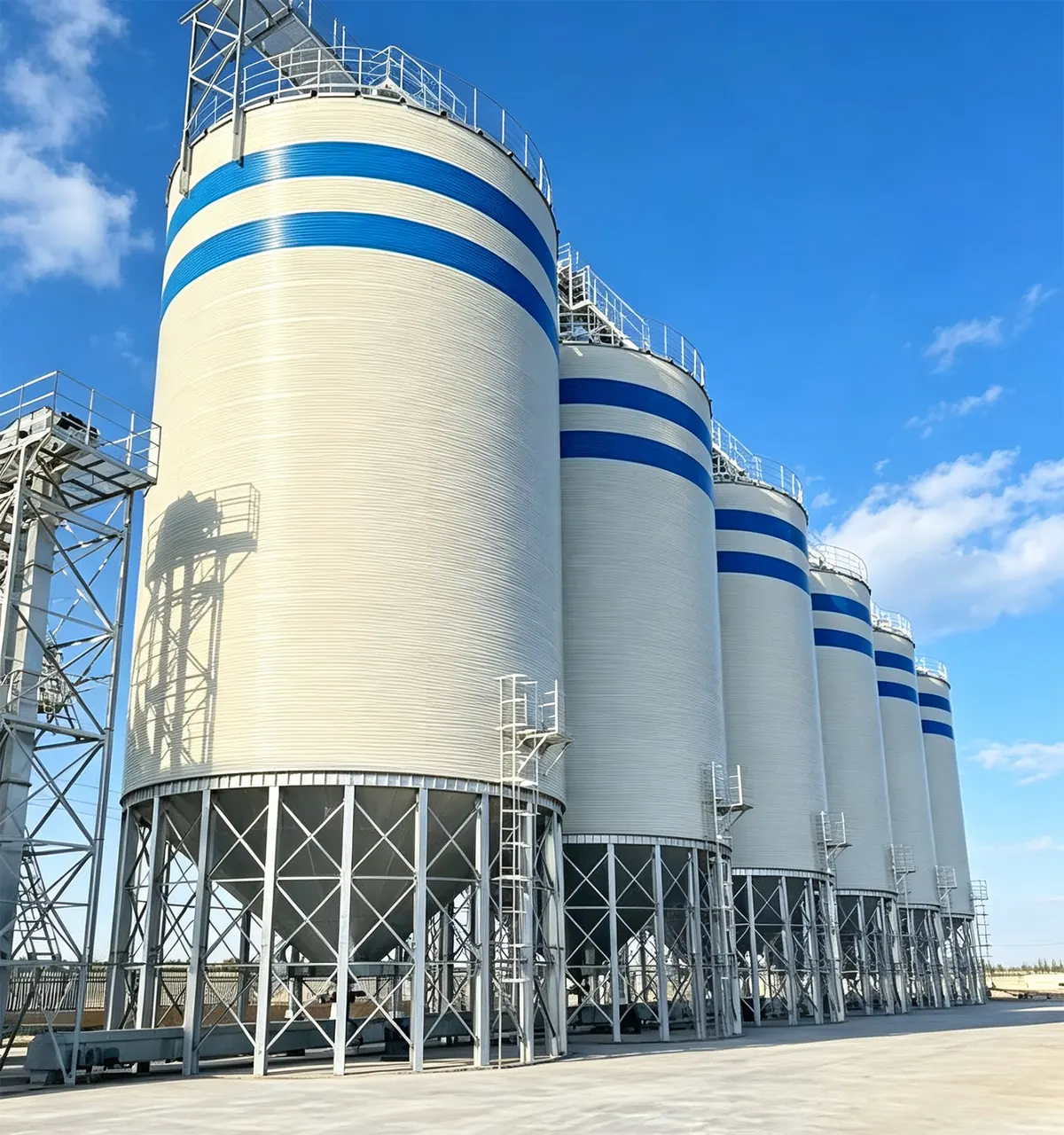
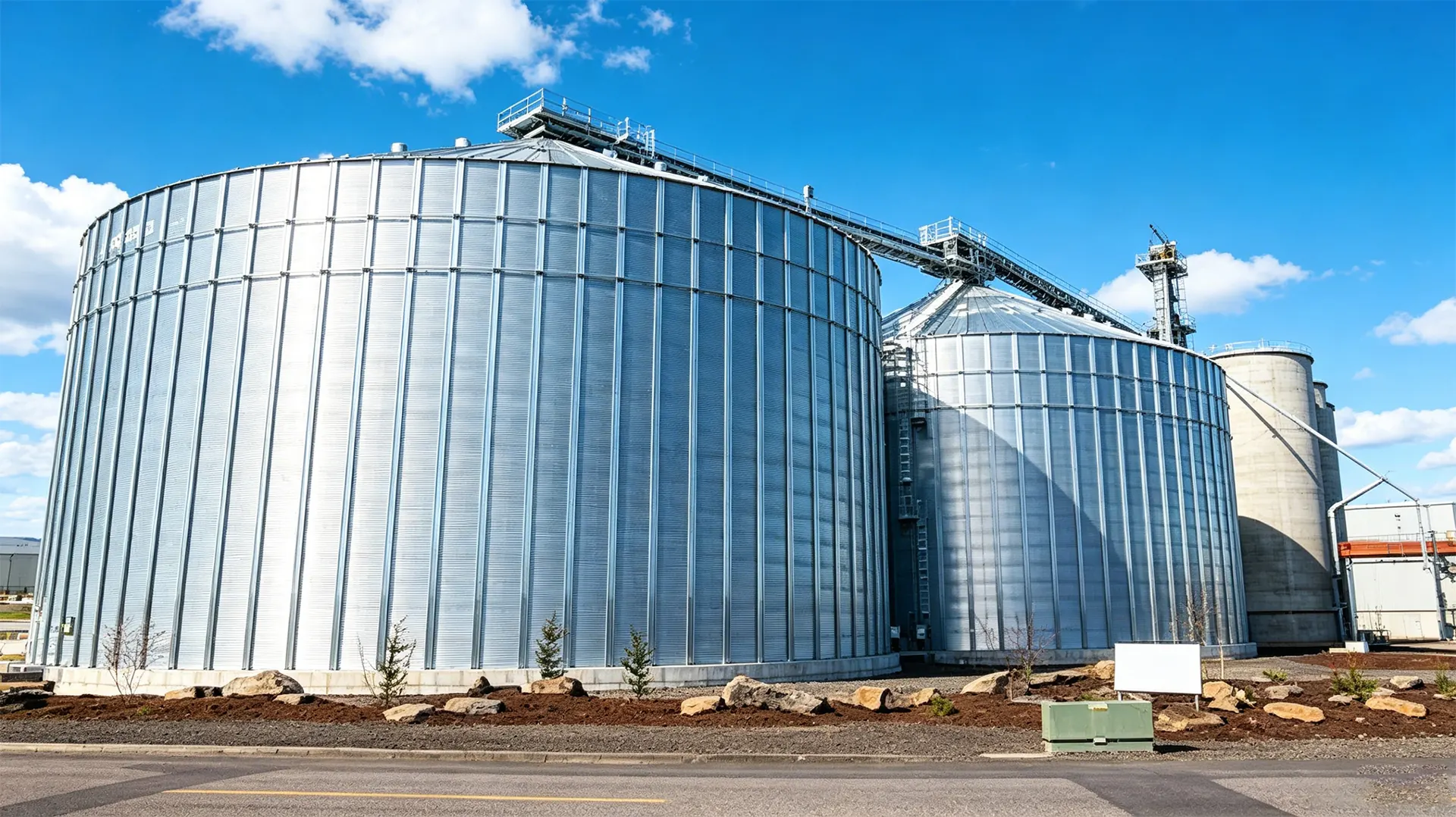
When engineering large-scale storage, structural integrity dictates the upper limits of capacity. A single spiral silo is generally limited to no more than 10,000 tons due to steel plate thickness constraints. As the diameter and height of a silo increase to accommodate greater volumes, the hoop tension and vertical compressive forces on the steel walls escalate exponentially. To safely contain these massive loads, the steel plate thickness must increase, but there is a practical limit to how thick the steel can be while still maintaining the structural viability of the spiral bending process. Our spiral silos are engineered with a protruding undercut thickness of the spiral seam that is 5 times the original steel plate thickness. This unique structural feature significantly strengthens the load-bearing capacity of the silo, providing exceptional resistance to both vertical compression and lateral grain pressure. By understanding these structural limits, engineers can design systems with a capacity range of 100t to 7,000t, ensuring safe, reliable operation well within the 10,000-ton threshold.
Aeration and Hopper Geometry: Design Factors That Alter True Storage Capacity
The theoretical volume of a silo rarely translates directly to usable grain capacity. Aeration systems, including ducts, fans, and plenums, occupy physical space within the bin, displacing grain. While this displacement is a necessary trade-off for grain preservation, it must be accounted for in the final capacity tally. Hopper geometry further complicates the calculation. A flat-bottom silo allows operators to utilize the full cylindrical volume, but requires extensive sweep augers for cleanout. Conversely, a hopper-bottom silo facilitates gravity discharge and self-cleaning, but the conical or pyramidal hopper reduces the overall cylindrical height and introduces a transition point where the grain flow dynamics change. The angle of the hopper must exceed the angle of repose of the stored commodity to prevent bridging, which directly impacts how much grain can be safely stored and reliably extracted.
Galvanized Steel and Monolithic Construction: How Build Quality Impacts Long-Term Capacity
Long-term capacity retention is directly tied to the construction materials and methods. Over time, corrosion can degrade the internal surfaces of a silo, creating rough patches and rust scale that alter the friction angle and impede grain flow. Our silos are constructed using galvanized steel plates, providing excellent corrosion resistance and a long service life. The smooth, zinc-coated surface ensures consistent grain flow and prevents material hang-up, preserving the bin's designed capacity for decades. Furthermore, the silo body is a monolithic structure—no holes, bolts, or screws—ensuring excellent airtightness. This seamless construction is achieved through specialized equipment that performs spiral bending and seam biting, guaranteeing quality at every point of the silo. The monolithic design not only prevents moisture ingress but also maintains the structural rigidity required to withstand the immense lateral pressures of a fully loaded silo, ensuring that the calculated capacity remains achievable throughout the structure's lifespan.
Safety Margins and Peak Loads: Avoiding Overfilling and Structural Stress
Engineering standards mandate strict safety margins to account for dynamic loads and unforeseen stresses. Grain is not a static fluid; it exerts significant horizontal pressure on the walls, and during filling and discharging, surge loads can multiply these pressures. Overfilling a bin eliminates the critical headspace required for air circulation and can subject the roof to extreme uplift and compression forces. Calculating capacity is not just about determining the maximum fill line; it is about establishing a safe operating limit. Operators must factor in the angle of repose when calculating the heaped capacity at the top of the bin