When evaluating Dust Dust Explosion Prevention in Grain Storage Facilities: En... Prevention in Grain Storage Facilities: En... storage bins for sale, the structural integrity of the foundation is the most critical factor in ensuring long-term operational safety and grain quality. A properly engineered foundation prevents catastrophic structural failure, mitigates uneven settlement, and secures your substantial capital investment against the immense static and dynamic loads exerted by stored grain.
Introduction to Foundation Design for Grain Bins
The foundation of a Dust Dust Explosion Prevention in Grain Storage Facilities: En... Prevention in Grain Storage Facilities: En... bin is far more than a simple concrete pad; it is a complex structural interface designed to transfer the immense dead and live loads of the stored grain into the underlying soil. The lateral pressures exerted by grain—particularly flowing grain which creates dynamic hydraulic pressures—combined with wind uplift forces, require rigorous geotechnical analysis. Whether you are consulting a grain bin size chart to plan a small farm operation or a massive commercial export terminal, the foundational engineering principles remain the same: distribute the load, resist the uplift, and prevent moisture ingress. Overlooking these principles can lead to severe structural buckling, bin wall collapse, and life-threatening engulfment hazards.
Key Technical Specifications of Foundation Design for Grain Bins
Understanding the technical specifications is vital for any procurement manager or agricultural engineer. The foundation design must align perfectly with the structural requirements of the specific bin. When referencing a Dust Dust Explosion Prevention in Grain Storage Facilities: En... Prevention in Grain Storage Facilities: En... bin size chart, you will notice that diameter and eave height dictate the total bushel capacity. However, the foundation engineer must convert this volume into weight (accounting for the specific crop's test weight) to calculate the required bearing capacity.
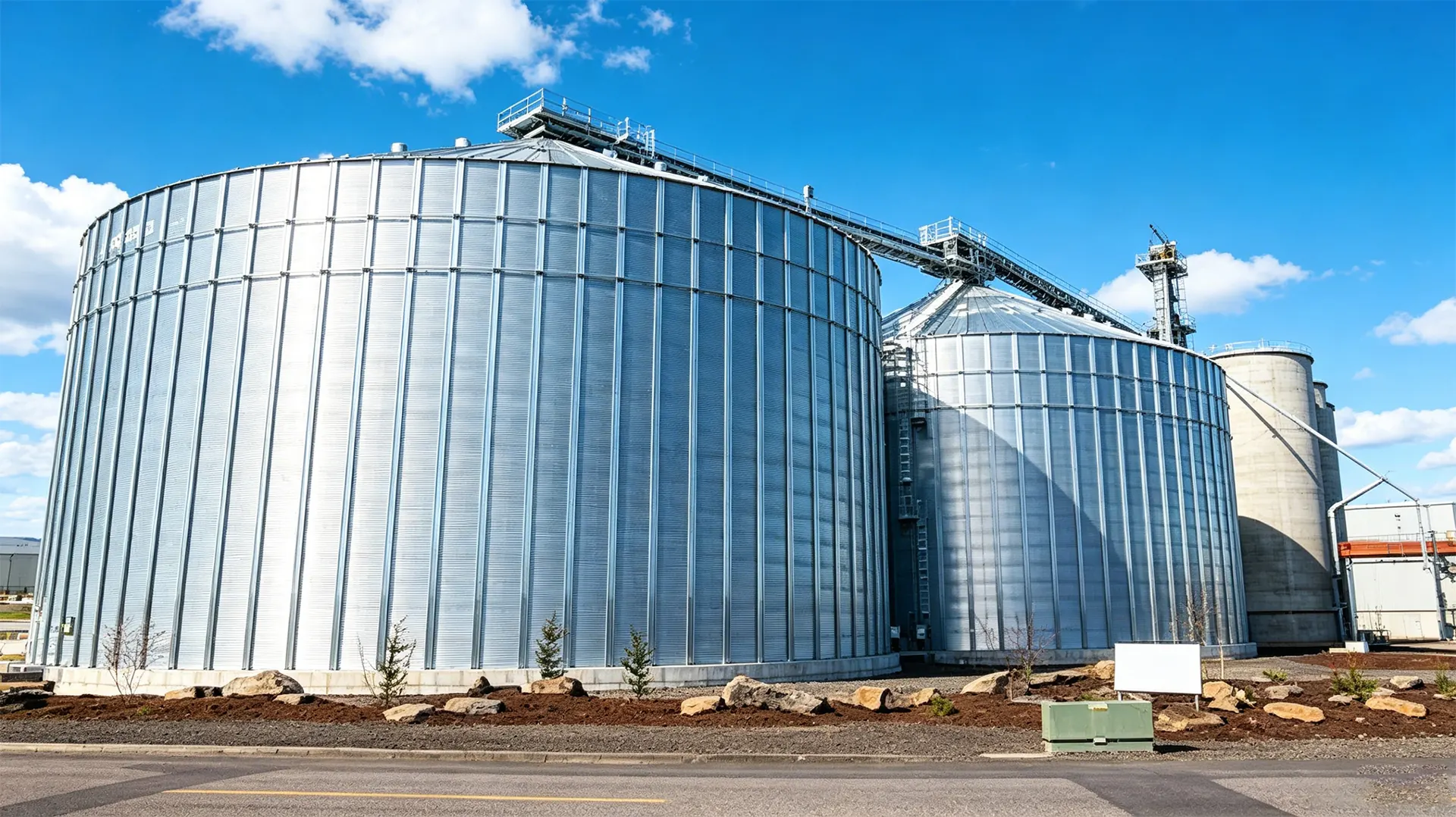
Furthermore, the configuration of grain bin rings dictates how the load is transferred to the foundation. The bottom ring, or stiffener profile, acts as a massive hoop, concentrating the vertical weight along the bin's circumference. This means the foundation must be heavily reinforced at the perimeter to handle these line loads. Adhering strictly to a Superior grain bin Manual ensures that anchor bolt placement, embedment depth, and torque specifications are precisely met, preventing wind uplift failures.
Load Calculations and Bearing Capacity
Engineers must calculate three primary loads: dead load (the weight of the steel structure), live load (the weight of the grain), and environmental loads (wind and seismic). The soil bearing capacity, measured in tons per square foot (tsf) or kilopascals (kPa), must safely exceed the maximum applied pressure. Standard agricultural soils typically range from 1.5 to 3.0 tsf. If the soil cannot support the load, deep foundation elements like driven piles or drilled piers must be utilized to transfer the load to deeper, more competent strata.
Design Considerations for Foundation Design for Grain Bins
Executing the best foundation design for grain bins requires a comprehensive evaluation of site-specific variables. A generic approach is never acceptable in structural engineering.
Soil Mechanics and Geotechnical Investigation
Before a single yard of concrete is poured, a thorough geotechnical investigation is mandatory. This involves drilling boreholes and conducting Standard Penetration Tests (SPT) to determine the soil composition, moisture content, and compaction characteristics. Highly expansive clays or loose, saturated sands require specialized ground improvement techniques, such as soil replacement or chemical stabilization, to prevent future settlement.
Wind Uplift and Seismic Forces
An empty grain bin is highly susceptible to wind uplift. The foundation must possess enough mass, or be anchored deep enough into the earth, to counteract the overturning moment generated by high-velocity winds. In seismic zones, the foundation must also absorb and dissipate kinetic energy without undergoing brittle failure. This is achieved through robust rebar detailing and the use of high-strength concrete mixes.
Material Selection and Foundation Design for Grain Bins Construction
The longevity of a grain bin foundation is directly tied to the quality of materials used. Substandard materials will degrade rapidly under the cyclic loading and harsh environmental conditions typical of agricultural storage facilities.
Concrete Specifications
Concrete is the primary material used in grain bin foundations. A minimum compressive strength of 4,000 psi is standard for commercial applications, though 5,000 psi or higher is recommended for heavy-use facilities. The water-to-cement ratio must be kept low (typically below 0.45) to minimize porosity and prevent freeze-thaw deterioration. Additionally, air-entraining agents should be incorporated to enhance durability in cold climates.
Reinforcement Strategies
Rebar (reinforcing steel) provides the necessary tensile strength that concrete inherently lacks. For ring-wall foundations, continuous circumferential rebar is critical to resist the outward hoop tension generated by the grain. For slab-on-grade foundations, welded wire fabric or bi-directional rebar mats prevent cracking due to shrinkage and thermal expansion. Epoxy-coated rebar or galvanized reinforcement should be specified in environments where chemical fertilizers or highly saline soils are present, as these can rapidly corrode standard carbon steel.
Industrial Applications of Foundation Design for Grain Bins
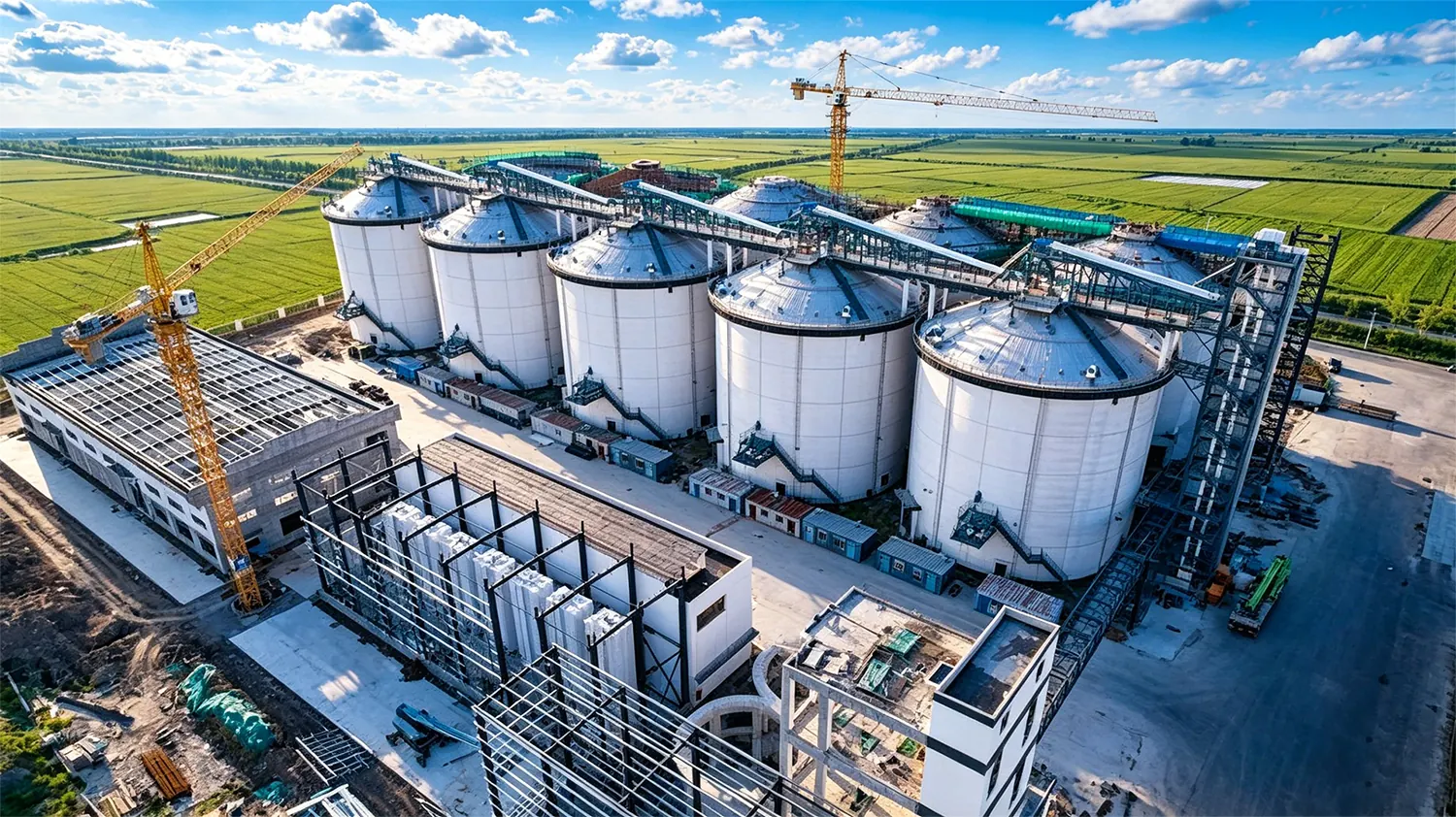
While the fundamental physics remain constant, the application of foundation design for grain bins varies significantly across industries. On-farm storage typically utilizes smaller diameters and relies on simpler, cost-effective slab foundations. However, commercial grain elevators and export terminals require massive, heavily engineered foundations capable of supporting bins exceeding 150 feet in diameter and holding millions of bushels.
In these high-capacity environments, the foundation must also integrate seamlessly with the material handling infrastructure. Conveyor tunnels, aeration ducts, and sweep auger pits are often cast directly into the foundation. When evaluating SUPERIOR Grain Bins for sale in a commercial context, the foundation design must accommodate these complex structural penetrations without compromising the structural integrity of the slab or ring wall.
Installation and Commissioning of Foundation Design for Grain Bins
Even the most meticulously engineered foundation will fail if the installation and commissioning processes are not executed with precision. Proper installation is the bridge between theoretical engineering and structural reality.
Site Preparation and Excavation
The process begins with precise surveying and layout. Excavation must extend to the depth specified by the geotechnical engineer, typically below the frost line to prevent frost heave. The subgrade must be compacted to at least 95% Standard Proctor density. A layer of compacted granular base (such as 3/4-inch crushed stone) is then placed to provide a stable working platform and facilitate drainage.
Formwork and Anchor Bolt Placement
Formwork must be rigid and precisely aligned to ensure the foundation dimensions match the bin's footprint exactly. The most critical step during this phase is the placement of anchor bolts. These bolts must be positioned using a template to ensure perfect alignment with the bin's base ring holes. Even a quarter-inch deviation can prevent proper bin assembly or create dangerous stress concentrations. Anchor bolts should be secured against displacement during concrete placement and protected from contamination with grease or debris until the bin erection phase.
Concrete Placing and Curing
Concrete must be placed continuously to avoid cold joints, which create weak planes in the foundation. Proper vibration is essential to eliminate air voids and ensure full encapsulation of the rebar. After placement, the concrete must be cured properly—maintaining adequate moisture and temperature for a minimum of seven days—to achieve its designed compressive strength. Premature drying can reduce surface strength by up to 50% and lead to long-term durability issues.
Common Foundation Types for Grain Bins
The selection of foundation type depends on bin size, soil conditions, and operational requirements. The three primary configurations used in the grain storage industry are ring-wall foundations, slab-on-grade foundations, and deep foundation systems.
Ring-Wall Foundations
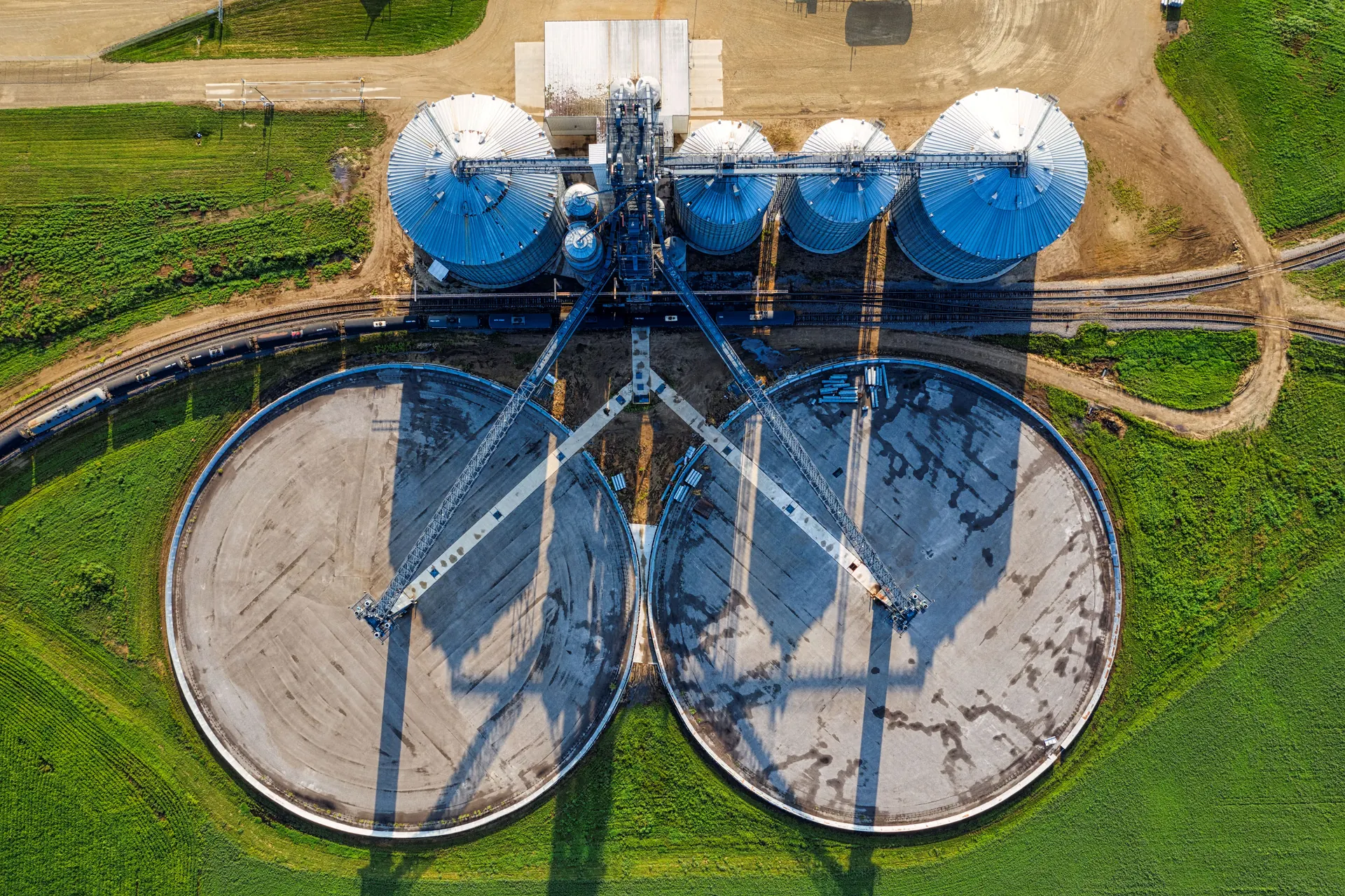
Ring-wall foundations consist of a continuous reinforced concrete wall that supports the bin's perimeter. The interior space is typically filled with compacted granular material and capped with a concrete slab. This design efficiently concentrates the load where the bin wall bears down while minimizing concrete volume. Ring-wall foundations are the most common choice for large-diameter commercial bins because they effectively manage the high line loads generated by the bin's hoop structure.
Slab-on-Grade Foundations
Slab-on-grade foundations are a cost-effective solution for smaller bins with lower total loads. These foundations consist of a single reinforced concrete slab that distributes the load across the entire footprint. Proper subgrade preparation is essential to prevent differential settlement. Slab-on-grade foundations are typically used for bins under 48 feet in diameter in on-farm applications where soil conditions are favorable.
Deep Foundation Systems
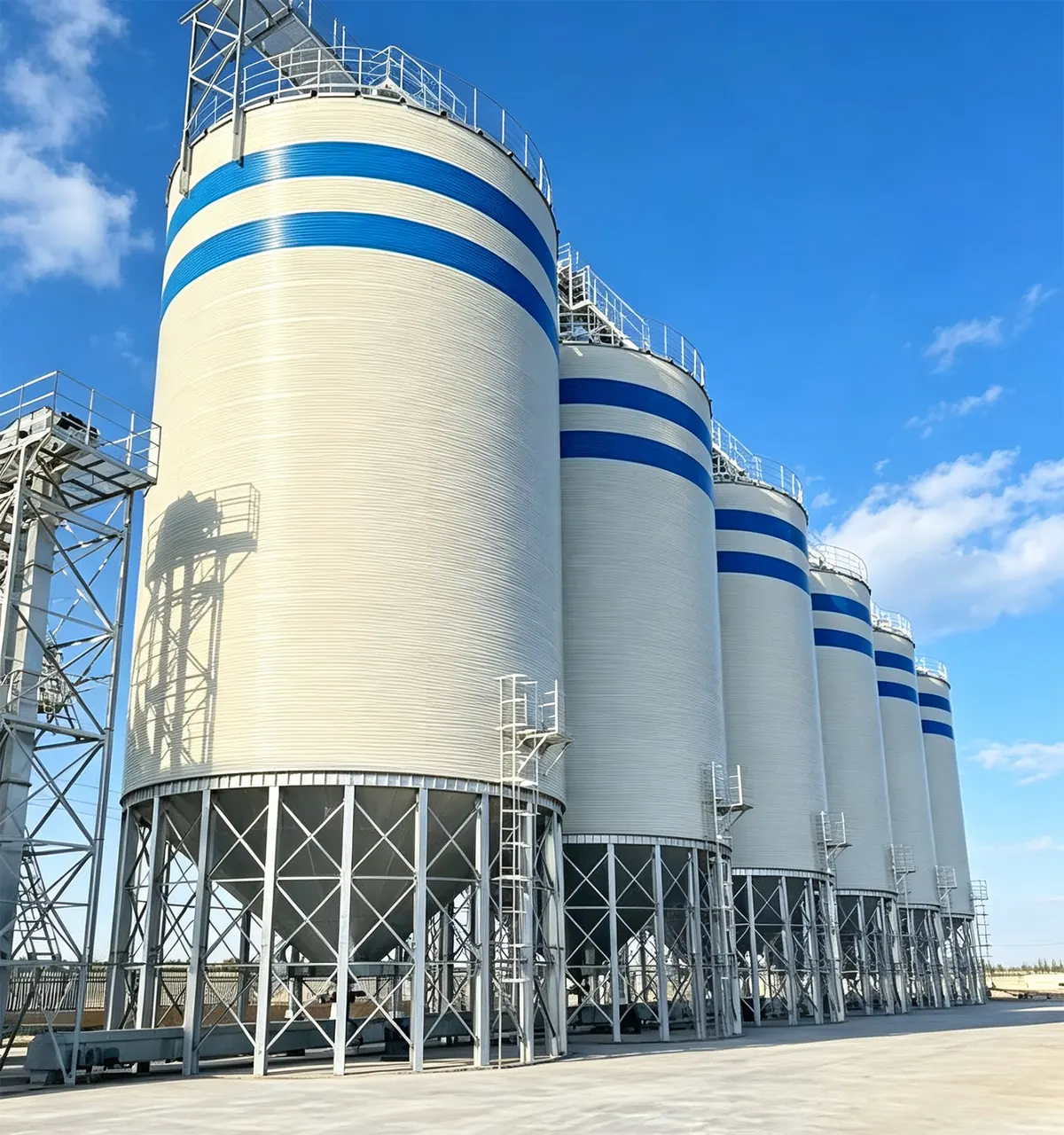
When surface soils lack adequate bearing capacity, deep foundation systems such as driven piles or drilled piers transfer the load to deeper, more competent strata. A reinforced concrete cap is then constructed on top of the piles to support the bin. While significantly more expensive, deep foundations are necessary in areas with soft clays, high water tables, or fill soils that cannot support conventional shallow foundations.
Maintenance and Long-Term Inspection
Foundation maintenance is often neglected but essential for preserving structural integrity over decades of service. Regular inspections should identify cracks, spalling, erosion, or settlement indicators early before they compromise the bin's stability. Drainage systems must remain functional to prevent water accumulation beneath the foundation, which can soften soils and cause differential settlement. Any signs of anchor bolt corrosion or loosening require immediate attention to maintain the bin's resistance to wind uplift forces.
Conclusion
Foundation design for grain bins is a critical engineering discipline that demands rigorous analysis, quality materials, and precise execution. From initial geotechnical investigation through final curing, every phase directly impacts the safety and longevity of the storage facility. By understanding load calculations, soil mechanics, material specifications, and proper installation techniques, engineers and facility owners can ensure their grain storage infrastructure performs reliably for decades. Investing in proper foundation engineering is not merely a construction cost—it is an essential safeguard for the substantial capital stored within these structures.