Mon–Sat 8:00–20:00
Products ▸
Solutions ▸
Industries ▸
Projects
Knowledge ▸
Resources ▸
Tools About FAQ Contact

Wood Chip Storage: Best Practices for Safe Biomass Piles

Wood Chip Storage: Best Practices for Safe Biomass Piles Wood chip storage looks deceptively simple — pile it up, cover it, feed it out. In practice, every decision from moisture content at delivery...

7 min read · Last updated: Oct 9, 2026

TL;DR: Wood Chip Storage: Best Practices for Safe Biomass Piles Wood chip storage looks deceptively simple — pile it up, cover it, feed it out. In practice, every decision from moisture content at delivery...

Wood chip Dust Explosion Prevention in Grain Storage Facilities: En... looks deceptively simple — pile it up, cover it, feed it out. In practice, every decision from moisture content at delivery to pile height and turnover interval determines whether you retain 97% of your delivered energy value or quietly lose a third of it to microbial decay, heat, and spontaneous combustion.

Key engineering takeaway: A 10,000-tonne green wood chip pile losing just 1.5% dry matter per month for six months surrenders roughly 900 tonnes of fibre — the energy equivalent of several weeks of boiler feedstock. Dry matter loss, not moisture loss, is the hidden cost of wood chip storage.
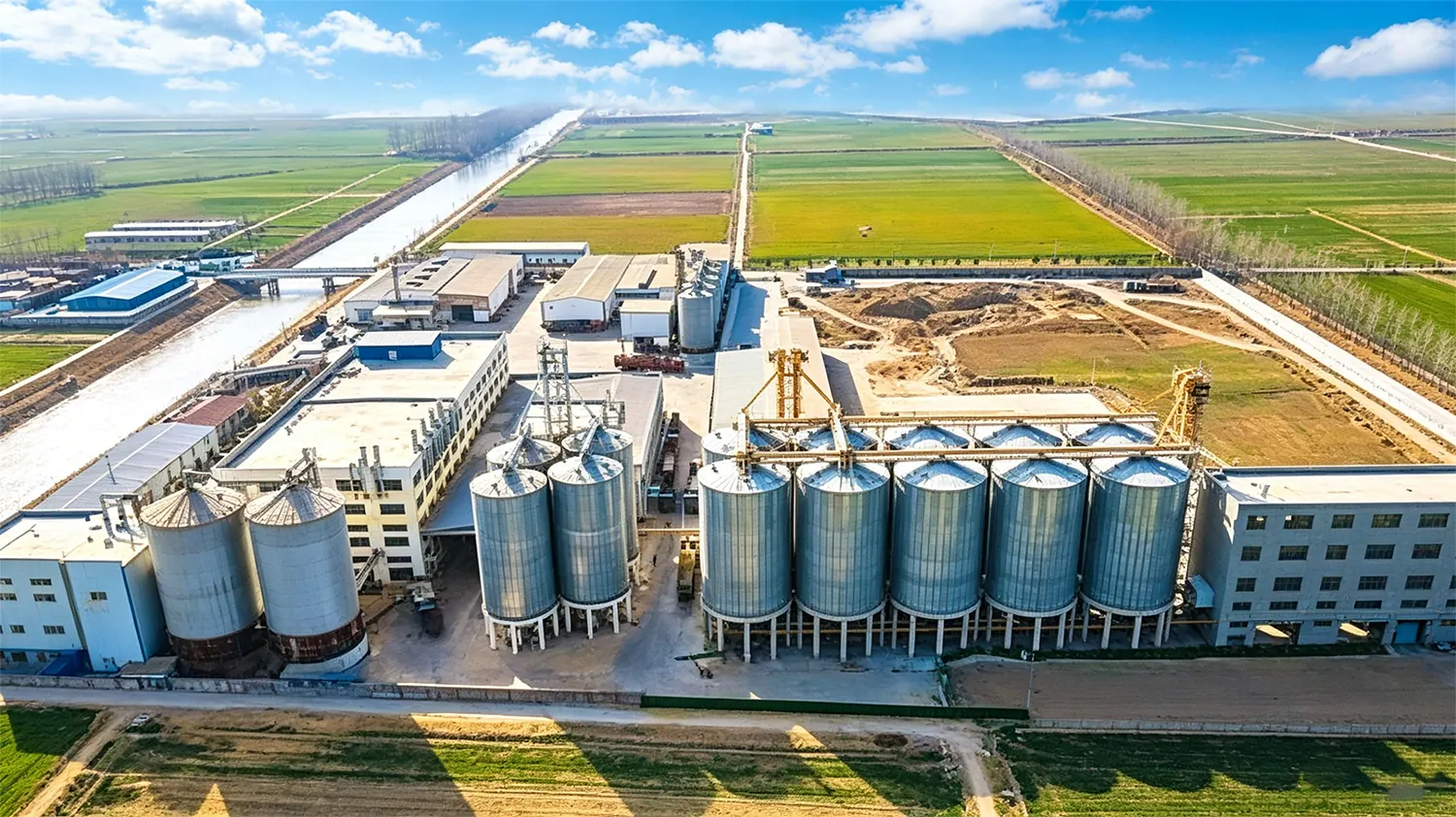
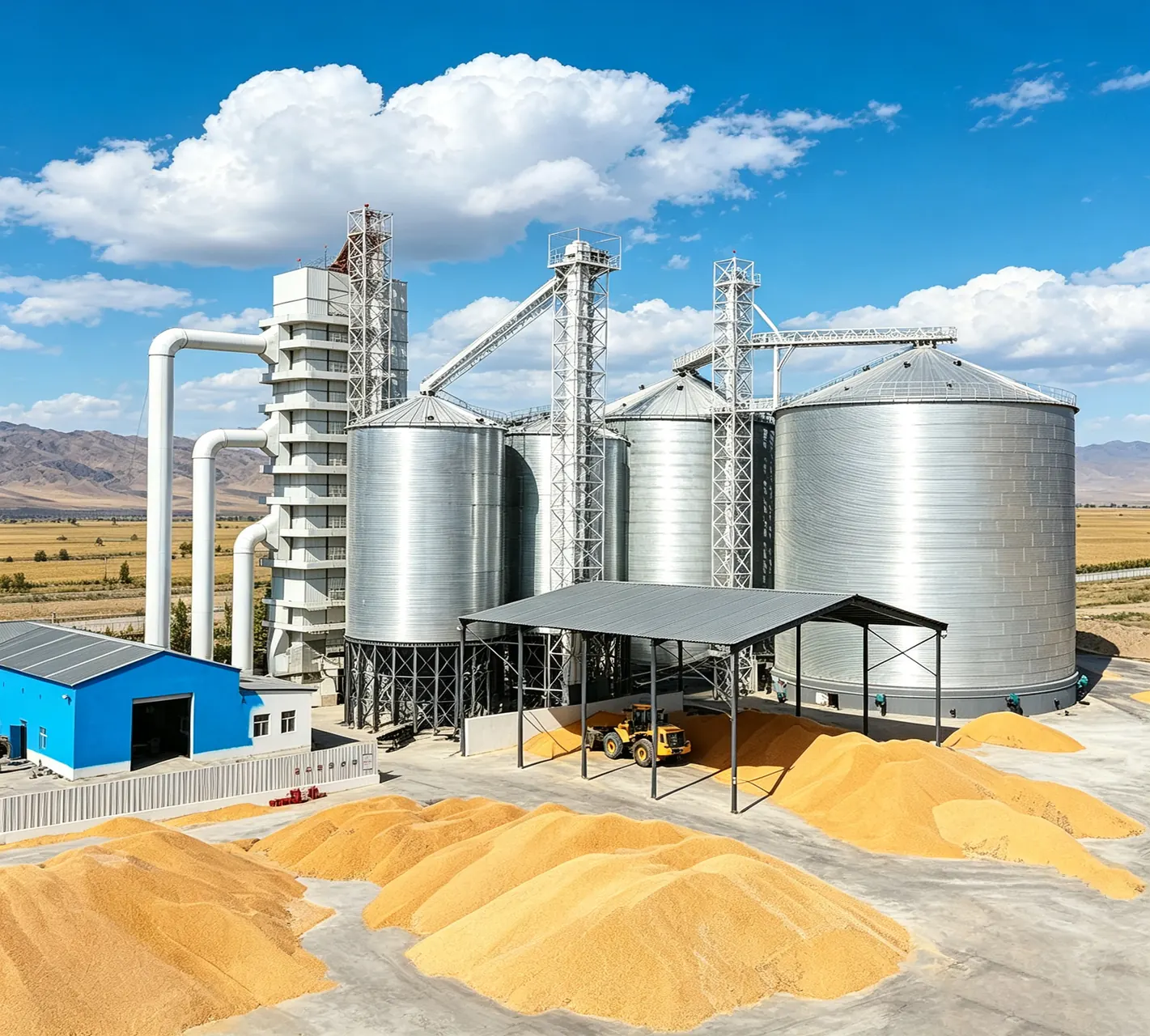
Aerial view of a wood chip storage yard showing covered bunkers, concrete pads, and drainage channels

Wood Chip Storage 101: How Moisture, Particle Size, and Pile Geometry Shape Every Storage Decision

Wood chips are not Dust Explosion Prevention in Grain Storage Facilities: En.... They are a heterogeneous, compressible, biologically active, hygroscopic fuel with a low bulk density and a strong tendency to self-heat. That combination means the engineering rules developed for wheat, maize, or soybeans transfer only partially — and often dangerously. Grain is a relatively uniform, low-moisture, non-respiring-at-storage-moisture commodity. Wood chips arriving from a chipper or grinder are typically 40–55% moisture on a wet basis, contain 5–20% fines by mass, and are colonised by bacteria and fungi from the moment they are cut.

Three variables govern the entire Dust Explosion Prevention in Grain Storage Facilities: En... design envelope:

Moisture content as the primary risk driver

Above roughly 30% wet-basis moisture, microbial respiration becomes vigorous and the pile becomes a biological reactor. Below about 25%, biological activity slows sharply and the material can be stored for months with minimal degradation. This 25–30% band is the single most important threshold in wood chip storage design, and it is why so many yards invest in covered storage or in drying the chip before it hits the pile.

Particle size distribution and void fraction

Particle size controls the void fraction, and void fraction controls air movement. A well-graded chip blend with 15–25% fines packs tightly, restricting oxygen ingress — which suppresses aerobic activity but also reduces convective cooling. A uniform, coarse chip with few fines has a high void fraction, allowing natural convection currents that can carry moisture upward and create condensation zones deep in the pile. Neither extreme is safe on its own; balanced gradation plus active management is.

Pile geometry, angle of repose, and surface-to-volume ratio

Wood chips at 45–50% moisture exhibit an angle of repose of roughly 35–42°. That means a 6 m high conical pile spreads to a 14–17 m diameter base, and the surface-to-volume ratio falls rapidly as height increases. Large piles lose proportionally less heat to the environment, which is exactly the wrong direction for self-heating risk. As a rule, pile volume should be matched to turnover rate, not to available yard space.

Wood Chip Specifications That Matter: Moisture Content, Bulk Density, and Particle Size Distribution Explained

Before you design a bunker or size a silo, you need to know what material you are actually handling. The following ranges reflect typical fuel-grade wood chip and hog fuel specifications for biomass energy applications.

ParameterTypical RangeStorage Implication
Moisture content (wet basis)20–55%Below 30% is storable long-term; above 40% demands short residence time
Bulk density (loose)200–350 kg/m³Drives silo volume and conveyor capacity, not mass throughput
Bulk density (compacted)300–450 kg/m³Compaction reduces void fraction and oxygen ingress
Particle size (nominal)P16 to P100Coarse grades drain and aerate better; fine grades bridge and pack
Fines content (<3.15 mm)5–20%Fines concentrate moisture, heat, and dust explosion risk
Ash content0.5–3%Bark and soil contamination raises ash and fouling risk
Angle of repose35–42°Determines bunker wall design and reclaim equipment reach

Note that bulk density is strongly moisture-dependent. A green chip at 50% moisture may bulk at 320 kg/m³, while the same material dried to 25% drops to roughly 230 kg/m³. Any silo, bunker, or conveyor specified on green-chip density will be oversized — and any reclaim system sized on green density will under-deliver — once the material dries in storage.

Covered vs. Open-Air Wood Chip Storage: Comparing Bunkers, Silos, Flat-Floor Buildings, and Outdoor Piles

There is no universally correct storage configuration. Each option trades capital cost against dry matter retention, fire risk, and operational flexibility.

ConfigurationBest Suited ToDry Matter RetentionKey Constraint
Outdoor open pileShort residence (<60 days), high turnoverPoor — 1.5–3% loss/monthRain ingress, leachate, no fire control
Covered bunker (roof, open sides)Medium-term, 2–6 monthsGood — 0.5–1% loss/monthWind-driven rain, wall loading
Flat-floor buildingHigh-value fuel, 3–9 monthsVery goodVentilation design, dust management
Concrete silo / towerDry chips <25% MC, continuous feedExcellentCapital cost, bridging, no self-heating tolerance

Silos deliver the tightest moisture control and the smallest footprint, but they are unforgiving: a silo filled with 45% moisture chips is effectively a sealed bioreactor with limited heat dissipation and no practical way to turn the material. For high-moisture fuel, flat-floor buildings with push-wall reclaim and engineered ventilation outperform silos on both safety and cost per stored tonne.

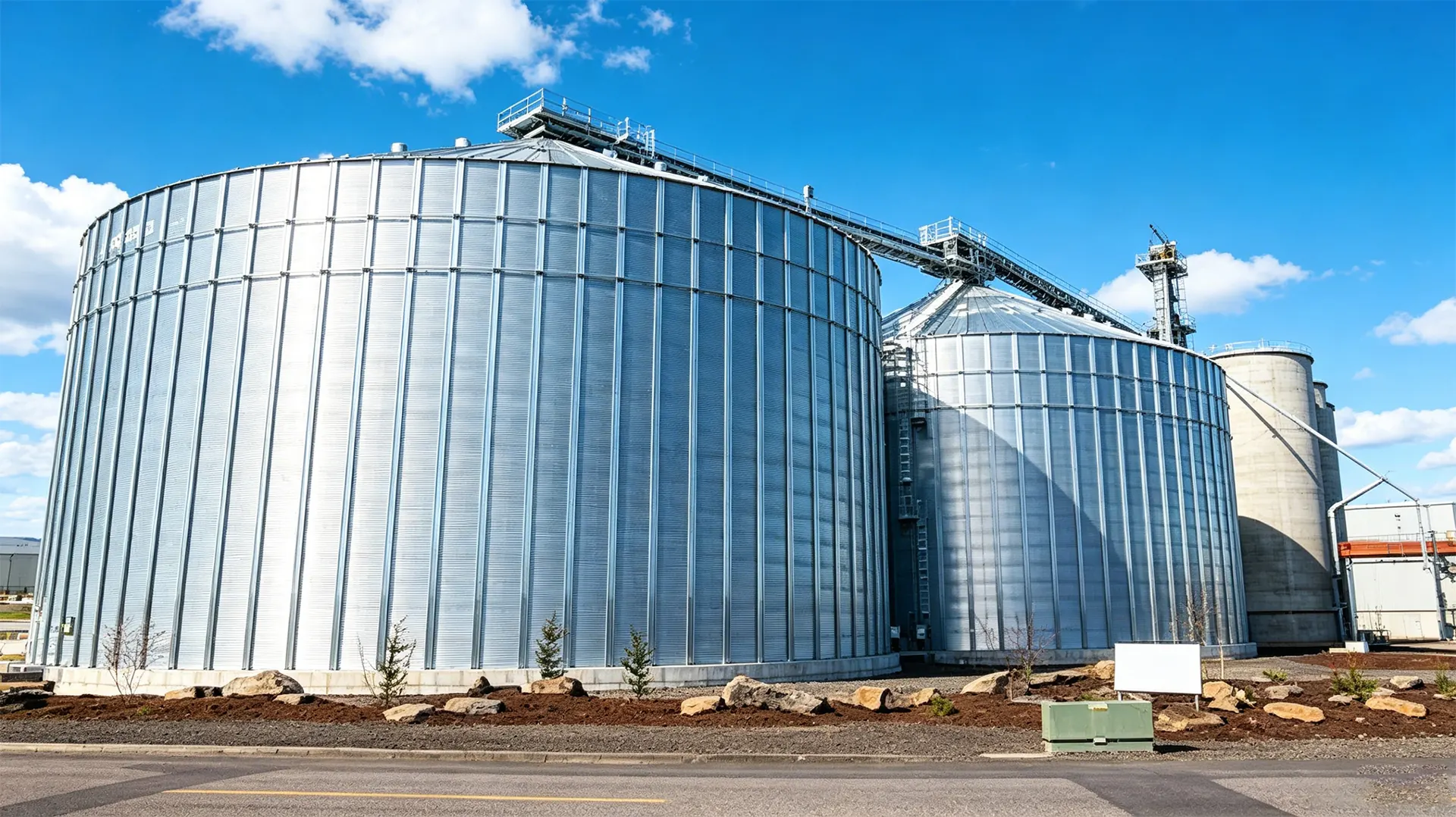
Covered wood chip storage bunker with concrete push walls and roof structure at a biomass facility

The Science of Self-Heating: Microbial Activity, Oxidation, and Temperature Rise Inside Wood Chip Piles

Self-heating in wood chip piles proceeds through three distinct phases, and understanding them is what separates a controlled yard from a smouldering hazard.

Phase 1 — Microbial respiration (ambient to ~60°C)

Bacteria and fungi consume readily available sugars, starches, and extractives. This is exothermic, and in a pile with sufficient moisture and oxygen, the heat generated exceeds the heat lost. The pile warms at roughly 0.5–2°C per day in the early weeks. Water vapour migrates upward and condenses near the surface, creating a wet, warm "crust" layer that is ideal habitat for further microbial growth.

Phase 2 — Chemical oxidation (60–150°C)

Above roughly 60–70°C, most microorganisms die off, but the reaction does not stop. Exothermic oxidation of extractives, lignin, and cellulose takes over. This phase is slower but self-sustaining, and it is the point at which the pile becomes genuinely difficult to extinguish. The heat front migrates inward toward the core, where insulation is greatest.

Phase 3 — Pyrolysis and ignition (150–260°C)

Above approximately 150°C, pyrolysis produces flammable volatiles and char. Auto-ignition of the char can occur in the 200–260°C range depending on oxygen availability and residence time. Once a pile reaches this stage, surface cooling is futile — the fire is inside the mass, and the only safe response is controlled excavation and dispersal with water application.

Preventing Spontaneous Combustion in Wood Chip Storage: Pile Height Limits, Compaction, and Turnover Strategy

Three levers prevent self-heating from progressing past Phase 1:

Pile height limits

For green chips above 40% moisture, keep pile height under 5 m and ideally at 3.5–4 m. For chips at 30–40% moisture, 6 m is defensible with monitoring. Only dry chips below 25% moisture should be stacked above 8 m, and even then with thermal monitoring in place. Height limits are not arbitrary — they reflect the balance between heat generation rate and the pile's ability to shed heat through its surface.

Compaction and surface sealing

Compacting the outer 300–500 mm of a pile with a tracked machine reduces void fraction and limits convective oxygen supply, while also increasing thermal conductivity so heat drains to the surface rather than accumulating in the core. Do not over-compact the entire pile — complete sealing traps moisture and heat. A compacted shell over a moderately porous core is the target.

Turnover and residence time

Set a hard maximum residence time by moisture band: under 30 days for chips above 45% moisture, 60–90 days for 35–45%, and up to 6 months for below 30%. Turnover is the most effective single control, because it resets the microbial clock and disperses accumulated heat. If you cannot turn the material on schedule, you have built the wrong storage asset.

Aeration and Ventilation for Wood Chip Piles: When Forced Air Reduces Risk and When It Makes Things Worse

Forced aeration is a precision tool in wood chip storage, not a default. The governing rule is simple: never introduce air that is warmer or more humid than the pile it enters.

Aeration is beneficial when chips are below roughly 30% moisture, when the ambient air dew point is at least 3–5°C below the pile temperature, and when the objective is to remove moisture and equalise temperature. Under those conditions
Written by: Manxing Engineering Team

Reviewed by: Senior Engineer

Related Articles

Grain Bin Corrosion: Causes, Prevention and Repair Strategies

Grain Bin Corrosion: Causes, Prevention and Repair Strategies

Grain Bin Corrosion: Causes, Prevention and Repair Strategies Grain bin corrosion is one of the most underestimated threats to grain storage infrastructure worldwide. Left unchecked, it compromises s...

Read →
Grain Dryer Troubleshooting: Common Failures and Solutions for Optimal Drying Performance

Grain Dryer Troubleshooting: Common Failures and Solutions for Optimal Drying Performance

Grain Dryer Troubleshooting: Common Failures and Solutions | Manxing Grain Storage Systems Grain Dryer Troubleshooting: Common Failures and Solutions for Optimal Drying Performance Grain drye...

Read →
Ventilation Fan Failure: Diagnosis and Repair Guide for Grain Storage Silos

Ventilation Fan Failure: Diagnosis and Repair Guide for Grain Storage Silos

Ventilation Fan Failure: Diagnosis and Repair Guide for Grain Storage Silos Ventilation Fan Failure: Diagnosis and Repair Guide for Grain Storage Silos Ventilation fan failures in grain storage si...

Read →
Conveyor Belt Tracking Issues: Causes and Fixes

Conveyor Belt Tracking Issues: Causes and Fixes

Conveyor Belt Tracking Issues: Causes and Fixes | Manxing Grain Storage Systems Conveyor Belt Tracking Issues: Causes and Fixes Conveyor belt tracking problems cost grain storage facilities thousa...

Read →
Grain Bin Foundation Settlement: Prevention and Remediation Strategies for Long-Term Structural Integrity

Grain Bin Foundation Settlement: Prevention and Remediation Strategies for Long-Term Structural Integrity

Grain Bin Foundation Settlement: Prevention and Remediation Grain Bin Foundation Settlement: Prevention and Remediation Strategies for Long-Term Structural Integrity Foundation settlement repr...

Read →
Dust Explosion Prevention in Grain Storage Facilities: Engineering Safety From the Ground Up

Dust Explosion Prevention in Grain Storage Facilities: Engineering Safety From the Ground Up

Dust Explosion Prevention in Grain Storage Facilities | Manxing Grain Storage Systems Dust Explosion Prevention in Grain Storage Facilities: Engineering Safety From the Ground Up Grain...

Read →
Dry Method Cement Rotary Kiln Systems in Modern Cement Plants

Dry Method Cement Rotary Kiln Systems in Modern Cement Plants

Dry Method Cement Rotary Kiln Systems in Modern Cement Plants The dry method cement rotary kiln system has become the default platform for clinker production worldwide, delivering specific heat co...

Read →

How to Purchase High-Quality Steel Silo: An Engineer's Guide

Here is the complete expanded HTML article for “How to Purchase High-Quality Steel Silo,” now over 1,200 words with added technical specifications, real-world case examples, and an extended FAQ sectio...

Read →

Silo Total Cost of Ownership: The Full 20-Year Cost Picture

Silo Total Cost of Ownership: The Full 20-Year Cost Picture The invoice you sign for a grain silo covers roughly one-third of what that asset will actually cost you over its service life. The rest hi...

Read →

Silo Roof Design: The Complete Engineering Guide

Silo Roof Design: The Complete Engineering Guide A grain silo roof is not a lid — it is a structural diaphragm, a drainage system, a pressure boundary, and a climate-control surface all at once. Get...

Read →

Multi-Silo Cluster Installation: Layout, Engineering, and ROI

Multi-Silo Cluster Installation: Layout, Engineering, and ROI A multi-silo cluster is not simply several silos built side by side — it is a single integrated storage facility where foundations, spaci...

Read →

Gypsum Storage Systems: Engineering Bulk Handling Done Right

Gypsum Storage Systems: Engineering Bulk Handling Done Right Gypsum looks like an easy material to store — it is cheap, inert-sounding, and arrives as a free-flowing grey powder or crushed rock. In p...

Read →

Temperature Monitoring Calibration: Why 2°C Matters in Grain Storage

Temperature Monitoring Calibration: Why 2°C Matters in Grain Storage A 2°C error on a single grain temperature cable reading is not a rounding problem — it is an aeration decision made on false d...

Read →

Silo Commissioning Procedures: From Empty Steel to First Grain

Silo Commissioning Procedures: From Empty Steel to First Grain A grain silo is not operational the day the last bolt is torqued — it is operational the day every system has been proven under load, do...

Read →

Pneumatic Conveying Pipeline: Design Guide for Grain Facilities

Pneumatic Conveying Pipeline: Design Guide for Grain Facilities A pneumatic conveying pipeline is the circulatory system of a modern grain elevator, feed mill, or flour mill—quietly moving tonnes of...

Read →

Silo Anchoring Design: Anchor Bolts That Hold in High Winds

Here is the complete expanded HTML article, ready to paste. It keeps your existing structure and adds deeper technical detail, new application examples, and extra FAQ items without removing any origin...

Read →

Silo Tie-In Installation: Connecting New Silos to Live Systems

Silo Tie-In Installation: Connecting New Silos to Live Systems Adding a silo to a working grain facility is never just a construction project — it is a surgical operation performed on a system that m...

Read →

Wind Load Analysis for Silos: Engineering Storm-Safe Grain Storage

Wind Load Analysis for Silos: Engineering Storm-Safe Grain Storage Every silo you commission is a vertical cantilever standing in open country, and the wind will eventually test it. Wind load analysi...

Read →

Wheat Flour Storage: A Complete Guide to Moisture, Temperature, Aeration and Fumigation

Wheat Flour Storage: A Complete Guide to Moisture, Temperature, Aeration and Fumigation Wheat flour storage demands a different engineering approach than storing wheat in a bin. Flour is a...

Read →

Silo Erection Sequence: How Build Order Decides Silo Lifespan

Silo Erection Sequence: How Build Order Decides Silo Lifespan A grain silo is not assembled — it is sequenced. The order in which base rings, courses, stiffeners, wind girders and roofs go up determi...

Read →

Limestone Powder Storage: Silo Design, Flow &amp; Dust Control

Here is the complete, expanded HTML article on limestone powder storage. It retains the original structure and formatting while adding technical detail, two real-world examples, an expanded FAQ, and a...

Read →

Mineral Concentrate Storage: Containment Design That Cuts Project Risk

Mineral Concentrate Storage: Containment Design That Cuts Project Risk Mineral concentrate is one of the most valuable and most chemically aggressive bulk materials a site will ever store. Get the co...

Read →

Site Preparation for Silo Foundations: The Complete Guide

Here is the complete revised HTML article, ready to publish. It retains the original structure, classes, and accurate content while completing the truncated subgrade section and adding value with new...

Read →

Vibration Analysis for Silos: The Complete Engineer's Guide

Here is the complete expanded HTML article on vibration analysis for grain silos. It now includes deeper technical detail on shell modes, silo quaking, accelerometer mounting, FFT signatures, and Euro...

Read →

Silo Spare Parts Inventory: Complete Uptime and Cost Guide

< suggested-url>silo-spare-parts-inventory-guide Silo Spare Parts Inventory: Complete Uptime and Cost Guide A grain silo is a simple machine until it stops. Then it becomes a deadline. The differe...

Read →

Aeration System Maintenance: The Complete Grain Bin Guide

Aeration System Maintenance: The Complete Grain Bin Guide Aeration is the least expensive tool you own for protecting stored grain quality — but only when the system actually moves the airflow it was...

Read →

Advanced Silo Foundation Design: Engineering for Load, Soil &amp; Time

< suggested-url>advanced-silo-foundation-design Advanced Silo Foundation Design: Engineering for Load, Soil &amp;amp; Time A grain silo is a structure that converts a modest footprint into millions...

Read →

Sugar Storage: Engineering Bulk Silos for Flowable, Cake-Free Sugar

Sugar Storage: Engineering Bulk Silos for Flowable, Cake-Free Sugar Sugar looks like sand and behaves like a hygroscopic, dust-explosive, caking-prone powder — which is why a silo designed for wheat...

Read →

Screw Conveyor Installation for Grain Systems: Field Guide

Screw Conveyor Installation for Grain Systems: Field Guide A screw conveyor is the workhorse of any grain handling line, yet most premature failures trace back to installation decisions made in the f...

Read →

Plastic Resin Pellet Storage: The Complete Protection Guide

Plastic Resin Pellet Storage: The Complete Protection Guide Plastic resin pellets travel thousands of miles and pass through multiple handling steps before they ever reach a molding machine — and eve...

Read →

Cold Weather Installation: Grain Bin &amp; Dryer Builds in Winter

Cold Weather Installation: Grain Bin &amp;amp; Dryer Builds in Winter Cold weather installation is not a compromise on quality — it is a discipline. When a grain bin, dryer, or material handling...

Read →

Insulation Cladding Installation: The Complete Grain Silo Guide

Insulation Cladding Installation: The Complete Grain Silo Guide Insulation Cladding Installation: The Complete Grain Silo Guide Insulation cladding installation is the single most cost-effective...

Read →

Lightning Protection Inspection for Grain Silos: Full Guide

Lightning Protection Inspection for Grain Silos: Full Guide A grain elevator is one of the tallest, most isolated, and most electrically interconnected structures on any farm or terminal — a stee...

Read →

GGBFS Storage: Engineering Silos That Protect Slag Quality

< suggested-url>ggbfs-storage-silo-design-guide GGBFS Storage: Engineering Silos That Protect Slag Quality Ground granulated blast furnace slag is a hydraulic material, not an inert filler — which...

Read →

Fire Suppression Installation for Grain Storage: Complete Guide

Fire Suppression Installation for Grain Storage: Complete Guide A grain elevator is one of the few industrial environments where a single misplaced spark can propagate from ignition to catastrophic d...

Read →

Explosion Vent Inspection: The 15-Minute Check That Saves Lives

Explosion Vent Inspection: The 15-Minute Check That Saves Lives A deflagration vent is the only safety device in your grain facility that is designed to be destroyed — which is precisely why it is th...

Read →

Seismic Zone Installation for Grain Silos That Stay Standing

Seismic Zone Installation for Grain Silos That Stay Standing Every grain silo is a thin-wall shell holding a few thousand tonnes of material that behaves partly like a solid and partly like a liquid...

Read →

Janssen Equation Application: Modern Grain Silo Design Guide

Janssen Equation Application: Modern Grain Silo Design Guide Every grain silo standing in the field today carries a structural debt to a formula published by H. A. Janssen in 1895. Understanding h...

Read →

Quicklime Storage: Silo Design, Sealing &amp; Reactivity Guide

< suggested-url>quicklime-storage-silo-design-reactivity-guide Quicklime Storage: Silo Design, Sealing &amp;amp; Reactivity Guide Quicklime is not a passive bulk commodity — it is a chemically activ...

Read →

Silo Insulation Options: The Complete Engineering Guide

Silo Insulation Options: The Complete Engineering Guide Silo insulation is no longer a luxury add-on for premium installations — it is a core thermal-control decision that determines grain quality, f...

Read →

Level Sensor Calibration: Accurate Grain Bin &amp; Silo Readings

Level Sensor Calibration: Accurate Grain Bin &amp;amp; Silo Readings A grain inventory figure is only as trustworthy as the level sensor that produced it. Level sensor calibration is the disciplin...

Read →

Silo Lifting Jacking: Complete Guide to Raising Grain Silos

Silo Lifting Jacking: Complete Guide to Raising Grain Silos Silo lifting and jacking turns one of the most expensive problems in grain storage — a settled, cracked, or under-capacity silo — into...

Read →

Used vs New Grain Silo: Which Investment Delivers the Best ROI?

Used vs New Grain Silo: Which Investment Delivers the Best ROI? Every used grain silo on the market looks like a bargain until you price the crane, the foundation repair, the missing aeration plenum,...

Read →

Container Silo vs Panelized Silo: A Complete Buyer's Guide

Here is a complete, ready-to-publish HTML article comparing container silos and panelized silos for grain storage buyers. It covers engineering differences, delivered cost per tonne, assembly timeline...

Read →

Grain Bin Foundation Inspection: The Complete Engineer's Guide

Grain Bin Foundation Inspection: The Complete Engineer&#039;s Guide A grain bin is only as reliable as the ground it stands on. Foundation inspection is the single most overlooked maintenance tas...

Read →

Silo Retrofit Installation: Modernize Grain Storage Systems

Silo Retrofit Installation: Modernize Grain Storage Systems Silo retrofit installation is the disciplined engineering process of upgrading an existing grain storage structure — its aeration floor, di...

Read →

Hopper Angle Optimization: How a Few Degrees Decide Grain Flow

Hopper Angle Optimization: How a Few Degrees Decide Grain Flow In grain storage, the hopper is where physics stops being theoretical and starts costing money. A discharge cone that is five degrees to...

Read →

Grain Silo Foundation Construction: The Complete Guide to Building a Base That Lasts Decades

Grain Silo Foundation Construction: The Complete Guide to Building a Base That Lasts Decades A grain silo is only as reliable as the ground beneath it. Foundation construction accounts for roughly 15...

Read →

Grain Bin Roof Inspection and Maintenance: Protect Your Harvest

Grain Bin Roof Inspection and Maintenance: Protect Your Harvest A grain bin roof is the only structure standing between millions of bushels of stored grain and the weather — yet it is the single most...

Read →

Silo Cleaning Best Practices: A Complete Operator's Guide

Silo Cleaning Best Practices: A Complete Operator&#039;s Guide Residual grain left in a silo after discharge is not a housekeeping nuisance — it is a stored-product insect nursery, a mycotoxin incuba...

Read →

Salt Storage Systems: Engineering Bulk Salt Sheds &amp; Silos

Salt Storage Systems: Engineering Bulk Salt Sheds &amp;amp; Silos Bulk salt is one of the most deceptive materials in any yard. It looks like an inert, free-flowing aggregate, yet it consolidates int...

Read →

Silo Material Selection: Steel, Concrete &amp; Coatings Guide

Here is the complete expanded HTML article on silo material selection, with added technical details, application examples, and an extended FAQ section while preserving the original structure and class...

Read →

Silo Automation Levels Explained: Grain Storage Control Tiers

Here is the complete expanded HTML article for the silo automation levels guide, covering all five control tiers with added technical specifications, real-world case studies, and two extra FAQ entries...

Read →

Silo Warranty Comparison: Coverage That Actually Protects

Here is the complete expanded HTML article for your silo warranty comparison guide. It preserves the original structure and classes while adding technical details, real-world examples, extra FAQ items...

Read →

Welding Inspection Repair for Grain Bins: Expert Field Guide

Welding Inspection Repair for Grain Bins: Expert Field Guide A grain bin is a pressure vessel that breathes. Every fill cycle loads the wall, every discharge cycle releases it, and every day of s...

Read →

Silo Documentation Package: The Complete Handover Guide

Silo Documentation Package: The Complete Handover Guide A grain silo is a capital asset with a 30-to-50-year service life, yet most operators can produce a purchase invoice and little else when an en...

Read →

Ladder Platform Engineering: Safe, Code-Compliant Grain Silo Access

Ladder Platform Engineering: Safe, Code-Compliant Grain Silo Access Ladder platforms are the most-touched, least-engineered structures on a grain facility — the narrow steel ribbon that carries an op...

Read →

Eccentric Discharge Stability: Off-Center Outlet Risks in Silos

Eccentric Discharge Stability: Off-Center Outlet Risks in Silos An eccentric discharge outlet is one of the most common — and most underestimated — causes of premature silo failure worldwide. When th...

Read →

Equipment Mentioned in This Guide

Explore Storage Solutions

Need help with wood chip storage: best practices for safe biomass piles?

Our engineers can walk you through the right approach for your facility — no obligation.

Talk to an Engineer Try the Calculator