Effective capacity planning by crop type is the cornerstone of profitable Dust Dust Explosion Prevention in Grain Storage Facilities: En... Prevention in Grain Storage Facilities: En... storage operations. Every crop presents unique physical characteristics—bulk density, angle of repose, moisture sensitivity, and respiration rates—that directly dictate silo dimensions, ventilation requirements, and material handling specifications. This comprehensive guide delivers the engineering frameworks and practical calculations that storage operators, agricultural engineers, and procurement managers need to design storage systems that preserve grain quality while maximizing throughput efficiency.
Strategic Capacity Planning by Crop Type: An Engineering Overview
Capacity planning in operations management is the process of determining the production capacity needed by an organization to meet changing demands for its products. In the context of Dust Dust Explosion Prevention in Grain Storage Facilities: En... Prevention in Grain Storage Facilities: En... storage, this discipline extends far beyond simply calculating cubic meters of volume. A rigorous capacity planning framework must integrate agronomic variables, harvest logistics, seasonal throughput patterns, and long-term strategic objectives.
Dust Dust Explosion Prevention in Grain Storage Facilities: En... Prevention in Grain Storage Facilities: En... storage engineers approach capacity planning as a multi-variable optimization problem. The objective function balances capital expenditure against operational flexibility, while constraints include site topography, crop rotation schedules, moisture content at intake, and target storage duration. Unlike generic warehouse planning, grain storage capacity must account for the biological reality that stored grain is a living, respiring commodity that generates heat and moisture—factors that directly influence safe storage volume and aeration system sizing.
At the facility level, capacity planning by crop type requires a granular understanding of how each commodity behaves within a silo environment. Wheat, corn, rice, soybeans, barley, oats, sunflower seeds, and sorghum each demand specific engineering considerations. A facility designed primarily for wheat storage cannot simply be repurposed for canola or sunflower seeds without a thorough reassessment of wall pressures, discharge aeration, and ventilation rates.
Crop-Specific Physical Properties That Drive Capacity Calculations
Before selecting silo types or calculating storage volumes, engineers must establish the physical parameters of each crop to be stored. These parameters form the foundation of all subsequent capacity planning methods.
Bulk Density and Its Impact on Silo Sizing
Bulk density—the mass of grain per unit volume—is the single most critical variable in capacity planning. Published bulk density values represent standard test weights measured at specific moisture contents, but field conditions frequently deviate from laboratory standards. Experienced engineers apply correction factors for moisture content, fines concentration, and kernel damage to arrive at realistic design densities.
The following table presents standard bulk density values used in preliminary capacity planning calculations:
| Crop | Standard Bulk Density (kg/m³) | Test Weight (kg/hl) | Angle of Repose (degrees) |
|---|---|---|---|
| Wheat | 770 | 77 | 25–28 |
| Corn (Maize) | 720 | 72 | 21–25 |
| Soybeans | 770 | 77 | 27–31 |
| Rice (Paddy) | 575 | 57.5 | 35–40 |
| Barley | 620 | 62 | 28–32 |
| Oats | 510 | 51 | 27–33 |
| Sunflower Seeds | 420 | 42 | 24–28 |
| Sorghum | 730 | 73 | 25–30 |
These values illustrate why capacity planning by crop type is non-negotiable. A 10,000 cubic meter flat bottom silo holds approximately 7,700 tonnes of wheat but only 5,100 tonnes of oats—a 34% reduction in tonnage capacity despite identical volumetric dimensions. Procurement managers who evaluate silo capacity solely on cubic meter specifications without referencing crop-specific bulk density risk significant overestimation of actual storage capability.
Angle of Repose and Silo Geometry
The angle of repose determines how grain naturally settles within a silo and directly influences the effective storage volume. Crops with steeper angles of repose—such as paddy rice at 35–40 degrees—create taller peak piles beneath a central fill point, leaving significant dead volume in the silo periphery. Engineers address this through multiple fill points, mechanical leveling systems, or cone-bottom silo configurations that maximize volumetric utilization.
Conversely, free-flowing crops like sunflower seeds with shallow angles of repose (24–28 degrees) distribute more evenly across the silo cross-section but present higher lateral wall pressures during discharge. This behavior influences the structural design of steel silo walls, stiffener placement, and discharge system selection.
Moisture Content, Respiration, and Aeration Requirements
Every crop has a critical equilibrium moisture content below which safe long-term storage is achievable. Wheat stored at 12.5% moisture content remains stable for 12–18 months, while soybeans at the same moisture level may experience quality degradation within 3–6 months due to higher oil content and respiration rates. Capacity planning must therefore integrate aeration system sizing—measured in cubic meters of air per hour per cubic meter of grain—that varies significantly by crop type.
Corn, with its high respiration rate and susceptibility to mold, typically requires aeration rates of 0.1–0.2 m³/hr per m³ of stored grain. Paddy rice, which retains a husk that traps moisture and heat, demands higher aeration rates of 0.15–0.25 m³/hr per m³. These requirements directly influence fan horsepower, duct design, and the spacing between aeration floors—all of which affect the usable volume within a silo system.
Capacity Planning Framework: From Demand Forecast to Silo Specification
A structured capacity planning framework translates agronomic and commercial forecasts into precise engineering specifications. This framework consists of five sequential stages that ensure no critical variable is overlooked.
Stage 1: Demand Forecasting and Throughput Analysis
The capacity planning process begins with a demand forecast that quantifies the expected tonnage of each crop type across the planning horizon. This forecast must account for contracted acreage, historical yield variability, harvest window duration, and intake rate requirements. A facility receiving 500 tonnes per day of corn during a 30-day harvest window faces fundamentally different capacity requirements than one handling 200 tonnes per day of wheat over a 60-day period.
Throughput analysis determines not only total storage volume but also the required intake and discharge rates. These rates dictate the specification of bucket elevators, belt conveyors, and other material handling equipment that must be sized to prevent bottlenecks during peak harvest periods.
Stage 2: Silo Type Selection by Crop and Application
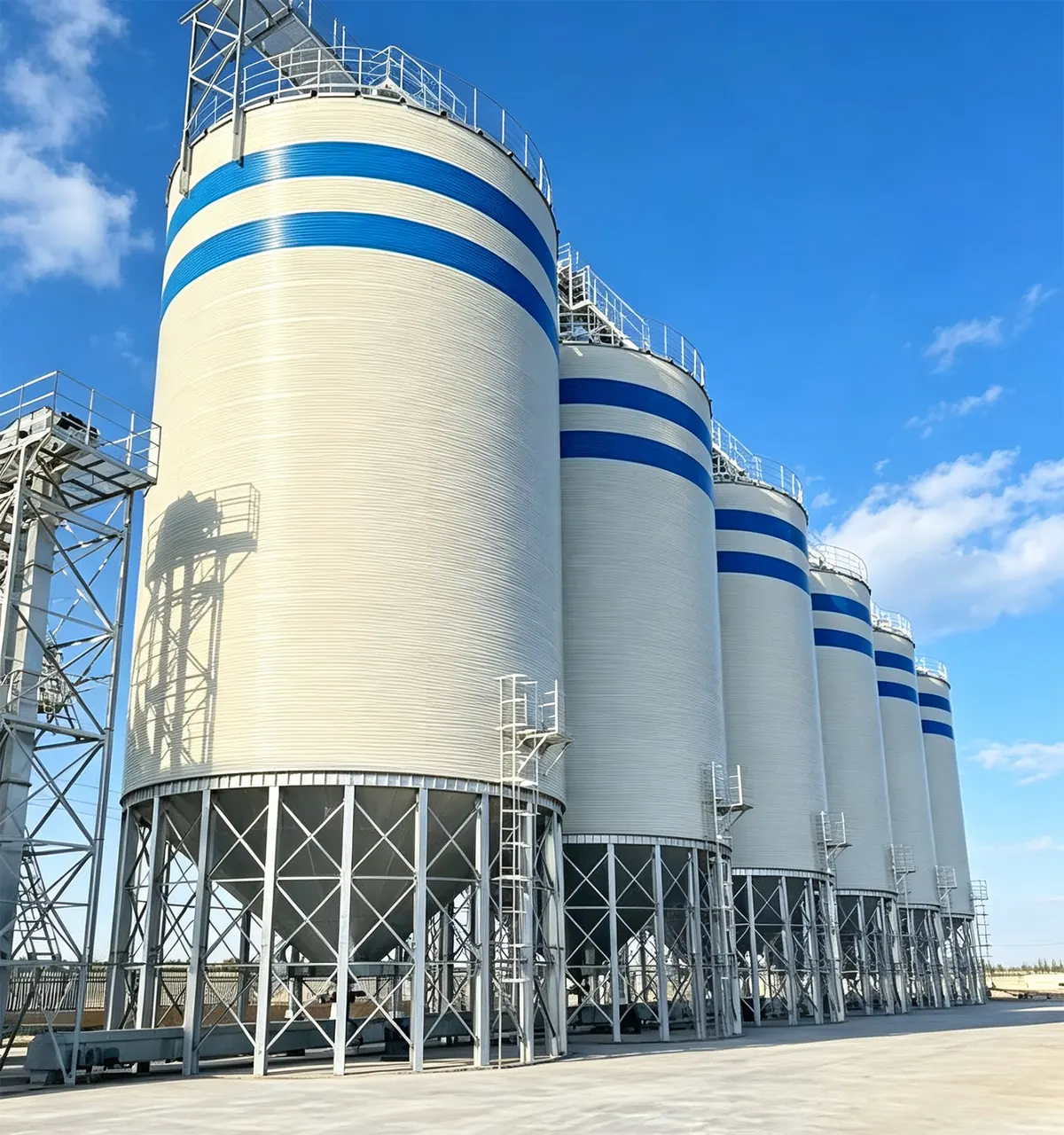
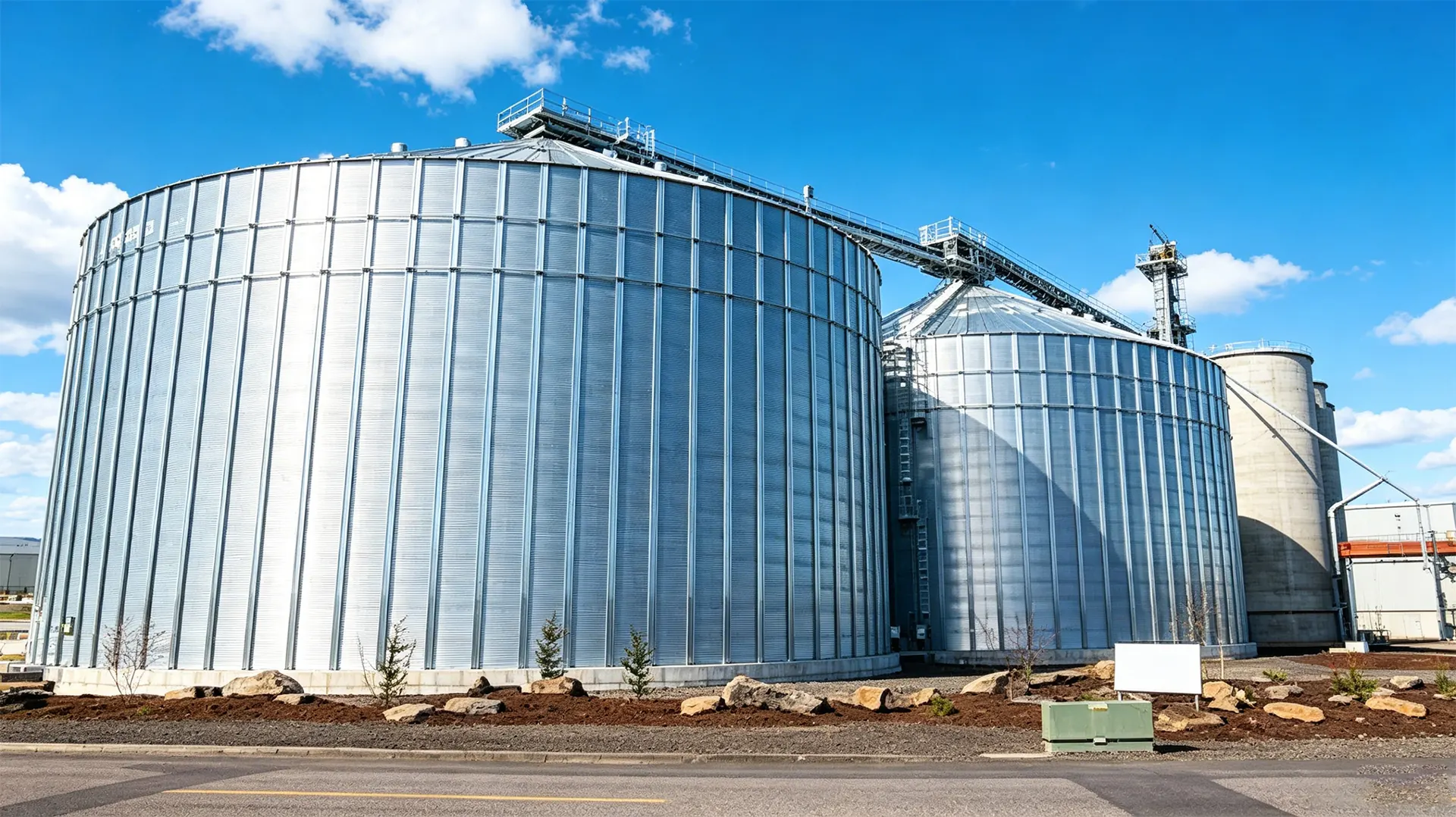
Different silo configurations serve distinct capacity planning objectives. Flat bottom silos are the workhorse of large-scale grain storage, offering capacities ranging from several hundred to over 100,000 cubic meters. Their flat concrete foundations and center discharge systems make them ideal for long-term storage of free-flowing grains like wheat, corn, and soybeans. The capacity of a flat bottom silo is calculated using the geometric formula V = π × r² × h for the cylindrical section, plus the volume of the conical or flat top as applicable.
Hopper-bottom silos, with their steep discharge cones (typically 45–60 degrees), provide complete gravity discharge and are preferred for crops that bridge or rasp, such as high-moisture corn, sunflower seeds, and paddy rice. Bolted steel silos offer modular scalability, making them suitable for operations that require incremental capacity expansion as crop volumes grow.
Advanced spiral steel silo construction technology enables rapid on-site fabrication of large-diameter silos with superior airtight properties. This construction method is particularly valuable for crops requiring controlled atmosphere storage, where gas-tight seals are essential for maintaining modified oxygen and carbon dioxide levels.
Stage 3: Volume-to-Tonnage Conversion
The fundamental formula for capacity planning converts volumetric capacity to tonnage capacity using crop-specific bulk density:
Tonnage Capacity = Silo Volume (m³) × Bulk Density (kg/m³) ÷ 1,000
For example, a flat bottom silo with a diameter of 30 meters and a cylindrical height of 25 meters provides a cylindrical volume of approximately 17,671 m³. Applying the bulk density values from our earlier table:
- Wheat: 17,671 × 770 ÷ 1,000 = 13,607 tonnes
- Corn: 17,671 × 720 ÷ 1,000 = 12,723 tonnes
- Oats: 17,671 × 510 ÷ 1,000 = 9,012 tonnes
- Sunflower seeds: 17,671 × 420 ÷ 1,000 = 7,422 tonnes
This capacity planning example demonstrates why crop-specific calculations are essential. The same silo holds 83% more wheat than sunflower seeds by weight—a difference that fundamentally alters the economics of storage infrastructure investment.
Stage 4: Aeration and Ventilation System Sizing
Aeration system design is an integral component of capacity planning that directly affects storage safety and grain quality preservation. The required aeration airflow rate is calculated as:
Total Airflow (m³/hr) = Grain Volume (m³) × Required Airflow Rate (m³/hr per m³)
Fan selection must account for static pressure resistance, which increases with grain depth and bulk density. Deeper silos storing dense crops like wheat require higher-pressure fans than shallower silos storing lighter crops like oats. Duct design—including the spacing, diameter, and open-area percentage of aeration floors—must be validated against the specific airflow resistance characteristics of each crop.
Stage 5: Material Handling Equipment Specification
Capacity planning extends beyond storage volume to encompass the entire material handling chain. Intake systems, bucket elevators, belt conveyors, distributors, and discharge equipment must be sized to match the peak throughput requirements of each crop. Handling equipment for abrasive crops like sunflower seeds requires wear-resistant liners and reduced belt speeds, while sticky crops like high-moisture corn demand specialized belt scrapers and self-cleaning pulleys.
Steel silo discharge systems play a critical role in ensuring that rated capacity translates into operational throughput. Fluidized discharge systems, mechanical sweep augers, and mass flow hoppers each offer distinct advantages depending on the crop's flow properties and the required discharge rate.
Capacity Planning Methods: Lead, Lag, and Match Strategies
Three primary capacity planning methods guide strategic investment decisions in grain storage infrastructure. Each method carries distinct risk profiles and capital implications.
Lead Strategy: Building Capacity Ahead of Demand
The lead strategy involves installing storage capacity in excess of current requirements, anticipating future growth in crop volumes or the addition of new crop types to the storage portfolio. This approach positions operations to capture market opportunities—such as unexpected contract volumes or new crop varieties—without the delays associated with construction lead times. The primary risk is underutilization of capital during the ramp-up period, which increases the fixed cost per tonne stored.
Engineers implementing a lead strategy typically design silo farms with standardized diameters and modular foundations that allow future expansion without disrupting existing operations. Large-span spatial grid structures over bulk material stockyards offer another lead-strategy option, providing covered storage capacity that can be expanded incrementally as demand materializes.
Lag Strategy Capacity Planning: Building to Actual Demand
Lag strategy capacity planning takes the opposite approach—installing storage capacity only when actual demand materializes and existing facilities reach full utilization. This conservative method minimizes capital risk and ensures high utilization rates on invested infrastructure. However, the lag strategy exposes operations to capacity constraints during peak harvest periods, potentially forcing expensive short-term leasing of third-party storage or, worse, leaving harvested grain exposed to weather damage.
The lag strategy is most appropriate for operations with highly predictable, stable crop volumes and limited growth trajectories. It requires rigorous monitoring of capacity utilization metrics and advance planning to ensure that new silo construction—which typically requires 6–12 months from design to commissioning—is initiated before existing facilities reach critical capacity thresholds.
Match Strategy: Incremental Capacity Alignment
The match strategy represents a middle ground, adding capacity in moderate increments that track actual demand growth with minimal lead time. This approach balances the capital efficiency of the lag strategy with the operational flexibility of the lead strategy. Bolted steel silos are particularly well-suited to the match strategy, as their modular design allows individual silos to be added to an existing farm without major foundation work or system reconfiguration.
Types of Capacity Planning in Grain Storage Operations
Beyond the strategic timing of capacity additions, capacity planning encompasses several distinct analytical dimensions that address different operational requirements.
Production Capacity Planning
Production capacity planning focuses on the throughput capabilities of the storage facility—the rate at which grain can be received, dried, cleaned, stored, and shipped. This analysis determines the specification of dryers, cleaners, conveyors, and loading equipment to ensure that harvest intake rates are not constrained by downstream processing bottlenecks.
Static Storage Capacity Planning
Static storage capacity planning addresses the total volumetric and tonnage capacity required to hold the expected inventory of each crop type throughout the storage season. This analysis must account for peak inventory levels, which typically occur shortly after harvest, and the rate at which inventory is drawn down through sales, processing, or shipment.
Safety Capacity Planning
Safety capacity planning reserves a buffer volume to accommodate unexpected surges in harvest yield, delayed shipments, or quality issues that prevent planned outflows. Industry best practice recommends maintaining 10–15% of total capacity as safety buffer, though this percentage varies based on the predictability of crop yields and the flexibility of outbound logistics.
Advanced Engineering Considerations for Crop-Specific Silo Design
Lateral Wall Pressure and Structural Design
Janssen's theory of silo wall pressure forms the basis of structural design for grain storage silos, but the theory's parameters—including the lateral pressure ratio and wall friction coefficient—vary by crop type. Crops with higher bulk density and lower internal friction angles generate greater lateral wall pressures, requiring heavier gauge steel, additional stiffeners, or thicker concrete walls.
Steel structure design for silo systems must also account for dynamic discharge pressures that can exceed static pressures by 2–3 times during eccentric discharge. This phenomenon is particularly pronounced with cohesive crops that form stable ratholes, creating asymmetric loading patterns that challenge standard structural assumptions.
Thermal Expansion and Temperature Effects
Grain stored in steel silos expands and contracts with temperature changes, generating significant forces on the silo structure. Corn, with its high thermal mass and typical storage at 15–18% moisture content, experiences substantial volume changes across seasonal temperature swings. Engineers must design silo walls and roofs to accommodate these movements without compromising structural integrity or seal performance.
Corrosion Protection for Crop-Specific Environments
Different crops create distinct corrosion environments within silos. High-moisture corn generates acidic condensation that accelerates corrosion on