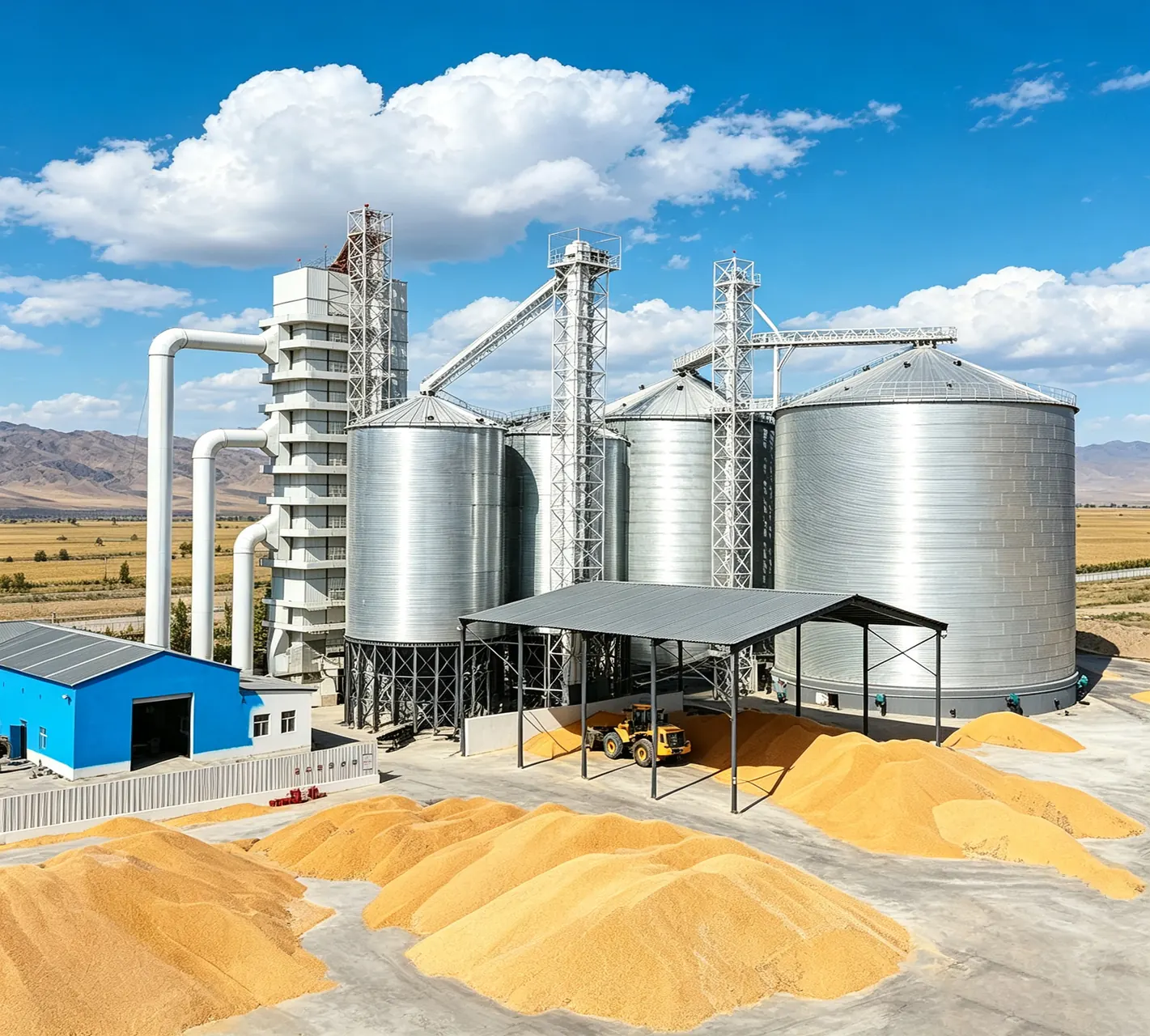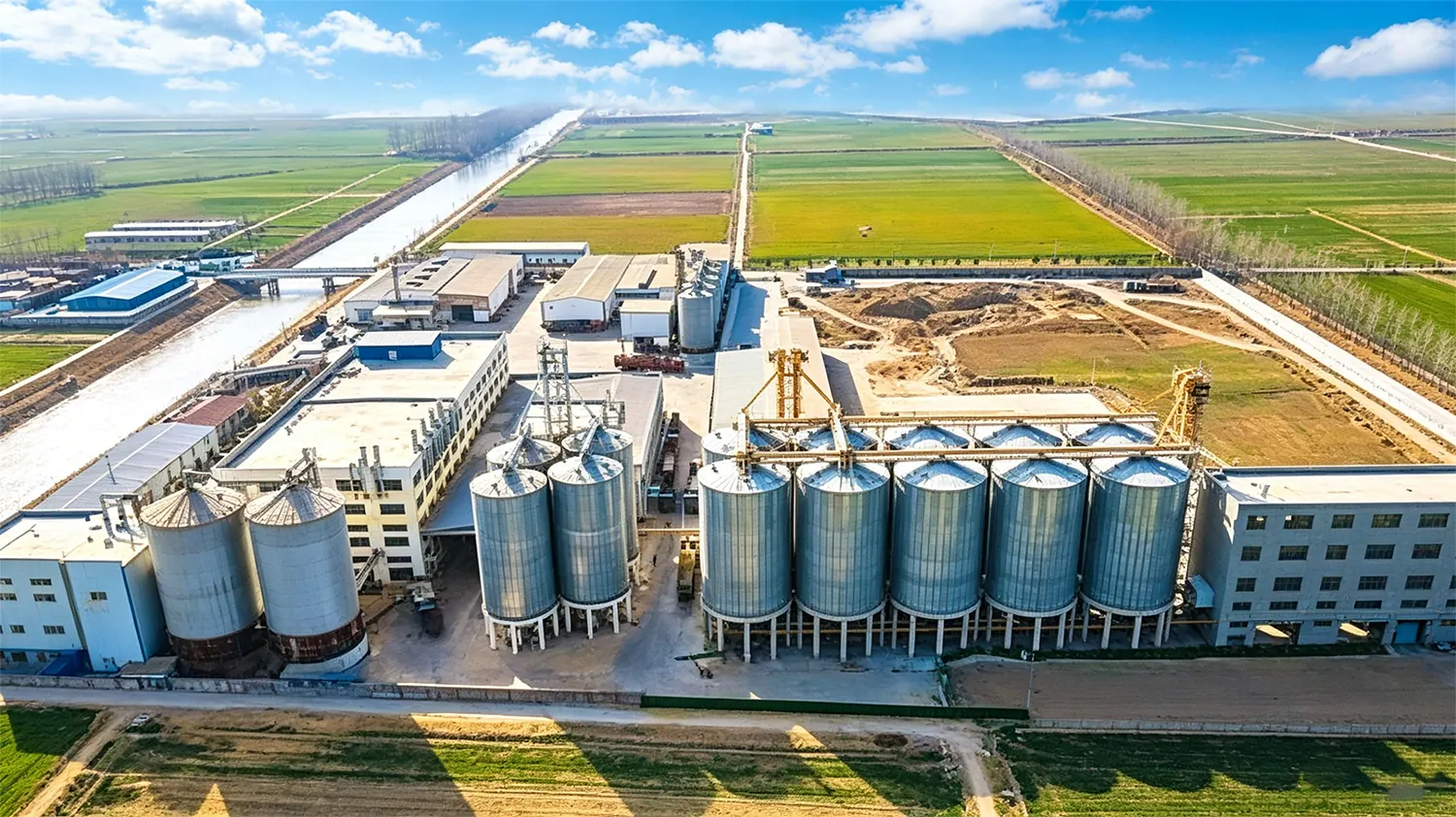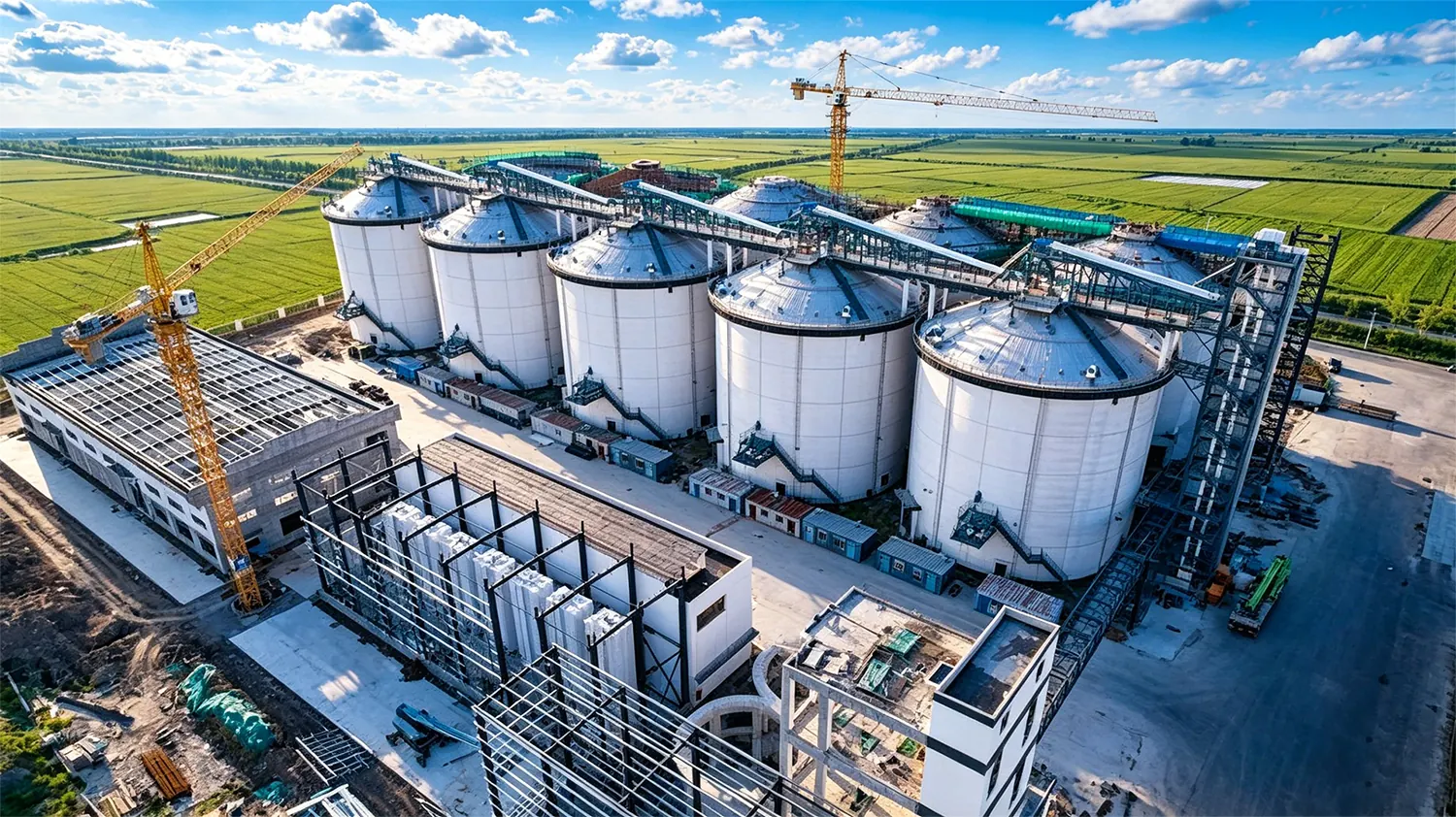
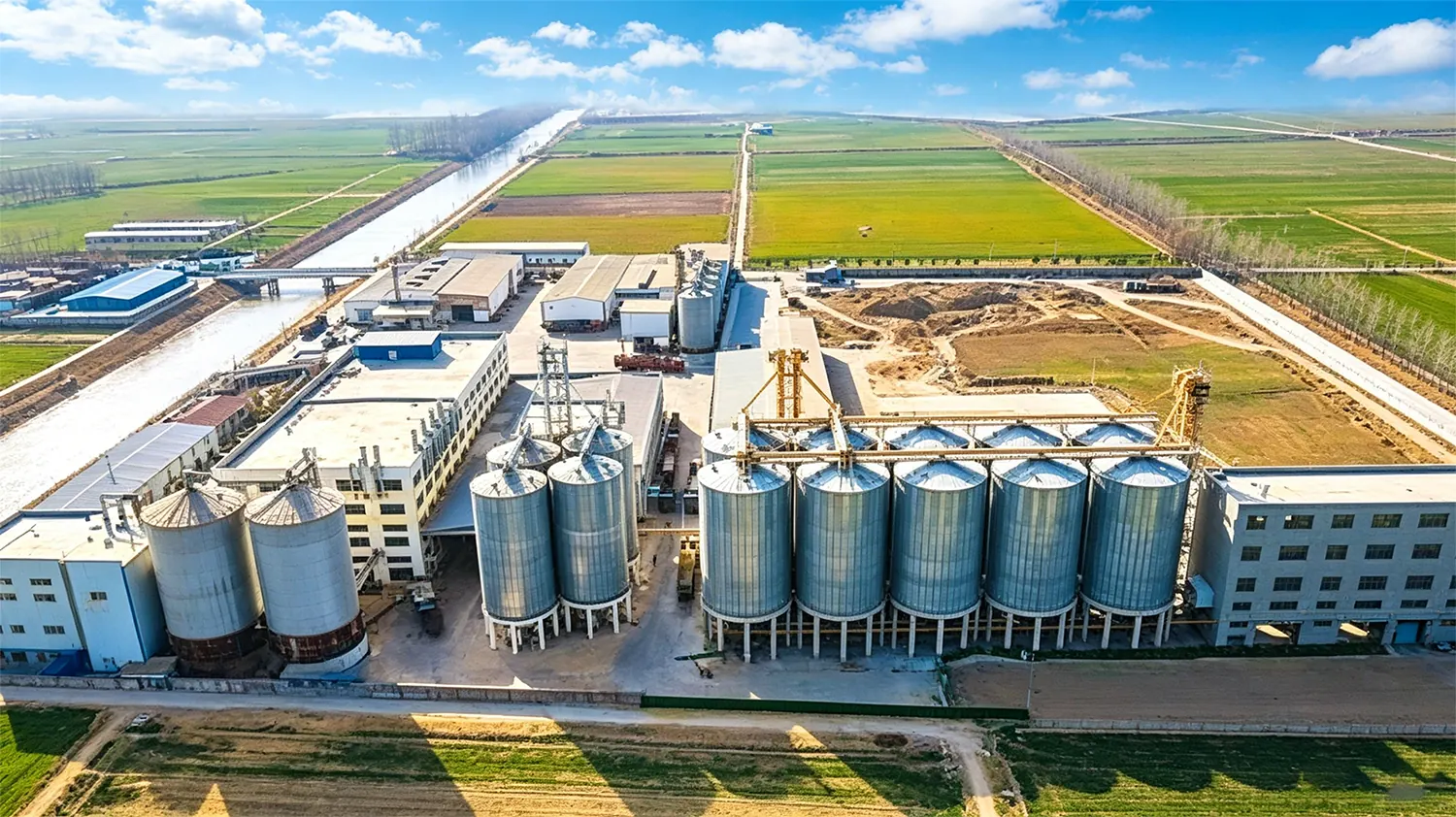
Selecting the right Dust Dust Explosion Prevention in Grain Storage Facilities: En... Prevention in Grain Storage Facilities: En... storage manufacturer is one of the most consequential decisions an agricultural operation can make. The quality of engineering, materials, and after-sales support directly impacts grain preservation, operational efficiency, and return on investment for decades. This comprehensive guide walks you through every critical factor—from technical specifications and construction methods to smart automation integration and total cost of ownership analysis.
Why Choosing the Right Grain Storage Manufacturer Matters
Dust Dust Explosion Prevention in Grain Storage Facilities: En... Prevention in Grain Storage Facilities: En... storage infrastructure represents a capital investment that must perform reliably across decades of seasonal cycles, extreme weather conditions, and evolving operational demands. The manufacturer you select determines not only the structural integrity of your silos but also the efficiency of your entire grain handling workflow—from intake and drying through storage, aeration, and discharge.
Substandard manufacturing leads to moisture infiltration, corrosion-induced structural failure, uneven aeration patterns, and Dust Dust Explosion Prevention in Grain Storage Facilities: En... Prevention in Grain Storage Facilities: En... spoilage that can destroy entire harvests. Conversely, partnering with an experienced grain bin manufacturer ensures that every component—from foundation design to roof ventilation—is engineered as an integrated system optimized for your specific grain types, climate conditions, and throughput requirements.
For commercial operations managing thousands of bushels annually, the difference between a properly engineered system and a poorly designed one can translate to hundreds of thousands of dollars in preserved grain value over the system's lifespan.
Key Technical Specifications: Capacity, Aeration, and Discharge Dynamics
Capacity Calculations and Storage Density
Accurate capacity planning begins with understanding the relationship between bushel volume, grain type, and silo geometry. Different grains have significantly different test weights—corn averages 56 lbs/bushel, Wheat Storage Best Practices: Moisture, Temperature and Q... 60 lbs/bushel, and soybeans 60 lbs/bushel—which directly affects the tonnage a given silo diameter can hold. A reputable manufacturer provides detailed capacity charts accounting for grain type, angle of repose, and peak vs. flat-top configurations.
For large grain bin installations exceeding 10,000 bushels, engineers must calculate wall pressure distributions using Janssen theory, which accounts for the friction between grain and silo walls and the nonlinear increase in horizontal pressure with depth. This analysis determines wall thickness requirements, hoop reinforcement spacing, and foundation load distribution.
Aeration System Design Principles
Aeration is the single most critical factor in maintaining grain quality during storage. Properly designed aeration systems maintain grain temperature within optimal ranges (typically 35–45°F for long-term storage) and prevent moisture migration that leads to condensation, mold growth, and hot spots.
Key aeration specifications include airflow rate (measured in cubic feet per minute per bushel), plenum design (full-floor vs. half-floor vs. duct-type), and fan static pressure capacity. For deep grain depths exceeding 30 feet, manufacturers must engineer higher-pressure centrifugal fans capable of overcoming the increased resistance. The industry standard recommends minimum airflow rates of 1/10 cfm/bushel for short-term storage and 1/5 to 1/3 cfm/bushel for long-term holding of moisture-sensitive grains.
Discharge Mechanisms and Flow Patterns
The discharge system determines how efficiently grain can be unloaded, cleaned, and transferred to transport. Center discharge systems with augers provide reliable unloading for flat-bottom silos, while hopper-bottom configurations offer gravity-assisted discharge ideal for smaller installations. For commercial-scale operations, sweep augers paired with under-floor conveyor systems maximize residual grain removal and minimize manual entry requirements.
Manufacturers must engineer discharge systems that promote mass flow rather than funnel flow, ensuring first-in-first-out grain movement that prevents spoilage of older grain trapped in stagnant zones. This requires precise calculation of hopper angles, outlet sizes, and surface finish characteristics based on the stored material's angle of repose and internal friction coefficient.
Design Considerations: Matching Silo Configurations to Your Grain Handling Workflow
Flat-Bottom vs. Hopper-Bottom Configurations
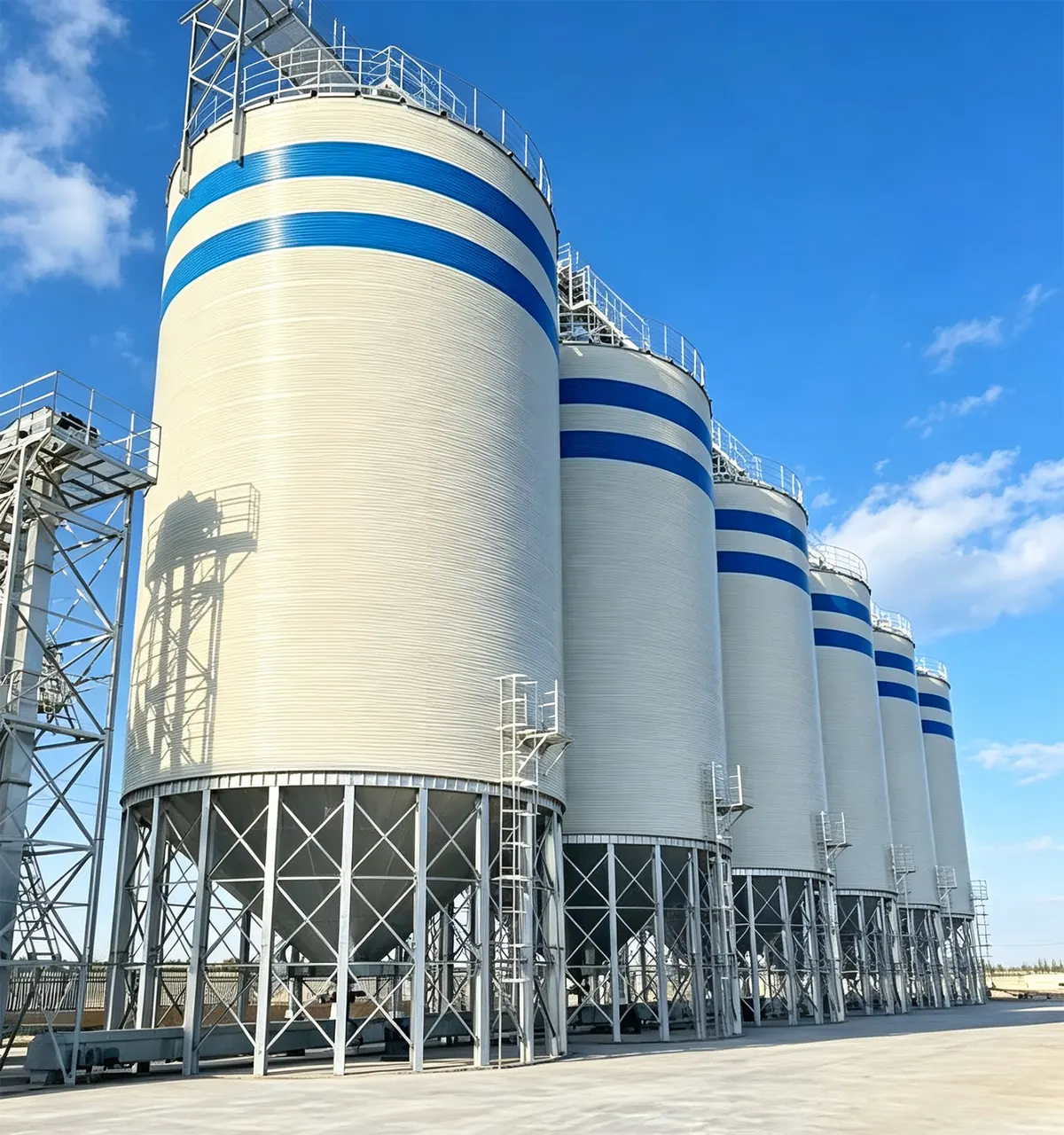
Flat-bottom silos dominate commercial grain storage due to their cost-effective high-capacity design. These structures feature a flat concrete foundation with an integrated aeration floor and center discharge system, making them ideal for large-volume storage of corn, wheat, soybeans, and other free-flowing grains. Capacities range from 2,000 to over 1,000,000 bushels per structure.
Hopper-bottom silos offer Complete Corn Storage Guide: From Harvest to Long-Term St... gravity discharge with residual rates below 1%, making them preferable for seed storage, frequent rotation operations, and applications where complete cleanout between batches is essential. The elevated structure also facilitates truck loading beneath the hopper without additional conveying equipment.
Grain Handling Equipment Integration
A storage silo never operates in isolation—it functions as one node in a comprehensive grain handling system. The manufacturer must design the silo interface to seamlessly connect with bucket elevators, belt conveyors, drag conveyors, and pneumatic conveying systems. This includes engineering intake spout locations, transition pieces, level indicators, and structural support points for external equipment.
Modern grain handling equipment integration also requires planning for dust collection systems, explosion venting per NFPA 61 standards, and temperature monitoring cable routing. The manufacturer should provide complete 3D layout drawings showing all equipment interfaces before fabrication begins.
Advanced Construction Methods: Spiral Folded and Bolted Silo Technologies
Spiral Folded Silo Technology
Spiral folded silo construction represents a significant advancement in manufacturing efficiency and structural performance. This method uses a continuous strip of galvanized steel that is fed into a spiral forming machine, where the edges are folded and locked together to create a seamless cylindrical shell. The resulting structure features uniform wall thickness, exceptional airtightness, and rapid on-site assembly.
The spiral forming process produces a silo with a smooth interior wall that reduces grain hangup, facilitates cleaning, and minimizes friction losses during discharge. The interlocking spiral seam provides structural continuity that distributes loads evenly around the circumference, eliminating the stress concentrations found at bolted joint locations.
Bolted Panel Construction
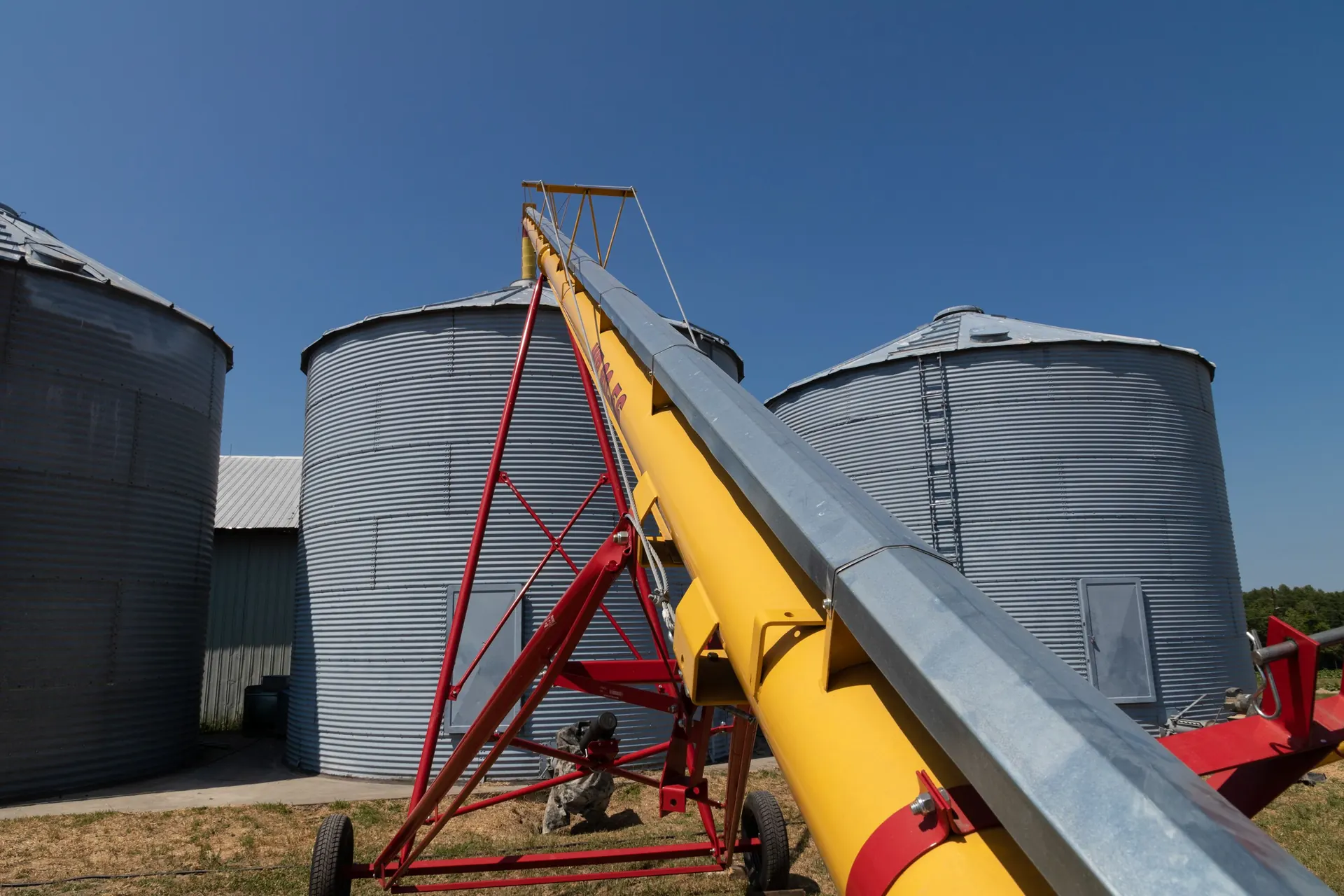
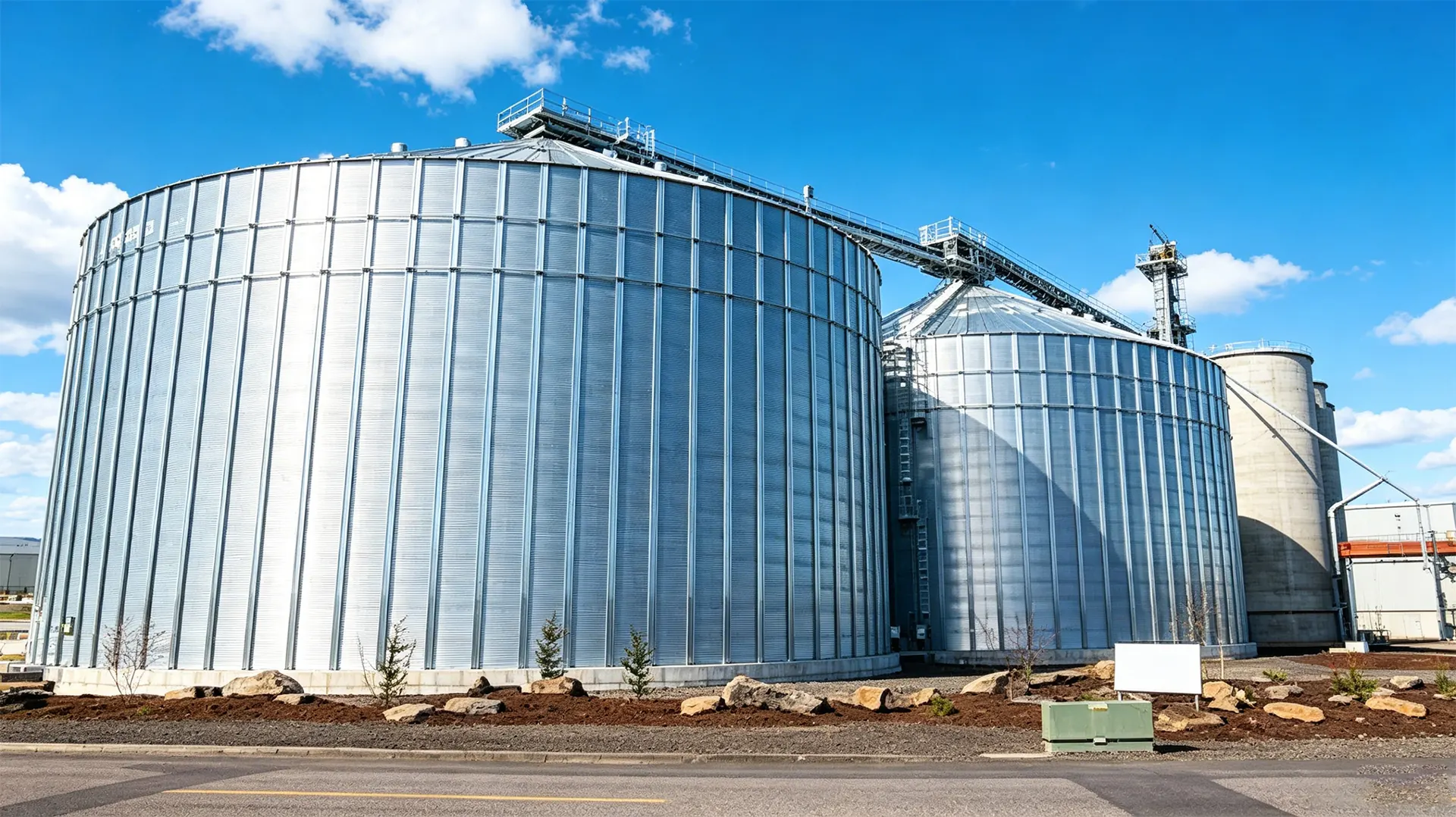
Bolted steel silos consist of individual corrugated panels that are bolted together on-site using high-strength fasteners. This modular approach offers several advantages: panels can be easily transported to remote locations, assembly requires no specialized machinery, and the silo can be disassembled and relocated if operational needs change.
Premium bolted silos use panels with 600g/m² or heavier zinc coating, combined with neoprene gaskets at every joint to ensure weathertightness. The bolt pattern and torque specifications are critical—under-torqued joints allow moisture infiltration, while over-torqued bolts can strip threads or deform panels. Reputable manufacturers provide detailed torque specifications and trained installation supervision.
Material Selection: Corrosion Resistance and Galvanized Steel Standards
The longevity of a grain storage silo depends fundamentally on the quality and thickness of its protective coating. Hot-dip galvanized steel remains the industry standard, with zinc coating weights ranging from Z275 (275 g/m²) for standard applications to Z600 (600 g/m²) for harsh environments or corrosive grain types.
For agri grain bins storing high-moisture grain, treated seed, or fertilizer-contaminated products, enhanced corrosion protection becomes essential. Premium manufacturers offer options including:
- Heavy zinc coatings (450–600 g/m²): Extending service life to 30+ years in moderate climates
- Polymer laminate coatings: Applied over galvanized steel for chemical resistance in aggressive environments
- Stainless steel panels: For the most corrosive zones—typically the bottom 3–5 rings where moisture and debris accumulate
- Aluminized steel: Offering superior resistance to sulfur-containing atmospheres
The manufacturer should provide coating thickness test reports for every panel batch and specify expected corrosion rates based on your local climate classification per ISO 9223 standards.
Integrating Smart Storage: IoT Monitoring, Drying, and Automation Systems
IoT-Based Grain Condition Monitoring
Modern commercial grain storage has evolved far beyond passive containment. IoT-enabled monitoring systems provide real-time visibility into grain temperature, moisture content, and bin fill levels from any location. These systems use cables suspended from the roof that contain temperature sensors at regular intervals, transmitting data to cloud-based platforms accessible via smartphone or desktop.
Advanced systems integrate CO₂ sensors that detect early-stage spoilage before temperature changes become apparent, providing operators with critical early warning that can prevent total bin loss. The monitoring platform should offer automated alerts, trend analysis, and integration with aeration fan controls for autonomous climate management.
Integrated Drying Systems
For operations receiving grain at moisture levels above safe storage thresholds (typically 15% for corn, 13% for wheat), integrated drying systems are essential. Continuous-flow dryers, batch dryers, and in-bin drying systems each offer distinct advantages depending on throughput requirements and energy costs.
The manufacturer should engineer the drying system as an integrated component of the storage facility, including heat recovery systems, automated moisture sensing at dryer discharge, and seamless transition from drying to storage bins. Properly designed drying systems reduce moisture content uniformly without over-drying, which causes weight loss and cracking that reduces market value.
Automation and Control Systems
Full automation of grain handling operations—including intake routing, dryer control, bin filling, aeration scheduling, and discharge sequencing—reduces labor requirements and eliminates human error. Programmable logic controllers (PLCs) with human-machine interfaces (HMIs) allow operators to manage entire facilities from a single control room.
When evaluating a manufacturer's automation capabilities, assess their ability to integrate with existing farm management software, provide remote access capabilities, and offer scalable architectures that can grow with your operation.
Installation and Commissioning: Evaluating Manufacturer Support and Project Timelines
The quality of installation directly affects silo performance, safety, and longevity. A reputable manufacturer provides comprehensive installation support including detailed foundation drawings, step-by-step assembly manuals, on-site technical supervision, and quality inspection protocols at critical milestones.
Typical project timelines for commercial installations range from 4–8 weeks for standard configurations to 12–20 weeks for complex multi-bin facilities with integrated handling systems. The manufacturer should provide a detailed project schedule with clear milestones, dependencies, and contingency plans for weather delays.
Commissioning procedures should include foundation level verification, shell plumbness measurement, bolt torque verification, aeration system airflow testing, and complete system integration testing before grain is introduced. Request a comprehensive commissioning report documenting all test results and sign-offs.
Maintenance Best Practices: Ensuring Longevity and Grain Preservation
Preventive maintenance is essential for maximizing the service life of grain storage infrastructure. A comprehensive maintenance program should include:
- Annual inspections: Checking roof seals, wall panels, ladders, and platforms for corrosion or damage
- Aeration system maintenance: Cleaning fan housings, verifying airflow rates, and replacing worn belts
- Temperature cable testing: Verifying sensor accuracy and cable integrity before each filling season
- Foundation monitoring: Checking for settlement, cracking, or water drainage issues
- Coating touch-up: Repairing any scratches or damaged areas in the galvanized coating
The manufacturer should provide a detailed maintenance manual with recommended schedules, inspection checklists, and troubleshooting guides. Some manufacturers offer annual maintenance contracts that include professional inspections and priority parts availability.
Cost Factors and ROI: Analyzing Total Cost of Ownership
Evaluating grain storage investments requires looking beyond initial purchase price to understand total cost of ownership over the system's lifespan. Key cost factors include:
| Cost Category | Typical Range | Impact on TCO |
|---|---|---|
| Silo structure and materials | 40–50% of total | Higher quality materials reduce maintenance costs |
| Foundation and civil works | 15–25% of total | Site conditions significantly affect costs |
| Grain handling equipment | 15–20% of total | Automation level drives equipment costs |
| Aeration and drying systems | 10–15% of total | Energy efficiency affects operating costs |
| Installation and commissioning | 5–10% of total | Experienced crews reduce timeline and rework |
| Annual maintenance | 1–2% of initial cost | Preventive maintenance extends service life |
A well-engineered system from a premium manufacturer typically delivers lower total cost of ownership despite higher initial investment, due to reduced maintenance, longer service life, lower energy consumption, and superior grain preservation that maintains product quality and market value.
Vetting the Manufacturer: Certifications, Warranties, and After-Sales Service
Industry Certifications and Standards Compliance
Verify that the manufacturer holds relevant certifications including ISO 9001 for quality management systems, and that their products comply with applicable standards such as ASCE 7 for structural loads, DIN 1055 for European installations, or local building codes. Manufacturers should provide