Sunflower seeds present unique challenges in bulk Dust Dust Explosion Prevention in Grain Storage Facilities: En... Prevention in Grain Storage Facilities: En... due to their high oil content, elevated fatty acid levels, and susceptibility to rapid spoilage when moisture and temperature thresholds are exceeded. This comprehensive engineering guide examines the critical design parameters, aeration strategies, and monitoring systems essential for maintaining seed quality and preventing catastrophic losses from heating and mold development.
Understanding Sunflower Seed Storage Characteristics
Sunflower seeds differ fundamentally from cereal grains in their Dust Dust Explosion Prevention in Grain Storage Facilities: En... Prevention in Grain Storage Facilities: En... behavior. The high oil content, typically ranging from 35% to 50% depending on the variety, creates distinct thermochemical properties that demand specialized storage engineering approaches. Unlike wheat or corn, sunflower seeds exhibit lower thermal conductivity, meaning heat generated by respiration or microbial activity dissipates slowly, creating localized hot spots that accelerate deterioration.
The critical moisture content threshold for safe sunflower seed Dust Dust Explosion Prevention in Grain Storage Facilities: En... Prevention in Grain Storage Facilities: En... stands at 9% for long-term preservation and 10% for short-term holding under temperate conditions. When moisture levels exceed these thresholds, lipase enzymes activate, increasing free fatty acid values and compromising both oil quality and seed viability. The respiration rate of sunflower seeds increases exponentially with moisture content, generating additional heat and moisture that creates a self-accelerating degradation cycle.
Key Technical Specifications of Sunflower Seed Storage: Preventing Heating and Mold
Engineering storage systems for sunflower seeds requires precise specification of multiple interrelated parameters. The following table outlines the critical design specifications for safe sunflower seed preservation:
| Parameter | Specification Range | Critical Threshold |
|---|---|---|
| Moisture Content | 7% – 9% | >10% = High Risk |
| Storage Temperature | 10°C – 20°C | >25°C = Critical |
| Aeration Airflow Rate | 0.1 – 0.3 m³/min/ton | <0.1 = Insufficient |
| Silo Wall Thickness | 2.0 – 4.0 mm (spiral) | Per structural calc |
| Temperature Monitoring | Cable sensors every 3m | Continuous |
| Relative Humidity (headspace) | <65% | >75% = Condensation Risk |
The aeration system design represents perhaps the single most critical engineering decision in sunflower seed storage. Perforated floor systems delivering uniform airflow distribution achieve superior results compared to duct-based configurations, particularly in flat-bottom silos exceeding 8 meters in diameter. The air distribution pattern must eliminate dead zones where stagnant air permits moisture migration and heat accumulation.
Design Considerations for Sunflower Seed Storage: Preventing Heating and Mold
Silo Configuration and Structural Design
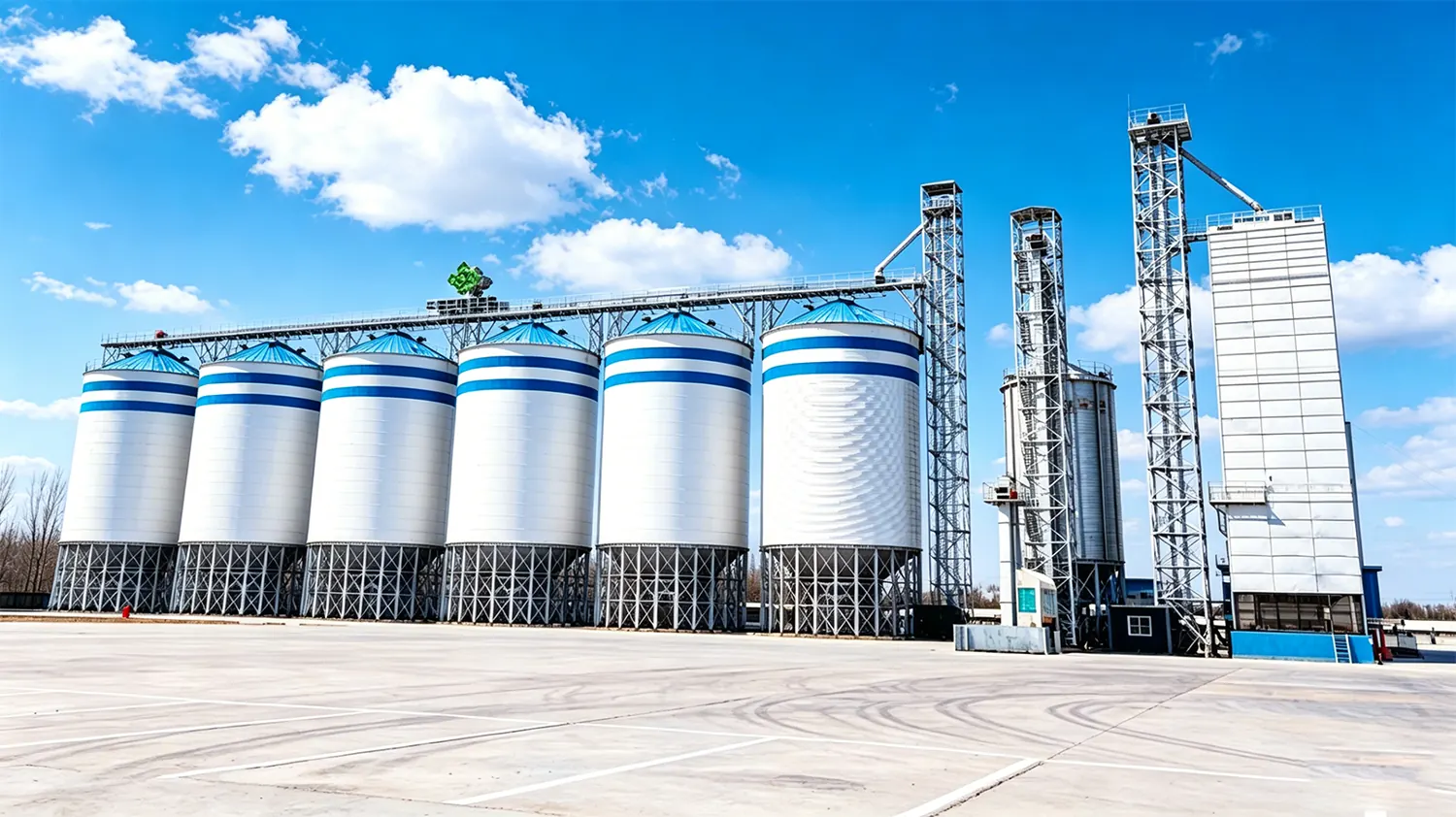
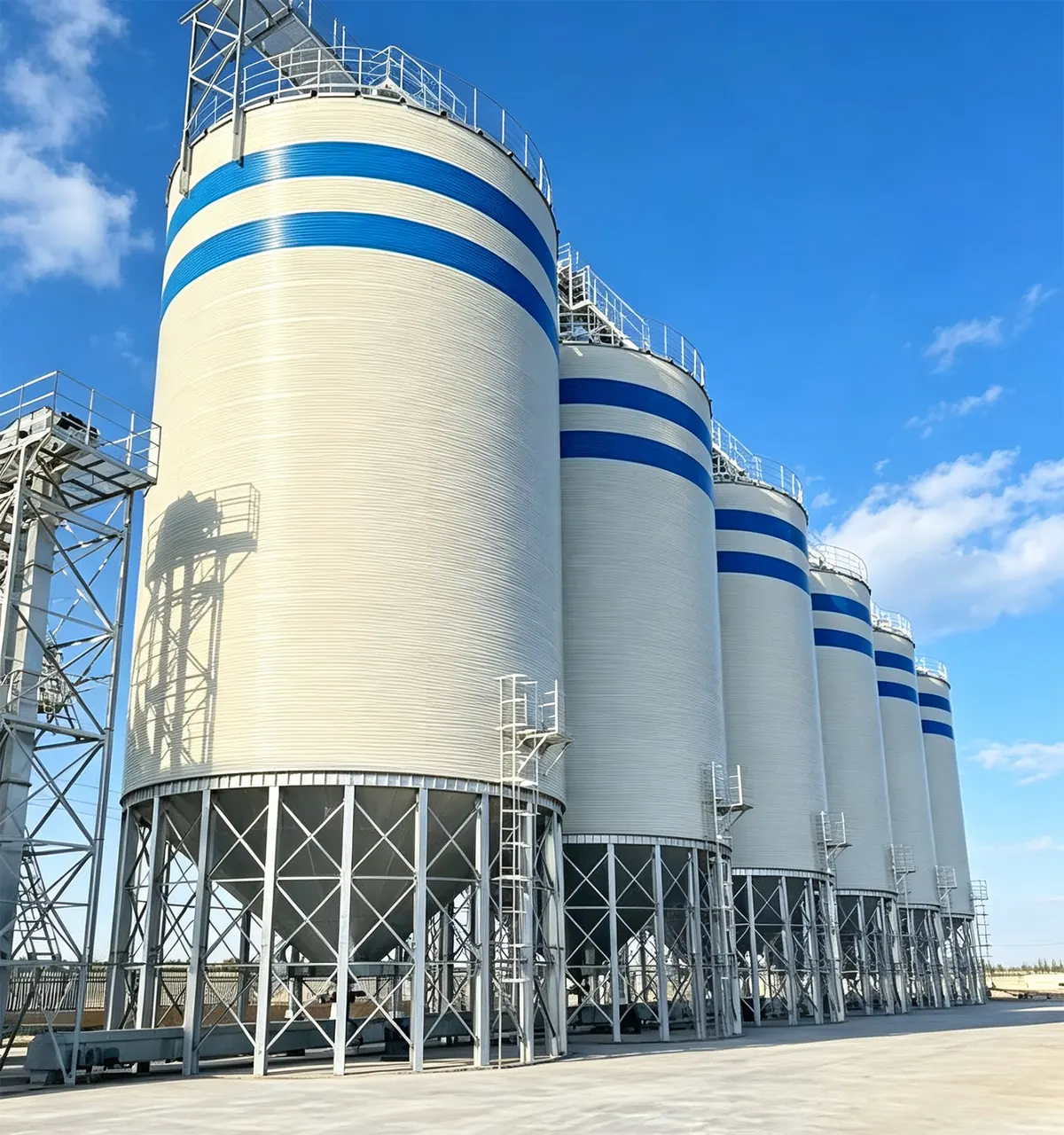
Spiral folded steel silos, manufactured using the Lipp double-seam technology, provide optimal airtightness for sunflower seed applications. The continuous spiral seam creates a uniform wall structure with superior sealing characteristics compared to bolted panel construction. This airtightness is essential for controlled atmosphere storage and prevents moisture infiltration from ambient humidity fluctuations.
For operations exceeding 5,000-ton capacity, flat-bottom silos with full perforated floors offer the most efficient storage configuration. The discharge system must account for sunflower seed flow characteristics, which exhibit mass flow behavior when properly conditioned but can develop bridging issues when moisture content exceeds 11%. Cone-bottom silos with minimum 60-degree hopper angles ensure reliable discharge without mechanical flow promotion devices.
Ventilation and Aeration System Architecture
The aeration system must deliver sufficient airflow to remove field heat accumulated during harvest and maintain uniform temperature throughout the silo volume. For sunflower seeds, the recommended aeration rate ranges from 0.1 to 0.3 cubic meters per minute per metric ton of stored seed, with higher rates required for seeds harvested above 10% moisture content.
Centrifugal fans with backward-curved blades provide the static pressure necessary to overcome the resistance of the seed bed, typically 1,500 to 3,500 Pascals depending on silo diameter and fill height. Variable frequency drives on fan motors enable operators to modulate airflow based on seasonal conditions and seed temperature readings, optimizing energy consumption while maintaining storage quality.
Material Selection and Sunflower Seed Storage: Preventing Heating and Mold Construction
Galvanized steel with zinc coating weights of 275 g/m² or higher provides adequate corrosion resistance for sunflower seed storage applications. The fatty acid composition of sunflower oil can accelerate corrosion in environments where condensation forms on internal surfaces, making proper insulation and vapor barriers essential design elements.
Internal surface treatments must comply with food-grade requirements when seeds are destined for human consumption. Epoxy-free zinc silicate coatings offer excellent adhesion and chemical resistance without introducing contaminants that could affect oil quality. All sealants and gaskets must be FDA-compliant and resistant to rancid oil degradation.
For the aeration floor system, galvanized perforated steel panels with precision laser-cut apertures provide consistent airflow distribution while maintaining structural integrity under the full weight of the seed column. The aperture size must be smaller than the minimum seed dimension to prevent grain loss into the plenum chamber.
Industrial Applications of Sunflower Seed Storage: Preventing Heating and Mold
Commercial sunflower seed processing facilities require integrated storage systems that interface seamlessly with cleaning, drying, and oil extraction equipment. Pre-storage drying systems must reduce moisture content from harvest levels of 12-18% to safe storage levels within 24-48 hours to prevent incipient spoilage. Counterflow grain dryers operating at air temperatures below 80°C preserve seed viability while achieving target moisture reduction.
Oilseed crushing operations typically maintain 30-60 days of sunflower seed inventory to ensure continuous production. This extended storage duration demands rigorous temperature monitoring protocols and periodic aeration cycles to counteract seasonal temperature fluctuations. Automated temperature cable systems with real-time data logging enable operators to detect heating events before visible mold development occurs.
Seed multiplication companies require specialized storage conditions that maintain germination rates above 85% for certified seed lots. Refrigerated aeration systems that cool intake air to 10-15°C provide the precise temperature control necessary for long-term seed viability preservation.
Installation and Commissioning of Sunflower Seed Storage: Preventing Heating and Mold
Foundation design for sunflower seed silos must account for both static seed loads and dynamic discharge pressures. Reinforced concrete ring foundations with appropriate soil bearing capacity verification ensure long-term structural stability. The foundation top surface must achieve a level tolerance of ±3mm across the full diameter to prevent silo wall distortion that could compromise airtightness.
During commissioning, the aeration system must undergo comprehensive airflow balancing using pitot tube measurements at multiple points across the floor surface. Acceptable airflow variation across the floor should not exceed ±15% of the design average. Temperature monitoring cables require individual calibration verification and functional testing before initial filling.
The initial filling protocol should proceed in stages, with leveling and surface inspection at 25%, 50%, and 75% capacity. This staged approach allows detection of any structural anomalies or aeration distribution issues before the full seed load is applied. The first aeration cycle should commence within 48 hours of completing the fill to remove field heat and equilibrate moisture distribution.
Maintenance Best Practices for Sunflower Seed Storage: Preventing Heating and Mold
Preventive maintenance programs for sunflower seed silos must address both structural integrity and system functionality. Quarterly inspections should verify seal integrity at all wall penetrations, roof vents, and discharge gates. The spiral seam connections require annual visual inspection for any signs of corrosion or mechanical damage that could compromise airtightness.
Aeration fan maintenance includes quarterly bearing lubrication, belt tension verification, and inlet screen cleaning. Perforated floor inspections during empty silo periods should identify any aperture blockages from seed fragments or debris that could create airflow dead zones. Temperature monitoring cables require annual resistance calibration to ensure measurement accuracy within ±0.5°C.
Grain protectants and fumigation systems provide additional protection against insect infestations that can generate heat and moisture. Phosphine fumigation conducted in airtight spiral silos achieves superior distribution and retention compared to less sealed storage structures. Fumigation protocols must comply with local regulations and maintain appropriate safety clearances for operational personnel.
Cost Factors and ROI of Sunflower Seed Storage: Preventing Heating and Mold
The capital investment for a complete sunflower seed storage system ranges from $35 to $65 per metric ton of capacity, depending on silo type, aeration sophistication, and automation level. Spiral folded steel silos typically offer 15-20% cost savings compared to bolted panel alternatives while providing superior airtightness and faster construction timelines.
Energy costs for aeration operations represent the primary ongoing expense, typically $0.50 to $1.50 per metric ton annually depending on climate conditions and electricity rates. Variable frequency drive installations reduce energy consumption by 30-40% compared to fixed-speed fan operation and typically achieve payback within 18-24 months.
The return on investment for properly engineered storage systems is measured primarily in reduced spoilage losses. Industry data indicates that sunflower seeds stored in aerated, temperature-monitored silos experience less than 0.5% annual quality degradation, compared to 3-8% losses in inadequately ventilated flat storage. For a 10,000-ton facility, this differential represents $150,000 to $400,000 in annual preserved value at current market prices.
How to Choose a Reliable Sunflower Seed Storage: Preventing Heating and Mold Supplier
Selecting a storage system supplier requires evaluation of engineering capability, manufacturing quality, and after-sales support infrastructure. Essential qualifications include demonstrated experience with oilseed storage projects, certified welding procedures for food-grade applications, and in-house structural engineering capabilities for site-specific design adaptation.
The supplier should provide comprehensive computational analysis of aeration airflow distribution, thermal modeling of seed temperature behavior under local climate conditions, and structural calculations verified by licensed engineers. Manufacturing facilities should maintain ISO 9001 quality management certification and employ automated coil processing equipment that ensures consistent dimensional tolerances.
After-sales technical support must include commissioning supervision, operator training programs, and responsive spare parts supply. Suppliers offering remote monitoring integration and predictive maintenance analytics provide additional long-term value through optimized system performance and reduced unplanned downtime.
Frequently Asked Questions About Sunflower Seed Storage: Preventing Heating and Mold
Protect Your Sunflower Seed Investment with Engineered Storage Solutions
With over two decades of experience designing and manufacturing grain storage systems, our engineering team delivers customized solutions that prevent heating and mold while maximizing storage efficiency. From initial site assessment through commissioning and ongoing technical support, we provide complete turnkey storage systems for sunflower seed operations worldwide.
Contact our engineering team today to discuss your sunflower seed storage requirements and receive a comprehensive system proposal tailored to your operational needs.