
Proper wheat storage is the cornerstone of post-harvest quality preservation, directly impacting market value, food safety, and operational profitability. After two decades of designing and commissioning Dust Dust Explosion Prevention in Grain Storage Facilities: En... Prevention in Grain Bin Foundation Settlement: Prevention and Remediati... Storage Facilities: En... storage systems across six continents, I can confirm that mastering the interplay between moisture content, temperature control, and quality monitoring separates profitable operations from those suffering preventable losses. This comprehensive Ventilation Fan Failure: Diagnosis and Repair Guide for G... delivers actionable engineering insights for operators, agricultural engineers, and procurement managers seeking to optimize their wheat storage infrastructure.
Understanding Wheat Storage Fundamentals
Wheat, like all cereal grains, remains a living biological organism after harvest. Its respiration rate, moisture equilibrium, and susceptibility to microbial invasion are governed by well-established thermodynamic and biological principles. Understanding these fundamentals is non-negotiable for anyone responsible for Dust Dust Explosion Prevention in Grain Storage Facilities: En... Prevention in Grain Storage Facilities: En... quality management.
At the cellular level, wheat kernels continue to consume oxygen and produce carbon dioxide, water vapor, and heat. This respiratory activity accelerates exponentially with increasing moisture content and temperature. When wheat is stored at moisture levels above 14% and temperatures above 25°C (77°F), respiration rates can increase tenfold, creating self-reinforcing cycles of heating, moisture migration, and spoilage that can destroy an entire silo within weeks.
The concept of equilibrium relative humidity (ERH) is central to safe storage. Wheat at 12.5% moisture content maintains an ERH of approximately 65%, which is below the threshold for mold growth. At 14% moisture, ERH rises to around 75%, entering the danger zone where Aspergillus and Penicillium species can proliferate. At 15% moisture and above, ERH exceeds 80%, creating conditions favorable for rapid mycotoxin-producing fungal colonization.
Moisture Control Strategies for Wheat Storage
Optimal Moisture Levels by Storage Duration
The target moisture content for wheat storage must be calibrated to the intended storage duration. For short-term storage of up to three months, wheat at 13.5% moisture can be acceptable if temperatures remain below 20°C. However, for long-term storage exceeding six months — the scenario most commercial operators face — wheat should be dried to 12.0–12.5% moisture content before loading into silos.
| Storage Duration | Maximum Safe Moisture (%) | Target Temperature (°C) | Monitoring Frequency |
|---|---|---|---|
| Up to 3 months | 13.5 | < 25 | Weekly |
| 3–6 months | 12.5 | < 20 | Twice weekly |
| 6–12 months | 12.0 | < 15 | Continuous |
| 12+ months | 11.5 | < 10 | Continuous with automated alerts |
Drying Systems Integration
Effective moisture management begins before wheat ever enters the silo. Modern grain drying systems — whether continuous-flow column dryers, mixed-flow dryers, or recirculating batch dryers — must be precisely calibrated for wheat's specific thermal sensitivity. Wheat intended for milling purposes should never be exposed to grain temperatures exceeding 60°C (140°F) during drying, as this damages gluten structure and reduces flour quality.
From an engineering perspective, the integration between drying systems and storage silos is critical. I have witnessed numerous installations where drying capacity was adequate but the transition conveying system introduced rehydration points — particularly at transfer elbows, bucket elevator boots, and belt conveyor discharge chutes. Every transfer point should be equipped with moisture sensors and, where climate conditions demand, localized dehumidification or heated-air curtain systems to prevent moisture reabsorption during conveyance.
Temperature Management Protocols
Thermal Dynamics in Grain Silos
Temperature is the single most important real-time indicator of grain storage condition. Unlike moisture content, which changes relatively slowly, temperature responds immediately to biological activity, environmental conditions, and thermal gradients within the grain mass. A well-designed temperature monitoring system serves as the early warning mechanism for incipient spoilage.
Heat accumulation in grain silos follows predictable patterns. In a typical flat-bottom silo storing 5,000 metric tons of wheat, the core temperature can remain 5–8°C above ambient for months after loading due to the grain mass's insulating properties. This thermal lag means that wheat loaded in late summer at elevated temperatures may not reach safe storage temperatures until mid-winter — if natural ventilation is relied upon exclusively.
Ventilation System Design Principles
Low-temperature ventilation technology uses controlled airflow to cool grain, inhibiting insect activity and mold growth. This method is energy-efficient and helps maintain grain quality over extended storage periods. The engineering principles behind effective ventilation are straightforward but demand precise execution.
Specific airflow rates for wheat ventilation typically range from 0.1 to 0.3 cubic meters per minute per cubic meter of grain (m³/min/m³) for cooling purposes. For aeration-only systems, 0.05–0.1 m³/min/m³ may suffice. The total system resistance — including the grain plenum, distribution ducts, and the grain mass itself — must be calculated to select appropriately sized centrifugal or axial fans.
Perforated floor systems offer the most uniform air distribution for large flat-bottom silos, achieving coverage ratios of 80–100% of the silo floor area. Duct-based systems, whether radial or linear, are more cost-effective for smaller installations but require careful spacing calculations to prevent dead zones where airflow is insufficient. For wheat storage drums and small-scale containers, even simple perforated pipe aeration can dramatically extend safe storage life when properly implemented.
Seasonal Temperature Management Strategies
Effective temperature management requires a seasonal strategy. In temperate climates, the optimal approach involves three phases: initial cooling in autumn to below 15°C, deep winter cooling to below 5°C, and spring insulation to prevent solar-driven reheating. Each phase demands different fan operating schedules and, in some cases, refrigeration-assisted aeration.
For operations in tropical and subtropical regions, natural ventilation alone is rarely sufficient to achieve safe storage temperatures. Mechanical refrigeration systems, though capital-intensive, become economically justified when storing high-value wheat for extended periods. The coefficient of performance (COP) of modern grain cooling units has improved significantly, with energy consumption as low as 0.8–1.2 kWh per metric ton per 10°C temperature reduction.
Quality Preservation Techniques
Insect Management in Stored Wheat
Insect infestation represents one of the most destructive threats to stored wheat quality. The primary insect pests — including the lesser grain borer (Rhyzopertha dominica), rice weevil (Sitophilus oryzae), and warehouse moth (Ephestia cautella) — can cause both direct grain loss and quality degradation through contamination, heating, and moisture generation.
How to preserve grains from insects begins with prevention. Thorough cleaning of empty silos between loading cycles, combined with residual surface treatments on silo walls and floors, eliminates harborage sites. Hermetic storage — creating oxygen-depleted environments through sealed silo construction — has emerged as a highly effective non-chemical approach. When oxygen levels are maintained below 2% through nitrogen purging or natural respiration sealing, all insect life stages are eliminated within 10–14 days.
For conventional silos, integrated pest management (IPM) protocols combining temperature control, regular monitoring with pitfall traps, and targeted fumigation with phosphine remain the industry standard. The critical threshold for fumigation action is the detection of any live insects in grain samples, as populations can double every 3–4 weeks under favorable conditions.
Mycotoxin Prevention
Mycotoxin contamination — particularly deoxynivalenol (DON), zearalenone, and aflatoxin — poses both economic and food safety risks. Prevention is vastly more cost-effective than remediation, as no commercially viable process can reliably detoxify contaminated wheat to food-grade standards.
The mycotoxin prevention triad consists of: (1) maintaining moisture below 12.5% throughout the grain mass, (2) keeping temperatures below 15°C to suppress fungal metabolic activity, and (3) minimizing mechanical damage during handling, as cracked kernels are exponentially more susceptible to fungal invasion. Every percentage point of cracked grain above 5% should trigger an immediate review of handling equipment settings.
Silo Design Considerations for Wheat Storage
Structural Configuration and Capacity Planning
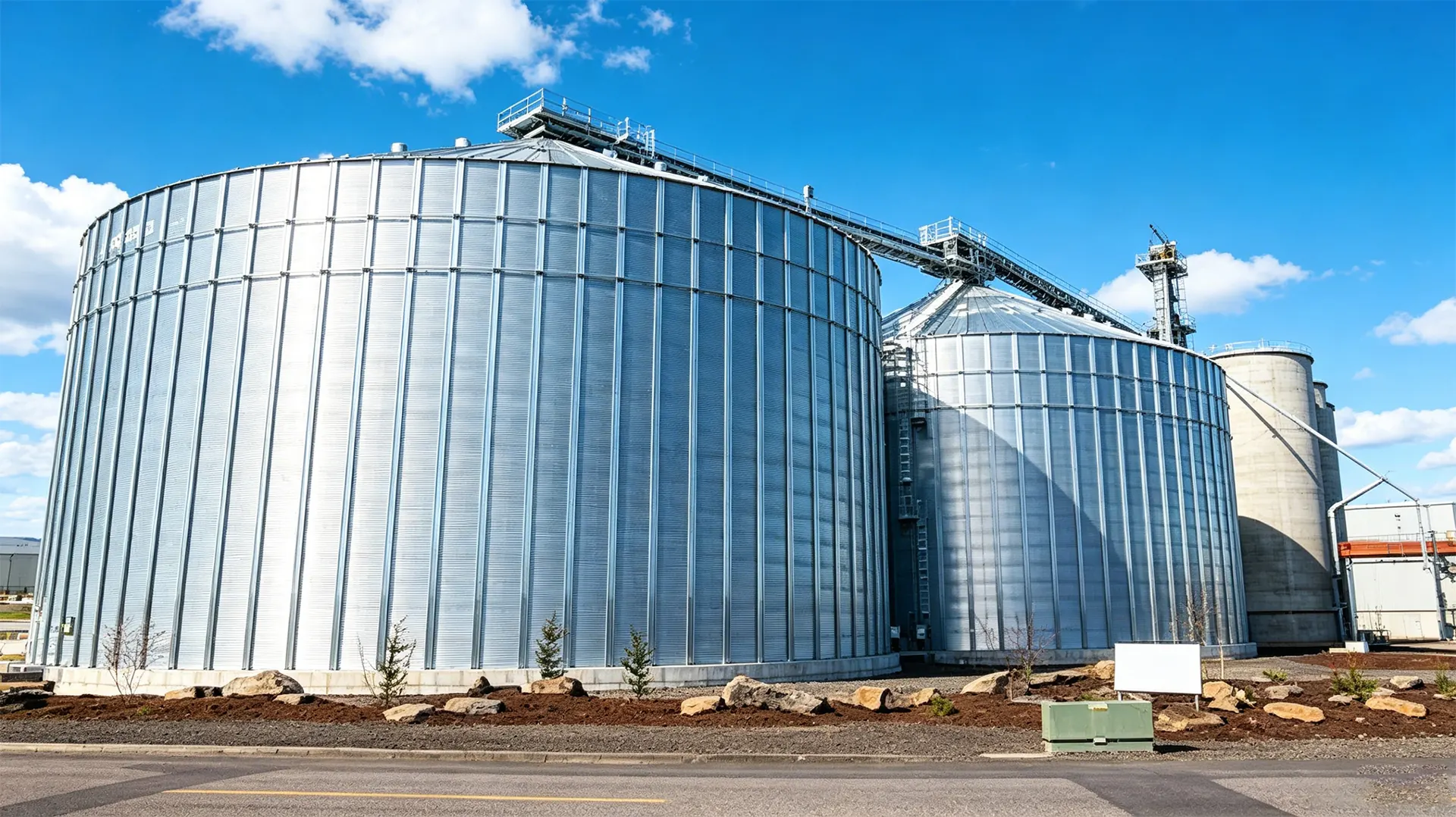
The selection of silo type — whether bolted steel, welded steel, concrete, or hybrid construction — must be driven by storage duration, throughput requirements, and local environmental conditions. For wheat storage applications, bolted steel silos with Galvanized vs Coated Steel: Which Is Right for Your Silo coatings offer an optimal balance of cost, construction speed, and long-term durability. The galvanized coating provides corrosion resistance against both atmospheric exposure and the mildly acidic conditions that can develop within stored grain environments.
Spiral steel silo construction technology, utilizing continuous strip steel formed into a helical corrugated wall, creates inherently airtight structures particularly suited for long-term wheat storage. The double-seam interlock between adjacent strips, when combined with appropriate sealant systems, achieves air leakage rates below 1% of silo volume per hour at design pressure — a critical specification for controlled-atmosphere storage applications.
Aeration and Monitoring Systems
Modern wheat storage silos should be designed with integrated aeration systems from the outset, rather than retrofitted as an afterthought. The aeration floor or duct network must be sized for the specific airflow resistance of wheat, which typically ranges from 25–40 mm water gauge per meter of grain depth depending on moisture content, foreign material percentage, and compaction conditions.
Temperature monitoring cables, suspended from the silo roof at regular intervals, provide the data foundation for all storage management decisions. A standard configuration places thermocouple sensors at 1.5–2.0 meter vertical intervals, with horizontal spacing of 3–4 meters in silos exceeding 15 meters in diameter. These cables should be rated for continuous operation at temperatures from -20°C to +80°C and protected against mechanical damage during loading and unloading operations.
Material Selection and Construction Standards
The materials used in silo construction directly impact wheat quality preservation. Galvanized steel sheets with a minimum zinc coating of 275 g/m² (Z275) provide adequate corrosion protection for most wheat storage applications. For coastal installations or regions with high atmospheric salinity, heavier coatings of 350–450 g/m² or supplementary epoxy paint systems are recommended.
Sealant materials for bolted joints must maintain flexibility across the full operating temperature range while resisting degradation from UV exposure, grain dust, and fumigation chemicals. Polyurethane and polysulfide sealants have demonstrated superior long-term performance in grain storage applications compared to silicone-based alternatives, which can shrink and crack under sustained compression loading.
For concrete silos, the internal surface treatment requires particular attention. Unfinished concrete can absorb and release moisture, creating localized high-humidity zones that promote mold growth. Epoxy-based internal coatings, applied to a minimum dry film thickness of 300 microns, create a non-porous barrier that prevents moisture migration into the concrete matrix and facilitates thorough cleaning between storage cycles.
Industrial Applications and Scale Considerations
Wheat storage best practices scale from small on-farm installations to commercial grain terminals handling hundreds of thousands of metric tons. At the small scale — wheat storage drums and farm bins of 10–100 ton capacity — the fundamental principles remain identical, though the monitoring and control systems are necessarily simplified. Even at this scale, investing in basic temperature monitoring and aeration capability yields measurable returns through reduced spoilage and improved market timing flexibility.
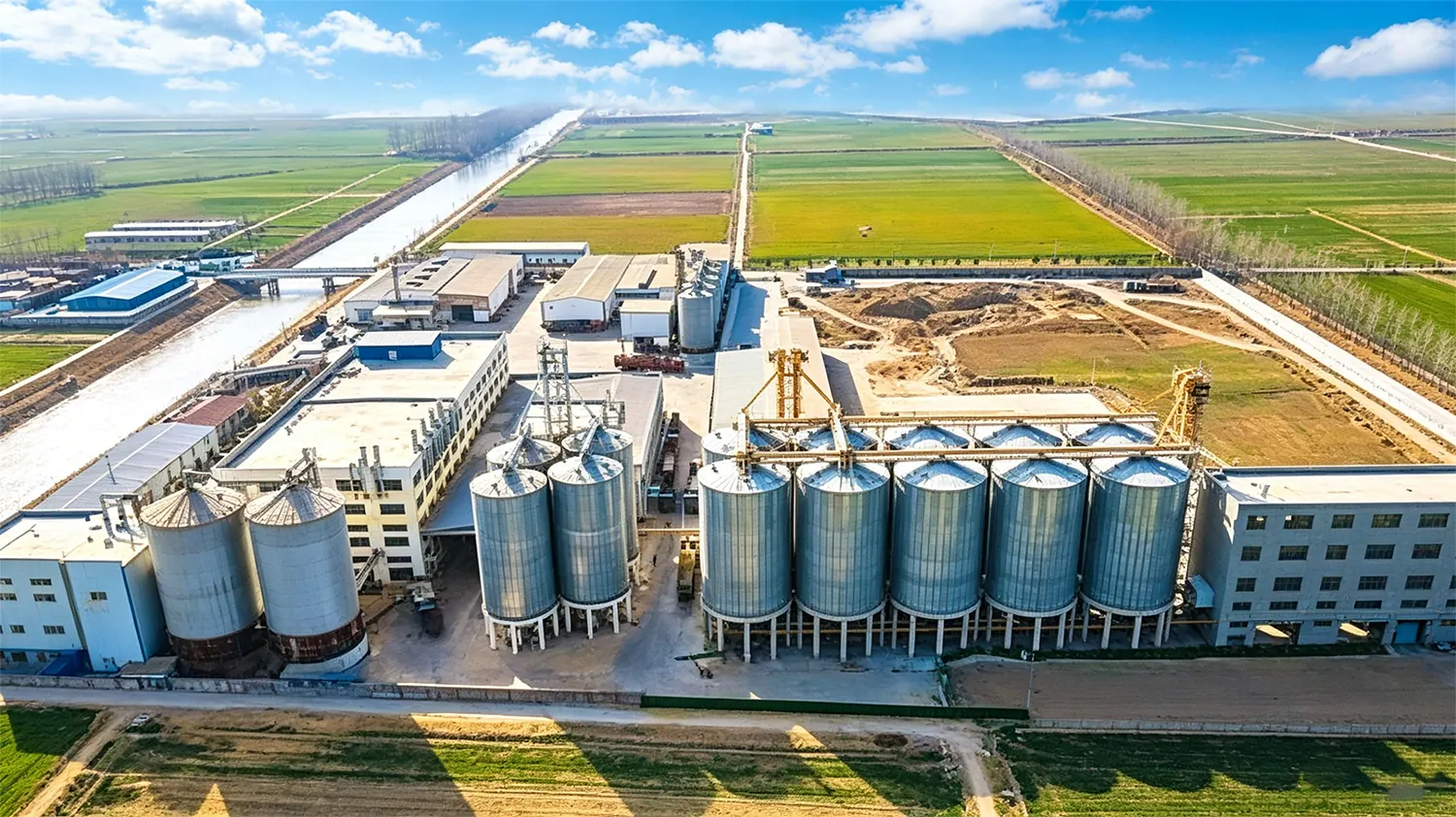
For commercial grain elevators and flour mill storage systems, the engineering complexity increases substantially. Multiple silo cells must be managed as an integrated system, with automated aeration scheduling, real-time quality tracking, and seamless integration with drying and handling equipment. The discharge system design — whether flat-bottom with sweep augers, hoppered-bottom, or mass-flow — must be optimized for wheat's specific flow characteristics, including its angle of repose (approximately 23–28°) and its tendency toward funnel-flow segregation in poorly designed hoppers.
Large-span spatial grid structures for bulk material stockyards represent an alternative to traditional silo storage for very large-volume operations. While these open or covered storage piles offer lower capital cost per ton, they require more sophisticated management practices to prevent moisture ingress, pest access, and quality degradation. Geomembrane covers, combined with forced aeration through embedded duct networks, can achieve storage losses comparable to enclosed silos when properly managed.
Installation and Commissioning Best Practices
The commissioning phase of a wheat storage installation is where theoretical design meets operational reality. A systematic commissioning protocol should include: structural integrity verification, air pressure testing of all sealed joints, calibration of temperature monitoring sensors against reference standards, fan performance verification against design specifications, and a Complete Corn Storage Guide: From Harvest to Long-Term St... functional test of all safety systems including emergency discharge and overpressure relief.
Floor levelness is a frequently overlooked but critical parameter. For perforated-floor aeration systems, floor levelness tolerances of ±3 mm over any 3-meter span are necessary to prevent air channeling through low spots. For duct-based systems, the duct alignment and support spacing must be verified to prevent deflection under grain loading that would alter airflow distribution patterns.
The initial loading procedure for a new silo requires particular care. The first 10–15% of grain should be loaded slowly and evenly to verify floor or duct performance and to prevent structural asymmetry from uneven loading pressures. During this phase, all monitoring systems should be operational and recording baseline data that will serve as the reference for subsequent storage management decisions.
Maintenance Protocols for Long-Term Performance
Preventive maintenance of wheat storage systems is not optional — it is a quality assurance requirement. A comprehensive maintenance program should address structural components, mechanical equipment, and monitoring systems on defined schedules.
Annual inspections should include: visual examination of all external surfaces for corrosion, mechanical damage, or sealant degradation; internal inspection of the silo liner for cracks, delamination, or pest harborage; verification of roof vent operation and bird screen integrity; testing of all fan motors, bearings, and belt drives; calibration check of temperature monitoring cables; and functional testing of level sensors, pressure relief valves, and emergency discharge systems.
Every five years, a more thorough assessment should include ultrasonic thickness testing of steel silo walls at high-wear zones (discharge openings, aeration plenum connections, and lower wall courses), sealant replacement on all bolted joints showing any deterioration, and complete recalibration of the temperature monitoring system against NIST-traceable reference standards.
Cost Factors and Return on Investment
The capital cost of wheat storage infrastructure varies dramatically with capacity, configuration, and specification level. As a general guide, bolted steel silos with basic aeration and temperature monitoring range from $35–55 per metric ton of storage capacity in most markets. Adding controlled atmosphere capability, automated aeration control