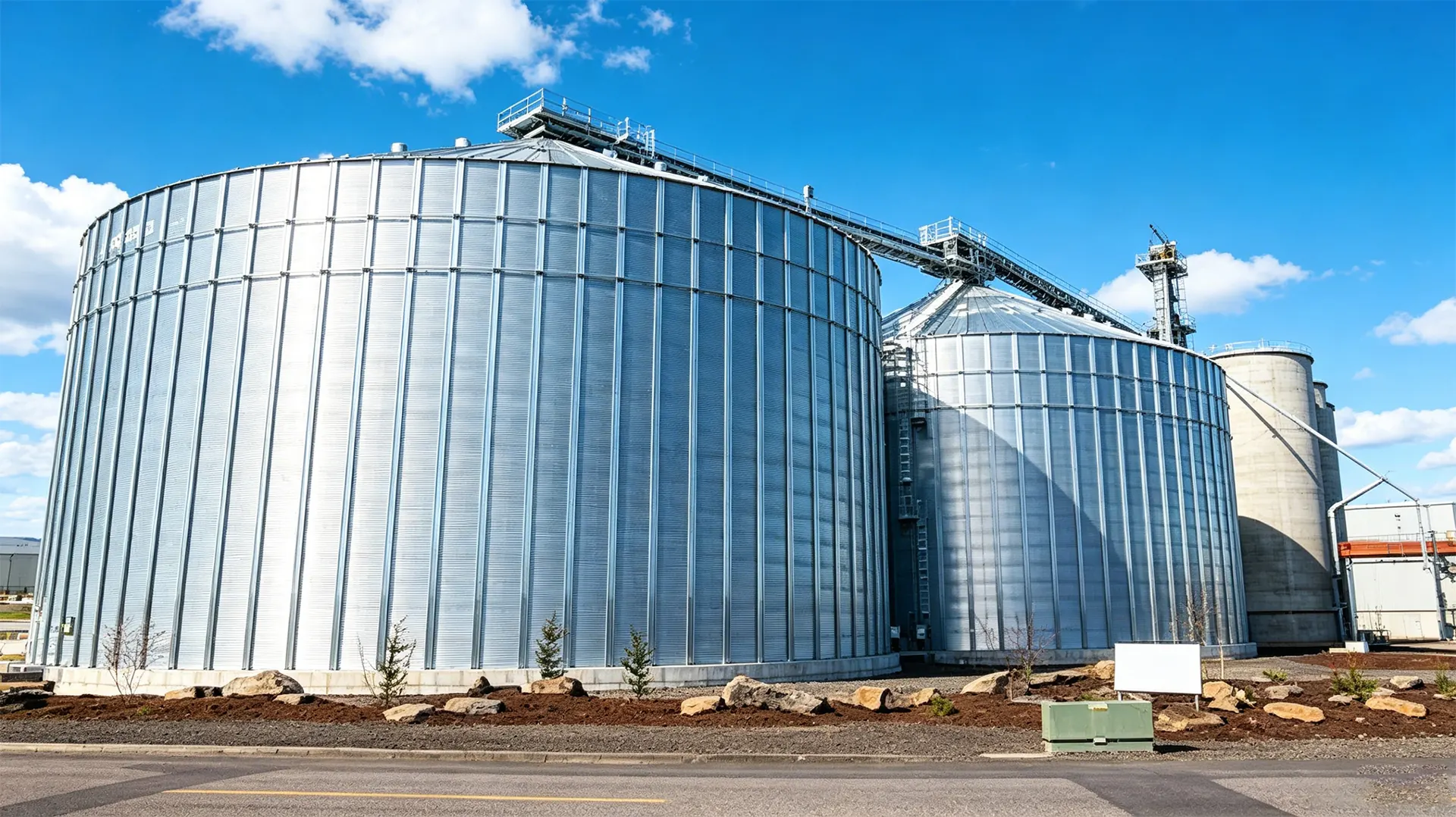

Proper aeration is the single most critical factor in preserving Dust Dust Explosion Prevention in Grain Storage Facilities: En... Prevention in Grain Storage Facilities: En... quality during long-term storage. Understanding the engineering principles behind airflow, static pressure, and moisture migration can mean the difference between premium-grade grain and costly spoilage losses.
1. The Science Behind Grain Aeration: Why Proper Airflow Matters
Aeration in Dust Dust Explosion Prevention in Grain Storage Facilities: En... Prevention in Grain Storage Facilities: En... storage is fundamentally a heat and mass transfer process. The aeration process involves forcing ambient air through a grain mass to equalize temperature, reduce moisture migration, and maintain grain quality. While many operators associate aeration solely with cooling, its engineering function extends far beyond simple temperature reduction.
When Dust Dust Explosion Prevention in Grain Storage Facilities: En... Prevention in Grain Storage Facilities: En... is stored in a silo, it creates a porous bed through which air can flow. The grain mass itself acts as a filter and heat exchanger. As air moves through the interstitial spaces between kernels, it absorbs heat and moisture, carrying thermal energy away from the grain bulk. This process follows the principles of psychrometrics, where the relationship between air temperature, relative humidity, and equilibrium moisture content determines whether the air will dry, condition, or rewet the grain.
The same fundamental principles that govern aeration in water treatment—where air is introduced to strip dissolved gases, oxidize contaminants, and promote biological treatment—apply conceptually to grain storage. In both applications, the aeration process controls the interaction between a gas phase and a solid or liquid medium to achieve a desired quality outcome. Understanding what is aeration in water treatment helps engineers appreciate the universal importance of gas-liquid and gas-solid mass transfer principles across industrial applications.
In grain storage, the primary objectives of aeration include cooling the grain mass to slow biological activity, preventing moisture migration caused by temperature gradients, removing musty odors, and conditioning grain before processing. Each objective requires specific airflow rates, fan operating strategies, and control logic to achieve optimal results.
2. Understanding Airflow Resistance and Static Pressure in Grain Bins
Grain resists airflow. This resistance, measured as static pressure in inches of water column (in. w.c.), is the fundamental parameter that determines fan selection and energy consumption. The depth of grain, the type of grain, fines concentration, and fill method all influence the static pressure a fan must overcome.
Deeper grain columns create higher resistance. Corn stored at 40 feet depth may generate static pressures of 6–9 in. w.c., while the same depth of wheat might produce 4–6 in. w.c. This difference occurs because smaller kernels pack more tightly, reducing the void space through which air can flow. Oilseeds like soybeans present unique challenges due to their tendency to compress and create uneven airflow paths.
Fines—broken kernels, dust, and chaff—dramatically increase resistance. When fines concentrate in specific areas (typically near the center during filling), they create zones of high resistance that short-circuit airflow. This phenomenon, known as preferential airflow, means some grain receives excessive aeration while other zones remain untreated. Proper grain management during loading, including the use of spreaders and core removal, is essential for maintaining uniform airflow resistance.
3. Aeration System Design: Calculating CFM Requirements for Different Grains
The foundation of aeration system design is determining the required airflow rate, expressed in cubic feet per minute per bushel (CFM/bu). This calculation depends on the grain type, storage duration, climate conditions, and intended aeration objective.
| Grain Type | Cooling CFM/bu | Drying CFM/bu | Typical Static Pressure (in. w.c.) |
|---|---|---|---|
| Corn | 0.1–0.2 | 0.5–1.0 | 6–10 |
| Wheat | 0.1–0.2 | 0.5–1.0 | 5–8 |
| Soybeans | 0.1–0.2 | 0.3–0.5 | 5–8 |
| Rice | 0.05–0.1 | 0.3–0.5 | 4–7 |
| Barley | 0.1–0.2 | 0.5–1.0 | 5–8 |
For long-term storage of corn in temperate climates, engineers typically specify 0.1 CFM/bu for cooling aeration. This rate provides sufficient airflow to push a cooling front through the grain mass within 150–200 hours, aligning with favorable ambient temperature windows. For drying applications, airflow rates increase to 1.0 CFM/bu or higher to provide the volume of air necessary to carry away moisture evaporated from the grain.
When calculating total system CFM requirements, multiply the desired CFM/bu by the total bushels stored. A 10,000-bushel corn silo requiring 0.1 CFM/bu needs a fan delivering 1,000 CFM at the system's total static pressure. This calculation forms the basis for fan selection and duct sizing.
4. Fan Selection and Sizing: Matching Equipment to Your Storage Capacity
Selecting the correct fan requires matching the fan's performance curve to the system's static pressure and CFM requirements. Two primary fan types serve grain aeration applications: centrifugal fans and axial flow fans.
Centrifugal fans excel in high-static-pressure applications. Their ability to deliver consistent airflow despite varying resistance makes them ideal for deep grain bins and systems with partially perforated ducts. These fans operate efficiently at static pressures ranging from 4 to 14 in. w.c., covering the majority of grain aeration scenarios. Backward-curved centrifugal fans offer the highest efficiency, often reaching 65–75% total efficiency at design conditions.
Axial flow fans provide high airflow at lower static pressures. They perform best in shallow grain depths (under 20 feet) and full-perforated floor systems where total static pressure remains below 5 in. w.c. While axial fans consume less horsepower per CFM at low pressures, their performance drops sharply as static pressure increases, making them unsuitable for deep bins or high-resistance grain configurations.
When evaluating aeration principles pdf documentation from engineering resources, pay close attention to fan performance curves rather than relying solely on manufacturer horsepower ratings. A fan's actual operating point—where its performance curve intersects the system resistance curve—determines real-world airflow delivery. Oversized fans operating against closed dampers waste energy, while undersized fans fail to deliver adequate airflow, leaving grain vulnerable to spoilage.
5. Perforated Flooring vs. Duct Systems: Choosing the Right Distribution Method
The air distribution system determines how evenly air enters the grain mass. Two primary configurations dominate modern grain storage: fully perforated floors and duct-based distribution systems.
Fully perforated floor systems provide the most uniform airflow distribution. In these systems, the entire silo floor consists of perforated metal panels supported on a plenum chamber. Air enters the grain mass across the full cross-sectional area, creating a uniform front that moves vertically through the grain. This design minimizes dead zones and ensures every kernel receives aeration. Flat-bottom silos with full perforated floors are ideal for long-term storage operations where grain quality preservation is paramount.
Duct-based systems offer a cost-effective alternative for smaller installations or hopper-bottom silos. Semi-circular or rectangular ducts arranged on the silo floor distribute air in radial patterns. While duct systems reduce initial construction costs, they create uneven airflow distribution—grain near the ducts receives significantly more airflow than grain between ducts. Engineers compensate by sizing ducts to deliver higher CFM per linear foot, but some non-uniformity remains inherent to the design.
The choice between perforated floors and duct systems depends on storage duration, grain value, and operational requirements. High-value grain stored for six months or longer benefits from the uniformity of perforated floors, while short-term storage of feed grain may justify the cost savings of duct systems.
6. Automated Aeration Controls: Leveraging Temperature and Moisture Sensors
Modern aeration systems integrate automated controls that optimize fan operation based on real-time conditions. These systems combine temperature cables, moisture sensors, and ambient weather data to make intelligent decisions about when to run fans.
Temperature cables suspended within the grain mass provide vertical temperature profiles at multiple locations. When temperature differentials exceed preset thresholds—typically 5–7°F between the grain core and surface—the control system activates fans to push cooling air through the bin. This targeted approach eliminates unnecessary fan operation during unfavorable ambient conditions, reducing energy consumption by 30–50% compared to manual operation.
Advanced controllers incorporate ambient temperature and relative humidity sensors to calculate the equilibrium moisture content of the grain. When ambient air conditions would cause the grain to rewet rather than dry, the system automatically shuts down fans. This logic prevents the common mistake of running fans during humid summer nights, which can actually increase grain moisture content and promote spoilage.
The integration of automated controls with remote monitoring platforms allows operators to manage multiple silos from a central location. Alarms notify personnel of temperature excursions, fan failures, or adverse weather conditions, enabling rapid response before grain quality deteriorates.
7. Seasonal Aeration Strategies: Cooling, Drying, and Conditioning Protocols
Effective aeration requires different strategies throughout the calendar year. Understanding seasonal protocols ensures operators maximize grain protection while minimizing energy expenditure.
Fall cooling represents the most critical aeration period. Freshly harvested grain often arrives at storage temperatures of 80–95°F, creating ideal conditions for insect reproduction and mold growth. The goal is to reduce grain temperature to 50–60°F by late fall using the coolest available ambient air. This typically requires 100–150 hours of fan operation during October and November, depending on climate and airflow rate.
Winter cooling pushes grain temperatures even lower, targeting 30–40°F in northern climates. At these temperatures, insect activity ceases completely, and mold growth slows to negligible rates. Operators should take advantage of cold ambient conditions in December through February to achieve these low temperatures, even if it means running fans during sub-freezing weather. The grain mass retains enough thermal mass to prevent freezing damage while achieving deep cooling.
Spring and summer conditioning focuses on preventing moisture migration. As ambient temperatures rise, the grain near the silo walls and surface warms while the grain core remains cold. This temperature gradient drives moisture migration, where warm air moving inward picks up moisture and deposits it in the cool core, creating spoilage-prone zones. Continuous low-level aeration (0.05 CFM/bu) or periodic fan operation prevents these gradients from developing.
8. Energy-Efficient Aeration: Reducing Operating Costs Without Sacrificing Grain Quality
Energy consumption represents the primary operating cost of aeration systems. Optimizing fan selection, duct design, and control strategies can reduce electricity usage by 40–60% while maintaining or improving grain quality outcomes.
Variable frequency drives (VFDs) offer the most significant energy savings potential. By adjusting fan speed to match actual airflow requirements, VFDs reduce power consumption according to the fan affinity laws: power varies with the cube of speed. Running a fan at 80% speed consumes only 51% of full-speed power. For operations that require different airflow rates