Moisture content is the single most critical factor determining whether Grain Bin Foundation Settlement: Prevention and Remediati... Bin Foundation Settlement: Prevention and Remediati... Bin Foundation Settlement: Dust Dust Explosion Prevention in Grain Storage Facilities: En... Prevention in Grain Storage Facilities: En... and Remediati... remains viable during storage or deteriorates into a total loss. After two decades of designing and implementing grain storage systems across six continents, I can state unequivocally: mastering moisture management separates profitable operations from catastrophic spoilage events. This guide delivers the technical depth you need to protect your inventory.
The Critical Link Between Moisture Content and Safe Grain Storage
Moisture content in Dust Dust Explosion Prevention in Grain Storage Facilities: En... Prevention in Grain Storage Facilities: En... is expressed as a percentage of the grain's total weight, calculated using the wet basis method: (weight of water / total weight) × 100. This metric governs every biological and chemical process occurring inside a storage container. When moisture levels exceed safe thresholds, respiration rates accelerate, mold colonies proliferate, and insect populations explode.
The relationship between moisture and spoilage is not linear—it is exponential. At 14% moisture content, corn may remain stable for 12 months under proper aeration. At 16%, that same corn may develop significant mold within 30 days. At 18%, spontaneous heating can occur within 72 hours, creating conditions for aflatoxin-producing Aspergillus species.
Understanding this relationship is fundamental for anyone managing moisture content and safe storage containers in commercial operations. The container itself—whether a steel silo, concrete tank, or flat warehouse—must be engineered not just to hold grain, but to actively manage the moisture equilibrium between the grain mass and its environment.
Understanding Equilibrium Moisture Content
EMC Fundamentals
Equilibrium Moisture Content (EMC) represents the moisture level at which grain neither gains nor loses water when exposed to air of a specific temperature and relative humidity. This concept is the cornerstone of all safe storage protocols. Grain is hygroscopic—it continuously exchanges moisture with surrounding air until equilibrium is reached.
The sorption isotherm curves for each grain species define the precise relationship between relative humidity, temperature, and equilibrium moisture content. For example, wheat at 25°C and 65% relative humidity will equilibrate at approximately 13.5% moisture content. At the same temperature but 75% relative humidity, the EMC rises to approximately 15.2%—crossing into the danger zone for fungal growth.
| Grain Type | Safe MC (%) | Critical MC (%) | Danger Zone (%) |
|---|---|---|---|
| Wheat | 12.5 | 14.0 | 15.5+ |
| Corn (Maize) | 13.0 | 15.0 | 16.5+ |
| Rice (Paddy) | 13.0 | 14.5 | 15.5+ |
| Soybeans | 12.0 | 13.0 | 14.0+ |
| Barley | 12.5 | 14.0 | 15.0+ |
| Sorghum | 12.5 | 14.0 | 15.0+ |
| Canola/Rapeseed | 8.0 | 10.0 | 11.0+ |
Temperature-Moisture Interaction
Temperature modifies the safe moisture threshold significantly. The rule of thumb I apply in system design: for every 5°C increase in grain temperature, the safe moisture content decreases by approximately 0.5%. This means corn stored at 30°C should not exceed 12% moisture for safe long-term storage, while the same corn at 10°C can tolerate up to 14%.
This interaction creates the concept of the "moisture-temperature safety envelope"—a three-dimensional safe operating zone that sophisticated monitoring systems track continuously. Modern steel silos equipped with cable-based temperature sensing and automated aeration controls maintain grain within this envelope by triggering fan operation when conditions approach boundary limits.
Moisture Content Measurement and Monitoring
Moisture Content & Safe Storage Meter Technologies
Accurate moisture measurement is non-negotiable for safe storage. The moisture content and safe storage meter market offers several technologies, each with specific applications and limitations:
Capacitance Meters: These measure the dielectric properties of grain, which correlate strongly with moisture content. Modern capacitance meters achieve ±0.5% accuracy within calibrated ranges. They are the workhorse of grain receiving operations due to their speed (10–30 seconds per reading) and portability. However, they require calibration for specific grain types and are sensitive to grain temperature and bulk density variations.
Resistance Meters: Based on the electrical resistance of grain samples, these meters crush a sample and measure resistance between two electrodes. They offer good accuracy (±0.3%) but are slower and require sample crushing. They excel in laboratory settings where precision outweighs speed.
Near-Infrared (NIR) Spectroscopy: NIR meters analyze the absorption of specific wavelengths by water molecules in grain. They provide non-destructive testing with results in under 60 seconds. Advanced NIR systems can simultaneously measure moisture, protein, oil, and starch content. Their higher cost is justified in high-throughput operations where multi-parameter analysis adds value.
Microwave Measurement: Microwave moisture meters penetrate deeper into grain samples, providing volumetric rather than surface measurements. They are particularly effective for measuring moisture in bulk grain flows on conveyors, enabling real-time process control during drying and transfer operations.
Sampling Protocols for Accurate Assessment
Even the best meter produces meaningless data if the sample is not representative. I enforce the following protocols on every project:
1. Collect a composite sample from at least 10 locations within a lot.
2. For trucks: probe at multiple depths and positions using a grain trier.
3. For silos: sample during discharge when grain is in motion, capturing material at timed intervals.
4. Seal samples immediately in airtight containers—moisture loss begins within minutes of exposure to ambient air.
5. Test within 24 hours of collection for reliable results.
Storage Container Engineering for Moisture Control
Types of Storage Containers and Their Moisture Management Capabilities
Selecting the appropriate moisture content and safe storage containers requires understanding how each container type interacts with moisture dynamics:
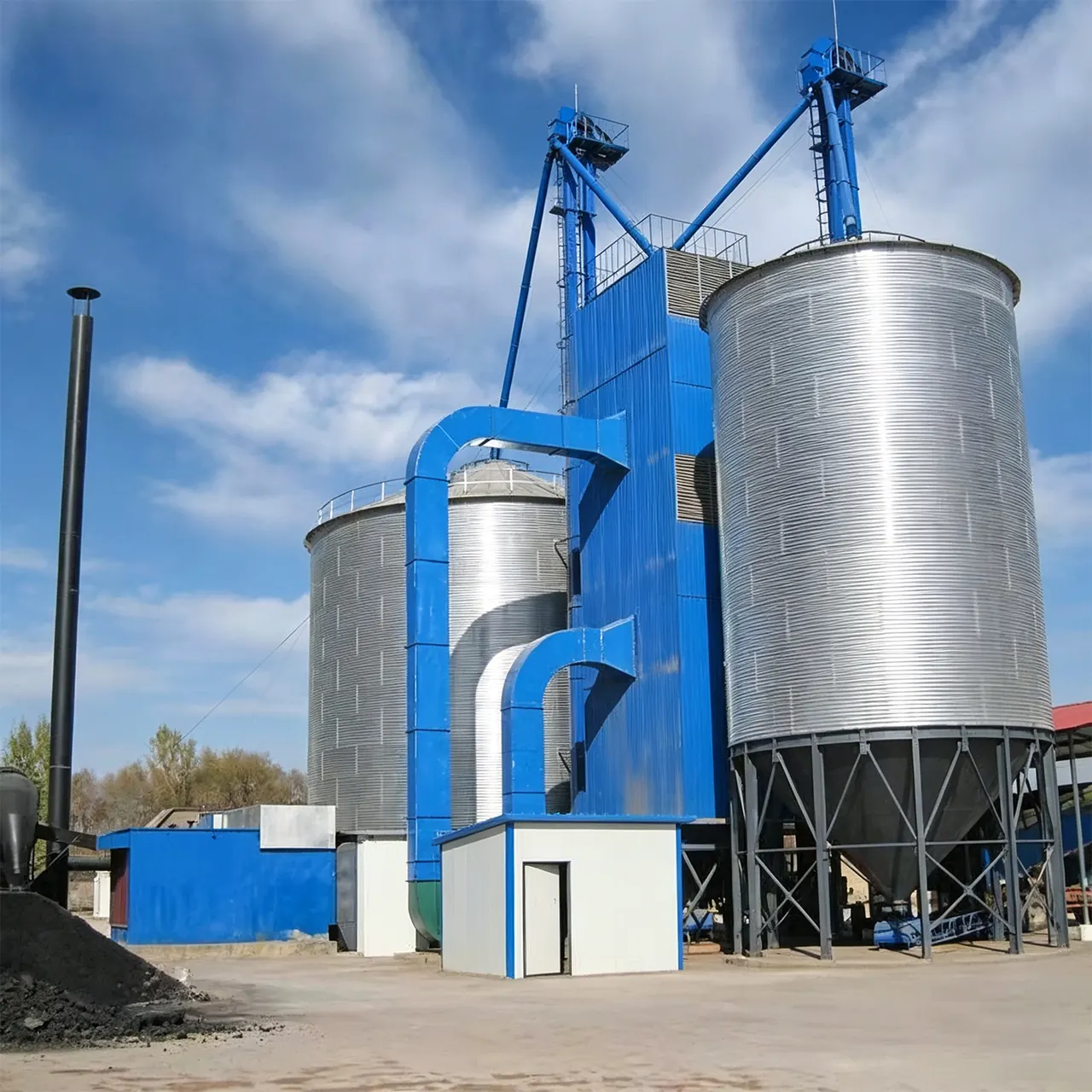
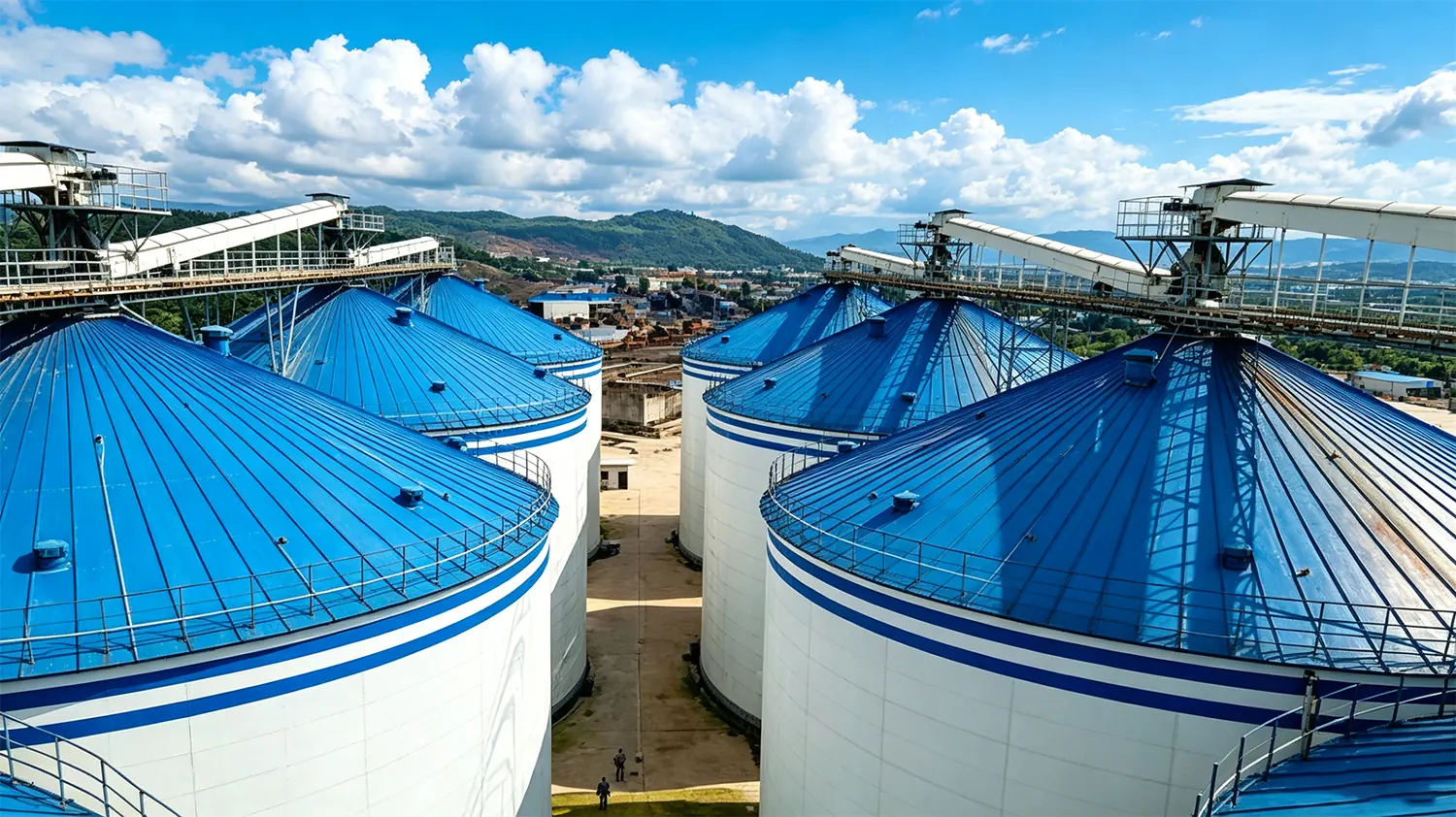
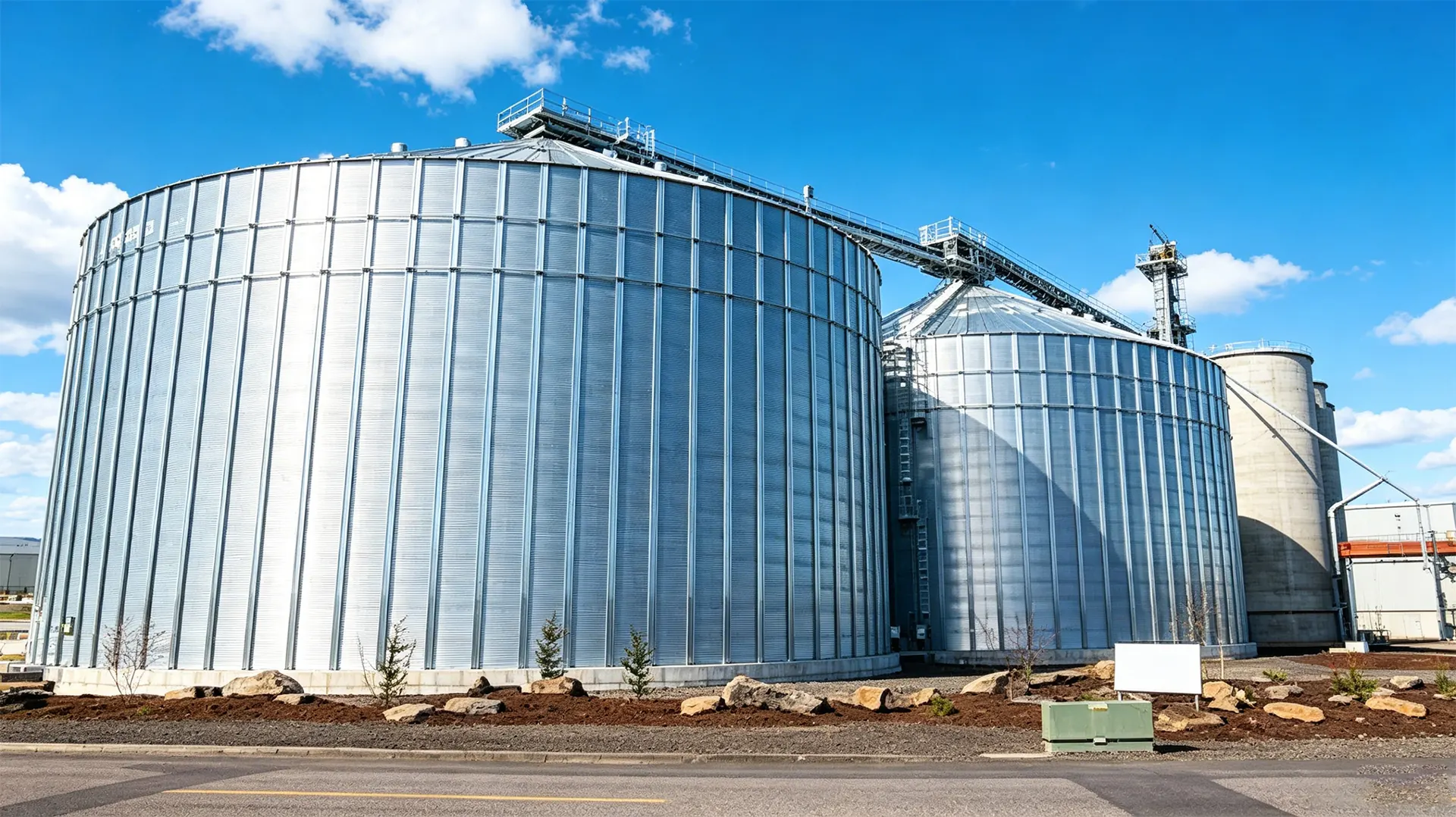
Galvanized Steel Silos: The industry standard for commercial grain storage. High-quality steel silos feature double-sided galvanized coating (minimum 275 g/m² zinc mass) that provides decades of corrosion resistance. The sealed construction minimizes moisture infiltration from rain and ground water. When equipped with aeration floors and temperature monitoring cables, steel silos provide the most controlled storage environment available.
Bolted Steel Silos: Ideal for operations requiring flexibility. Bolted panels allow for disassembly, relocation, and capacity expansion. Modern gasket systems achieve airtight ratings suitable for controlled atmosphere storage, where oxygen levels are manipulated to suppress insect activity regardless of moisture conditions.
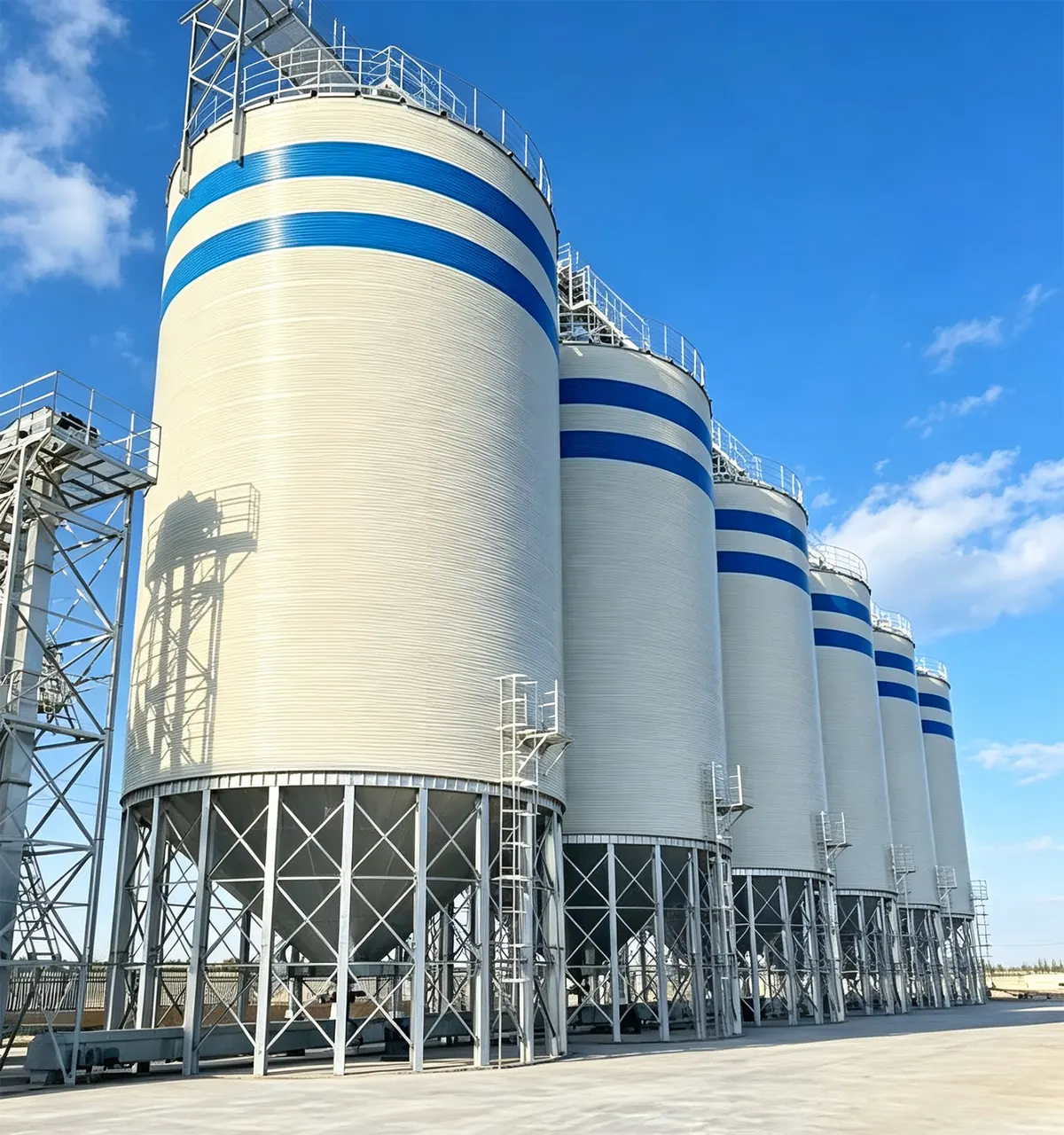
Spiral (Lipp) Silos: Conformed using a cold-forming spiral technique, these silos achieve exceptional airtight seams without field welding. The continuous spiral joint eliminates potential leak paths, making them superior for moisture-sensitive products and aeration-dependent storage.
Concrete Silos: Preferred for high-capacity, long-term storage of bulk grains. Concrete's thermal mass moderates temperature fluctuations, reducing condensation risk on internal walls. However, concrete requires careful sealing to prevent moisture wicking from foundations.
Water Storage Containers for Home Use: Principles Applied
The engineering principles governing grain moisture control apply equally to water storage containers for home use. Just as grain must be protected from excess moisture, stored water must be protected from contamination, light exposure, and temperature extremes that promote biological growth.
Types of water storage systems for residential applications include:
• Food-grade polyethylene tanks (most common, UV-stabilized)
• Stainless steel tanks (premium, longest lifespan)
• Fiberglass tanks (corrosion-resistant, suitable for underground installation)
• Bladder/flexible tanks (space-efficient, temporary applications)
• Rainwater harvesting barrels (50–300 gallon capacity)
For water storage containers for home use, the material must be FDA-approved or NSF-certified for potable water contact. Dark or opaque construction prevents algae growth. Sealed lids with insect screens maintain water quality while allowing pressure equalization.
How to Sanitize Water Storage Containers
Proper sanitation prevents biofilm formation and pathogen proliferation. The CDC-recommended protocol for how to sanitize water storage containers involves:
Step 1: Wash with warm water and dish soap. Scrub all interior surfaces.
Step 2: Rinse thoroughly with clean water.
Step 3: Sanitize with a solution of 1 tablespoon unscented liquid chlorine bleach per gallon of water.
Step 4: Ensure all interior surfaces contact the sanitizer for at least 30 seconds.
Step 5: Drain and air dry completely before filling.
Step 6: Repeat sanitization every 6 months for containers in active use.
This protocol mirrors the sanitation requirements for grain storage containers, where residual organic material from previous storage cycles can harbor mold spores and insect eggs that compromise new grain deposits.
Grain Drying Systems: Reducing Moisture to Safe Levels
Drying Technologies and Selection Criteria
When harvest moisture exceeds safe storage thresholds—which occurs frequently in temperate climates—mechanical drying becomes essential. The best moisture content and safe storage outcomes result from matching the drying technology to the grain type, throughput requirements, and quality targets.
Continuous Flow Dryers: The backbone of commercial grain drying. Mixed-flow and cross-flow configurations process grain in continuous batches, reducing moisture from 25%+ down to safe storage levels in a single pass (or two passes for very wet grain). Modern continuous dryers incorporate discharge moisture sensors and automatic temperature control to prevent over-drying and kernel damage.
Batch Dryers: Suitable for smaller operations and specialty grains. Grain is loaded into a drying chamber, dried to target moisture, cooled, and discharged. While slower than continuous systems, batch dryers offer superior uniformity and are gentler on fragile grains like malting barley and seed corn.
In-Bin Drying: Uses ambient air or slightly heated air forced through a grain mass in a storage silo. With a deep grain bed (3+ meters), in-bin drying achieves gradual, uniform moisture reduction. This method preserves grain quality exceptionally well but requires careful management to prevent overdrying at the bottom while upper layers remain too wet.
Low-Temperature Drying: Maintains grain temperature below 35°C using ambient or minimally heated air over extended periods (days to weeks). This approach maximizes germination retention in seed grain and minimizes stress cracking in rice destined for milling.
Drying System Sizing
Proper dryer sizing requires calculating the evaporative load: the mass of water that must be removed per hour. The formula is:
Evaporation rate (kg/h) = Grain throughput (kg/h) × (Initial MC% − Final MC%) / (100 − Final MC%)
For example, drying 20 tons/hour of corn from 22% to 14% moisture requires removing approximately 1,860 kg of water per hour. System design must account for ambient humidity, available heat source efficiency, and the psychrometric properties of the drying air.
Aeration: The Active Defense Against Moisture Migration
How Aeration Prevents Moisture Problems
Aeration—the forced movement of ambient air through stored grain—serves three critical functions: temperature control, moisture equalization, and Dust Explosion Prevention in Grain Storage Facilities: En... of moisture migration. Even grain stored at safe moisture levels can develop problems if temperature differentials within the silo drive moisture movement.
Moisture migration occurs when temperature gradients exist within the grain mass. Warm air rises through the grain, carrying moisture from warm zones to cooler zones near the silo walls and roof. This condensation creates localized high-moisture pockets where mold flourishes—often undetected until significant damage has occurred.
Aeration systems counteract this by maintaining uniform grain temperature. Design criteria for effective aeration:
• Minimum airflow rate: 0.1–0.2 CFM/bushel for natural aeration
• Higher rates (0.5–1.0 CFM/bushel) for rapid cooling of warm grain
• Duct design ensuring uniform air distribution across the silo floor
• Automated controls that operate fans only when ambient conditions provide drying potential
Intelligent Aeration Control Systems
Modern steel silos integrate aeration with comprehensive monitoring systems. Temperature cables spaced vertically through the grain mass provide real-time thermal profiles. The control system compares grain temperature and moisture against ambient conditions, activating fans only when the wet-bulb temperature of ambient air is below the grain temperature—ensuring aeration cools rather than humidifies the grain.
This intelligent approach can reduce aeration energy consumption by 40–60% compared to timer-based systems while providing superior moisture management. The return on investment for automated aeration control typically falls within 1–2 storage seasons through reduced energy costs and spoilage prevention.
Best Practices for Moisture Content & Safe Storage
Operational Protocols
Based on field experience across thousands of installations, I recommend these non-negotiable protocols:
1. Pre-Storage Inspection: Clean