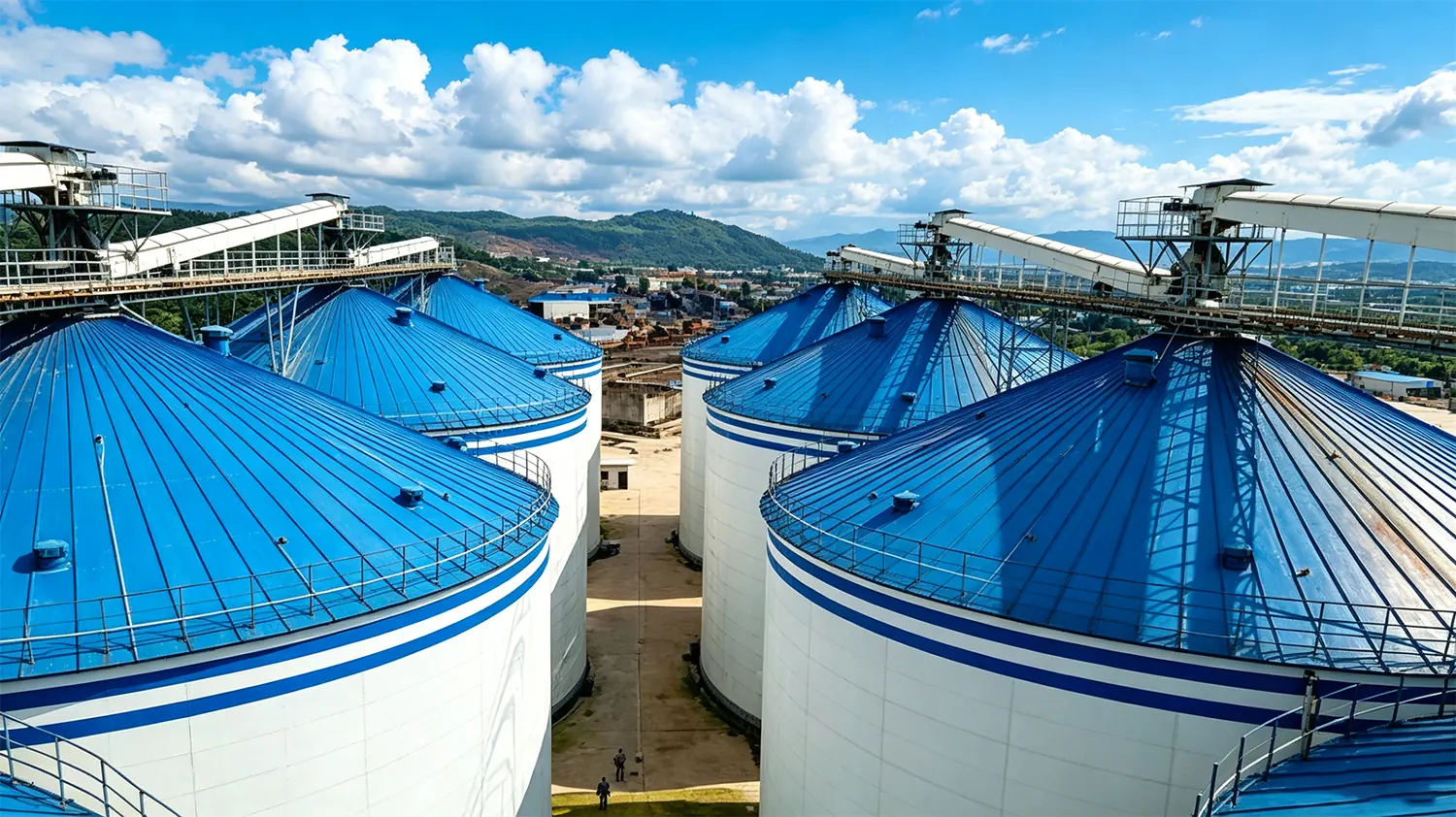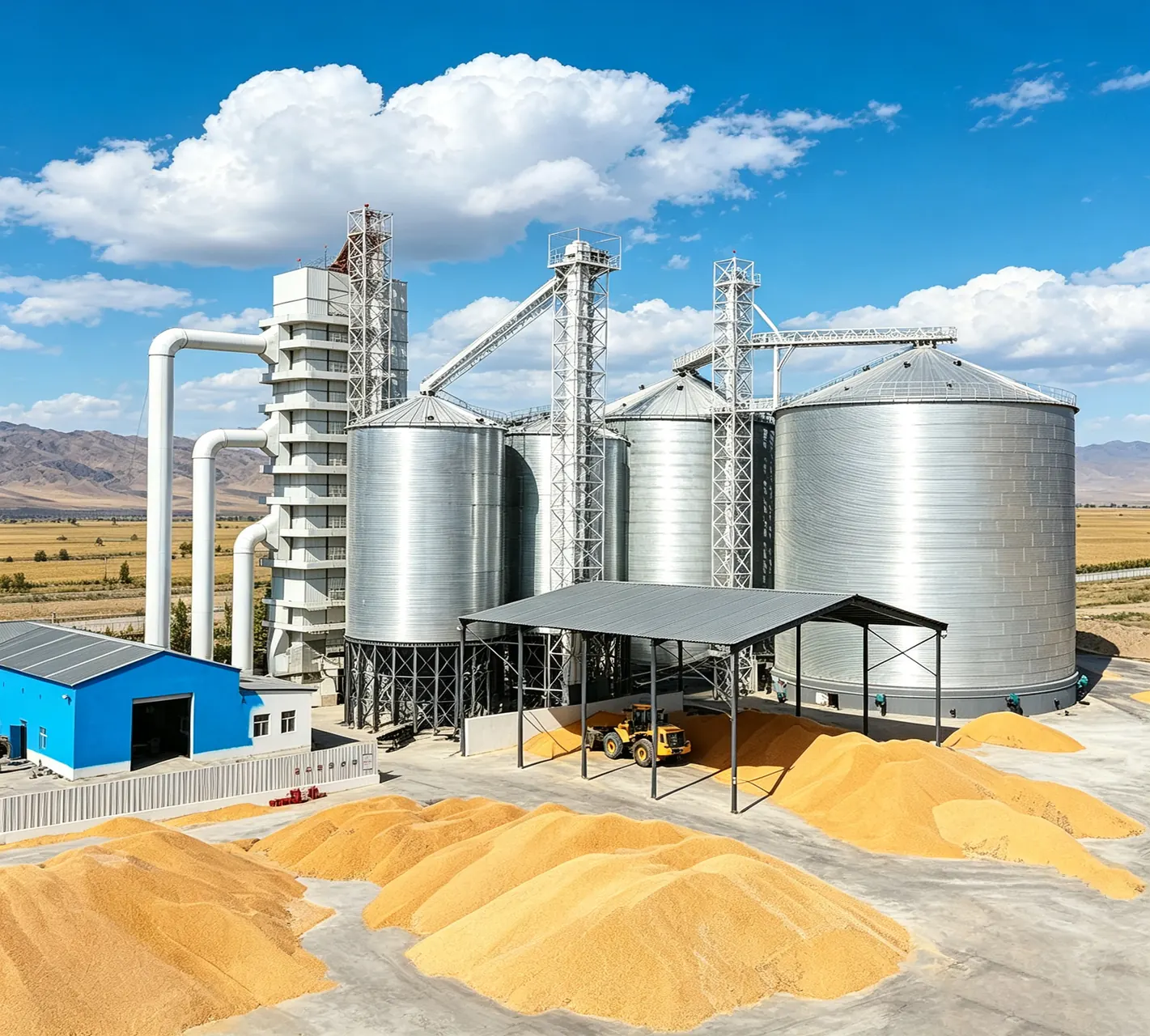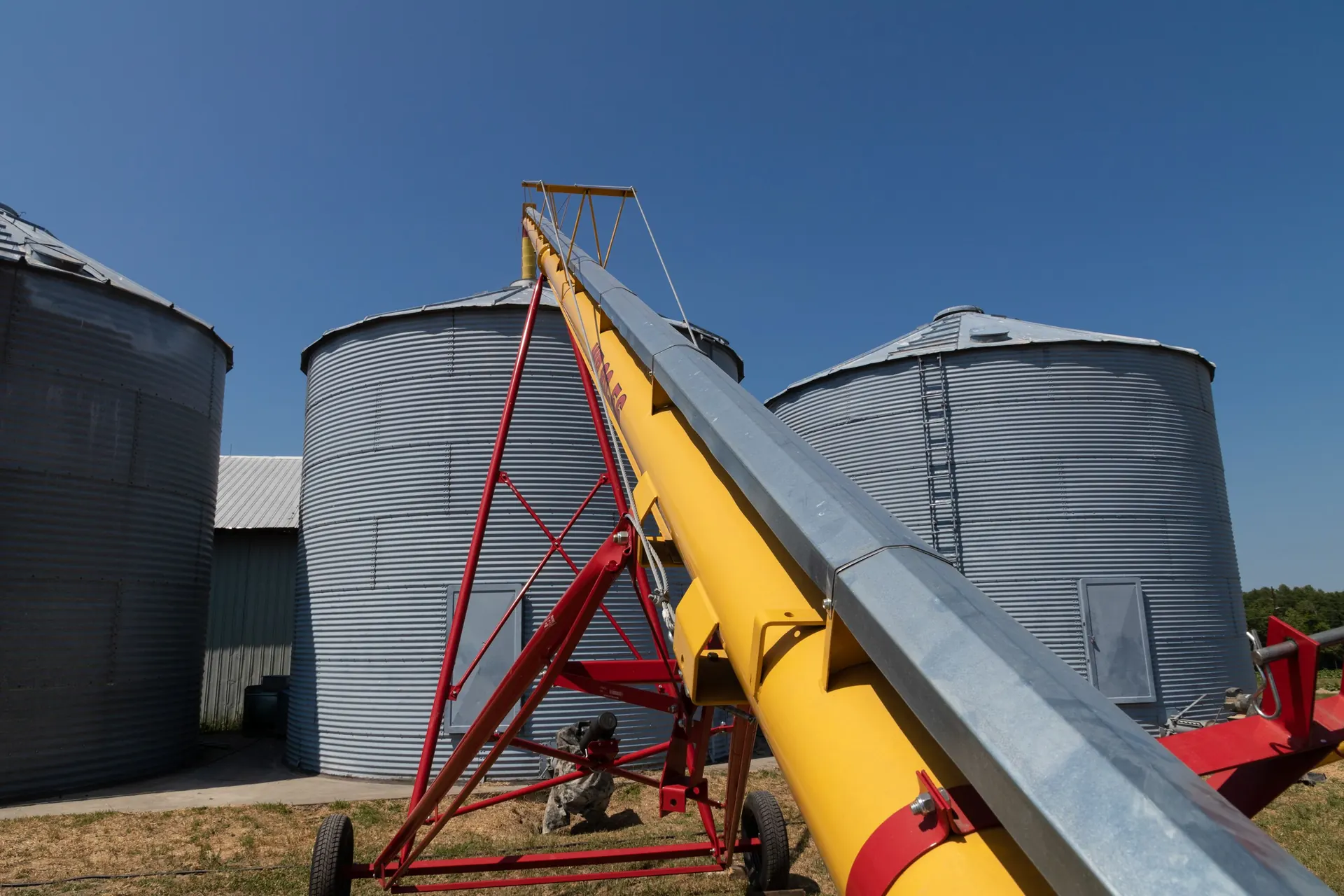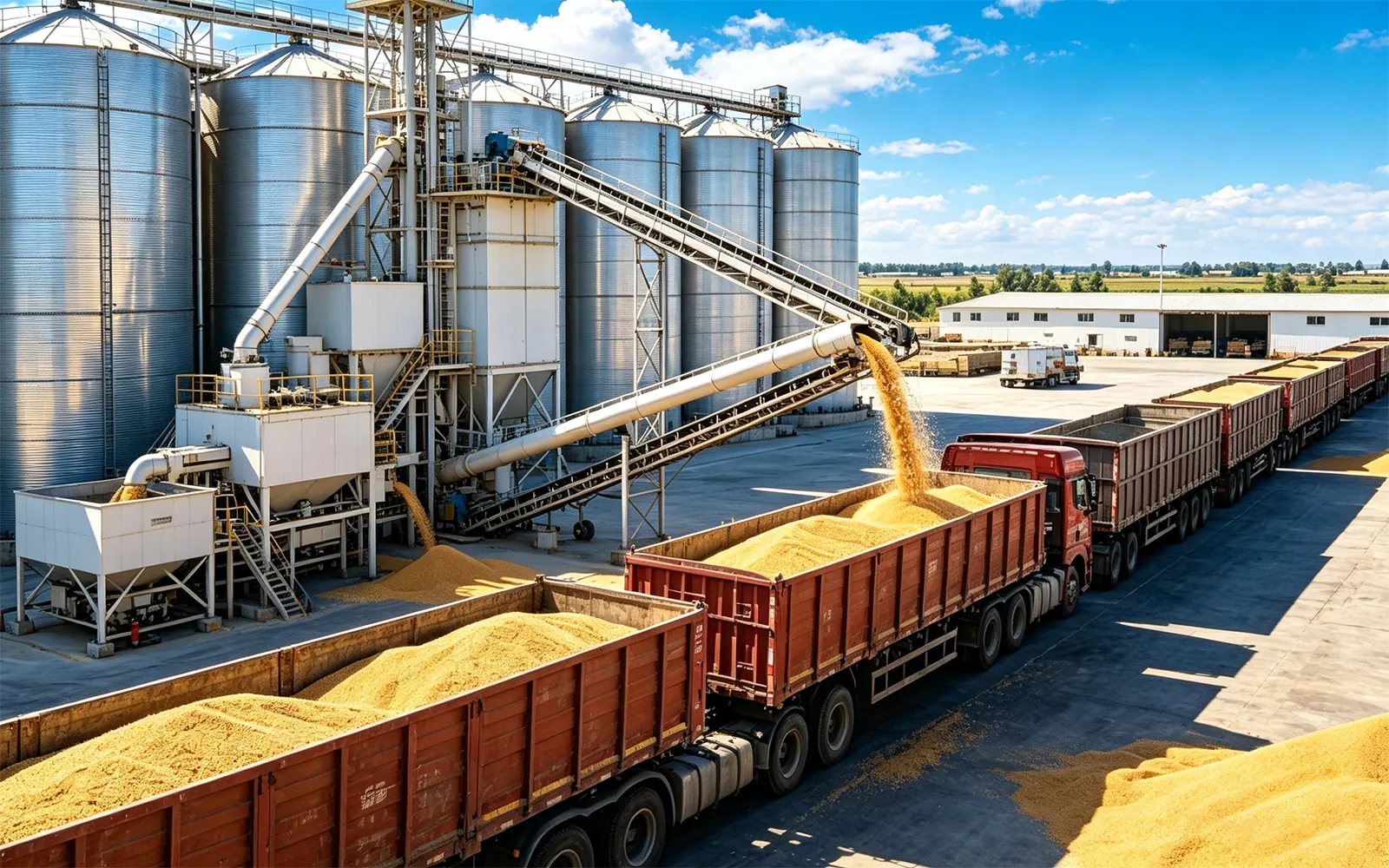
Wheat flour storage demands a Different Types of Silos Used in Cement, Mining & Agr... engineering approach than storing wheat in a bin. Flour is a milled, hygroscopic, high-surface-area powder with a lipid fraction that oxidises, a bulk density that resists airflow, and a particle size that makes it both a pest magnet and a dust-explosion hazard. Getting wheat flour storage right means controlling moisture content and water activity, holding temperature down, managing relative humidity in the headspace, and running a disciplined integrated pest management programme. This Purchase High-Quality Steel Silo: An Engineer's Guide covers the target specifications, the equipment options, the aeration and fumigation realities, and the monitoring routines that keep flour in specification from mill to bake.
Why Wheat Flour Storage Is Not the Same as Grain Storage
Wheat kernels are protected by a seed coat and store at 12–13% moisture with a bulk porosity of roughly 40%, which is why conventional aeration and fumigation work so well in grain Different Types of Silos Used in Cement, Mining & Agr.... Wheat flour has none of those advantages:
- No protective outer layer. Milling ruptures the endosperm, exposes starch granules and lipids, and multiplies the specific surface area by several orders of magnitude. Moisture and oxygen move in fast.
- Very low porosity. Bulk flour has an inter-particle void fraction of roughly 25–35% and a bulk density of about 550–700 kg/m³ depending on