
A Dust Explosion Prevention in Grain Storage Facilities: En... inventory figure is only as trustworthy as the level sensor that produced it. Level sensor calibration is the disciplined process of tying a raw electrical signal — milliamps, echo time, or pulse count — back to a physical grain depth inside a bin or silo, and it is the single most neglected task in most grain storage operations. Get it right and your inventory, your drying decisions, and your aeration strategy all rest on solid numbers.
Level Sensor Calibration 101: Why Accurate Grain Bin and Silo Readings Start With a Baseline
Every level sensor is a transducer. It does not Measure Your Cement Mill and Cement Classifier "tonnes of corn." It measures a physical phenomenon — the capacitance of the material between two probes, the time of flight of an acoustic pulse, the dielectric reflection of a radar wave, or the angle of a mechanical plumb bob. Calibration is the act of establishing a known mathematical relationship between that raw measurement and a real, verified Dust Explosion Prevention in Grain Storage Facilities: En... depth or volume.
A baseline is what makes that relationship meaningful over time. Without a documented baseline — the sensor's output at a known empty condition (zero) and at a known full or reference condition (span) — you have no way of knowing whether a reading of 62% is still 62%, or whether it drifted to 65% after three months of dust accumulation on the antenna face. Calibration is not a one-time commissioning step; it is the anchor point against which every subsequent reading is judged.
In grain storage, calibration has three distinct layers, and confusing them is a common source of error:
- Sensor calibration — the instrument's own zero and span against a traceable reference.
- Geometry calibration — mapping sensor output to the actual volume of a non-cylindrical space, including cone bottoms, hopper transitions, and offset fill points.
- Product calibration — accounting for the fact that wheat, corn, soybeans, canola, and barley all present different dielectric constants, bulk densities, and angles of repose.
A sensor that is perfectly calibrated for corn at 15% moisture will not necessarily read accurately for soybean meal or for corn at 24% moisture straight out of the field. That distinction separates a technician who turns a screw until the number "looks right" from an engineer who understands the physics.

The Hidden Costs of Uncalibrated Level Sensors in Grain Storage and Material Handling
Sensor drift rarely announces itself. It shows up as a slow erosion of confidence in the data, and then as real money.
Inventory and shrink. Elevators and feed mills reconcile physical inventory against book inventory. A level sensor reading 3% high at a 10,000-tonne facility creates a phantom 300-tonne shortfall that will be chased through scale tickets, truck weights, and moisture shrink calculations for weeks.
Drying and aeration errors. Automated drying systems and aeration controllers often use level data to estimate grain mass and airflow per tonne. If the level sensor under-reports, the controller may push more air than intended, over-drying grain, removing too much weight, and increasing breakage. Over-drying one point of moisture on 5,000 tonnes of corn represents real lost revenue.
Material handling and safety. In flat storage and hopper-bottom silos, a false high reading can cause an operator to believe a bin is fuller than it is, leading to overfilling and spillage. A false low reading on a bin that is actually near full can lead to bin wall overpressure, roof loading, or an unsafe entry decision.
Maintenance cost. Erratic readings generate work orders. Technicians climb bins, pull sensors, and replace perfectly functional hardware because nobody verified the calibration before condemning the instrument.
Level Sensor Types in Grain Bins: Capacitance, Ultrasonic, Radar, Laser, and Mechanical Compared
Grain is one of the more hostile materials for level measurement: abrasive, dusty, prone to bridging and rat-holing, with a low dielectric constant and a surface that is almost never flat. Each technology handles that environment differently.
| Technology | Typical Accuracy | Best For | Calibration Sensitivity |
|---|---|---|---|
| Capacitance (RF admittance) | ±1–2% of span | Point-level and continuous level in smaller bins; simple, low-cost | Highly sensitive to moisture and bulk density; requires product-specific calibration |
| Ultrasonic (acoustic) | ±0.25% of span typical | Continuous level in bins with moderate dust and stable temperature | Sensitive to temperature, humidity, and dust on the transducer face |
| Radar (non-contact, 26/80 GHz) | ±2–5 mm on clean signals | Tall silos, dusty headspaces, high-temperature grain | Largely self-calibrating for distance; requires empty-bin reference and false-echo mapping |
| Guided wave radar / TDR | ±5–10 mm | Narrow bins, liquids, and bins with internal structure | Requires probe-length entry and dielectric setting for the product |
| Laser (time-of-flight) | ±10–20 mm | Clean, low-dust headspaces; scanning surface profiling | Optics degrade quickly with dust; frequent verification needed |
| Mechanical (plumb bob, paddle, tilt switch) | ±50–150 mm | Point-level backup, redundant high-level alarms | Mechanical wear and cable stretch require periodic re-referencing |
The practical lesson: radar and guided wave radar generally hold calibration best in grain service because their measurement principle is geometric rather than material-dependent. Capacitance sensors measure the material itself, so they demand the most careful, product-specific calibration — and they reward it with excellent repeatability when properly set up.

Calibration Frequency: How Harvest Cycles, Dust, Temperature Swings, and Product Density Affect Sensor Accuracy
There is no universal interval, but there is a defensible engineering rule: calibrate at commissioning, verify at least once per harvest cycle, and re-calibrate whenever the product, the sensor location, or the process changes.
Dust. A 2 mm coating of grain dust on an ultrasonic transducer face can shift the zero point by 20–50 mm and reduce echo amplitude enough to cause dropouts. In high-dust environments — receiving pits, dump pits, and bins filled by pneumatic conveyance — monthly verification is not excessive.
Temperature. Ultrasonic sensors calculate distance from the speed of sound, which changes roughly 0.17% per °C. A sensor calibrated at 25 °C in summer and asked to work at −15 °C in winter carries an inherent error unless temperature compensation is active and correctly configured. Radar is far less sensitive, but headspace temperature gradients can still refract the beam in very tall silos.
Product density and moisture. Bulk density varies with moisture, test weight, and compaction. Corn at 720 kg/m³ and corn at 780 kg/m³ occupy measurably different volumes at the same level. If your system converts level to tonnes, the density constant in that calculation deserves as much attention as the sensor calibration itself.
Mechanical factors. Cable stretch on plumb-bob systems, bin wall settlement, and re-leveling of the sensor mounting flange all shift the reference plane. Any structural work on the bin is a trigger to re-verify.
Pre-Calibration Checklist: Bin Geometry, Safe Access, Lockout/Tagout, and Documentation
Most calibration errors are made before anyone touches the sensor. Work through this list first:
- Bin geometry. Confirm diameter, straight-wall height, cone angle, hopper outlet elevation, and the exact elevation of the sensor mounting flange. Record the sensor's reference plane, not the roof deck elevation.
- Empty-bin status. For a true zero, the bin must be confirmed empty — or the residual heel depth measured and documented. Never assume "empty" from a previous shift's report.
- Safe access. Roof access with fall protection, bin-entry permit if internal work is required, and atmospheric testing for confined space entry.
- Lockout/tagout. Isolate the fill conveyor, discharge conveyor, sweep auger, aeration fans, and any bin-bottom equipment. A calibration that begins with a running sweep auger is a calibration that will be redone — or worse.
- Instrumentation. Handheld communicator or HART/Modbus tool, calibrated reference tape with weighted plumb, multimeter for 4–20 mA loop verification, and the sensor's original configuration record.
- Documentation. Previous calibration sheet, sensor model and serial number, firmware revision, and the loop drawing showing power, signal, and grounding.
Step-by-Step Level Sensor Calibration for Grain Bins and Silos: Zero, Span, and Multi-Point Methods
Zero Calibration (Empty-Bin Reference)
With the bin confirmed empty and the sensor stabilized, record the raw output — mA value, echo distance, or digital count. For ultrasonic and radar devices, this is typically set as the reference distance to the bin floor. For capacitance sensors, this establishes the baseline capacitance of the empty vessel, which includes the effects of probe insulation, wall proximity, and any residual material on the probe.
Critical detail: allow the sensor to warm up and stabilize for the manufacturer's specified period — usually 15–30 minutes — before capturing the zero. A zero captured during warm-up drift is a zero you will be correcting for months.
Span Calibration (Known-Fill Reference)
Span sets the sensor's response at a second known point. Two approaches are common:
- Physical fill. Fill to a measured depth — for example, 50% of straight-wall height — and enter that value. This is the most accurate method and the most disruptive.
- Simulated span. Inject a known mA or digital signal to represent full-scale. This is fast but validates the electronics, not the physics. Use it for loop verification, never as the sole span reference.
Multi-Point Calibration
For bins where volume accuracy matters — commercial elevators, processing plants, and inventory-grade installations — a five-point calibration at approximately 20%, 40%, 60%, 80%, and 100% of span produces a curve rather than a straight line. This matters because the relationship between level and volume is nonlinear in cone-bottom silos and in bins with fill peaks and discharge funnels. Multi-point data also reveals sensor nonlinearity that a two-point calibration would hide entirely.
After each point, allow the grain surface to settle. Freshly filled grain forms a peak at the fill point and a higher wall contact angle; readings taken immediately after the conveyor stops will differ from readings taken after 30 minutes of settling.
In-Situ vs. Bench Calibration: When to Calibrate in the Field and When to Pull the Sensor
Calibrate in situ when the sensor is functioning, the bin can be brought to a known condition, and the measurement chain (sensor, cabling, junction box, PLC input card) is under suspicion. In-situ calibration validates the entire loop, which is what actually matters to the operator.
Pull the sensor for bench calibration when you need to verify the instrument against a traceable reference independent of the bin, when the device has been exposed to extreme conditions, when firmware is being updated, or when a sensor is being relocated to a different service. Bench work also lets you inspect the antenna face, probe insulation, seals, and cable glands under good lighting — inspections that are difficult on a windy roof at −10 °C.
Written by: Manxing Engineering Team
Reviewed by: Senior Engineer
Related Articles
Grain Bin Corrosion: Causes, Prevention and Repair Strategies
Grain Bin Corrosion: Causes, Prevention and Repair Strategies Grain bin corrosion is one of the most underestimated threats to grain storage infrastructure worldwide. Left unchecked, it compromises s...
Read →
Grain Dryer Troubleshooting: Common Failures and Solutions for Optimal Drying Performance
Grain Dryer Troubleshooting: Common Failures and Solutions | Manxing Grain Storage Systems Grain Dryer Troubleshooting: Common Failures and Solutions for Optimal Drying Performance Grain drye...
Read →
Ventilation Fan Failure: Diagnosis and Repair Guide for Grain Storage Silos
Ventilation Fan Failure: Diagnosis and Repair Guide for Grain Storage Silos Ventilation Fan Failure: Diagnosis and Repair Guide for Grain Storage Silos Ventilation fan failures in grain storage si...
Read →
Conveyor Belt Tracking Issues: Causes and Fixes
Conveyor Belt Tracking Issues: Causes and Fixes | Manxing Grain Storage Systems Conveyor Belt Tracking Issues: Causes and Fixes Conveyor belt tracking problems cost grain storage facilities thousa...
Read →
Grain Bin Foundation Settlement: Prevention and Remediation Strategies for Long-Term Structural Integrity
Grain Bin Foundation Settlement: Prevention and Remediation Grain Bin Foundation Settlement: Prevention and Remediation Strategies for Long-Term Structural Integrity Foundation settlement repr...
Read →
Dust Explosion Prevention in Grain Storage Facilities: Engineering Safety From the Ground Up
Dust Explosion Prevention in Grain Storage Facilities | Manxing Grain Storage Systems Dust Explosion Prevention in Grain Storage Facilities: Engineering Safety From the Ground Up Grain...
Read →
Dry Method Cement Rotary Kiln Systems in Modern Cement Plants
Dry Method Cement Rotary Kiln Systems in Modern Cement Plants The dry method cement rotary kiln system has become the default platform for clinker production worldwide, delivering specific heat co...
Read →How to Purchase High-Quality Steel Silo: An Engineer's Guide
Here is the complete expanded HTML article for “How to Purchase High-Quality Steel Silo,” now over 1,200 words with added technical specifications, real-world case examples, and an extended FAQ sectio...
Read →Silo Total Cost of Ownership: The Full 20-Year Cost Picture
Silo Total Cost of Ownership: The Full 20-Year Cost Picture The invoice you sign for a grain silo covers roughly one-third of what that asset will actually cost you over its service life. The rest hi...
Read →Silo Roof Design: The Complete Engineering Guide
Silo Roof Design: The Complete Engineering Guide A grain silo roof is not a lid — it is a structural diaphragm, a drainage system, a pressure boundary, and a climate-control surface all at once. Get...
Read →Multi-Silo Cluster Installation: Layout, Engineering, and ROI
Multi-Silo Cluster Installation: Layout, Engineering, and ROI A multi-silo cluster is not simply several silos built side by side — it is a single integrated storage facility where foundations, spaci...
Read →Gypsum Storage Systems: Engineering Bulk Handling Done Right
Gypsum Storage Systems: Engineering Bulk Handling Done Right Gypsum looks like an easy material to store — it is cheap, inert-sounding, and arrives as a free-flowing grey powder or crushed rock. In p...
Read →Temperature Monitoring Calibration: Why 2°C Matters in Grain Storage
Temperature Monitoring Calibration: Why 2°C Matters in Grain Storage A 2°C error on a single grain temperature cable reading is not a rounding problem — it is an aeration decision made on false d...
Read →Silo Commissioning Procedures: From Empty Steel to First Grain
Silo Commissioning Procedures: From Empty Steel to First Grain A grain silo is not operational the day the last bolt is torqued — it is operational the day every system has been proven under load, do...
Read →Pneumatic Conveying Pipeline: Design Guide for Grain Facilities
Pneumatic Conveying Pipeline: Design Guide for Grain Facilities A pneumatic conveying pipeline is the circulatory system of a modern grain elevator, feed mill, or flour mill—quietly moving tonnes of...
Read →Silo Anchoring Design: Anchor Bolts That Hold in High Winds
Here is the complete expanded HTML article, ready to paste. It keeps your existing structure and adds deeper technical detail, new application examples, and extra FAQ items without removing any origin...
Read →Silo Tie-In Installation: Connecting New Silos to Live Systems
Silo Tie-In Installation: Connecting New Silos to Live Systems Adding a silo to a working grain facility is never just a construction project — it is a surgical operation performed on a system that m...
Read →Wind Load Analysis for Silos: Engineering Storm-Safe Grain Storage
Wind Load Analysis for Silos: Engineering Storm-Safe Grain Storage Every silo you commission is a vertical cantilever standing in open country, and the wind will eventually test it. Wind load analysi...
Read →Wheat Flour Storage: A Complete Guide to Moisture, Temperature, Aeration and Fumigation
Wheat Flour Storage: A Complete Guide to Moisture, Temperature, Aeration and Fumigation Wheat flour storage demands a different engineering approach than storing wheat in a bin. Flour is a...
Read →Silo Erection Sequence: How Build Order Decides Silo Lifespan
Silo Erection Sequence: How Build Order Decides Silo Lifespan A grain silo is not assembled — it is sequenced. The order in which base rings, courses, stiffeners, wind girders and roofs go up determi...
Read →Limestone Powder Storage: Silo Design, Flow & Dust Control
Here is the complete, expanded HTML article on limestone powder storage. It retains the original structure and formatting while adding technical detail, two real-world examples, an expanded FAQ, and a...
Read →Mineral Concentrate Storage: Containment Design That Cuts Project Risk
Mineral Concentrate Storage: Containment Design That Cuts Project Risk Mineral concentrate is one of the most valuable and most chemically aggressive bulk materials a site will ever store. Get the co...
Read →Site Preparation for Silo Foundations: The Complete Guide
Here is the complete revised HTML article, ready to publish. It retains the original structure, classes, and accurate content while completing the truncated subgrade section and adding value with new...
Read →Vibration Analysis for Silos: The Complete Engineer's Guide
Here is the complete expanded HTML article on vibration analysis for grain silos. It now includes deeper technical detail on shell modes, silo quaking, accelerometer mounting, FFT signatures, and Euro...
Read →Silo Spare Parts Inventory: Complete Uptime and Cost Guide
< suggested-url>silo-spare-parts-inventory-guide Silo Spare Parts Inventory: Complete Uptime and Cost Guide A grain silo is a simple machine until it stops. Then it becomes a deadline. The differe...
Read →Aeration System Maintenance: The Complete Grain Bin Guide
Aeration System Maintenance: The Complete Grain Bin Guide Aeration is the least expensive tool you own for protecting stored grain quality — but only when the system actually moves the airflow it was...
Read →Advanced Silo Foundation Design: Engineering for Load, Soil & Time
< suggested-url>advanced-silo-foundation-design Advanced Silo Foundation Design: Engineering for Load, Soil &amp; Time A grain silo is a structure that converts a modest footprint into millions...
Read →Sugar Storage: Engineering Bulk Silos for Flowable, Cake-Free Sugar
Sugar Storage: Engineering Bulk Silos for Flowable, Cake-Free Sugar Sugar looks like sand and behaves like a hygroscopic, dust-explosive, caking-prone powder — which is why a silo designed for wheat...
Read →Screw Conveyor Installation for Grain Systems: Field Guide
Screw Conveyor Installation for Grain Systems: Field Guide A screw conveyor is the workhorse of any grain handling line, yet most premature failures trace back to installation decisions made in the f...
Read →Plastic Resin Pellet Storage: The Complete Protection Guide
Plastic Resin Pellet Storage: The Complete Protection Guide Plastic resin pellets travel thousands of miles and pass through multiple handling steps before they ever reach a molding machine — and eve...
Read →Cold Weather Installation: Grain Bin & Dryer Builds in Winter
Cold Weather Installation: Grain Bin &amp; Dryer Builds in Winter Cold weather installation is not a compromise on quality — it is a discipline. When a grain bin, dryer, or material handling...
Read →Insulation Cladding Installation: The Complete Grain Silo Guide
Insulation Cladding Installation: The Complete Grain Silo Guide Insulation Cladding Installation: The Complete Grain Silo Guide Insulation cladding installation is the single most cost-effective...
Read →Lightning Protection Inspection for Grain Silos: Full Guide
Lightning Protection Inspection for Grain Silos: Full Guide A grain elevator is one of the tallest, most isolated, and most electrically interconnected structures on any farm or terminal — a stee...
Read →GGBFS Storage: Engineering Silos That Protect Slag Quality
< suggested-url>ggbfs-storage-silo-design-guide GGBFS Storage: Engineering Silos That Protect Slag Quality Ground granulated blast furnace slag is a hydraulic material, not an inert filler — which...
Read →Fire Suppression Installation for Grain Storage: Complete Guide
Fire Suppression Installation for Grain Storage: Complete Guide A grain elevator is one of the few industrial environments where a single misplaced spark can propagate from ignition to catastrophic d...
Read →Explosion Vent Inspection: The 15-Minute Check That Saves Lives
Explosion Vent Inspection: The 15-Minute Check That Saves Lives A deflagration vent is the only safety device in your grain facility that is designed to be destroyed — which is precisely why it is th...
Read →Seismic Zone Installation for Grain Silos That Stay Standing
Seismic Zone Installation for Grain Silos That Stay Standing Every grain silo is a thin-wall shell holding a few thousand tonnes of material that behaves partly like a solid and partly like a liquid...
Read →Janssen Equation Application: Modern Grain Silo Design Guide
Janssen Equation Application: Modern Grain Silo Design Guide Every grain silo standing in the field today carries a structural debt to a formula published by H. A. Janssen in 1895. Understanding h...
Read →Quicklime Storage: Silo Design, Sealing & Reactivity Guide
< suggested-url>quicklime-storage-silo-design-reactivity-guide Quicklime Storage: Silo Design, Sealing &amp; Reactivity Guide Quicklime is not a passive bulk commodity — it is a chemically activ...
Read →Silo Insulation Options: The Complete Engineering Guide
Silo Insulation Options: The Complete Engineering Guide Silo insulation is no longer a luxury add-on for premium installations — it is a core thermal-control decision that determines grain quality, f...
Read →Silo Lifting Jacking: Complete Guide to Raising Grain Silos
Silo Lifting Jacking: Complete Guide to Raising Grain Silos Silo lifting and jacking turns one of the most expensive problems in grain storage — a settled, cracked, or under-capacity silo — into...
Read →Equipment Mentioned in This Guide
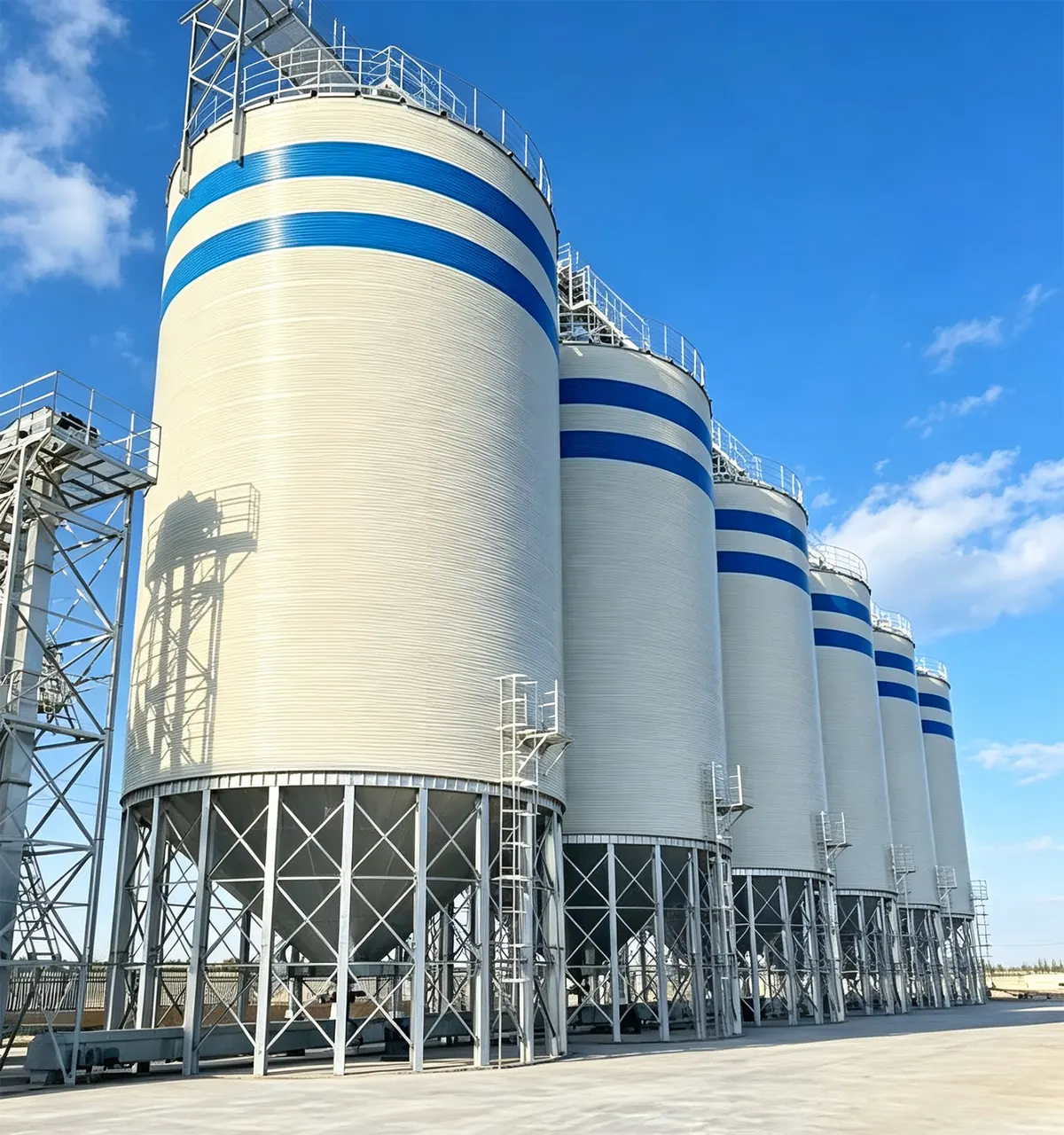
Wood Pellet Silo
Dust-controlled storage for biomass wood pellets
View Product →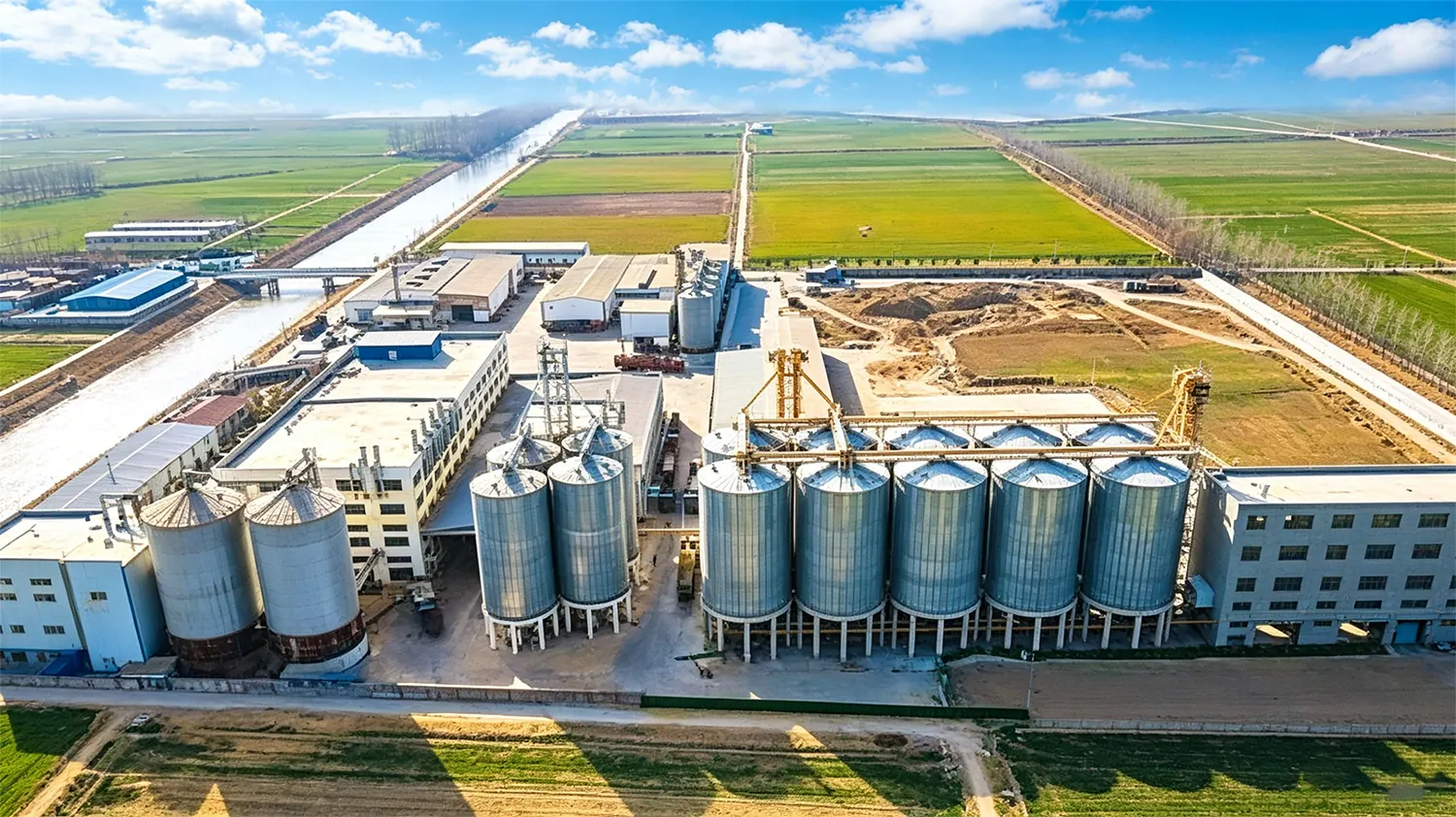
Commercial Silo
High-capacity storage for elevators, terminals and industrial users
View Product →
Feed Silo
Hygienic pellet & mash feed storage for feed mills and farms
View Product →Explore Storage Solutions
Corn Storage Solution
Complete storage systems for corn — from farm bins to export terminals
View Solution →
Wheat Storage Solution
Protect protein & milling quality with low-moisture storage
View Solution →Need help with level sensor calibration: accurate grain bin & silo readings?
Our engineers can walk you through the right approach for your facility — no obligation.
Talk to an Engineer Try the Calculator