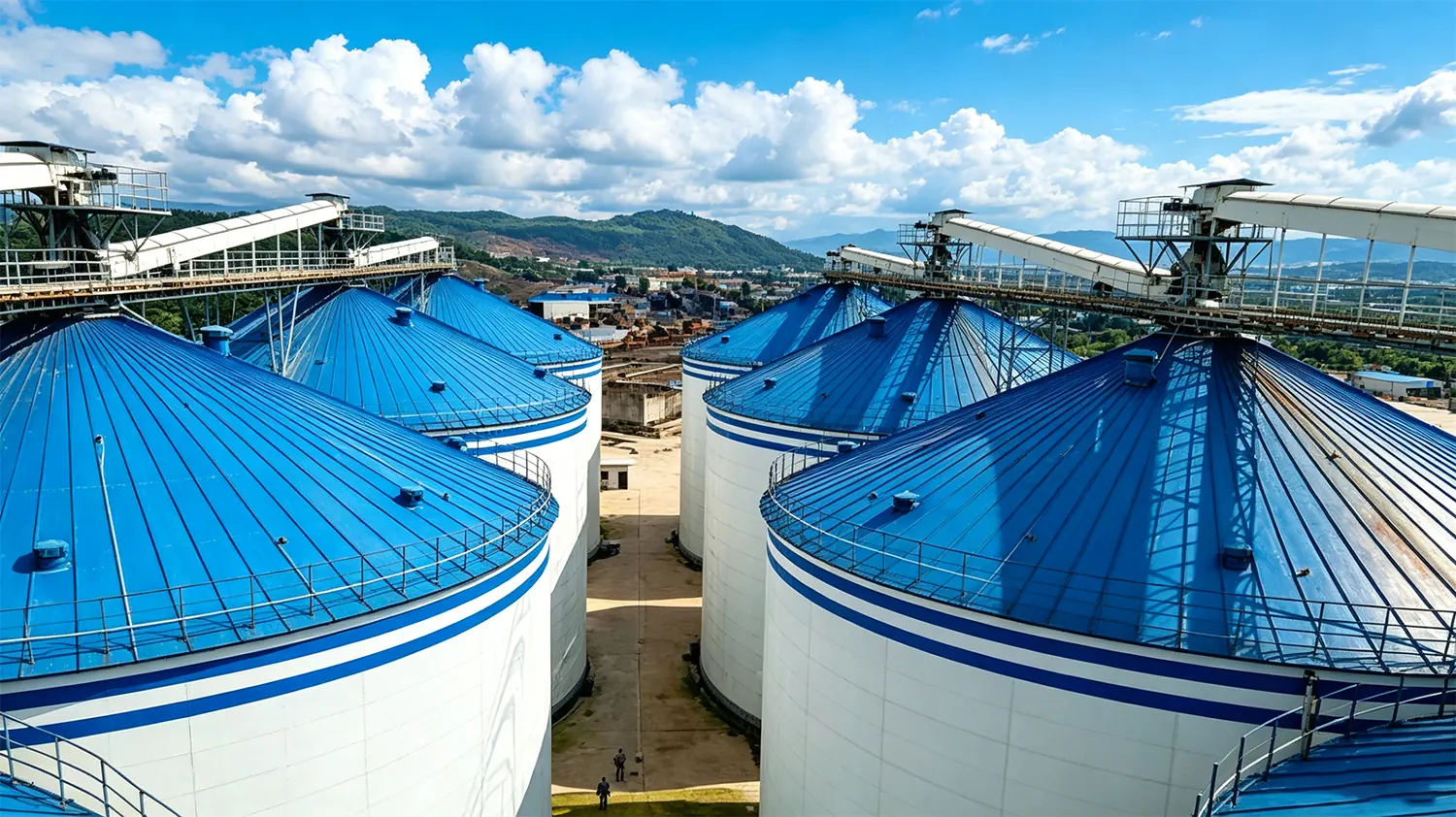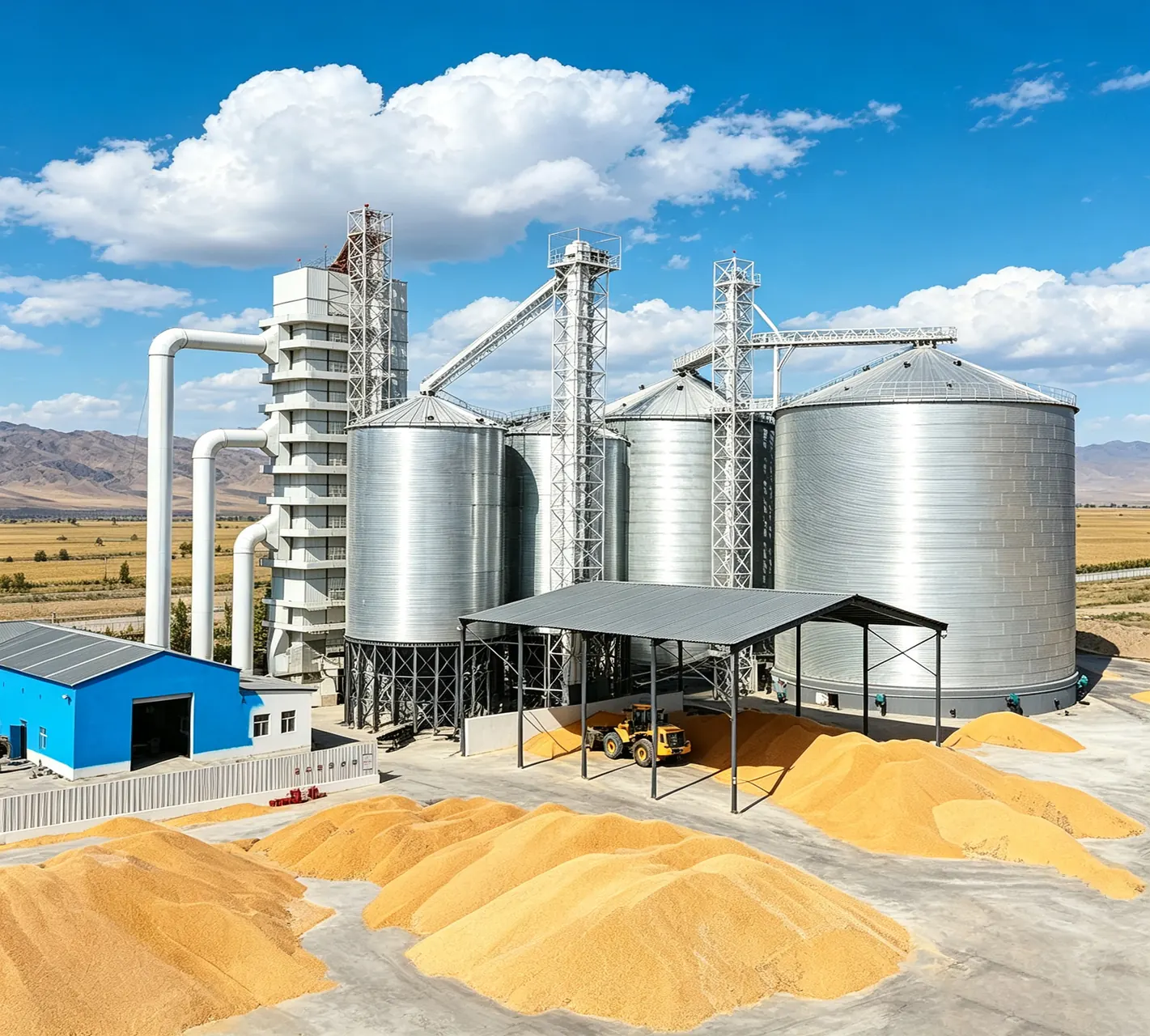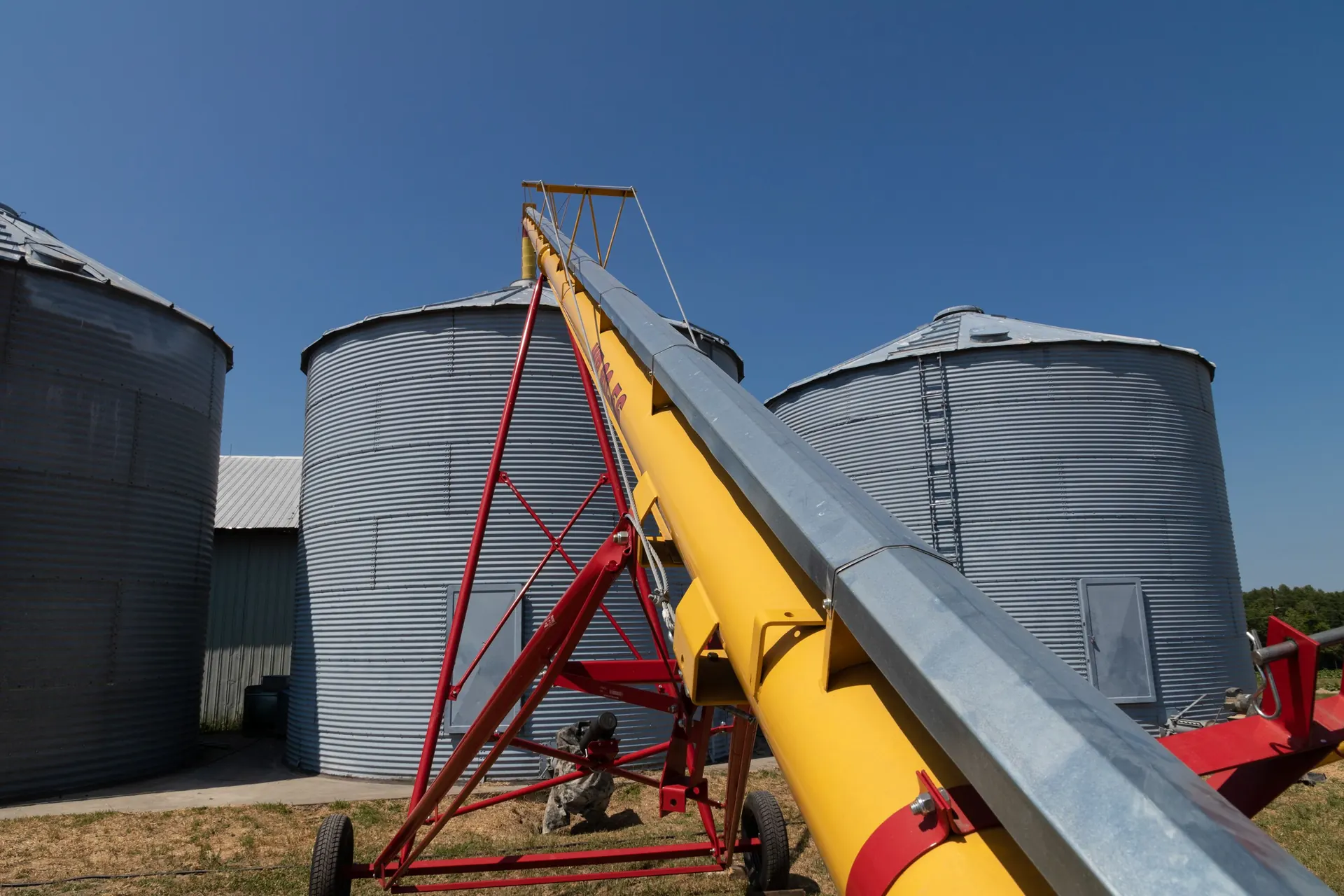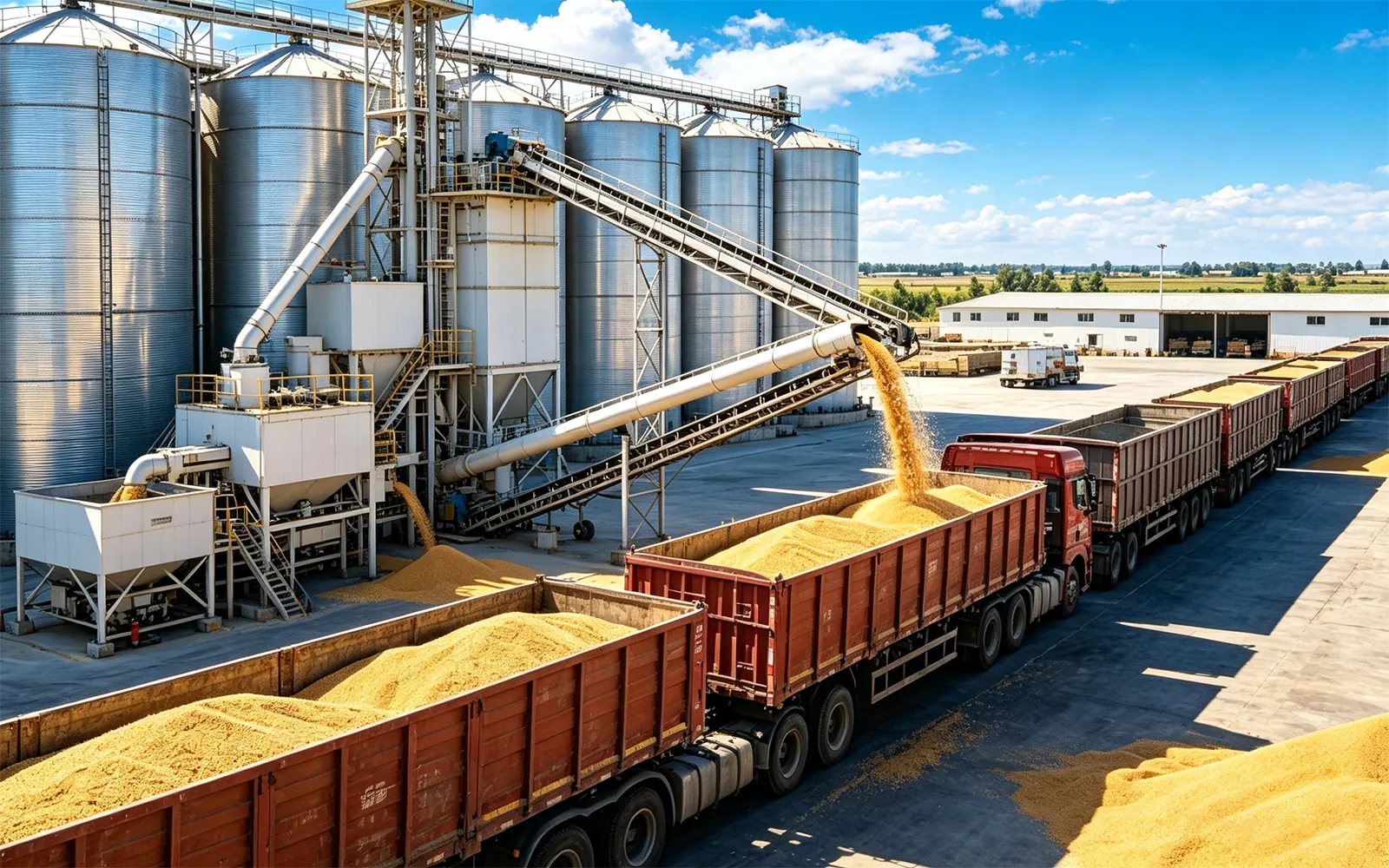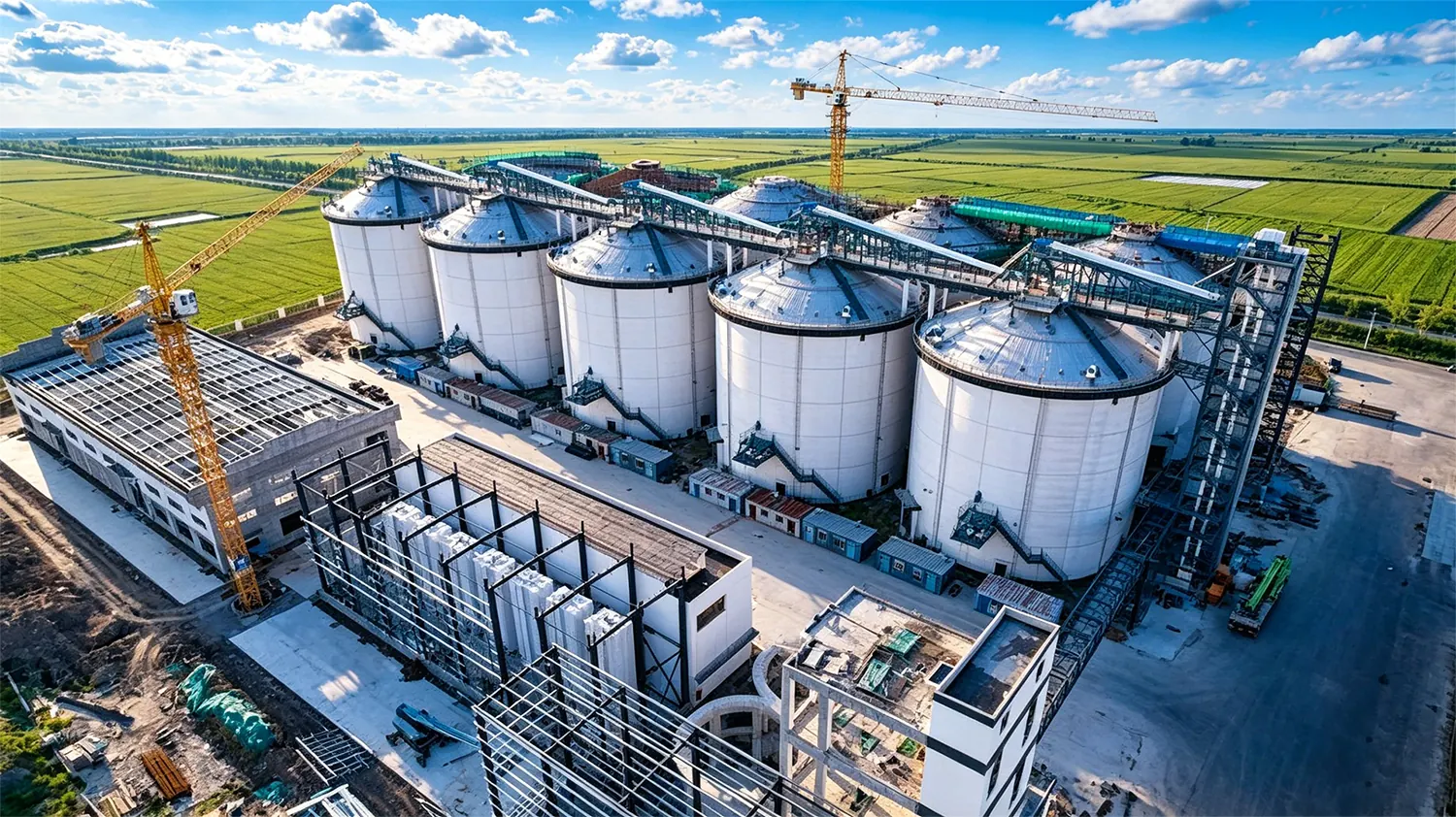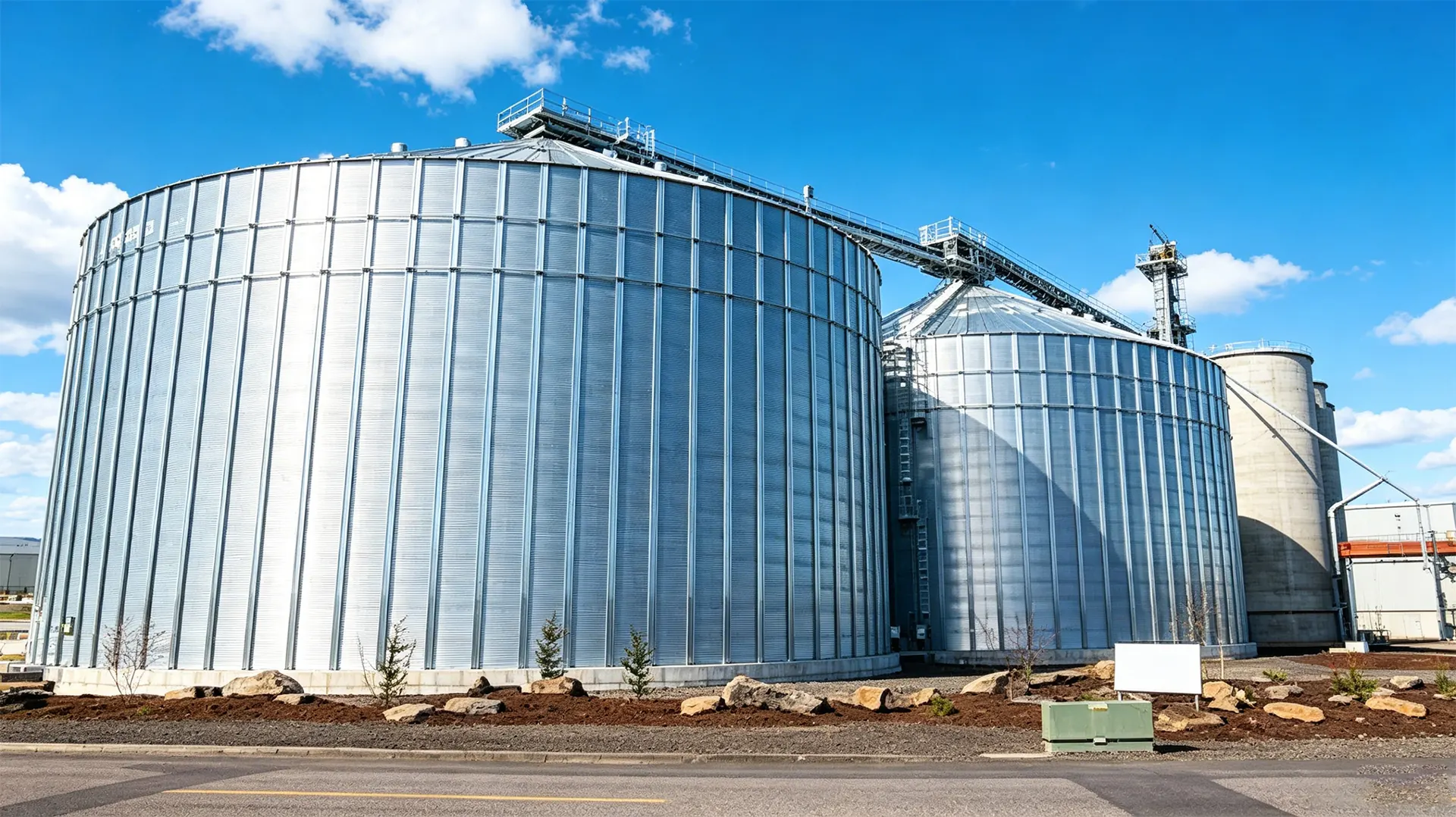
Silo retrofit installation is the disciplined engineering process of upgrading an existing Dust Explosion Prevention in Grain Storage Facilities: En... storage structure — its aeration floor, discharge system, venting, monitoring, and structural envelope — so it performs like a Dry Method Cement Rotary Kiln Systems in Modern Cement Pl... asset without the capital cost of a greenfield build. Done well, a retrofit buys two to three decades of reliable service at a fraction of replacement cost. Done poorly, it creates a structural liability that only shows up under a full grain load on a hot August afternoon.
Key takeaway: A properly scoped silo retrofit typically restores 20–30 years of remaining service life at 30–50% of the cost of an equivalent new silo, with 60–80% less site disruption. The single greatest predictor of success is not the equipment selected — it is the quality of the pre-retrofit structural assessment performed before a single bolt is ordered.

Silo Retrofit Installation: What It Is, When It Pays Off, and How to Scope the Project
A silo retrofit is a scoped engineering intervention on an existing storage structure. It is not maintenance, and it is not a rebuild. The distinction matters commercially: maintenance restores original function, while a retrofit deliberately changes the performance envelope of the asset — higher airflow, faster reclaim, better monitoring, new code compliance, or compatibility with a Different Types of Silos Used in Cement, Mining & Agr... commodity.
Retrofit projects generally fall into four categories, and most real projects combine two or more:
- Capacity and flow upgrades — new discharge cones, larger sweep augers, higher-throughput reclaim conveyors.
- Conditioning upgrades — aeration floor replacement, fan and duct resizing, in-bin drying conversion.
- Compliance and safety upgrades — explosion venting, roof vents, fall protection, ladder and platform replacement.
- Digital upgrades — cable-based temperature monitoring, level sensing, automated aeration control.
Scoping begins with a simple question: what is the failure mode we are solving? An elevator that cannot turn a bin in under 14 hours has a reclaim bottleneck, not an aeration problem. A farm operation with hot spots appearing three weeks after fill has an airflow distribution problem, not a fan problem. Misdiagnosing the constraint is the most common and most expensive retrofit error we see in the field.
Retrofit vs. Replace: Comparing Cost, Downtime, and Remaining Service Life
Replacement is the correct answer when the shell has lost meaningful section thickness, when the foundation has rotated or settled differentially, or when the required capacity increase exceeds what the existing footprint can support. Retrofit wins in nearly every other scenario.
| Factor | Retrofit | Full Replacement |
|---|---|---|
| Typical capital cost (same capacity) | 30–50% of new build | 100% baseline |
| Site disruption | Low — existing foundation and civils retained | High — demolition, new civils, new foundation |
| Permitting complexity | Moderate; often minor amendment | Full new construction permit cycle |
| Downtime per bin | 5–21 days depending on scope | 8–20 weeks |
| Service life extension | 20–30 years with proper assessment | 40–50 years |
| Best suited to | Sound shell, adequate foundation, functional constraint | Structural fatigue, foundation failure, major capacity change |
The economic case usually rests on throughput, not on storage volume. A retrofit that cuts bin turnaround from 18 hours to 6 hours can effectively add a full turn per season across the site — value that dwarfs the construction cost difference.
Pre-Retrofit Structural Assessment: Load Ratings, Wall Thickness Testing, and Foundation Evaluation
This is where retrofit projects are won or lost. Every downstream decision — fan size, cone geometry, whether a roof-mounted sensor junction box can even be hung — depends on what the structure can actually carry.
Wall thickness and corrosion mapping
Corrugated galvanized shells corrode from the inside out, and the worst material loss is almost always at the grain-to-wall interface in the lower third of the bin. Ultrasonic thickness gauging on a grid pattern — typically one reading per corrugation per 1.5 m of height, densified in the bottom third — establishes remaining section thickness. Compare against the original design thickness and the allowable stress used in the original design code. A rule of thumb: if measured thickness has fallen below 80% of design, the shell's ability to resist internal pressure from a deep grain fill must be re-verified before any additional load is added.
Foundation and settlement evaluation
Survey the ring wall for plumbness and elevation. Differential settlement across the circumference is far more dangerous than uniform settlement — a 25 mm differential on a 9 m diameter bin induces shell distortion that concentrates stress at bolt lines. Look for spalling concrete, exposed reinforcement, corroded anchor bolts, and evidence of moisture migration at the base. Any anchor bolt that cannot be torqued to specification should be treated as a structural finding, not a maintenance item.
Load rating and code basis review
Establish what code the silo was designed to and what code applies today. Older silos designed under superseded pressure assumptions frequently have little reserve for the higher discharge loads that modern reclaim equipment can generate. Document the assessment — this document becomes the basis of design for the entire retrofit and, in many jurisdictions, the record an insurer will ask for after a loss.

Aeration Floor and Fan System Retrofits: Restoring Airflow and Grain Conditioning in Legacy Silos
Aeration retrofits fail for one reason more than any other: the designer selects a fan based on the required airflow rate without calculating the static pressure the existing or proposed duct network will impose. Airflow is a system property, not a fan property.
Start with the target specific airflow. For ambient aeration and moisture equalization, most grains need 0.1–0.5 cfm per bushel (roughly 5–25 m³/h per tonne). For in-bin drying, requirements jump to 1–3 cfm/bu and sometimes higher for high-moisture corn. Then work backwards through the duct pressure drop, grain bed resistance, and transition losses to specify fan static pressure and volume.
Full-floor versus duct-based retrofits
Full perforated floor replacement gives the most uniform distribution and is the correct choice when converting to drying duty. Duct-based retrofits — surface ducts or partial under-floor laterals — cost significantly less and work acceptably for aeration-only duty, but they create uneven airflow zones that become hot spot generators if the operator does not understand the limitation.
Fan, transition, and control upgrades
Do not overlook the transition. A poorly fabricated fan-to-duct transition can waste more pressure than the entire duct run. Specify smooth, gradual transitions with a maximum included angle of 15 degrees, and verify that the fan discharge matches the duct cross-section rather than forcing air through an abrupt expansion.
Roof, Vent, and Explosion Venting Upgrades: Meeting Current Codes and Satisfying Insurers
Grain dust is a combustible dust, and legacy silos are frequently under-vented relative to modern standards. Explosion venting retrofits are among the highest-value, lowest-cost interventions available — and increasingly, they are a condition of insurance coverage.
Key design considerations for venting retrofits:
- Vent area sizing must be calculated for the enclosure volume and the dust's deflagration index (Kst), following recognized combustible dust standards.
- Vent location should direct pressure relief away from occupied areas, adjacent structures, and personnel access routes.
- Vent panels must not be obstructed by roof walkways, cable trays, or monitoring hardware installed during the same retrofit.
- Roof vents for aeration exhaust need free area equal to or greater than the inlet airflow, or the fan will simply pressurize the headspace and stall.
Also address the practical items insurers flag: ladder cages, roof handrails, platform load ratings, and clearly marked egress. A retrofit that modernizes aeration but leaves a 1985 ladder cage in place will still generate a compliance finding.
Sweep Augers, Discharge Cones, and Reclaim System Modernization for Faster Turnaround
Reclaim is where retrofit investment pays back fastest. Typical upgrades include:
- Replacing a single-speed sweep auger with a variable-frequency drive unit that can match feed rate to downstream conveyor capacity, eliminating choke-and-stall cycles.
- Converting flat-bottom bins to hopper or cone-bottom discharge where the existing structure and foundation permit, converting unreliable cleanout labor into reliable gravity flow.
- Upsizing the under-bin conveyor or reclaim chain to match the new discharge rate — a common oversight that leaves the bottleneck exactly where it was.
- Adding discharge gate automation and interlocking to prevent over-feeding and to allow single-operator bin changeover.
When modifying discharge geometry, re-run the structural check. Converting from a flat floor to a cone changes the load path and increases localized wall pressures near the outlet. This is precisely the kind of change that makes the pre-retrofit assessment document essential.
Grain Temperature Monitoring and Cable Sensor Retrofits: Turning an Aging Silo Into a Smart Silo
Temperature cable retrofits are the lowest-friction entry point into silo modernization because they require no structural modification. A typical installation places cables on a grid spacing of 3–5 m, with sensing points every 1.5–2 m of height and denser spacing in the top 3 m where convective heating begins.
Modern digital bus sensors have largely displaced analog thermocouple strings. The advantages are material: individual sensor addressing means one failed point does not blind the whole cable, digital signal transmission eliminates the drift and calibration burden of analog loops, and a single two- or four-wire bus can daisy-chain dozens of cables back to one controller.
Pair the hardware with control logic that acts on the data. A monitoring system that only alarms is a missed opportunity. A system that automatically starts aeration when the average grain temperature exceeds ambient by a defined margin, and locks out during high-humidity windows, converts stored data into stored quality.
Retrofitting for a Different Commodity: Adapting Storage Bins to New Grain Types and Flow Characteristics
Repurposing a bin from corn to canola, or from wheat to soybean, is a genuine engineering change — not a labeling exercise. Three material properties drive the redesign:
- Bulk density determines total wall load. A bin designed for 720 kg/m³ wheat will be significantly overstressed holding 900 kg/m³ of high-moisture corn at the same fill height.
- Angle of internal friction and wall friction govern whether the bin discharges in mass flow or funnel flow, which in turn determines segregation behavior and cleanout effort.
- Angle of repose and particle size affect filling patterns, peak loads, and dust generation potential.
Smaller, lighter seeds also change aeration behavior: higher void fraction means lower resistance to airflow, so an existing fan may now deliver more air than intended — sometimes enough to fluidize light material near the inlet. Check the numbers before committing the bin.
Phasing Silo Retrofit Installation Around Harvest: Staging, Sequencing, and Zero-Stoppage Strategies
Nobody takes a bin out of service in October. Retrofit scheduling is therefore a sequencing problem, and the best projects are planned 12–18 months ahead with harvest as an immovable anchor.
A workable phasing model:
- Assessment and design (off-season, months 1–3): structural inspection, thickness testing, drawings, permit submissions.
- Procurement and prefabrication (months 3–8): long-lead items — fans, sweep augers, cones, vent panels — fabricated off-site to minimize on-site work windows.
- Bin-by-bin execution (months 8–11