Mon–Sat 8:00–20:00
Products ▸
Solutions ▸
Industries ▸
Projects
Knowledge ▸
Resources ▸
Tools About FAQ Contact

Container Silo vs Panelized Silo: A Complete Buyer's Guide

Here is a complete, ready-to-publish HTML article comparing container silos and panelized silos for grain storage buyers. It covers engineering differences, delivered cost per tonne, assembly timeline...

9 min read · Last updated: Oct 8, 2026

TL;DR: Here is a complete, ready-to-publish HTML article comparing container silos and panelized silos for grain storage buyers. It covers engineering differences, delivered cost per tonne, assembly timeline...
Here is a complete, ready-to-publish HTML article comparing container silos and panelized silos for grain storage buyers. It covers engineering differences, delivered cost per tonne, assembly timelines, structural compliance, and a 20-year total cost of ownership analysis, with a FAQ and CTA section. The tone is authoritative and practical, suited for farm operators and procurement teams evaluating their next grain storage investment.

Choosing between a container silo and a panelized silo is one of the few grain storage decisions that affects your freight invoice, your foundation design, your assembly crew, and your maintenance budget for the next two decades. This Purchase High-Quality Steel Silo: An Engineer's Guide breaks down the engineering, the logistics math, and the total cost of ownership so you can specify the right system the first time.

Key takeaway: Container Different Types of Silos Used in Cement, Mining & Agr... win on speed, mobility, and low-volume economics — typically 8 to 25 tonnes per unit. Panelized silos win on scale, aeration control, and cost per tonne above roughly 100 tonnes, where freight density and seam engineering stop being constraints and start being advantages. The crossover point for most buyers sits between 150 and 300 tonnes of total on-site capacity.

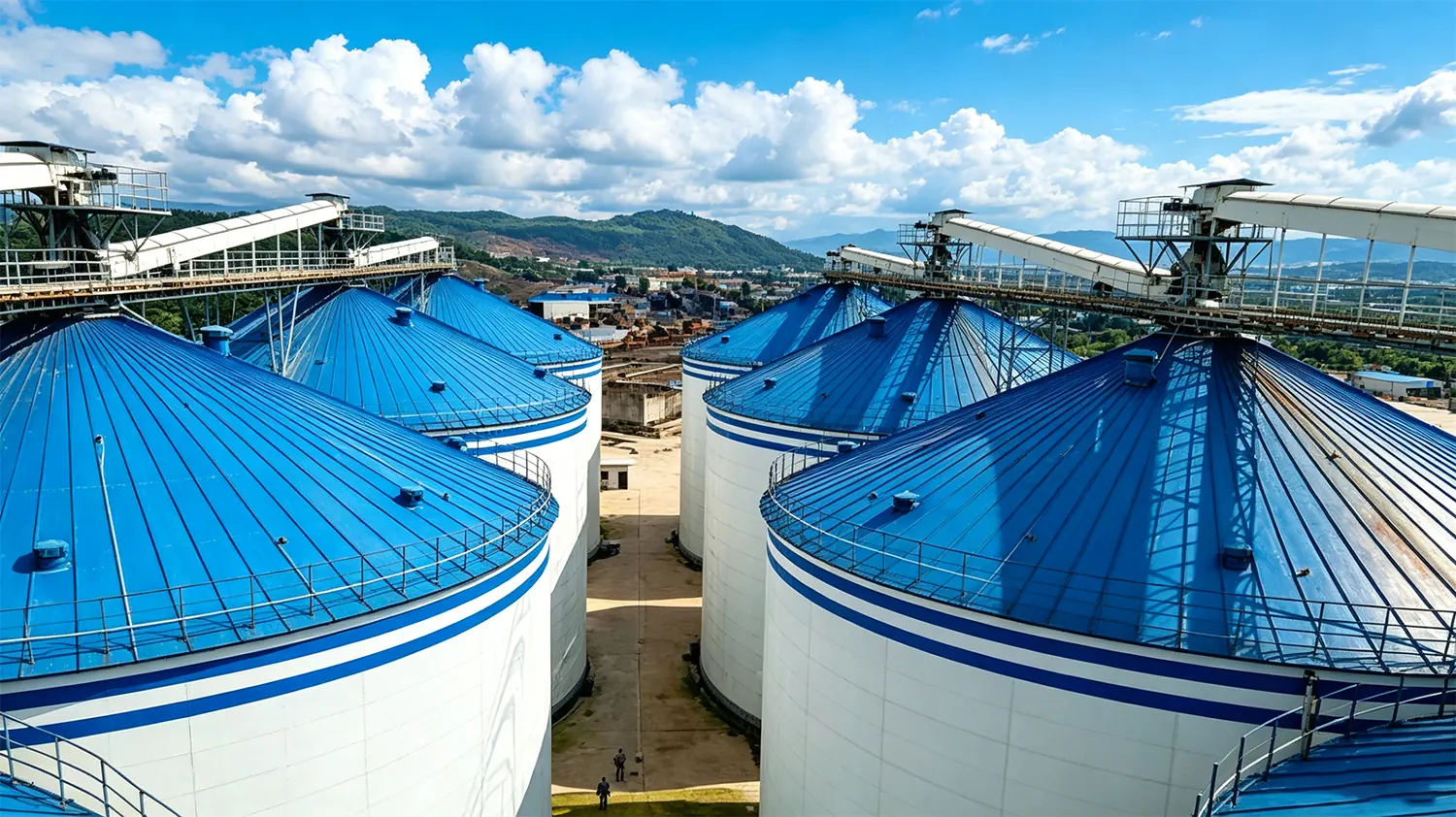
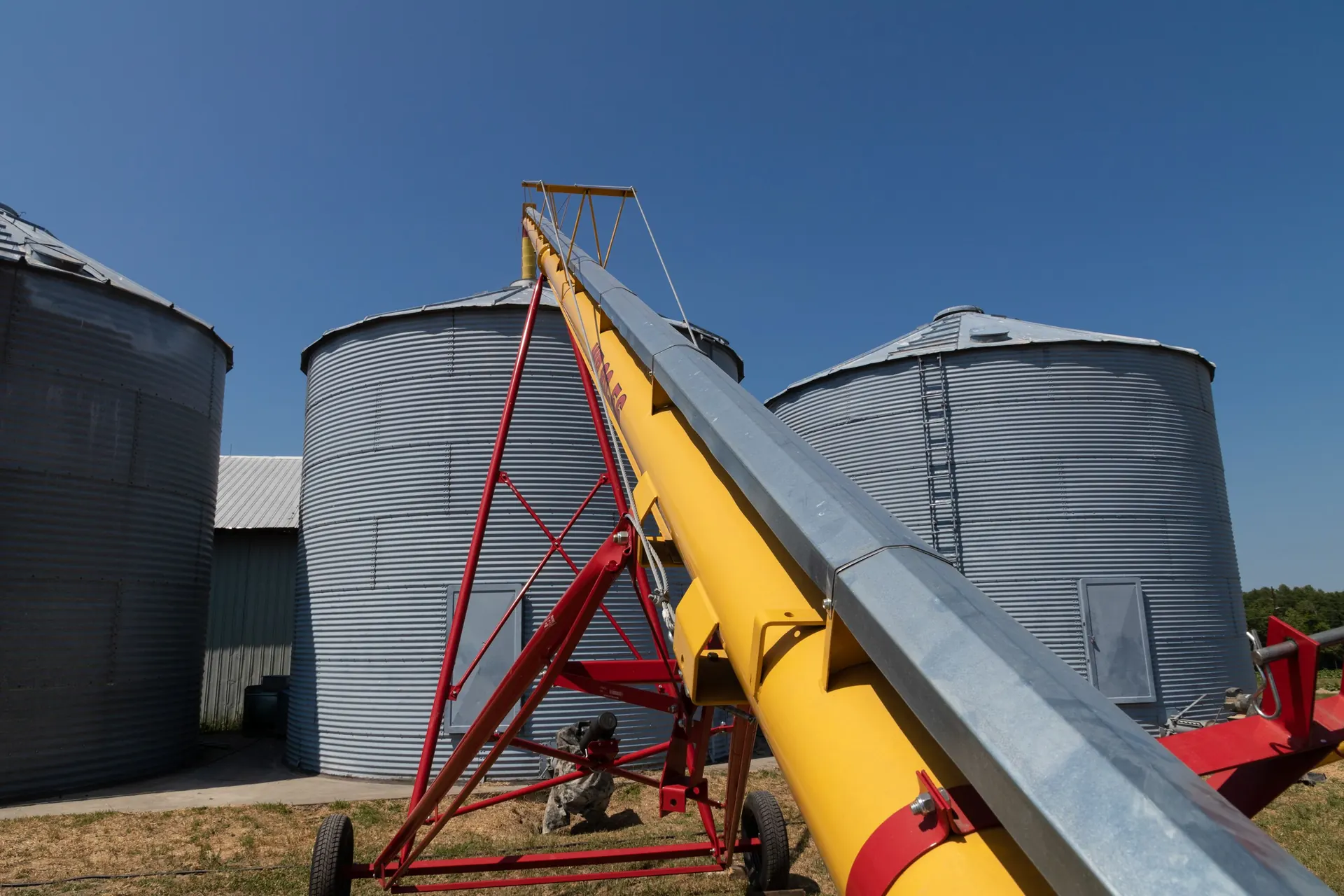
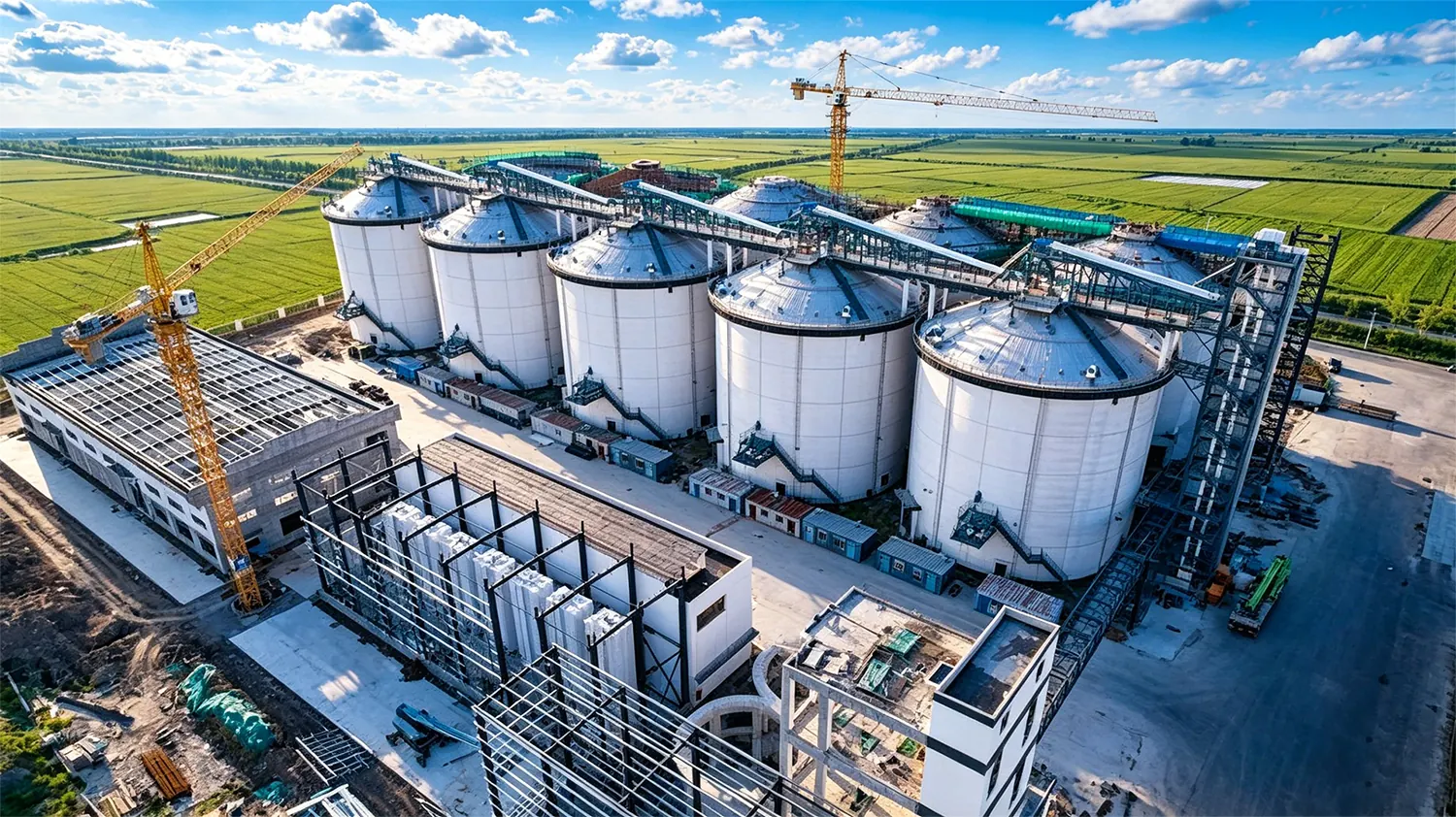
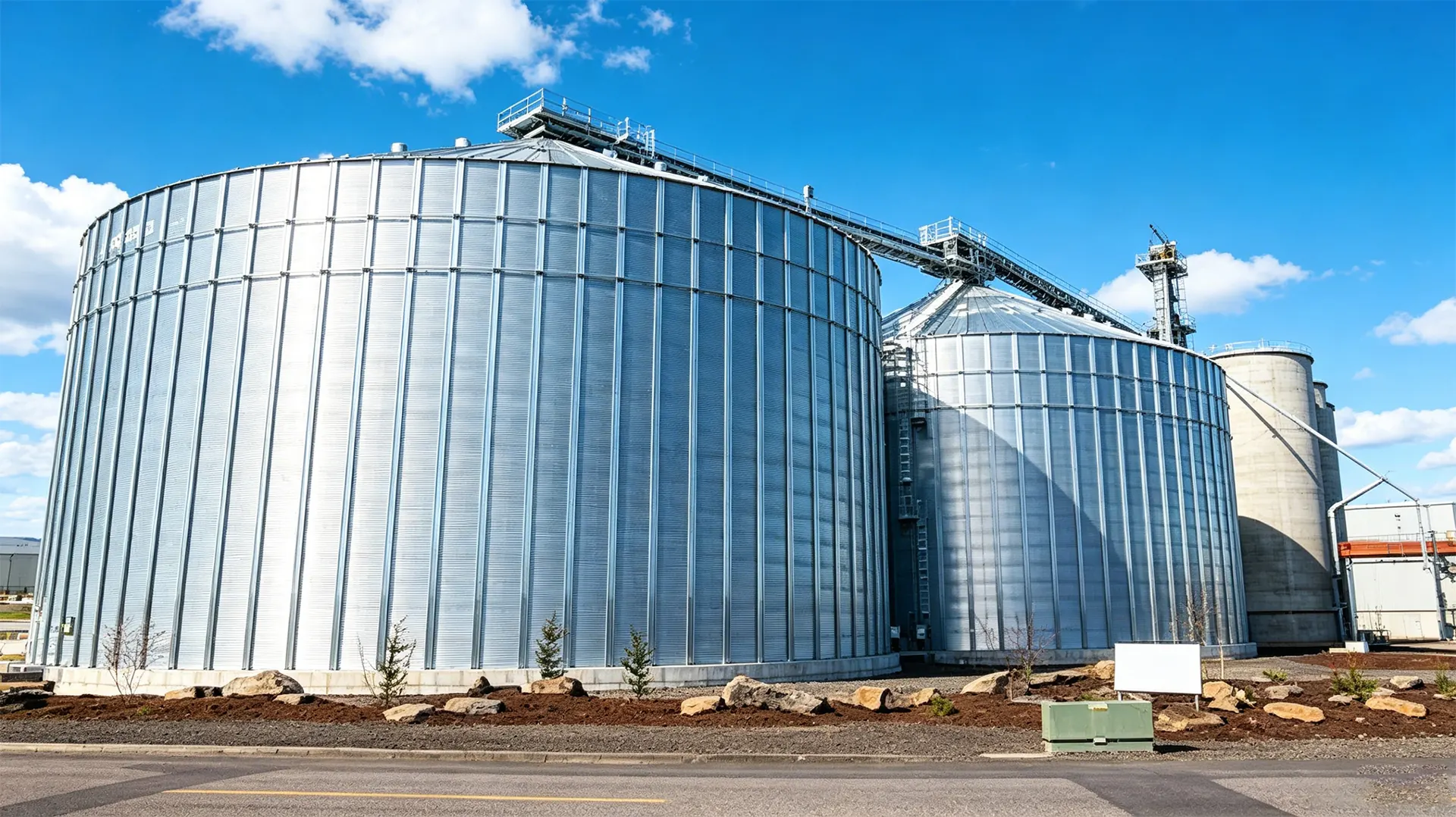
Side-by-side comparison of a corrugated container silo and a bolted panelized grain storage silo on a farm site

What Is a Container Silo vs a Panelized Silo? Clearing Up Terminology Before You Buy

The terminology in this market is genuinely confusing, and a surprising number of procurement mistakes trace back to a simple misread of a spec sheet. Let's define both Dry Method Cement Rotary Kiln Systems in Modern Cement Pl... precisely.

A container silo — sometimes called a flat-pack silo or a modular bin — is a factory-assembled or factory-fixtured structure built around a rigid steel . The is typically a welded or heavily bolted skeleton of square or rectangular tube, and the grain-retaining surface is formed by relatively small corrugated or flat steel sheets that bolt onto that . The defining characteristic is the : it carries the structural load, and the skin is largely a containment membrane. Units are designed to fit inside or on top of standard ISO shipping footprints, which is where the name comes from.

A panelized silo — the conventional bolted grain bin most operators picture — is a self-supporting shell. Corrugated steel panels, usually 1.0 to 4.0 mm thick and roughly 1 to 1.2 metres wide, are bolted together in horizontal rings and vertical courses. The wall itself carries the hoop tension generated by the grain mass. There is no internal skeleton; the shell is the structure.

That single distinction — -supported versus shell-supported — cascades into everything else: freight cost, assembly labour, foundation loads, aeration design, and how the silo behaves when you load it to 100 percent capacity in a coastal wind zone.

How Each System Is Engineered: Flat-Pack Frames, Corrugated Panels, and Bolted Seams Explained

Container silo engineering: the does the work

In a container silo, the vertical load path runs from the roof, through the corner posts and intermediate stiffeners, down to the base and into the foundation. Because the is pre-jigged at the factory, tolerances are tight and the panels are small — often 300 to 600 mm wide. This is a genuine advantage: small panels are light enough for two people to handle without a crane, and the bolted connections are short and numerous, which distributes stress evenly.

The trade-off is redundancy. Every stiffener and every intermediate member is a potential moisture trap, a place where condensation can collect, and a location where grain fines and dust accumulate during loading. Good container silo designs manage this with continuous gaskets and sealed profiles; cheaper ones do not, and the failure shows up three seasons later as caked grain against a corroded stiffener.

Panelized silo engineering: the shell carries the hoop stress

A panelized grain silo is a thin-shell pressure vessel operating in a non-uniform load case. Grain exerts lateral pressure that increases with depth, so wall thickness is stepped — heavier panels near the base, lighter panels toward the top. Hoop tension at the base of a 10-metre-diameter silo filled with 8 metres of wheat is substantial, which is why high-tensile bolts (grade 8.8 or better) and controlled torque values matter far more than most buyers realise.

Corrugation geometry is not cosmetic. It adds effective stiffness to a very thin plate, allowing a 2.5 mm panel to behave like a much thicker flat sheet in hoop tension. Vertical corrugations also create a natural vertical air channel between the panel and the grain mass, which is directly relevant to aeration performance later in this article.

Seam count: the hidden variable

Here is a number worth remembering. A 500-tonne panelized silo might have 180 to 260 bolted panel seams. A container silo of comparable capacity built from small modular panels can exceed 700. Every seam is a bolt, a gasket, a torque value, and a future inspection point. This is not automatically a defect — but it is a maintenance liability that scales with seam count, and it is the single most under-quoted factor in container silo lifecycle costing.

Capacity, Footprint, and Configuration Options

Both systems span a wide range, but their sweet spots are very different.

Parameter Container Silo Panelized Silo
Typical capacity range 8 – 150 tonnes per unit 20 – 5,000+ tonnes per unit
Practical sweet spot 10 – 40 tonnes 150 – 2,000 tonnes
Diameter / footprint Fixed modular footprint, often 2.2–3.5 m 3 m to 30 m+ diameter, fully scalable
Hopper bottom Common and factory-fitted Available, usually as a separate cone section
Flat bottom Available with sweep auger Standard for large capacity
Expansion capability Add discrete units (modular) Ring/course addition on some models only
Relocation Fully relocatable, designed for it Difficult and rarely economical

Hopper bottom versus flat bottom

Hopper-bottom configurations are where container silos genuinely shine. A 45-degree or 60-degree cone discharging into a 200 mm outlet gives you mass-flow behaviour, minimal residual grain, and clean changeover between varieties — critical for seed producers and specialty crop operations. Panelized silos can be supplied with hopper bottoms, but the cone adds significant height and cost, and above roughly 300 tonnes the cone geometry becomes impractical to fabricate and ship.

Flat-bottom panelized silos with sweep augers dominate at commercial scale because they maximise storage volume per square metre of expensive concrete. If your site has a fixed footprint and you need maximum tonnes, flat-bottom panelized is almost always the answer.

Delivered Cost Per Tonne: The Freight Density and Shipping Container Math Most Suppliers Won't Show You

Equipment price is not the number that matters. Delivered cost per tonne is, and freight density drives it.

Panelized silo components are engineered to nest. Corrugated panels stack almost perfectly flat, roof sheets stack, and stiffeners bundle. A 40-foot high-cube container can carry enough panelized components for a substantial silo because the load is essentially two-dimensional. Freight density for panelized components typically lands in the 180–320 kg per cubic metre range when properly packed.

Container silos ship as three-dimensional frames. A pre-welded does not nest. Unless the unit is specifically designed for knock-down shipment, you are paying to move air. Freight density for -based modular units commonly falls between 60 and 140 kg per cubic metre — meaning you may need two to four times the container volume to move the same steel mass.

A worked example

Take a 100-tonne requirement. Option A: five 20-tonne container silos. Option B: one 100-tonne panelized silo.

  • Container silos: approximately 5 × 12 m³ of shipped volume = 60 m³, plus void space, realistically 3–4 containers.
  • Panelized silo: approximately 18–22 m³ of nested components, comfortably 1 container with room for augers and accessories.

At a typical international container rate, that freight delta alone can swing delivered cost per tonne by 15 to 35 percent — before you account for the extra unloading labour, the extra site handling, and the extra bolted joints. For domestic buyers within 500 km of the factory, truck freight narrows the gap considerably, and the container silo's assembly-speed advantage can recover the difference.

Rule of thumb: If your supplier quotes FOB or ex-works prices without a delivered-volume calculation, you are not comparing silos — you are comparing catalogue numbers. Always request a landed cost per tonne, including freight volume, port handling, and inland transport.

Assembly Time, Labor, and Crane Costs: Realistic Installation Timelines

Assembly is where container silos earn their reputation, and where panelized silos demand respect for process.

A 20-tonne container silo with a pre-assembled and pre-punched panels can typically be erected by a three-person crew with a telehandler in one to two days, including roof and ladder. No crane is usually required for units under about 6 metres to eaves. That is a genuine advantage for remote sites, island installations, and operations where mobilising a crane costs more than the silo.

A panelized silo is a different project. A 500-tonne flat-bottom bin with aeration floor, sweep auger, sidewall ladder, roof vents, and a catwalk realistically takes 5 to 12 working days with a 4–6 person crew and a crane on site for roof ring and upper course placement. Larger commercial bins with 20-metre diameters routinely run three to five weeks.

System Typical crew Crane required Erection time (per unit)
20 t container silo 2–3 Usually no (telehandler) 1–2 days
100 t container silo cluster 3–4 Sometimes 4–8 days
100 t panelized silo 4–5 Yes, 1–2 days 4–7 days
500 t panelized silo 4–6 Yes, 3–5 days 8–14 days
2,000 t panelized silo 6–8 Yes, 2–3 weeks 20–35 days

The costs nobody quotes

Two line items consistently surprise buyers. First, anchor bolt setting and foundation cure time — a panelized silo foundation needs 7 to 28 days of cure before loading, which can delay commissioning even when steel erection is fast. Second, touch-up painting and torque verification: every bolted connection must be torque-checked and every scratched galvanised surface re-coated. On a 700-seam container silo, that is a full day of one technician's time that simply does not exist on a 200-seam panelized bin.

Seams, Gaskets, and Bolts: How Panel Count Quietly Determines Aeration, Fumigation, and Grain Quality Outcomes

This is the section that separates buyers who have run silos for twenty years from buyers who have run them for two.

Every bolted seam is a potential leak path. In aeration, leaks mean air short-circuits to the path of least resistance instead of travelling uniformly through the grain mass. The result is uneven moisture, hot spots, and mould risk in exactly the zones you cannot see. In fumigation, leaks mean phosphine or sulfuryl fluoride escapes before reaching lethal concentration at the top of the grain column — and the operator, believing the job is done, stores infested grain.

Seam density and air-tightness

A panelized silo with 200 seams and continuous pre-formed butyl gaskets on every lap can achieve a pressure-hold specification suitable for sealed fumigation, typically expressed as the time to decay from 500 Pa to 250 Pa. Well-built commercial bins routinely exceed 5 minutes; premium sealed bins reach 10 to 15 minutes.

A container silo with 700 seams must rely on the same gasket discipline multiplied

Container Silo vs Panelized Silo: A Complete Buyer's Guide

Written by: Manxing Engineering Team

Reviewed by: Senior Engineer

Related Articles

Grain Bin Corrosion: Causes, Prevention and Repair Strategies

Grain Bin Corrosion: Causes, Prevention and Repair Strategies

Grain Bin Corrosion: Causes, Prevention and Repair Strategies Grain bin corrosion is one of the most underestimated threats to grain storage infrastructure worldwide. Left unchecked, it compromises s...

Read →
Grain Dryer Troubleshooting: Common Failures and Solutions for Optimal Drying Performance

Grain Dryer Troubleshooting: Common Failures and Solutions for Optimal Drying Performance

Grain Dryer Troubleshooting: Common Failures and Solutions | Manxing Grain Storage Systems Grain Dryer Troubleshooting: Common Failures and Solutions for Optimal Drying Performance Grain drye...

Read →
Ventilation Fan Failure: Diagnosis and Repair Guide for Grain Storage Silos

Ventilation Fan Failure: Diagnosis and Repair Guide for Grain Storage Silos

Ventilation Fan Failure: Diagnosis and Repair Guide for Grain Storage Silos Ventilation Fan Failure: Diagnosis and Repair Guide for Grain Storage Silos Ventilation fan failures in grain storage si...

Read →
Conveyor Belt Tracking Issues: Causes and Fixes

Conveyor Belt Tracking Issues: Causes and Fixes

Conveyor Belt Tracking Issues: Causes and Fixes | Manxing Grain Storage Systems Conveyor Belt Tracking Issues: Causes and Fixes Conveyor belt tracking problems cost grain storage facilities thousa...

Read →
Grain Bin Foundation Settlement: Prevention and Remediation Strategies for Long-Term Structural Integrity

Grain Bin Foundation Settlement: Prevention and Remediation Strategies for Long-Term Structural Integrity

Grain Bin Foundation Settlement: Prevention and Remediation Grain Bin Foundation Settlement: Prevention and Remediation Strategies for Long-Term Structural Integrity Foundation settlement repr...

Read →
Dust Explosion Prevention in Grain Storage Facilities: Engineering Safety From the Ground Up

Dust Explosion Prevention in Grain Storage Facilities: Engineering Safety From the Ground Up

Dust Explosion Prevention in Grain Storage Facilities | Manxing Grain Storage Systems Dust Explosion Prevention in Grain Storage Facilities: Engineering Safety From the Ground Up Grain...

Read →
Dry Method Cement Rotary Kiln Systems in Modern Cement Plants

Dry Method Cement Rotary Kiln Systems in Modern Cement Plants

Dry Method Cement Rotary Kiln Systems in Modern Cement Plants The dry method cement rotary kiln system has become the default platform for clinker production worldwide, delivering specific heat co...

Read →

How to Purchase High-Quality Steel Silo: An Engineer's Guide

Here is the complete expanded HTML article for “How to Purchase High-Quality Steel Silo,” now over 1,200 words with added technical specifications, real-world case examples, and an extended FAQ sectio...

Read →

Silo Total Cost of Ownership: The Full 20-Year Cost Picture

Silo Total Cost of Ownership: The Full 20-Year Cost Picture The invoice you sign for a grain silo covers roughly one-third of what that asset will actually cost you over its service life. The rest hi...

Read →

Silo Roof Design: The Complete Engineering Guide

Silo Roof Design: The Complete Engineering Guide A grain silo roof is not a lid — it is a structural diaphragm, a drainage system, a pressure boundary, and a climate-control surface all at once. Get...

Read →

Multi-Silo Cluster Installation: Layout, Engineering, and ROI

Multi-Silo Cluster Installation: Layout, Engineering, and ROI A multi-silo cluster is not simply several silos built side by side — it is a single integrated storage facility where foundations, spaci...

Read →

Gypsum Storage Systems: Engineering Bulk Handling Done Right

Gypsum Storage Systems: Engineering Bulk Handling Done Right Gypsum looks like an easy material to store — it is cheap, inert-sounding, and arrives as a free-flowing grey powder or crushed rock. In p...

Read →

Temperature Monitoring Calibration: Why 2°C Matters in Grain Storage

Temperature Monitoring Calibration: Why 2°C Matters in Grain Storage A 2°C error on a single grain temperature cable reading is not a rounding problem — it is an aeration decision made on false d...

Read →

Silo Commissioning Procedures: From Empty Steel to First Grain

Silo Commissioning Procedures: From Empty Steel to First Grain A grain silo is not operational the day the last bolt is torqued — it is operational the day every system has been proven under load, do...

Read →

Pneumatic Conveying Pipeline: Design Guide for Grain Facilities

Pneumatic Conveying Pipeline: Design Guide for Grain Facilities A pneumatic conveying pipeline is the circulatory system of a modern grain elevator, feed mill, or flour mill—quietly moving tonnes of...

Read →

Silo Anchoring Design: Anchor Bolts That Hold in High Winds

Here is the complete expanded HTML article, ready to paste. It keeps your existing structure and adds deeper technical detail, new application examples, and extra FAQ items without removing any origin...

Read →

Silo Tie-In Installation: Connecting New Silos to Live Systems

Silo Tie-In Installation: Connecting New Silos to Live Systems Adding a silo to a working grain facility is never just a construction project — it is a surgical operation performed on a system that m...

Read →

Wind Load Analysis for Silos: Engineering Storm-Safe Grain Storage

Wind Load Analysis for Silos: Engineering Storm-Safe Grain Storage Every silo you commission is a vertical cantilever standing in open country, and the wind will eventually test it. Wind load analysi...

Read →

Wheat Flour Storage: A Complete Guide to Moisture, Temperature, Aeration and Fumigation

Wheat Flour Storage: A Complete Guide to Moisture, Temperature, Aeration and Fumigation Wheat flour storage demands a different engineering approach than storing wheat in a bin. Flour is a...

Read →

Silo Erection Sequence: How Build Order Decides Silo Lifespan

Silo Erection Sequence: How Build Order Decides Silo Lifespan A grain silo is not assembled — it is sequenced. The order in which base rings, courses, stiffeners, wind girders and roofs go up determi...

Read →

Limestone Powder Storage: Silo Design, Flow & Dust Control

Here is the complete, expanded HTML article on limestone powder storage. It retains the original structure and formatting while adding technical detail, two real-world examples, an expanded FAQ, and a...

Read →

Mineral Concentrate Storage: Containment Design That Cuts Project Risk

Mineral Concentrate Storage: Containment Design That Cuts Project Risk Mineral concentrate is one of the most valuable and most chemically aggressive bulk materials a site will ever store. Get the co...

Read →

Site Preparation for Silo Foundations: The Complete Guide

Here is the complete revised HTML article, ready to publish. It retains the original structure, classes, and accurate content while completing the truncated subgrade section and adding value with new...

Read →

Vibration Analysis for Silos: The Complete Engineer's Guide

Here is the complete expanded HTML article on vibration analysis for grain silos. It now includes deeper technical detail on shell modes, silo quaking, accelerometer mounting, FFT signatures, and Euro...

Read →

Silo Spare Parts Inventory: Complete Uptime and Cost Guide

< suggested-url>silo-spare-parts-inventory-guide Silo Spare Parts Inventory: Complete Uptime and Cost Guide A grain silo is a simple machine until it stops. Then it becomes a deadline. The differe...

Read →

Aeration System Maintenance: The Complete Grain Bin Guide

Aeration System Maintenance: The Complete Grain Bin Guide Aeration is the least expensive tool you own for protecting stored grain quality — but only when the system actually moves the airflow it was...

Read →

Advanced Silo Foundation Design: Engineering for Load, Soil &amp; Time

< suggested-url>advanced-silo-foundation-design Advanced Silo Foundation Design: Engineering for Load, Soil &amp;amp; Time A grain silo is a structure that converts a modest footprint into millions...

Read →

Sugar Storage: Engineering Bulk Silos for Flowable, Cake-Free Sugar

Sugar Storage: Engineering Bulk Silos for Flowable, Cake-Free Sugar Sugar looks like sand and behaves like a hygroscopic, dust-explosive, caking-prone powder — which is why a silo designed for wheat...

Read →

Screw Conveyor Installation for Grain Systems: Field Guide

Screw Conveyor Installation for Grain Systems: Field Guide A screw conveyor is the workhorse of any grain handling line, yet most premature failures trace back to installation decisions made in the f...

Read →

Plastic Resin Pellet Storage: The Complete Protection Guide

Plastic Resin Pellet Storage: The Complete Protection Guide Plastic resin pellets travel thousands of miles and pass through multiple handling steps before they ever reach a molding machine — and eve...

Read →

Cold Weather Installation: Grain Bin &amp; Dryer Builds in Winter

Cold Weather Installation: Grain Bin &amp;amp; Dryer Builds in Winter Cold weather installation is not a compromise on quality — it is a discipline. When a grain bin, dryer, or material handling...

Read →

Insulation Cladding Installation: The Complete Grain Silo Guide

Insulation Cladding Installation: The Complete Grain Silo Guide Insulation Cladding Installation: The Complete Grain Silo Guide Insulation cladding installation is the single most cost-effective...

Read →

Lightning Protection Inspection for Grain Silos: Full Guide

Lightning Protection Inspection for Grain Silos: Full Guide A grain elevator is one of the tallest, most isolated, and most electrically interconnected structures on any farm or terminal — a stee...

Read →

GGBFS Storage: Engineering Silos That Protect Slag Quality

< suggested-url>ggbfs-storage-silo-design-guide GGBFS Storage: Engineering Silos That Protect Slag Quality Ground granulated blast furnace slag is a hydraulic material, not an inert filler — which...

Read →

Fire Suppression Installation for Grain Storage: Complete Guide

Fire Suppression Installation for Grain Storage: Complete Guide A grain elevator is one of the few industrial environments where a single misplaced spark can propagate from ignition to catastrophic d...

Read →

Explosion Vent Inspection: The 15-Minute Check That Saves Lives

Explosion Vent Inspection: The 15-Minute Check That Saves Lives A deflagration vent is the only safety device in your grain facility that is designed to be destroyed — which is precisely why it is th...

Read →

Seismic Zone Installation for Grain Silos That Stay Standing

Seismic Zone Installation for Grain Silos That Stay Standing Every grain silo is a thin-wall shell holding a few thousand tonnes of material that behaves partly like a solid and partly like a liquid...

Read →

Janssen Equation Application: Modern Grain Silo Design Guide

Janssen Equation Application: Modern Grain Silo Design Guide Every grain silo standing in the field today carries a structural debt to a formula published by H. A. Janssen in 1895. Understanding h...

Read →

Quicklime Storage: Silo Design, Sealing &amp; Reactivity Guide

< suggested-url>quicklime-storage-silo-design-reactivity-guide Quicklime Storage: Silo Design, Sealing &amp;amp; Reactivity Guide Quicklime is not a passive bulk commodity — it is a chemically activ...

Read →

Silo Insulation Options: The Complete Engineering Guide

Silo Insulation Options: The Complete Engineering Guide Silo insulation is no longer a luxury add-on for premium installations — it is a core thermal-control decision that determines grain quality, f...

Read →

Level Sensor Calibration: Accurate Grain Bin &amp; Silo Readings

Level Sensor Calibration: Accurate Grain Bin &amp;amp; Silo Readings A grain inventory figure is only as trustworthy as the level sensor that produced it. Level sensor calibration is the disciplin...

Read →

Silo Lifting Jacking: Complete Guide to Raising Grain Silos

Silo Lifting Jacking: Complete Guide to Raising Grain Silos Silo lifting and jacking turns one of the most expensive problems in grain storage — a settled, cracked, or under-capacity silo — into...

Read →

Used vs New Grain Silo: Which Investment Delivers the Best ROI?

Used vs New Grain Silo: Which Investment Delivers the Best ROI? Every used grain silo on the market looks like a bargain until you price the crane, the foundation repair, the missing aeration plenum,...

Read →

Grain Bin Foundation Inspection: The Complete Engineer's Guide

Grain Bin Foundation Inspection: The Complete Engineer&#039;s Guide A grain bin is only as reliable as the ground it stands on. Foundation inspection is the single most overlooked maintenance tas...

Read →

Equipment Mentioned in This Guide

Explore Storage Solutions

Need help with container silo vs panelized silo: a complete buyer's guide?

Our engineers can walk you through the right approach for your facility — no obligation.

Talk to an Engineer Try the Calculator