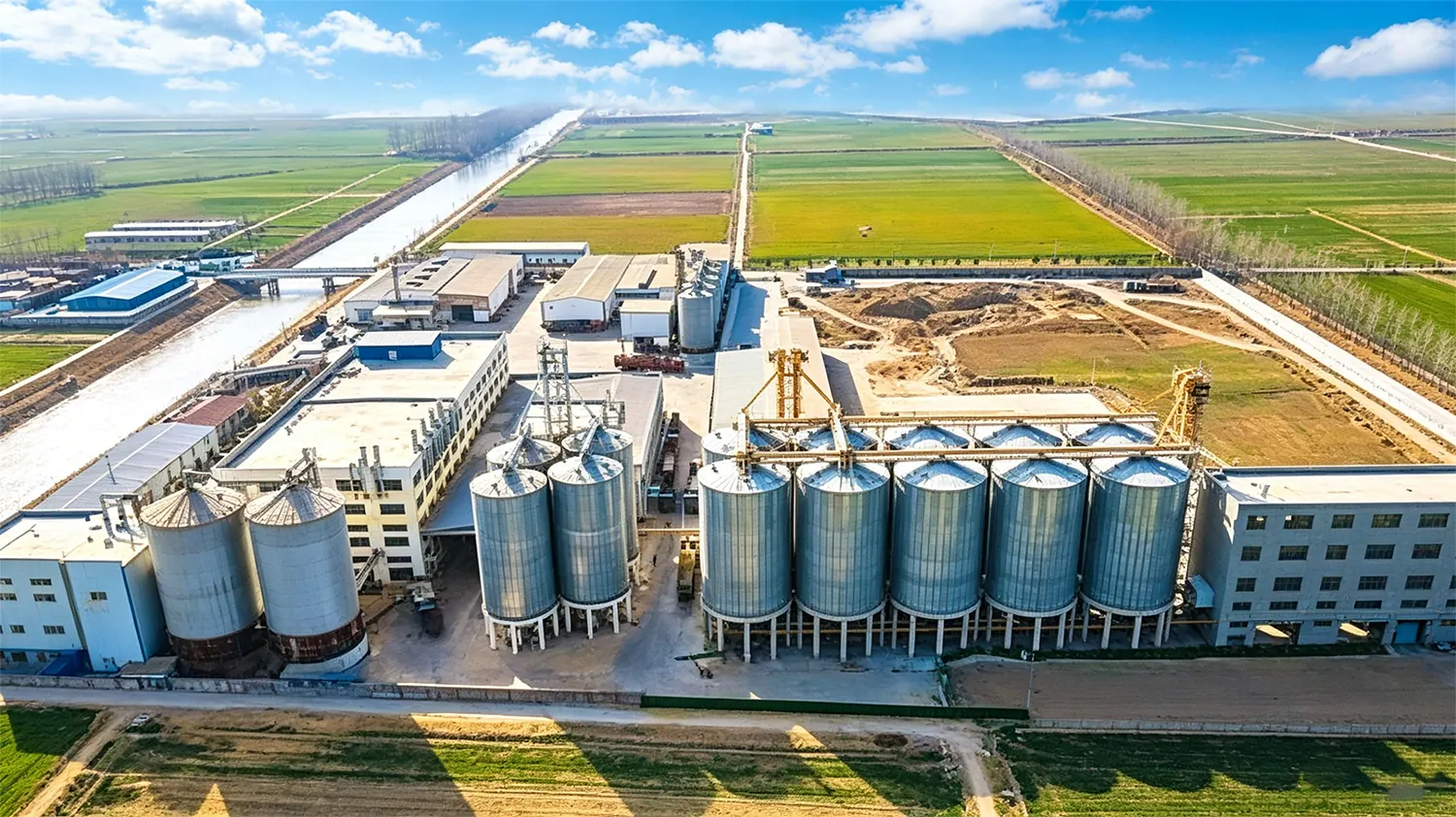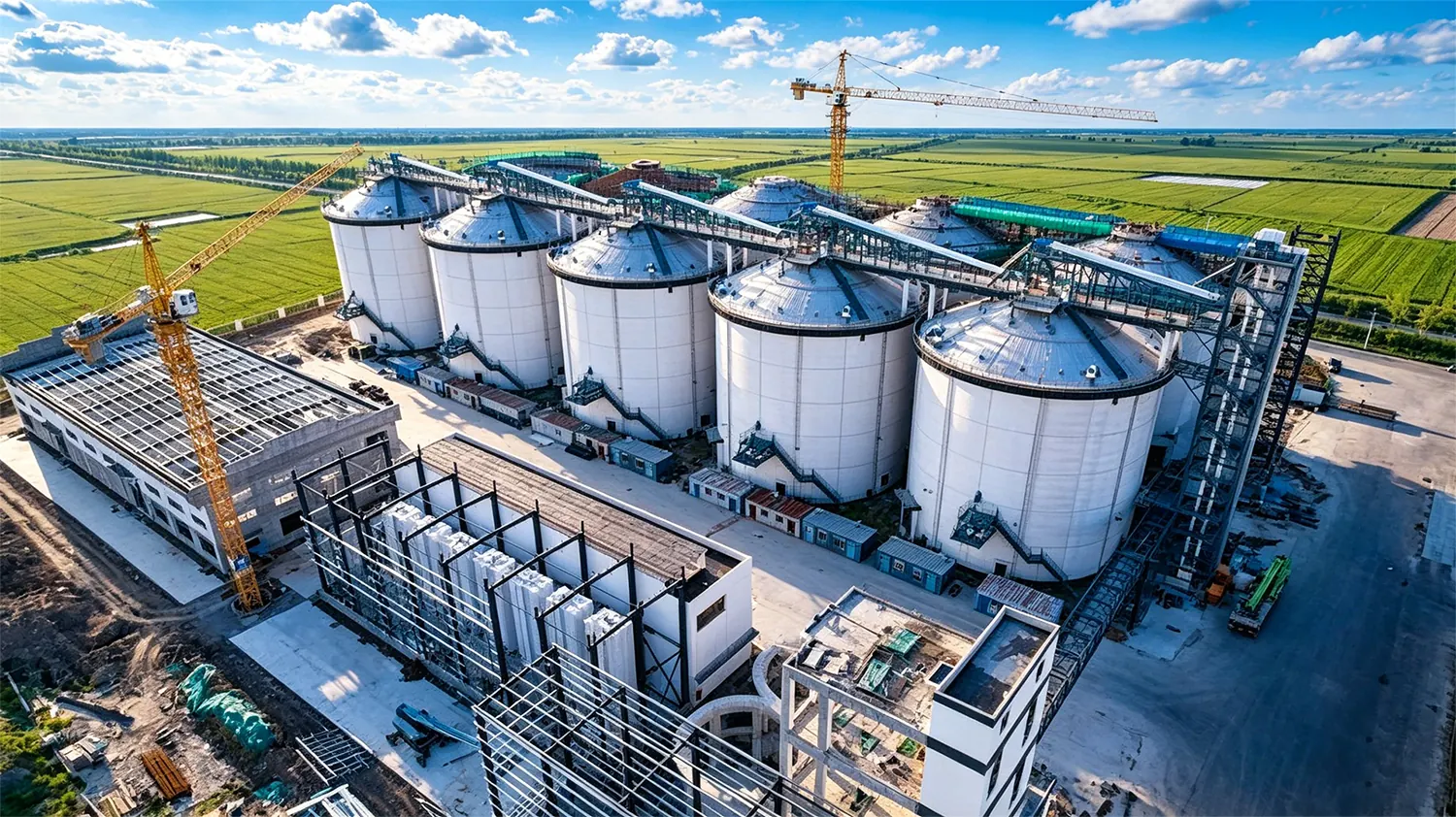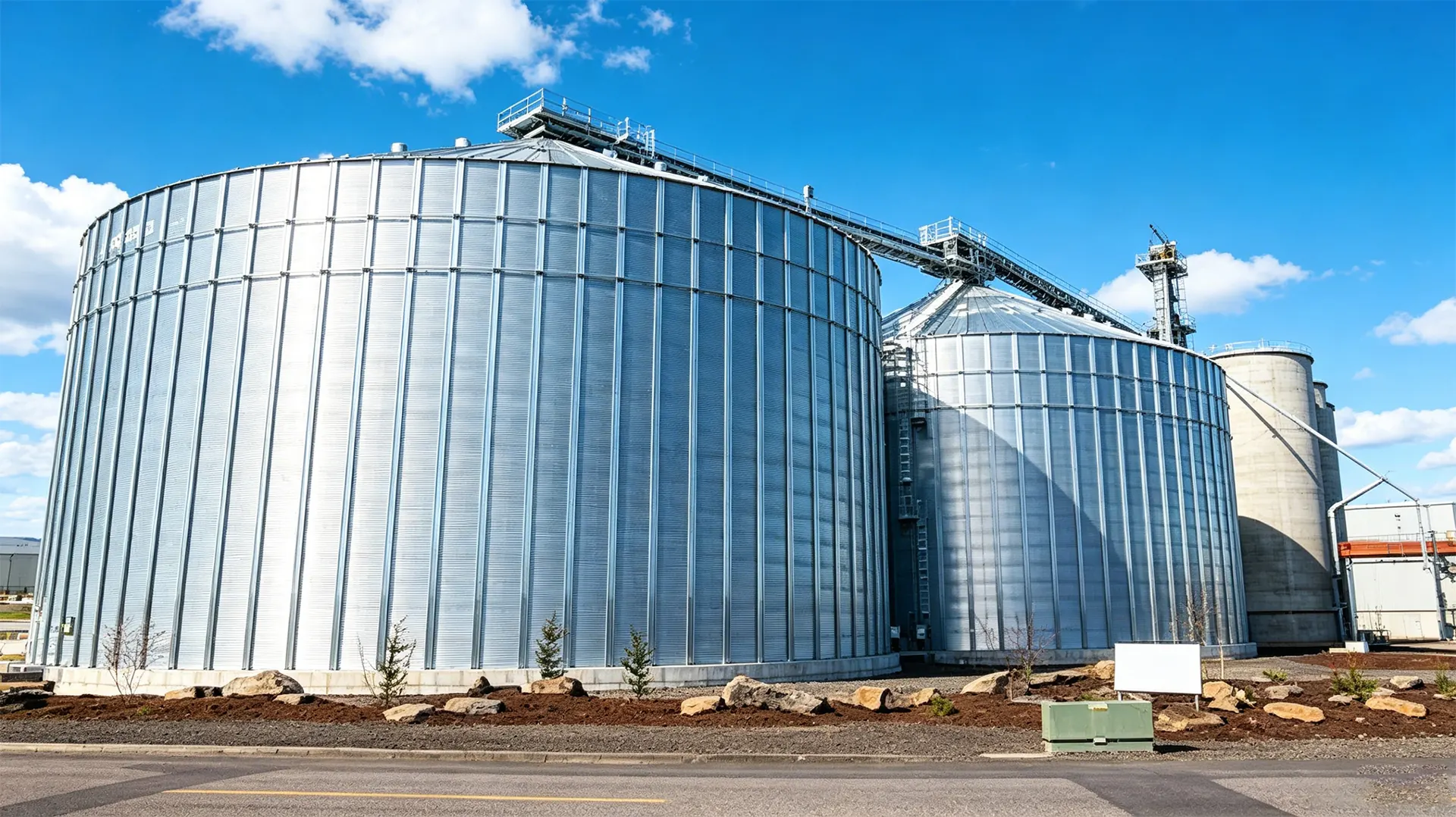
In Dust Explosion Prevention in Grain Storage Facilities: En... storage, the hopper is where physics stops being theoretical and starts costing money. A discharge cone that is five degrees too shallow turns a perfectly good silo into a ratholed, segregated, labor-intensive liability — while a cone that is five degrees too steep quietly adds tens of thousands of dollars in Purchase High-Quality Steel Silo: An Engineer's Guide, headroom, and foundation cost. Getting the angle right is the single highest-leverage decision in hopper design.
This article walks through the engineering logic that separates a hopper that works from one that merely exists: the difference between angle of repose and hopper design angle, the mechanics of mass flow versus funnel flow, how wall friction and liner selection shift the required angle, how to design for the Dust Explosion Prevention in Grain Storage Facilities: En... you will actually store in year ten rather than the grain you tested in year one, and how to diagnose and retrofit a hopper that is already underperforming.
It is worth stating the economics plainly at the outset, because hopper geometry is usually decided in a design meeting, not a laboratory. The cost of a hopper cone scales with surface area, which scales roughly with the secant of the half-angle — meaning that every additional degree of steepness is more expensive than the last. Against that, the cost of a rathole is measured in manual rodding labor, confined-space entry, plugged screw conveyors, sheared feeder shafts, out-of-condition grain, and in the worst case a structural failure when a hung-up mass releases suddenly. In almost every case, the rathole is the more expensive mistake. The engineering task is not to build the steepest cone possible, but to find the shallowest cone that still guarantees the flow regime the process actually needs.
Angle of Repose vs. Hopper Design Angle: The Costly Misconception Behind Most Underperforming Grain Hoppers
The most common and most expensive error in grain hopper design is using the angle of repose as the design angle. The two numbers are related only in that they both describe granular behavior — they answer entirely different questions.
Angle of repose is the slope a free-standing pile of grain assumes when it is poured onto a surface. For shelled corn it typically falls between 21° and 24° from horizontal; for wheat, 23°–28°; for soybeans, 25°–28°. It describes the surface of a pile at rest with essentially zero confining stress. It tells you how high a pile will stack and how much grain will hang on a wall above the grain line. It tells you nothing useful about whether grain will discharge from a cone.
The hopper design angle is a stress-state problem. Grain in a hopper is confined, loaded, and pressed against sloping walls. The material near the outlet is under a stress field that compacts it, increases its cohesive strength, and mobilizes wall friction along the entire cone surface. The angle required to guarantee flow is derived from three measured properties: the effective angle of internal friction (δ), the wall friction angle between the grain and the specific wall material (φ′), and the material's flow function, which relates consolidating stress to the strength the grain develops under that stress.
The practical consequence is stark. A corn hopper designed at the 22° angle of repose will not flow at all — it will arch or rathole on the first fill. The same corn, tested properly, generally demands a cone of 60°–65° from horizontal on carbon steel for reliable mass flow. That is a 40° gap between the number people guess and the number physics requires.
One further trap: angle is quoted in two conventions. North American practice typically states the hopper angle from horizontal, while much European and vendor literature states it from vertical. A "30° cone" in one drawing set is a 60° hopper in the other. Always confirm the reference plane before comparing two quotations, because a misread convention is a 30° error that survives all the way to fabrication.

Mass Flow vs. Funnel Flow: How Hopper Geometry Drives Segregation, Caking, and Dead Zones
Every hopper operates in one of two regimes, and the hopper angle is the primary control.
What mass flow looks like
In mass flow, every particle in the silo moves whenever any grain is discharged. The entire contents descend as a plug, the velocity profile is nearly uniform, and discharge is first-in-first-out. The benefits compound: no stagnant grain, no preferential flow channels, minimal segregation, uniform residence time for aeration and fumigation, and consistent bulk density at the outlet. Mass flow also generates far more predictable loads on the cone walls, which matters for structural design.
What funnel flow looks like
In funnel flow, only a narrow channel above the outlet moves. Grain outside that channel — often 50–70% of the hopper volume — is stagnant. It sits there through dozens of fill and discharge cycles, slowly compacting, gaining moisture at the wall interface, and developing mold and caking. When it finally does collapse, it arrives at the outlet in slugs, causing