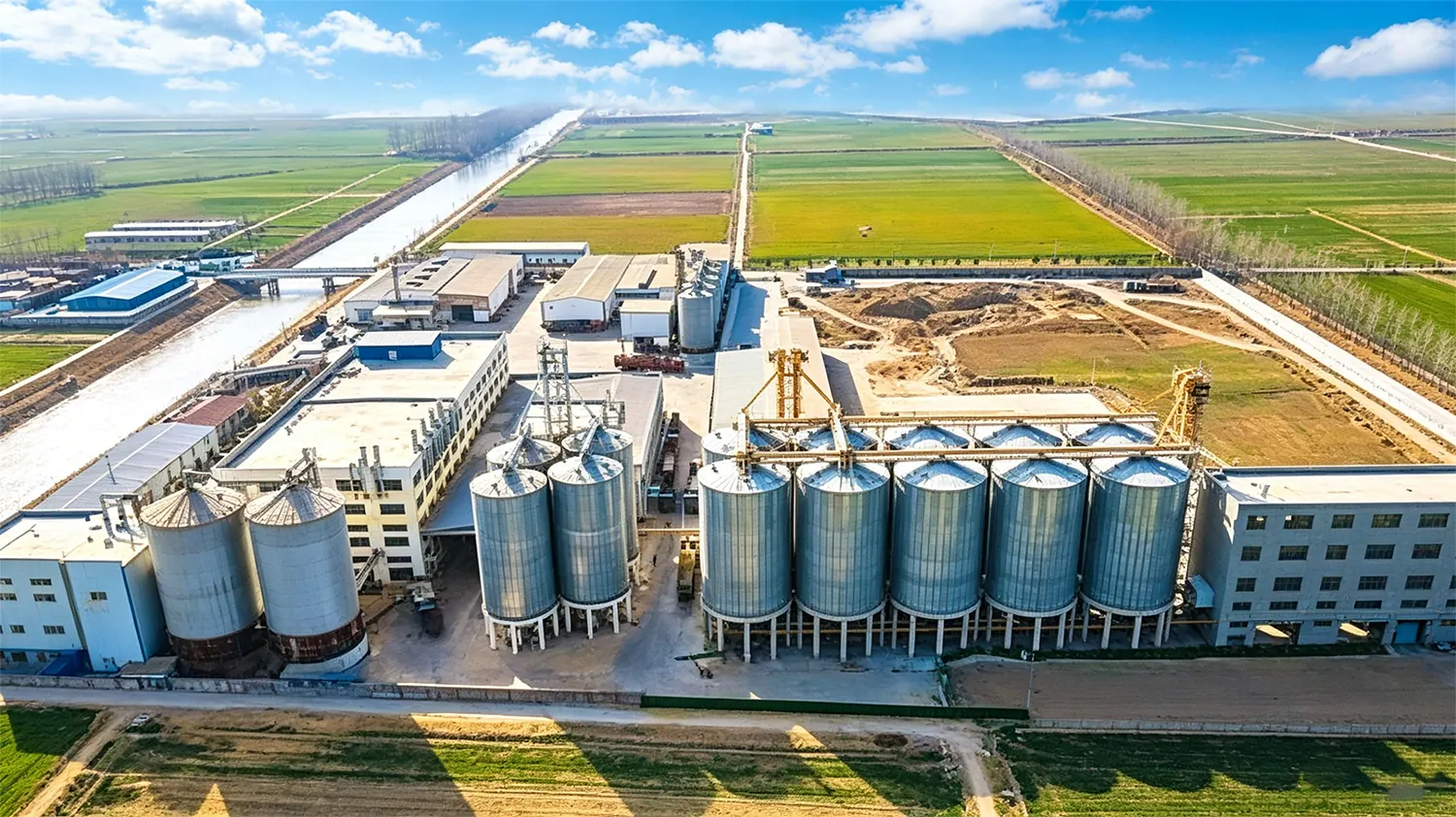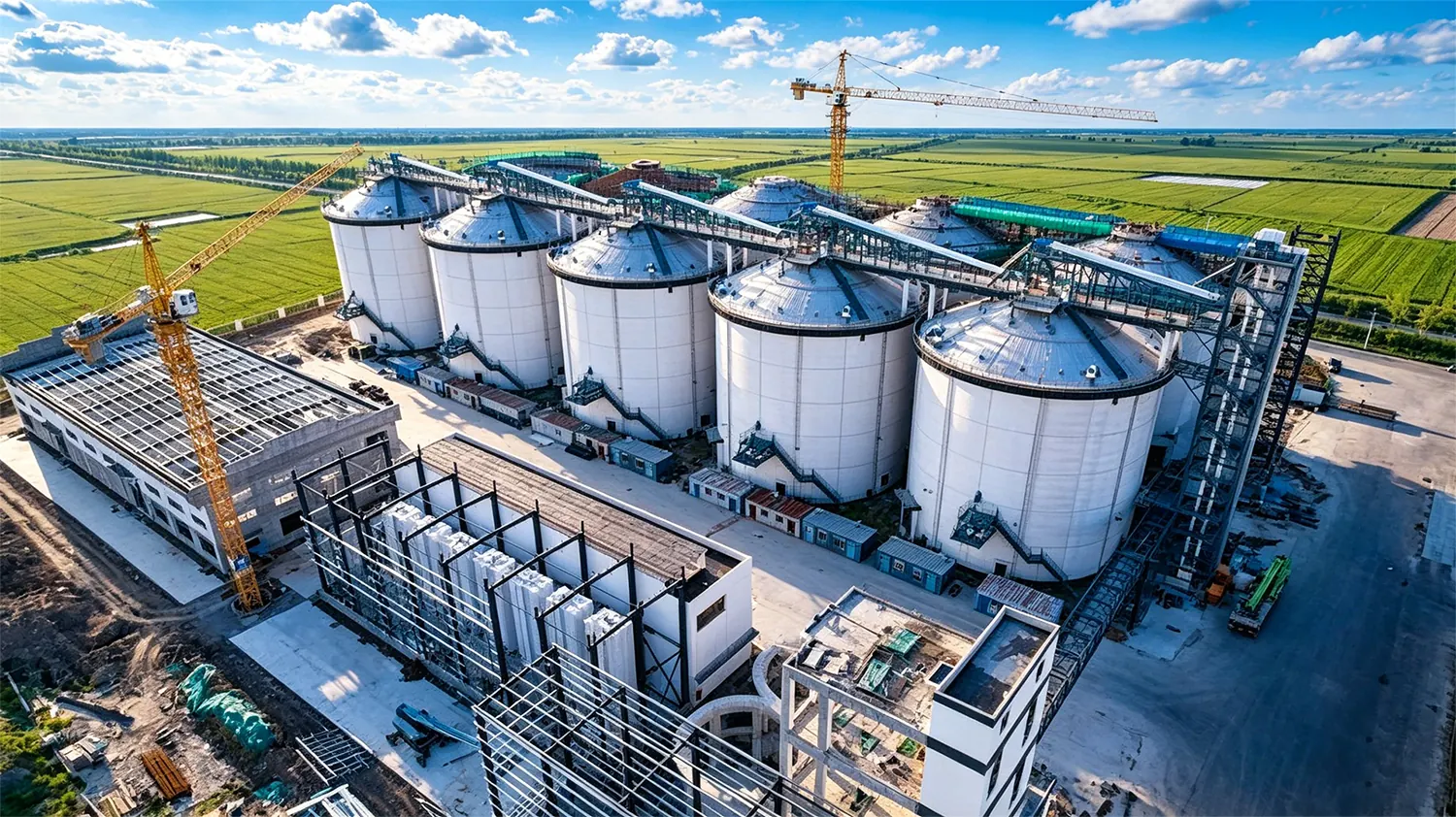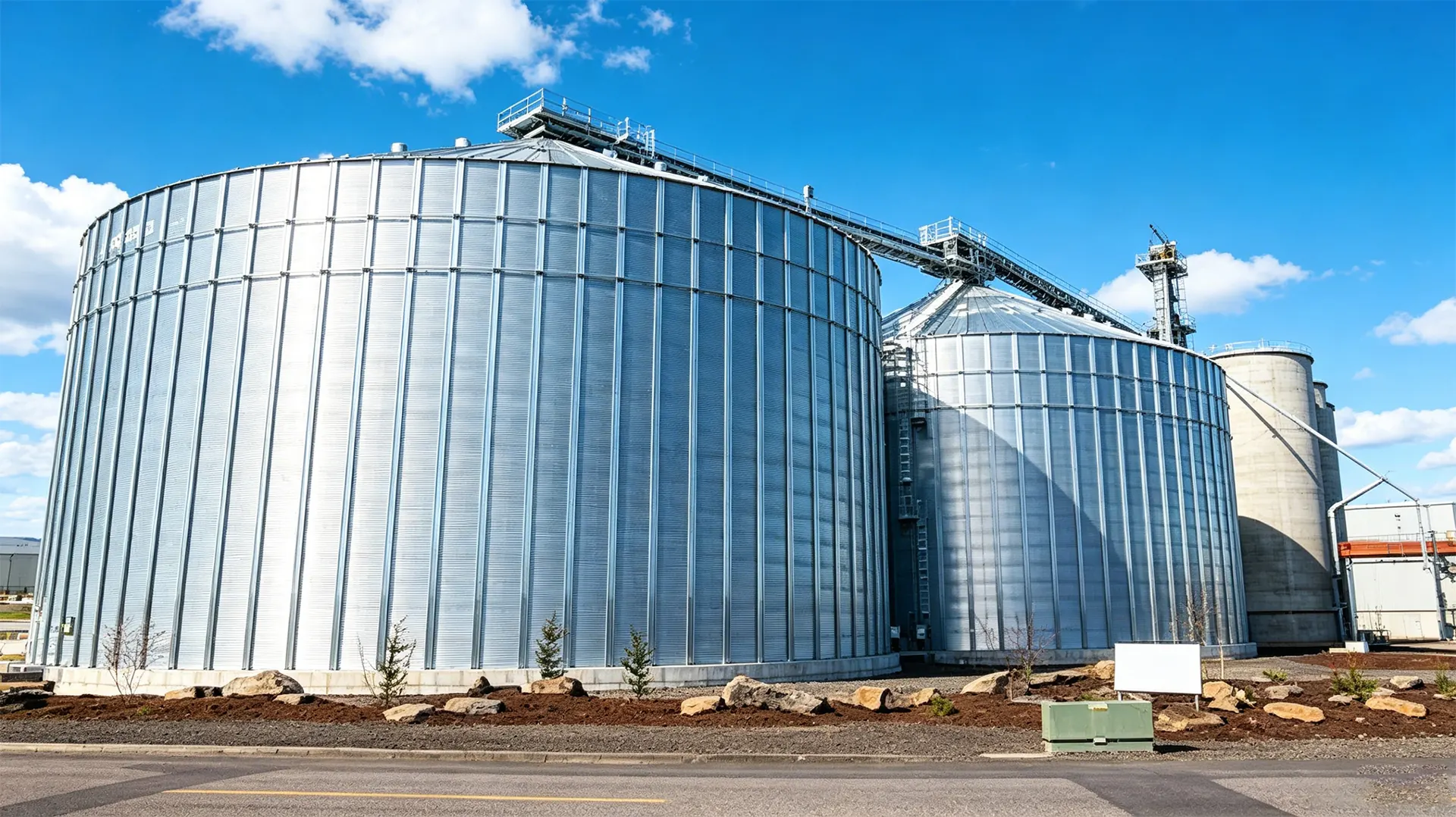
Silo automation is not a product you buy — it is a capability tier you earn, one control loop at a time. This Purchase High-Quality Steel Silo: An Engineer's Guide breaks down the five recognised levels of Dust Explosion Prevention in Grain Storage Facilities: En... storage automation, the sensors and control architecture behind each, and how to choose the level that actually pays for itself in your facility.
Why Your Silo Automation Level Determines Grain Quality, Energy Costs, and Labor Needs
Stored grain is a living, breathing, thermally unstable biological mass. It respires, it migrates moisture, it generates heat pockets, and it responds to every ambient condition change across the storage season. The decisions that determine whether a 10,000-tonne bin comes out of storage in specification or arrives at the mill discounted are made continuously — often overnight, often when nobody is on site.
That is the real definition of automation level: how many of those decisions your system makes correctly without a human in the loop. A facility that logs temperatures on a clipboard and switches fans by habit is not at a lower "technology tier" — it is operating a fundamentally Different Types of Silos Used in Cement, Mining & Agr... risk profile. Every manual decision point introduces delay, inconsistency between operators, and reliance on tacit knowledge that walks out the door with retirement.
The three cost levers are tightly coupled. Grain quality is a function of time-at-temperature and moisture history. Energy cost is a function of how long fans run and whether they run when ambient air is actually capable of drying or cooling the grain. Labour is a function of how many of those decisions require a person to be present, awake, and experienced. Raising your automation level attacks all three simultaneously — but only if the level is genuinely implemented, not merely purchased.
It is worth quantifying the stakes before choosing a tier. A 5,000-tonne bin of wheat stored at 14.5% moisture and 28 °C will respire roughly twice as fast as the same wheat stored at 12.5% and 18 °C. Over a six-month storage window that difference alone can consume 0.4–1.0% of dry matter, generate measurable hot spots near the wall, and create migration moisture that condenses under the roof deck. At a wheat value of USD 260/t, a 0.6% dry matter loss on 5,000 t is approximately USD 7,800 of value destroyed in a single bin — before any quality discount is applied at the buyer's door. A Level 3 or Level 4 control layer that prevents that loss typically costs a fraction of one season's avoidable shrink.
Equally important, automation level is not a permanent classification. Facilities move up and down the ladder as equipment is replaced, staff turn over, and IT/OT policies change. A site can hold a Level 4 control platform and still operate at Level 2 behaviour if the psychrometric setpoints are never configured or the operators override them by habit. The level you actually occupy is the level your daily decisions reflect.

The Five Levels of Silo Automation: From Manual Monitoring to Fully Autonomous Storage
The industry has converged on a broadly consistent five-level model. It is useful because it separates sensing from deciding from acting — the three things that must all be present before a system can be called automated at any given level.
| Level | Control Model | Who Decides | Typical Fit |
|---|---|---|---|
| Level 1 — Manual | Hand probes, manual starters, paper logs | Operator, on site | Small farm bins under ~1,000 t |
| Level 2 — Local Automation | PLC + local HMI, threshold alarms, scheduled aeration | Operator sets rules; PLC executes | Single-site farms and small elevators |
| Level 3 — Supervisory | SCADA, historian, remote monitoring, central control room | Operator supervises; system executes | Multi-bin elevators, 10,000–100,000 t |
| Level 4 — Predictive | Psychrometric control, model-predictive scheduling, sequenced handling | System decides within set constraints | Commercial terminals, ports, feed mills |
| Level 5 — Autonomous | Self-learning optimisation, digital twin, closed-loop load-out | System decides; humans audit | Large terminals with 24/7 operations |
Two structural points are worth noting before walking the levels. First, each tier presupposes the instrumentation and interlocks of the tier below it — you cannot run psychrometric control on top of a Level 1 sensor set, because the controller needs trustworthy plenum humidity, grain temperature, and ambient psychrometrics to compute anything meaningful. Second, the cost curve is not linear. Going from Level 1 to Level 2 is typically the largest single capital jump per unit of benefit on small bins, while Level 3 to Level 4 is often the cheapest incremental step on large facilities because the sensors are already installed and only the decision logic changes.
Level 1 and 2 Automation: Basic Monitoring, PLC Control, and Local HMI Systems
Level 1: The Manual Baseline
At Level 1, the silo has instrumentation but no control. Temperature cables may exist, but readings are taken with a handheld reader or a laptop plugged into a junction box. Fans are switched at a wall panel. Moisture is checked with a bench meter on a sample pulled from the bin. The operator is the control system, and the quality of the outcome depends entirely on their diligence and experience.
The hidden cost here is not the labour hours — it is the decision latency. A hot spot at 35 °C detected on a Monday may have started on Friday. By the time a manual aeration cycle runs, the affected grain may already have lost a grade.
Level 2: PLC, Local HMI, and Rule-Based Control
Level 2 introduces a programmable logic controller with a local HMI panel. The essentials of a competent Level 2 installation are:
- Temperature cabling on a grid of roughly 6–10 m, with sensors at 1.5–2 m vertical intervals and a minimum of two cables in small bins, scaling up with diameter. Cables must be tensioned and roof-mounted without compromising the structural envelope.
- Level sensing — rotary paddle or capacitive switches for high/low, or radar (FMCW) for continuous inventory.
- Ambient and plenum sensing — dry-bulb temperature and relative humidity outside, plus plenum temperature and static pressure under the perforated floor.
- Actuator control — motor starters, VFDs, and slide-gate or butterfly-valve actuators wired back to the panel with proper interlocks.
- Threshold logic — fan starts when any cable exceeds a setpoint, stops after a fixed run time.
Level 2 is a genuine step change, but it is rule-based, not condition-based. A schedule that runs a fan for six hours because it ran for six hours yesterday can easily push humid night air through dry grain and create a wet layer near the surface — the classic cause of crusting and surface spoilage.
From a hardware standpoint, a solid Level 2 panel typically uses a compact PLC with 16–32 digital inputs, 8–16 relay outputs, and at least four analogue inputs for 4–20 mA or 0–10 V sensor loops. Temperature cabling is usually a digital bus arrangement (commonly a three-wire