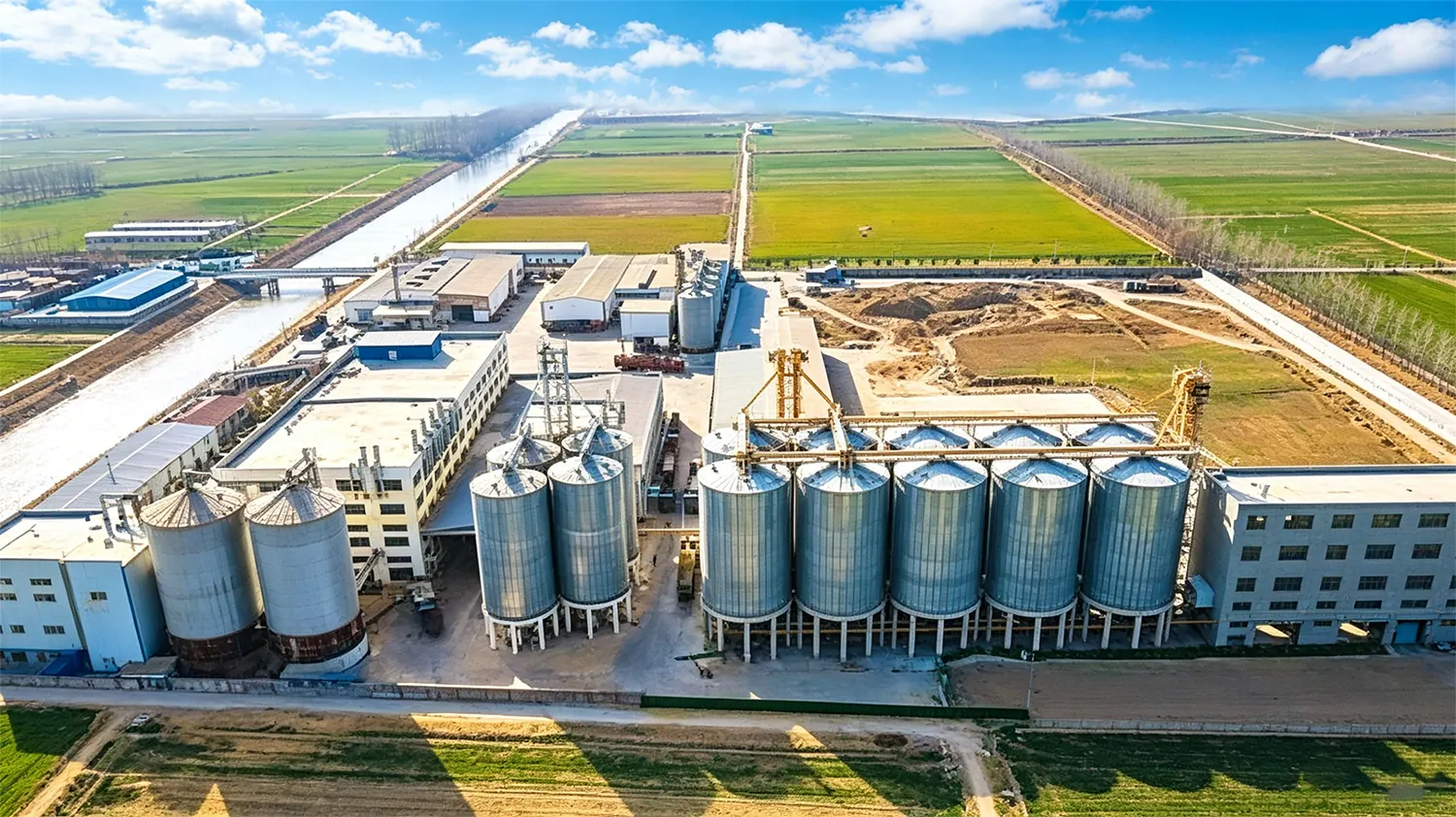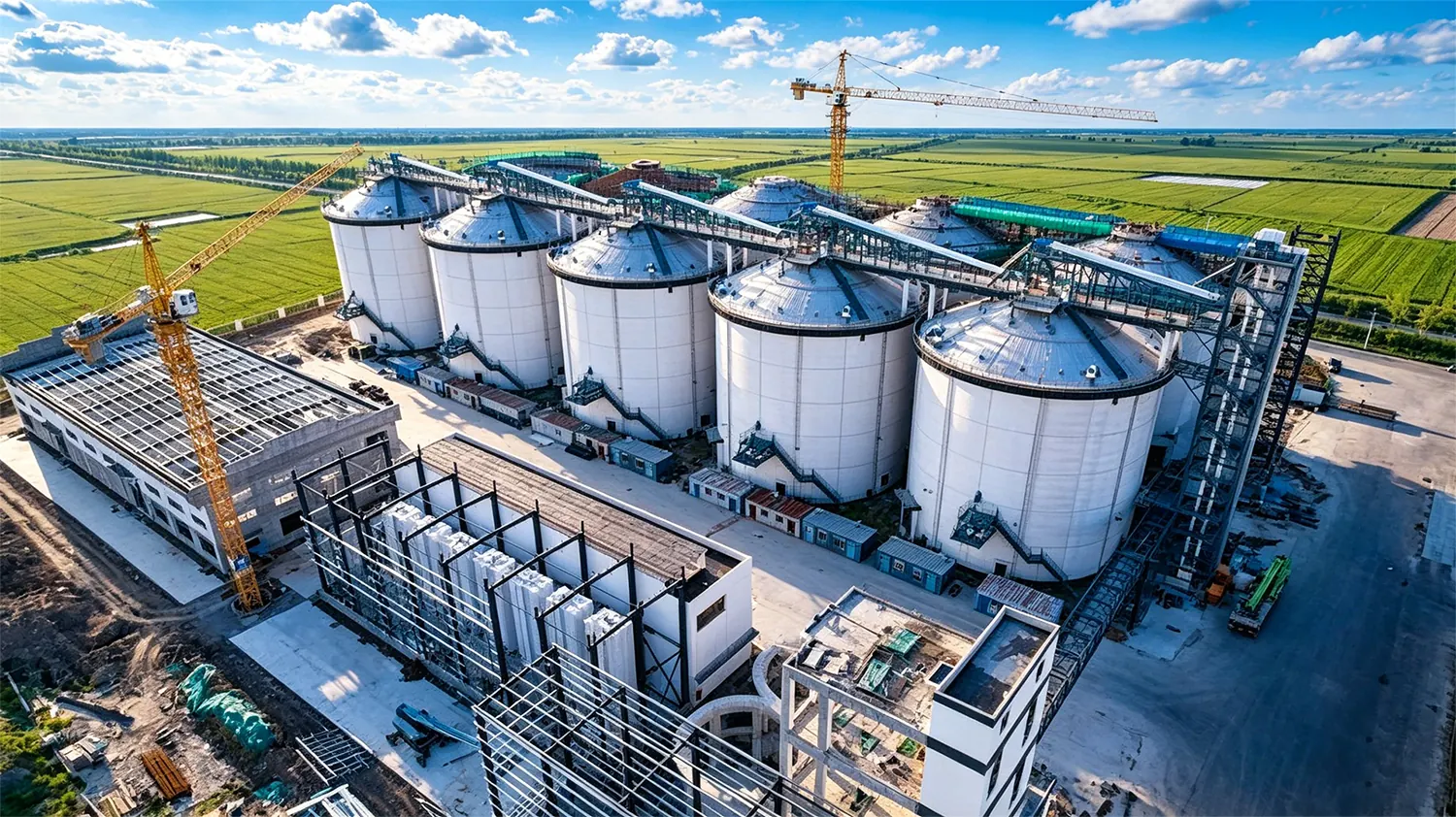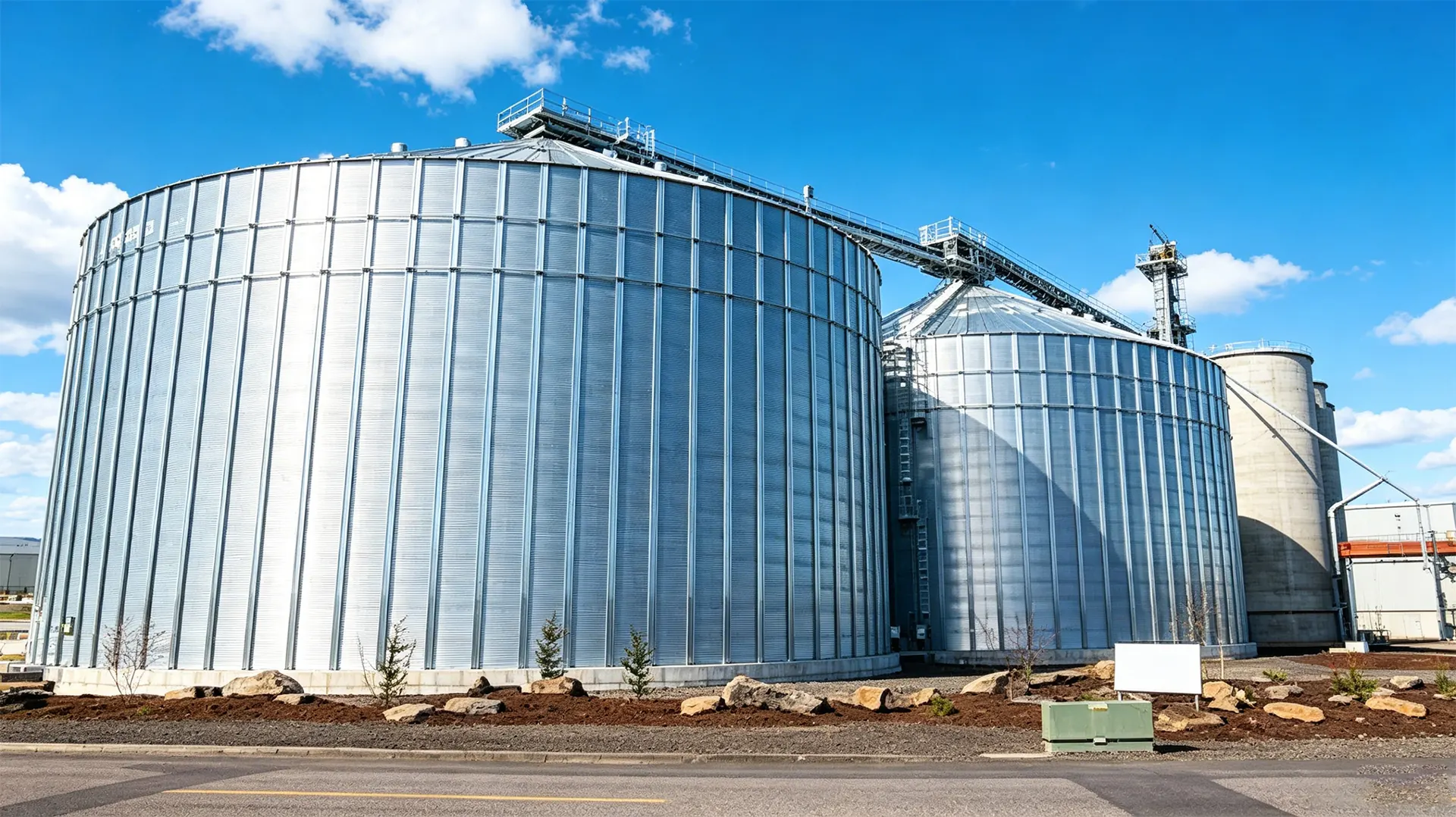
A grain silo is a capital asset with a 30-to-50-year service life, yet most operators can produce a Purchase High-Quality Steel Silo: An Engineer's Guide invoice and little else when an engineer, insurer, or regulator asks a hard question. The silo documentation package is the difference between an asset you can maintain, finance, and defend — and a steel structure full of unknowns.
After two decades of commissioning bolted and welded grain storage Dry Method Cement Rotary Kiln Systems in Modern Cement Pl... across four continents, I can tell you the single most reliable predictor of a smooth ownership transition is not the condition of the galvanizing or the accuracy of the sweep auger. It is the completeness of the documentation package delivered at handover. This Purchase High-Quality Steel Silo: An Engineer's Guide breaks down exactly what belongs in that package, why each component matters, and how to rebuild one when it is already missing.
Key takeaway: A complete silo documentation package typically runs 800 to 2,500 pages across 12 to 18 document families. In our experience, fewer than one in three second-hand grain storage assets changes hands with a fully traceable package — and the cost of reconstructing missing records after the fact runs 3% to 8% of the asset's replacement value.
What Is a Silo Documentation Package? The Complete Handover Blueprint for Grain Storage Systems
A silo documentation package is the controlled, indexed, and revision-managed set of engineering, fabrication, construction, commissioning, and operational records that describes a grain storage asset from concept through decommissioning. It is not a single binder. It is an engineering deliverable with its own quality standard, its own review cycle, and its own contractual weight.
The package serves four distinct audiences, each reading it differently:
- Maintenance and operations teams need equipment data, spare parts lists, control narratives, and troubleshooting logic to keep the asset running.
- Structural and process engineers need design loads, as-built geometry, and material certifications to evaluate modifications, repairs, or capacity upgrades.
- Regulators and safety officers need proof of compliance with grain handling, combustible dust, confined space, and electrical standards.
- Insurers, lenders, and acquirers need evidence of design adequacy, code compliance, and maintenance history to price risk and transfer liability.
When any of those audiences is working from incomplete records, the asset quietly loses value. A silo with a full package commands a premium at resale, qualifies for cleaner insurance terms, and absorbs a retrofit far more cheaply because the baseline is known rather than assumed. Consider a single, mundane example: aeration fan specifications. Without a documented fan curve, a maintenance planner cannot tell whether a 15 kW centrifugal fan is operating near its best efficiency point or running far out on the curve against excessive static pressure. The result is either burned-out motors or, more commonly, chronic under-aeration that silently degrades grain quality every season. Documentation is not administrative overhead. It is the instrument panel for the asset.
It is also worth stating plainly what a documentation package is not. It is not a sales brochure, a warranty certificate, or a folder of CAD files with no revision control. The distinguishing feature of a genuine package is traceability: every document carries a unique number, a revision status, a date, an author, and a link to the change that produced it. When a document is superseded, the old revision is archived rather than deleted, so the engineering history of the asset remains intact.

Anatomy of a Complete Silo Documentation Package: From As-Built Drawings to Load-Out Schedules
A well-structured package is organized by document family, not by chronology. Chronological binders — the classic "here is everything we sent you" folder — are nearly useless six years later. Discipline-based indexing is what makes a package searchable by a technician standing at the bin in the rain.
Document Family Matrix
| Document Family | Representative Deliverables | Primary User | Retention Trigger |
|---|---|---|---|
| Design and engineering | General arrangement drawings, load calculations, structural analysis reports, P&IDs | Engineers, insurers | Life of asset |
| Fabrication and materials | Mill test certificates, coating reports, weld procedures, dimensional inspection reports | Engineers, QA | Life of asset |
| Construction and installation | Foundation records, anchor bolt schedules, torque logs, survey reports, as-builts | Maintenance, engineers | Life of asset |
| Commissioning and quality | Inspection test plans, functional test records, air leak tests, punch lists | Operations, QA | Life of asset |
| Electrical and controls | Single-line diagrams, I/O lists, PLC backups, calibration certificates | Maintenance, controls techs | Life of asset, updated per change |
| Operations and maintenance | O&M manuals, lubrication schedules, spare parts lists, load-out schedules | Operations | Life of asset, updated |
| Safety and regulatory | Confined space program, dust hazard analysis, emergency plans, permits | Safety officers, regulators | Life of asset, reviewed annually |
The as-built drawing set deserves special emphasis. Design drawings and as-built drawings diverge on virtually every project — a bolt circle shifted 25 mm, an aeration duct rerouted around a foundation obstruction, a fan relocated to clear a conveyor. The as-built set is the only drawing that reflects what is physically standing in your yard.
Structural and Foundation Documents: Load Calculations, Anchor Bolt Schedules, and Seismic Design Criteria
Structural documentation answers one question: can this silo safely hold what we are putting in it, in the environment where it sits? That answer depends on grain pressure theory, environmental loading, and foundation performance.
Design Load Basis
The structural calculation package should state, explicitly, the grain pressure design basis. Most modern silos are designed using Janssen's equation for horizontal and vertical pressures with a wall friction coefficient, or the Airy/Reimbert formulations, applied with the appropriate overpressure and eccentric discharge factors. The package should record the assumed bulk density for each stored commodity (for example, 750 kg/m³ for wheat, 640 kg/m³ for barley, 720 kg/m³ for maize), the internal friction angle, the wall friction coefficient against the specific wall material, and the hopper or flat-bottom geometry used in the analysis. Without these assumptions written down, no engineer can later confirm whether the silo is safe to store a denser commodity or to fill to a higher level.
Environmental loads must also be documented: wind speed per the applicable code, snow and roof live loads, and seismic design category where relevant. For tall, slender silos the governing case is frequently wind-induced shell buckling rather than internal grain pressure, which is why the calculation file must show the buckling check, the shell stiffener spacing, and the ring beam design.
Foundation Records and Anchor Bolt Schedules
Foundation documentation typically includes the geotechnical investigation report, the bearing capacity assumption, the reinforced concrete design drawings, and — critically — the as-built anchor bolt schedule with recorded torque values and the torque wrench calibration certificate. A documented, verified anchor bolt torque log is one of the most requested items in any post-incident structural investigation, because it distinguishes a construction defect from an operational overload.
Site survey records complete the structural family. A settlement monitoring baseline taken immediately after commissioning allows future differential settlement to be measured against a known starting point rather than guessed at.
Aeration, Drying, and Airflow Documentation: Fan Curves, Static Pressure, and Air Distribution
Grain conditioning is where the process documentation earns its keep. The package should contain, for every fan in the system, the manufacturer's certified fan curve showing airflow against static pressure at the operating speed, the motor nameplate data, the fan selection point, and the system resistance curve. These two curves, plotted together, define the actual operating point of the aeration system.
Equally important is the airflow documentation for the grain mass itself. For a typical in-bin drying or aeration setup, the design airflow rate is expressed in m³/min per tonne (or cfm/bushel). The package should state the design target — for example, 0.1 m³/min per tonne for maintenance aeration of wheat, or substantially higher for full-bin drying — and the airflow distribution calculation that shows how that air divides between the center and the perimeter of the bin. Poor air distribution is one of the most common causes of spoilage, and it is invisible without the original calculation.
Drying Control Narrative and Schedules
A written control narrative explains how the PLC sequences the fans, heaters, augers, and sweep systems, what interlocks protect the equipment, and what the alarm setpoints are. Alongside the narrative belong the drying schedules — the recommended plenum temperature and airflow for each commodity at each initial moisture content — which are frequently the first documents lost and the hardest to reconstruct.
Electrical and Controls Documentation: Single-Line Diagrams, PLC I/O Lists, and Calibration Records
The electrical and controls family is the most frequently under-delivered portion of any package. At minimum it should include:
- Single-line diagrams showing the incoming supply, main breaker, motor control centers, variable frequency drives, and protective device ratings.
- PLC I/O lists enumerating every input and output tag with its address, description, wire number, and device.
- Control panel layout drawings and terminal schedules.
- PLC program backups in the original development environment, plus a documented upload/download procedure.
- Instrument calibration certificates for level sensors, temperature cables, moisture meters, and gas detectors.
The PLC backup deserves special attention. A controls system without a stored, versioned program file is a single point of failure: when the processor fails, the replacement must be re-programmed from scratch, often while the harvest is running. Every documented silo system should carry at least two independent copies of the current PLC and HMI programs, stored on separate media and dated.
Safety and Regulatory Documents: Confined Space, Dust Hazard, and Emergency Response
Grain storage sits at the intersection of several serious hazards: engulfment, combustible dust, confined spaces, and rotating equipment. The safety documentation family is therefore non-negotiable, both ethically and legally. It should include the confined space entry program with a bin-specific hazard assessment, the combustible dust hazard analysis (DHA) required under modern grain handling standards, the emergency response and rescue plan, and records of the most recent safety inspections.
The DHA in particular is a living document. It must be reviewed whenever the process changes — a new receiving pit, a relocated dust collector, or a change in commodity can all shift the dust classification of an area. A package that contains a five